Scientific Evidence Strengthens Nepal’s Funding Request
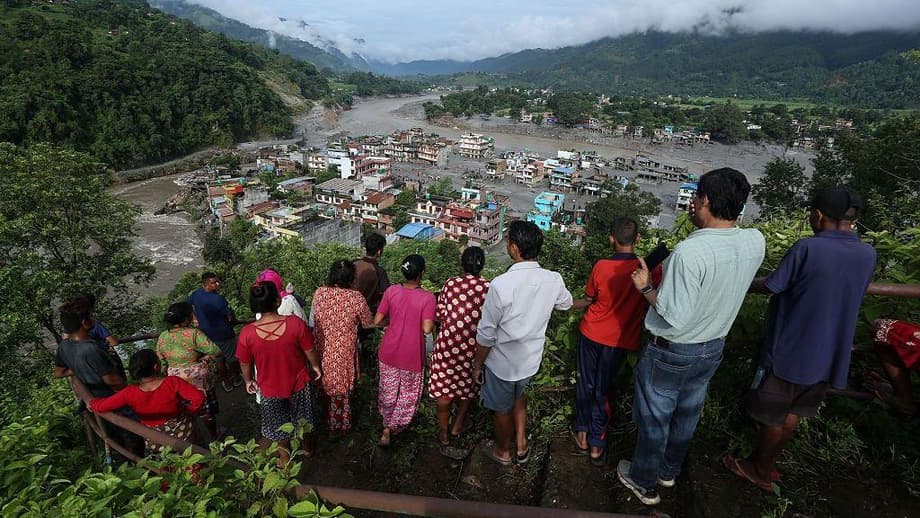
Nepal is preparing to seek about $20 million from the United Nations Fund for Responding to Loss and Damage after a catastrophic flood disaster killed around 1,400 people and left 6,150 missing, according to official figures cited in the latest reports. The money would provide an initial contribution toward recovery in communities along Nepal’s border with Tibet, where floods and landslides destroyed homes, roads, energy facilities and other vital infrastructure.
- Scientific Evidence Strengthens Nepal’s Funding Request
- How Climate Change May Have Made the Disaster More Likely
- Why the Study Matters to Nepal’s Claim
- Nepal Faces a Much Larger Reconstruction Bill
- Urgent Support Meets a Slow Funding Process
- A Test for the Loss and Damage System
- Nepal Takes the Case to the United Nations
- Key Points
The request will rely heavily on a new study by World Weather Attribution, a research group that examines the role of human caused climate change in extreme events. The study concluded that rising temperatures likely helped destabilise rock, ice and frozen ground near Langtang Lirung, a Himalayan peak on Nepal’s side of the border. The collapse unleashed an avalanche that sent huge volumes of debris and water into settlements downstream.
Nepal’s application comes as developing countries press for faster access to money from the loss and damage fund. The fund was created to help countries deal with destruction that cannot be prevented through adaptation alone, including deaths, destroyed infrastructure, lost homes and damage to cultural and economic life.
Nearly 120 countries have submitted claims worth close to $3 billion. The fund, however, reportedly has less than $400 million available for distribution, creating a sharp gap between requests and available money.
How Climate Change May Have Made the Disaster More Likely
The study does not describe climate change as the sole cause of the floods. Instead, it identifies warming as one part of a chain of events that combined with geological weaknesses in an unstable mountain environment.
Researchers found that temperatures in the area during July and August were about 1.5 degrees Celsius warmer because of human influence on the climate. Glaciers in the region have also been thinning by roughly half a metre each year. As glacier ice retreats and permafrost, or permanently frozen ground, thaws, slopes can lose some of the strength that holds them together.
Heavy snowfall in October and November added to the amount of water available for melting earlier this year. The resulting pressure may have weakened existing fractures in the mountain. A magnitude 7.8 earthquake that struck Nepal in 2015 and triggered another rock and ice avalanche may also have damaged the underlying rock, although researchers said they could not confirm how much the earthquake contributed to the recent collapse.
Scientists describe this type of disaster as a compound event. That means several hazards interact, rather than a single storm or temperature record causing the damage. In this case, warming, glacier loss, thawing frozen ground, heavy snow and geological instability appear to have combined at a dangerous location.
Friederike Otto, a climatologist at Imperial College London and a co author of the study, said the evidence left no doubt that human caused warming played a role in the conditions that preceded the disaster.
There was absolutely no doubt that human induced climate change played a role here in the preconditioning of the disaster.
Her wording reflects a key point in climate attribution research. Scientists may be able to identify how warming changes the likelihood or severity of an event without claiming that warming directly caused every stage of the event.
Why the Study Matters to Nepal’s Claim
The United Nations fund requires countries to show that the damage for which they are seeking support is connected to climate change. That requirement makes scientific evidence central to Nepal’s application.
Before the study was released, Nepali authorities had been collecting satellite images, drone footage and preliminary assessments of damage. Those records can show the scale of destruction, but they cannot by themselves establish how climate change contributed to the collapse. The new analysis gives the government a stronger scientific basis for linking the disaster to long term warming.
Maheshwar Dhakal, spokesperson for Nepal’s Ministry of Agriculture, Forest and Environment, said the study would form the main basis of the claim because it sets out the role played by climate conditions.
The report will be the main basis of our claim as it has detailed what role climate has played in this disaster.
The study has not yet been published in an academic journal. World Weather Attribution says its assessments use a reviewed method for analysing extreme events, and the Nepal findings build on observations made by glacier and mountain scientists soon after the floods.
Simon Cook, a glacier expert at the University of Dundee, described the research as a valuable examination of the disaster’s underlying causes. He said it offered strong evidence that warming was a key factor, while cautioning that scientists still cannot explain every part of the collapse with precision.
Climate warming ultimately destabilises these high mountain environments.
Cook has also called for better monitoring of high mountain areas so that changes in ice, rock and water pressure can be detected before a collapse occurs. Such systems are difficult to install in remote terrain, yet they can provide valuable time for evacuation when communities are located downstream.
Nepal Faces a Much Larger Reconstruction Bill
The proposed $20 million request would be only a small portion of the money Nepal says it needs. Government leaders estimate that rebuilding after the disaster could cost about $5 billion. The damage includes destroyed homes, transport links, power facilities and local economic activity across border communities.
Officials say the scale of the losses exceeds Nepal’s ability to respond alone. Many affected settlements are remote, making transport, rescue operations and reconstruction more expensive. Damage to energy infrastructure can also disrupt hospitals, communications, water systems and businesses long after floodwaters recede.
The disaster has caused both economic and non economic losses. Economic losses include damaged buildings, roads, bridges, farms and power stations. Non economic losses include deaths, displacement, lost community networks, cultural sites and emotional trauma. The loss and damage fund is intended to address both kinds of harm, although its rules and available resources remain limited.
Nepal contributes very little to global greenhouse gas emissions compared with major industrial economies. Its leaders argue that this imbalance should shape the international response. The country is highly exposed to warming because its population lives near fragile slopes, fast changing glaciers and rivers fed by snow and ice.
Nepal’s government has used the language of compensation when describing the money it needs. Danya Liu, a climate adaptation specialist at BloombergNEF, said that wording points toward a polluter pays approach. Under that model, countries and companies most responsible for historic emissions would carry a larger share of the costs, instead of disaster hit countries relying mainly on aid.
Urgent Support Meets a Slow Funding Process
Nepal submitted its appeal after the August 26 flash flood near the Bhote Koshi River, which followed the glacial collapse near the Nepal Tibet border. The country’s finance and environment ministers asked the fund’s board to provide urgent assistance, saying the scale of the destruction was beyond the government’s capacity to handle alone.
In a letter dated September 9, the fund’s co chairs, Camila Minerva Rodriguez Tavarez and Georg Borsting, assured Nepal that they were working with the board to consider a rapid response. They said the board would examine every available option to make the support as swift and meaningful as possible.
Members from developing countries have also pressed for immediate action. Eight of the fund’s 14 board members from developing countries, along with six alternate members, reportedly signed a letter calling for an extraordinary meeting. The letter said the disaster matched the kind of climate related crisis the fund was created to address.
The support from developing country representatives points to broad political sympathy for Nepal’s request. It also exposes disagreements over how quickly the fund can act and how strictly existing procedures should be applied. Representatives from developed countries did not sign the call for an extraordinary meeting, according to reports on the board’s response.
Fund officials are scheduled to meet in December to decide which requests can be accepted and whether Nepal’s case should receive an urgent decision. The process could determine whether the country receives money while rescue and reconstruction needs are still immediate, or after much of the early response has already passed.
A Test for the Loss and Damage System
Nepal’s application will be watched closely by other vulnerable countries. If the fund accepts the claim quickly, it could show that evidence from a climate attribution study can help governments access support after complex disasters involving landslides, glacier collapse and flooding.
The case is also testing how the fund deals with disasters that do not fit a simple pattern. A cyclone or heatwave can often be compared with historical records. A mountain collapse may involve an earthquake, rock fractures, snowfall, melting ice and rising temperatures at the same time. Establishing the role of each factor is more difficult, especially when the event takes place in an area with limited monitoring data.
That does not make the climate connection irrelevant. Warming can alter background conditions even when it does not directly trigger a particular collapse. Thinner glaciers, thawing frozen ground and increased meltwater can leave slopes more vulnerable. The scientific question is often whether warming made a disaster more likely or more severe, rather than whether it acted alone.
The fund’s limited resources add another layer of difficulty. Requests near $3 billion are competing for less than $400 million, meaning even an approved claim may cover only a small share of total losses. Nepal’s proposed amount would help with urgent needs, yet it would not come close to the estimated reconstruction bill.
Nepal Takes the Case to the United Nations
Prime Minister Balendra Shah is expected to discuss the disaster and climate justice at the United Nations General Assembly in New York during his first foreign trip as prime minister. Nepali officials want the event to be viewed as more than a national emergency. They see it as evidence of the growing costs faced by countries that made a small contribution to the emissions driving global warming.
Foreign Minister Shisir Khanal has said international support should be judged through the lens of climate justice rather than charity. That argument reflects a wider position held by developing countries, which have spent years seeking predictable finance for climate adaptation and recovery.
For Nepal, the diplomatic case rests on two connected points. The country needs immediate help after a disaster that has destroyed lives and infrastructure. It also wants the international funding system to recognise that warming is changing the risks faced by mountain communities, even when local geology and weather remain part of the cause.
The scientific report cannot guarantee that Nepal will receive the requested money. It does, however, give the government a clearer explanation of how climate change affected the conditions behind the flood. The fund’s decision will show whether that kind of evidence can translate into timely support.
Key Points
- Nepal plans to seek about $20 million from the UN Fund for Responding to Loss and Damage.
- About 1,400 people died and 6,150 remained missing in the disaster, according to official figures cited in reports.
- A World Weather Attribution study linked warming to glacier loss, thawing frozen ground and instability near Langtang Lirung.
- Nepal estimates that rebuilding damaged communities and infrastructure could cost about $5 billion.
- Nearly 120 countries have requested close to $3 billion from a fund with less than $400 million available for distribution.
- The fund’s board is expected to consider Nepal’s request and possible urgent support at a meeting in December.