
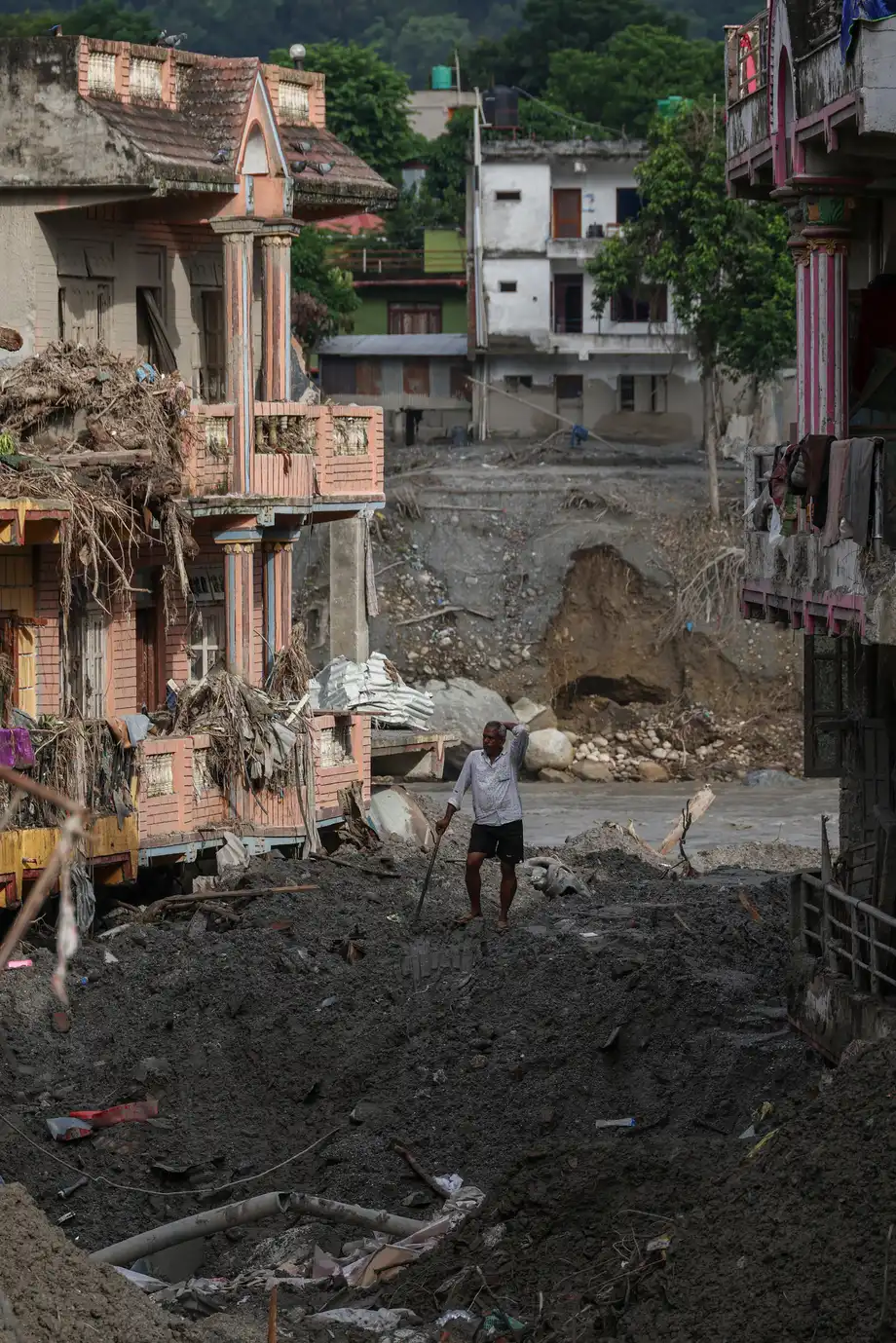
Reconstruction costs stretch far beyond the initial damage
Nepal estimates it needs US$4.78 billion to recover from the August 26, 2026 Himalayan floods, with almost all of that money required for reconstruction beyond the first six months. The government ended its main search and rescue operation on October 5 with 1,455 people confirmed dead, 5,285 still missing and 13,795 rescued. Essential emergency rescues will continue when needed.
Contents
- Reconstruction costs stretch far beyond the initial damage
- What happened, and when the response changed
- Why the financial estimates differ
- The official assessment shows a wider footprint
- Missing people leave families without legal certainty
- Power and transport dominate the rebuilding task
- Lost farms, schools and shops prolong displacement
- Economic disruption extends beyond the flooded valleys
- Climate finance covers only a fraction of the bill
- Scientific uncertainty and continuing flood risks
- Key Points
The financial challenge is larger than replacing ruined buildings. Roads, bridges, electricity networks, farmland and trading routes were destroyed or disrupted together, leaving communities unable to return to normal even where individual homes survived. Reconstruction estimates amount to roughly a tenth of Nepal's gross domestic product.
Foreign ministry spokesman Lok Bahadur Chhetri initially put recovery needs for the first six months at US$57.67 million and longer reconstruction needs at approximately US$4.71 billion. The US$4.78 billion total was also presented as approximately A$6.67 billion. These are currency equivalents, not separate estimates.
The government subsequently recommended NPR 559.17 billion for 504 reconstruction and rehabilitation plans. That recommendation is not evidence that the full recovery bill has been funded. Additional allocations are expected for projects whose costs or priorities have not yet been established.
Meanwhile, families face a more immediate barrier: thousands of missing people have not been legally declared dead. Without death certificates, relatives can struggle to obtain compensation, claim insurance or transfer property. The disaster has therefore created two connected recovery tasks, financing reconstruction and making assistance accessible to the people entitled to it.
What happened, and when the response changed
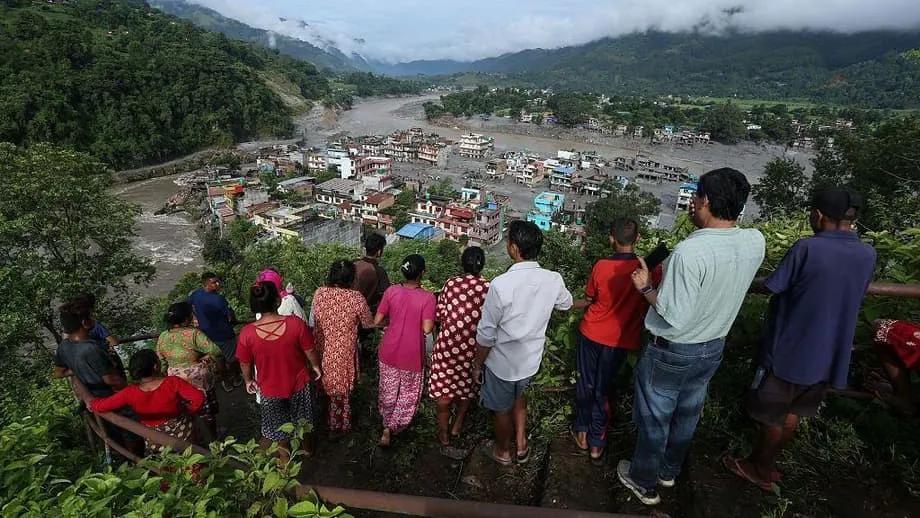
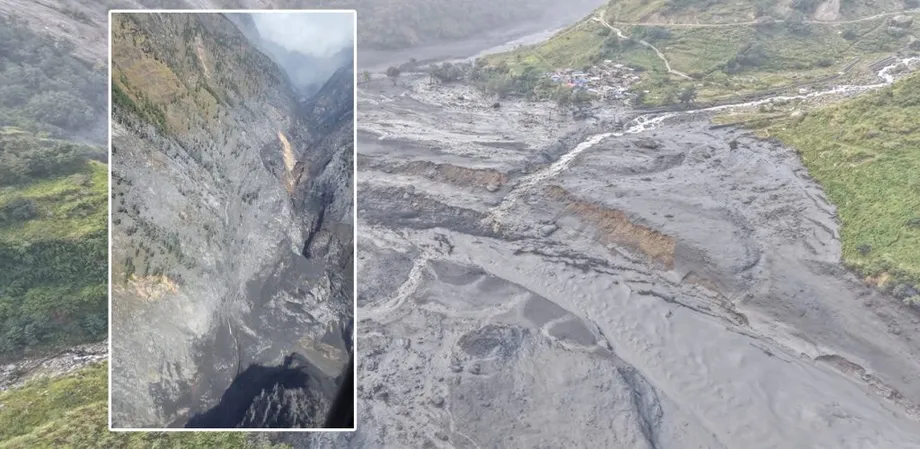
The flood began on the morning of August 26, when a collapse of glacial ice and rock sent water, sediment and debris through Himalayan river valleys near the Nepal–Tibet border. The Bhote Koshi, Upper Trishuli and Narayani–Gandak systems were affected. Settlements, border facilities and infrastructure downstream were overwhelmed.
Descriptions of the immediate trigger differ. Some accounts identify a rock and ice avalanche from Langtang Lirung that briefly blocked a river before the obstruction failed. Others describe the avalanche becoming a destructive surge directly. The precise sequence and the contribution of warming require scientific assessment.
The response developed through several distinct stages:
- August 26: The main flood struck communities near the border and downstream river corridors.
- August 28: A reported breach of a temporary debris barrier interrupted rescue work.
- September 13: Nepal released its Rapid Damage and Needs Assessment, providing preliminary figures for damage, losses and recovery.
- September 17: Traffic resumed in both directions on a replacement track at Krishnabhir, restoring an important connection while leaving continuing closure risks.
- October 5: The government concluded the main search and rescue operation after about 40 days and shifted towards rehabilitation.
- October 9: UNICEF described continuing isolation, trauma and urgent needs six weeks after the disaster.
Phanindra Paudel, chief of the National Emergency Operation Centre, explained the change in operations:
We are moving from the search and rescue phase to the search and rehabilitation phase.
Dharam Raj Uprety, chief of the National Disaster Risk Reduction and Management Authority, said active searches for bodies would stop, but remains and belongings found during rehabilitation would still be recovered. The decision does not mean that every missing person has been identified or legally recorded as dead.
Why the financial estimates differ
The government's rapid assessment puts total disaster effects at NPR 408.29 billion, approximately US$2.70 billion. That comprises NPR 274.48 billion in physical damage and NPR 133.81 billion in losses, such as interrupted business activity and income. Recovery needs are higher, at NPR 723.32 billion, approximately US$4.775 billion.
Those dollar conversions use the Nepal Rastra Bank exchange rate of NPR 151.48 per US dollar on September 9. The assessment allocates NPR 8.73 billion to early recovery and NPR 714.58 billion to longer reconstruction. Rounded figures can produce small differences when the components are added.
The World Bank's Global Rapid Post Disaster Damage Estimation, included in its Nepal Development Update, estimates US$1.66 billion in direct physical damage. Nepal's preliminary assessment puts the comparable figure at US$1.81 billion. Neither figure includes the full cost of rebuilding services with greater protection against future hazards.
Recovery needs are approximately 1.8 times the government's US$2.70 billion estimate of damage and losses. This does not mean all destroyed assets cost 80 percent more to replace. The recovery calculation includes restoring services, improving protection and addressing needs beyond the value of assets lost.
A committee led by National Planning Commission vice president Gunakhar Bhatta was given six weeks to prepare a fuller Post Disaster Needs Assessment. A donor conference is planned after that work. The initial rapid assessment relied on existing records, remote mapping and satellite imagery rather than household surveys or detailed engineering inspections. Its figures remain working estimates, not a final reconstruction budget.
The official assessment shows a wider footprint
The United Nations Development Programme's Nepal flood assessment records a government approved estimate of 84,270 affected people across 17 municipalities in six districts: Rasuwa, Nuwakot, Dhading, Chitawan, Gorkha and Tanahu.
That is broader than preliminary estimates of approximately 33,000 people associated with damaged housing. Reports variously describe that smaller group as affected, displaced or having lost their homes. These categories should not be treated as interchangeable. The rapid assessment also covered fewer municipalities and districts than the UNDP population estimate.
UNDP estimates US$158.6 million in potential building damage, with uncertainty of plus or minus 30 percent. That implies a range of roughly US$111 million to US$206 million. It excludes the full damage to infrastructure, agricultural land, economic activity and humanitarian needs.
The agency stresses that its figures are preliminary modelling results requiring field validation. They do not establish confirmed damage, displacement or disruption of services. A separate estimate of roughly US$170 million for residential and commercial buildings along the Rasuwa and Nuwakot valleys should likewise not be mistaken for the national loss total.
UNDP estimates 556,200 tonnes of debris associated with assessed buildings and a broader indicative total of 2.2 million tonnes including belongings, vegetation, rock and sediment. Clearing this material is part of making land, roads and neighbourhoods usable again.
About 76 percent of residents in the affected municipalities live in municipalities with vulnerability above the national average before the flood, according to an index based on Nepal's 2021 census. The disaster therefore struck many communities already facing disadvantages.
Missing people leave families without legal certainty
Counts have changed during the response. Earlier figures recorded 1,385 recovered bodies and approximately 5,130 missing in Nepal. A September 23 update listed 1,451 recovered bodies and more than 6,000 missing, while the October 5 tally reported 1,455 deaths and 5,285 missing. These provisional records require reconciliation, rather than being added together.
UNICEF's October 9 update used rounded figures of at least 1,400 deaths, including 84 children, and nearly 5,300 missing. Tibet's reported toll was a separate 43 dead and 519 missing. Earlier reports identified roughly 800 missing foreigners across the disaster area, while another preliminary count listed approximately 600 from 35 countries. Later nationality figures included 33 Britons, 80 Americans and more than 50 Ukrainians. An earlier Australian count left 35 unaccounted for after eight were found.
Identification has been slow. One account recorded 112 bodies returned to families after DNA testing out of 1,445 recovered, with 1,333 temporarily buried pending identification. That figure differs from the later confirmed death total and represents another stage of the response.
Section 40 of Nepal's Civil Code generally presumes a missing person dead after 12 years. Although exceptions exist, reporting on the provision identifies no specific rule for a disaster of this kind. Families say the resulting uncertainty prevents access to death certificates and financial support.
Available assistance includes up to NPR 25,000 for funeral costs, approximately NPR 200,000 for the first death in a family and NPR 100,000 for each additional death. Payment depends on documentation. The prime minister's office has acknowledged difficulties in exceptional circumstances, and the home ministry says it is prepared to amend the law if necessary. No completed amendment or firm resolution date has been announced.
Power and transport dominate the rebuilding task
Infrastructure accounts for US$1.38 billion, or 83 percent, of the World Bank's physical damage estimate. Residential buildings represent US$185 million and other buildings US$101 million. Rasuwa accounts for approximately US$1.07 billion of damage, followed by Nuwakot at US$551 million and Dhading at about US$39 million.
Energy figures differ according to the projects and capacity categories counted. Initial accounts described 12 hydropower projects destroyed or affected. The rapid assessment records 13 affected projects and 759 megawatts of capacity, while another preliminary government account gives 783 megawatts.
The World Bank breakdown identifies seven operating hydropower projects with 256 megawatts, five projects under construction with approximately 395 megawatts, and a 25 megawatt solar facility. Transmission damage disrupted another 149.6 megawatts. Its approximately 430.7 megawatt total refers to affected operating generation and transmission, not a sum including all capacity still under construction.
Energy Minister Biraj Bhakta Shrestha told Parliament on September 23 that more than 800 workers at hydropower sites remained unaccounted for. The rapid assessment places energy recovery needs at NPR 390.62 billion, about 54 percent of the national recovery estimate.
More than 55 kilometres of the 82 kilometre Galchhi–Rasuwagadhi trade corridor were damaged, including 40 kilometres washed away. That means over two thirds of the route was affected and nearly half destroyed. Across the affected area, 37 motorable bridges and 68 suspension bridges were damaged. Restoring these connections is necessary for both relief deliveries and economic recovery.
Lost farms, schools and shops prolong displacement
The rapid assessment records 7,570 affected private buildings and an estimated 8,317 households. Other reports give substantially different housing totals, including approximately 7,500 homes destroyed and 20,000 damaged. These accounts cannot be reconciled simply by treating every number as a count of the same buildings.
The assessment identifies damage to 48 public facilities, 18 schools and seven health facilities. Across the schools, 308 rooms were affected, with 156 completely damaged. Recovery funding includes temporary learning spaces, materials and counselling, alongside permanent rebuilding.
Agricultural damage covers 1,806 hectares, comprising 1,669 hectares of paddy and 137 hectares of vegetables. Farmer Nanimaya Senchuri lost two plots, her rice crop and a banana plantation nearly ready for harvest. Her farm supplied both food and income. She described the scale of the flood:
"In all my life, I had never seen a flood like this," she said.
UNICEF's October humanitarian update describes continuing trauma and difficult access in Rasuwa, where isolated communities still depend on airlifted relief. Caroline Holt, director for disasters, climate and crises at the International Federation of Red Cross and Red Crescent Societies, said recovery required more than immediate survival:
"People need more than assistance to survive, they need confidence in their future, they need to know where they live, how they will earn an income and when their children can return to school," she said.
Researchers Sara Shneiderman and Amy Leigh Johnson argue that rebuilding must account for livelihoods, local decisions and Indigenous rights. Indigenous nationalities comprise approximately 38 to 90 percent of residents in nine of the 15 municipalities covered by the rapid assessment. Relocation may reduce flood exposure while also separating families from farmland, work and ancestral territory.
Economic disruption extends beyond the flooded valleys
The World Bank projects growth of 3.7 percent in the fiscal year ending in mid July 2027, with a possible recovery to 5.2 percent the following year. The Asian Development Bank's forecast is 4.1 percent, following a reduction of 0.4 percentage points. Both are below the government's 6 percent target.
The main channels of disruption are energy, transport, trade and tourism. The Rasuwagadhi crossing accounts for 10.8 percent of Nepal's merchandise imports from China and 47.3 percent of its merchandise exports to China. Damage therefore affects businesses beyond the immediate flood zone.
More than 200 hotels and restaurants were damaged, and access to Langtang, Gosaikunda and the Kailash Mansarovar corridor was disrupted before the September to November tourism season. Electricity exports also face pressure from the loss of approximately 60 megawatts of export oriented hydropower capacity.
Reconstruction will increase demand for imported machinery, equipment and materials. The World Bank expects remittances to help sustain foreign exchange reserves, but disrupted local markets, crop losses and expensive transport can still raise household costs even if national inflation stays contained.
Climate finance covers only a fraction of the bill
Nepal contributes approximately 0.1 percent of global greenhouse gas emissions. Its government argues that countries responsible for much larger emissions should share recovery costs. UNICEF says the Himalayas are warming about twice as fast as the global average.
At the UN General Assembly, Prime Minister Balendra Shah called for grants rather than additional borrowing. He told world leaders:
"When a climate-driven disaster destroys infrastructure of a poor country, the answer cannot simply be another mega-loan or a patchwork of small grants," he said.
Chatham House's climate finance analysis records Nepal's US$20 million request to the UN Fund for Responding to Loss and Damage, the maximum per project. That would cover only about 0.42 percent of the US$4.78 billion recovery estimate.
The analysis says 27 countries had pledged US$822.06 million to the fund by March 2026, with approximately half received. Its first funding round offered US$342 million against requests approaching US$2.8 billion. These are global fund figures, not allocations to Nepal. A separate report of more than US$820 million pledged specifically for flood recovery by September 7 should not be confused with that global total; the accounts do not establish a common funding ledger or confirmed disbursements.
China has expressed willingness to assist Nepal within its capacity. Shah has also proposed a Himalayan Climate Resilience Mechanism involving Nepal, India and China to share glacial lake information and strengthen warnings.
Scientific uncertainty and continuing flood risks
The evidence connecting warming with Himalayan glacier retreat does not, by itself, establish the exact cause of this collapse. Earlier accounts describe investigators unable to reach the site because of limited resources. Later climate finance analysis refers to a study attributing several cascading climate factors to the disaster. That progression does not establish an agreed final explanation.
Estimates of the surge's speed also differ: one account gives approximately 150 kilometres per hour in some locations, while Chatham House gives nearly 188 kilometres per hour. Neither should be presented as a single settled measurement.
Chatham House discusses the International Court of Justice's July 2025 climate advisory opinion and its requirement for a causal connection that is "sufficiently direct and certain". The opinion provides legal context, but is not a compensation award to Nepal or a determination of responsibility for this flood.
Nepal plans detailed studies of four glacial lakes, Thulagi, Lower Barun, Lumding Tsho and Hongu II, before controlled drainage through canals and gated structures. The programme could take up to six years and includes sensors, forecasting, warning systems and community preparation. These are preventive projects, not confirmation that one of those lakes caused the August disaster.
A study by C. Scott Watson and colleagues found that built areas potentially exposed to flooding grew 46 percent between 2016 and 2023. Nearly 300,000 people were estimated to live in exposed areas across the Nepalese Himalayas, including more than 100,000 downstream of glacial lakes. Its height above nearest drainage method screens buildings by their elevation relative to rivers; it does not replace detailed hazard mapping.
A separate subsequent flood on the Budhi Gandaki in Gorkha left four people missing and reportedly swept away 35 houses and three bridges. At least 18 hydropower camp workers escaped, and the army airlifted six people from Jagat. Authorities suspected a landslide blockage but had not confirmed the precise cause.
The next international milestone identified is COP31, scheduled for November 9–20 in Antalya. Nepal's immediate unfinished tasks remain the detailed needs assessment, financing decisions, legal recognition for missing people and safer reconstruction choices. None has a confirmed completion date in the announcements.
Key Points
- Nepal estimates flood recovery and reconstruction needs at US$4.78 billion, mostly for work beyond the first six months.
- The October 5 tally recorded 1,455 deaths, 5,285 missing people and 13,795 rescued.
- UNDP records an estimated 84,270 affected people across 17 municipalities in six districts.
- The World Bank estimates US$1.66 billion in physical damage, with infrastructure accounting for 83 percent.
- Missing death certificates are delaying compensation, insurance and inheritance processes for families.
- Nepal's US$20 million climate fund request would cover approximately 0.42 percent of estimated recovery needs.
- Detailed assessments, financing and plans to reduce future flood exposure remain unfinished.