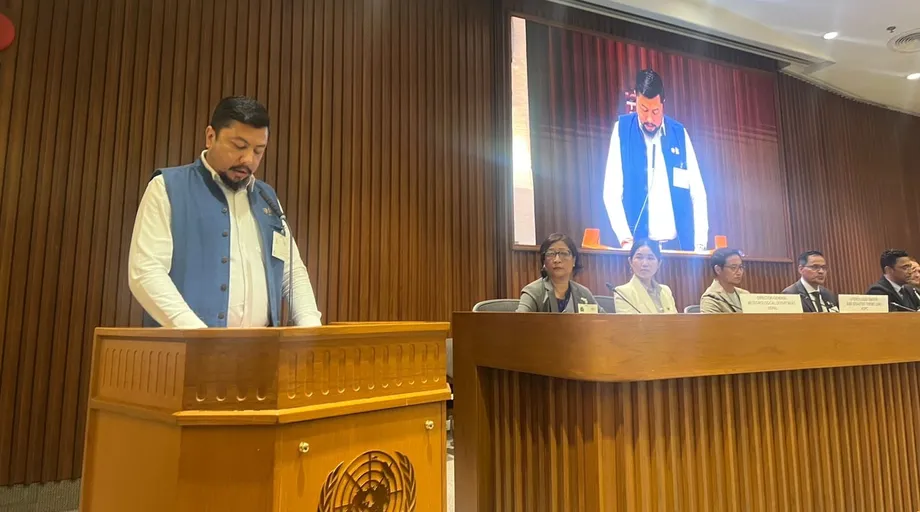
Bangkok support puts Himalayan warnings and finance in focus
Representatives of 53 countries have supported Nepal's proposals for tackling Himalayan climate risks, according to the secretariat of Energy, Water Resources and Irrigation Minister Biraj Bhakta Shrestha. The package brings together satellite monitoring, shared disaster warnings, grants for preparedness and recovery, and investment in mountain communities.
Contents
- Bangkok support puts Himalayan warnings and finance in focus
- What Nepal wants countries to support
- How satellites and shared warnings would work
- Grants rather than loans for mountain protection
- Why investment must follow the whole river
- A deadly flood preceded the diplomatic push
- India and China are central to implementation
- An earlier science council offers a caution
- Legal proposals connect regional duties with local benefits
- Key Points
The support was announced in an October 30, 2026 account of a regional dialogue at the Bangkok headquarters of the United Nations Economic and Social Commission for Asia and the Pacific (ESCAP). Nepal and ESCAP jointly organised the meeting, titled From Everest to the Sea, also rendered as From Sagarmatha to the Sea. Sagarmatha is the Nepali name for Everest.
Shrestha's central argument was that danger originating in the mountains travels beyond national borders. Nepal wants governments, scientific institutions and international space agencies to work together, connecting observations of glaciers and unstable slopes with warnings for people and infrastructure farther downstream.
The diplomatic backing comes as Nepal works to turn Prime Minister Balendra Shah's proposed Himalayan Climate Resilience Mechanism into a practical arrangement involving Nepal, India and China. Nearly a month after Shah presented the idea to the United Nations General Assembly on September 24, ministries were still preparing its details, and neither neighbour had received a formal, detailed proposal.
No funding total, launch date or implementation timetable was announced for the Bangkok package. The immediate task is to convert support into agreements about who shares information, who pays and how warnings reach communities facing danger.
What Nepal wants countries to support
Nepal's proposals connect four needs: observing mountain hazards, sharing knowledge across borders, making finance available quickly and supporting the livelihoods of communities that protect forests and watersheds.
The minister's secretariat also highlighted investment decisions across entire river systems, from upstream hydropower projects to downstream settlements and border towns. Shrestha included that requirement in his appeal for disaster finance, while the broader community investment proposal covers clean energy, agriculture, herbs and tourism.
- Build a warning system for several types of hazards using satellites, artificial intelligence and other technology to monitor vulnerable slopes and glaciers.
- Develop the Himalayan Climate Resilience Mechanism to exchange information, monitor dangerous glacial lakes and coordinate warnings.
- Provide accessible grants for monitoring, preparedness and recovery, with a permanent funding channel for rapid responses to loss and damage.
- Invest in Himalayan livelihoods through clean energy, sustainable agriculture, herbs and responsible tourism, alongside access to markets without import duties.
Shrestha presented the measures to an audience that included ministers from countries across Asia and the Pacific, United Nations representatives, scientists and diplomats. Their different responsibilities matter: scientists can identify hazards, governments can arrange warnings and emergency action, and financial partners can support the equipment and institutions needed to keep the system operating.
How satellites and shared warnings would work
Nepal's first proposal focuses on places where danger can develop far from the settlements it threatens. Satellites can help observe changes in glaciers, lakes and mountain slopes across large or difficult terrain. Artificial intelligence, software that identifies patterns in data, could help process those observations.
A system covering several hazards would bring information about different dangers into a coordinated warning process. Nepal is seeking cooperation among space agencies, scientific bodies and governments, rather than leaving each country or institution to work with its own observations alone.
The second proposal addresses how that information moves. The Himalayan Climate Resilience Mechanism would link data exchange, glacial lake monitoring and early warnings across borders. A glacial lake holds water associated with a glacier; monitoring dangerous lakes is one of the specific tasks Shah set out.
Shah, Nepal's prime minister, described the intended practical work in his September 24 General Assembly address:
Through this mechanism, let us share satellite data and expertise. Let us monitor dangerous glacial lakes. Let us strengthen joint early-warning systems,
The two proposals depend on each other. Better observations provide the information, while regional coordination determines how that information can reach neighbouring authorities and communities in time for action.
Grants rather than loans for mountain protection
Shrestha called for finance that moves quickly enough to support disaster preparedness and recovery. He argued that Himalayan monitoring costs millions of dollars, while failing to monitor can lead to losses worth billions. He used those broad figures to make the case for prevention, without presenting a detailed project budget.
Nepal wants high Himalayan monitoring and early warning funded through grants rather than loans. A grant does not have to be repaid; a loan creates a future repayment obligation. That difference affects how much financial pressure a government faces while trying to protect communities and rebuild after a disaster.
Shrestha, the minister responsible for energy, water resources and irrigation, also called for a standing funding channel that could respond rapidly to damage:
Let us create a permanent window for the rapid addressing of loss and damage and fill it with adequate funds. For monitoring and early warning in the high Himalaya, give grants, not loans. And let every investment, from hydropower on our riverbanks to border towns, be made risk-sensitive from source to sea,
A permanent funding window means an established route through which money can be requested and released. Loss and damage refers here to the harm communities face when climate impacts destroy property, disrupt livelihoods or otherwise cause lasting losses.
Why investment must follow the whole river
Nepal's appeal extends beyond installing monitoring equipment. Shrestha wants climate and disaster risks considered when governments and development partners invest anywhere along a river, including hydropower sites, riverside settlements and towns near national borders.
A source to sea approach looks at a river as a connected system. Decisions upstream need to account for the people, buildings and economic activities downstream. For investors, that means examining hazards originating beyond the immediate project site and, in some cases, beyond the country's border.
The community proposal adds a livelihoods dimension to that approach. Nepal is seeking investment in clean energy, sustainable agriculture, herbs and responsible tourism for people who help protect mountain forests and watersheds. A watershed is the area of land that drains into a particular river or water system.
Nepal also proposed market access without import duties for Himalayan products. Import duties are taxes charged when goods enter another country. Removing them could reduce a barrier facing producers, although the proposal does not identify particular products, participating markets or negotiated trade terms.
Together, the investment requests link disaster protection with the ability of mountain residents to earn a living. Monitoring addresses approaching danger, while the livelihood measures seek to support the communities living with that danger.
A deadly flood preceded the diplomatic push
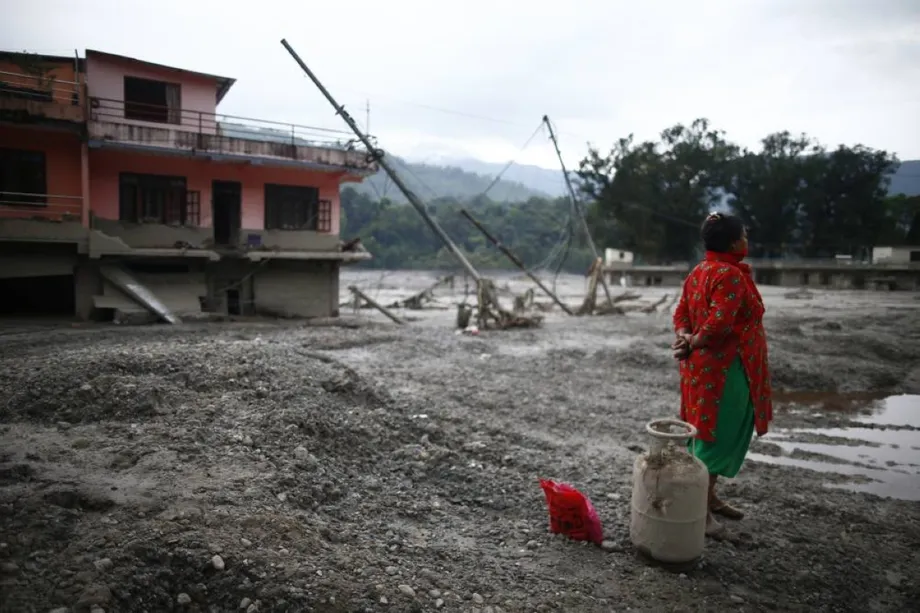
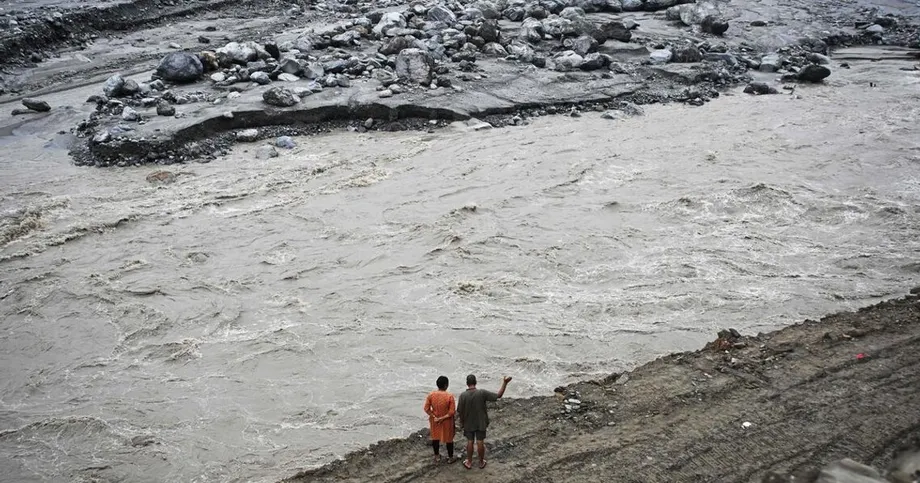
The regional initiative followed the August 26 Bhotekoshi flood in the Nepal and Tibet region. The reported toll was 1,550 people killed and more than 5,500 unaccounted for. Nepal's government estimated property damage at $4.7 billion.
The disaster gave urgency to demands for cooperation over satellite imagery, river information and warnings. China subsequently said it had shared those types of information with Nepal. Shah then used his General Assembly address to propose a mechanism led by the three neighbouring countries.
- August 26, 2026: The Bhotekoshi flood struck the Nepal and Tibet region, with extensive deaths, missing people and property damage reported.
- September 2: China's foreign ministry described information sharing with Nepal and expressed willingness to cooperate on disaster prevention and climate risks.
- September 24: Shah proposed the Himalayan Climate Resilience Mechanism at the 81st session of the United Nations General Assembly.
- Nearly a month later: Nepal's ministries were consulting agencies and developing a concept note, with no detailed proposal formally submitted to India or China.
- October 30: Support from representatives of 53 countries for Nepal's Bangkok proposals was reported.
The sequence shows two strands of work developing together: a broad international appeal for finance and technology, and a more focused effort to establish cooperation among Nepal and its two neighbours.
India and China are central to implementation
Nepal's proposed mechanism would require India and China to agree on practical arrangements for exchanging information. China's foreign ministry spokesperson Guo Jiakun expressed a general willingness to cooperate on September 2, and Beijing described sharing satellite imagery, hydrological information and warnings with Nepal after the flood.
Guo, speaking for China's foreign ministry, said:
Climate change is a common challenge facing all humanity. No country can stay immune from such risks. China will continue to work with the international community to strengthen exchanges and cooperation and effectively prevent and mitigate the negative impact of climate change.
New Delhi had not publicly commented on Nepal's proposed mechanism at the stage when ministries were preparing the concept note. Nepal's Ministry of Foreign Affairs and Ministry of Agriculture, Forest and Environment were consulting relevant agencies on the proposal's design.
Former chief secretary and foreign secretary Shanker Das Bairagi identified limited coordination among Nepal's agencies as a concern. He also warned that scientific access and information sharing involving Tibet could encounter geopolitical sensitivities. China places restrictions on access by foreign scientists and researchers conducting geological studies there.
Those practical issues put detailed rules at the centre of the negotiations: which information is exchanged, which institutions receive it, and how the participating governments organise scientific work and emergency communication.
An earlier science council offers a caution
India had already agreed to establish a Himalayan Science Council through the Bay of Bengal Initiative for Multi-Sectoral Technical and Economic Cooperation (BIMSTEC). An expert meeting in 2017 decided to pursue the council to study the Himalayan ecosystem and promote cooperation among scientific institutions in member countries.
Experts met again in 2021 and 2023, yet the council had still not been established as a functioning institution. That history makes institutional design a concrete issue for Nepal's new initiative: agreement on an idea needs to be followed by assigned responsibilities, operating arrangements and resources.
The emerging legal debate goes further, proposing a regional agreement beneath the climate mechanism. Suggested starting points include cooperation among Nepal, India and China on less contentious subjects, supported by a task force combining scientific, legal and other expertise.
Proposed principles include responsibility according to countries' capabilities, reasonable care to prevent harm, precaution in the face of environmental risks and making polluters bear pollution costs. In everyday terms, the aim is to match duties to resources while requiring countries to act before avoidable damage spreads.
Legal proposals connect regional duties with local benefits
The legal case for a Himalayan agreement draws on the International Court of Justice advisory opinion of July 23, 2025, concerning countries' climate obligations. An advisory opinion explains the court's view of the law. The United Nations General Assembly endorsed that opinion on May 20, 2026, in a vote of 141 to eight, with 28 abstentions, including India.
The proposed regional framework would also address the contribution mountain communities make by protecting ecosystems that supply water and other benefits beyond their own settlements. That brings the debate back to how the gains from development are distributed.
Nepal's Supreme Court provided a domestic example in the 2023 Upper Karnali hydropower case. The court directed that the government's share of the project's returns be spent on the people and ecology of the Karnali watershed.
For the Himalayan initiative, the connected choices are now practical ones: how to finance shared protection, how to exchange sensitive information and how to ensure mountain residents benefit from investment. The Bangkok support gives Nepal a wider diplomatic audience for those demands, while the regional mechanism still requires detailed arrangements among the governments expected to operate it.
Key Points
- Representatives of 53 countries supported Nepal's climate proposals, according to Minister Biraj Bhakta Shrestha's secretariat.
- Nepal seeks satellite monitoring, shared warnings, accessible grants and investment in Himalayan livelihoods.
- The proposed Himalayan Climate Resilience Mechanism would coordinate cooperation led by Nepal, India and China.
- Nearly a month after the September 24 announcement, Nepal had yet to submit a detailed proposal to either neighbour.
- Shrestha called for grants rather than loans for high Himalayan monitoring and early warning.
- No funding total, launch date or implementation timetable was announced for the Bangkok package.