A reservoir for a thirsty economy, on land others call home
A proposed reservoir in Thailand's eastern province of Chanthaburi would store 99.5 million cubic metres of water, but its future basin includes homes occupied by 654 people in 334 households and protected forest used by wild elephants. The Khlong Wang Tanot project has Cabinet approval, yet still needs permission to use protected land in Khao Sip Ha Chan, including approval from the National Park Committee.
Contents
- A reservoir for a thirsty economy, on land others call home
- Cabinet approval leaves another decision ahead
- Villagers want a future after relocation
- Farmers need water, but also access to it
- Industry's demand is growing faster
- Data centres add another claim on supplies
- Elephants already live close to farms and villages
- A smaller reservoir is part of the debate
- Protesters propose improving existing dams
- Key Points
The dispute intensified on October 24, 2026, when residents and conservation campaigners gathered at the Chanthaburi Provincial Administrative Organization to oppose construction. Their demand was concrete: protect the forest and consider spending the project's stated 7.2 billion baht budget on improving the three reservoirs already in the watershed.
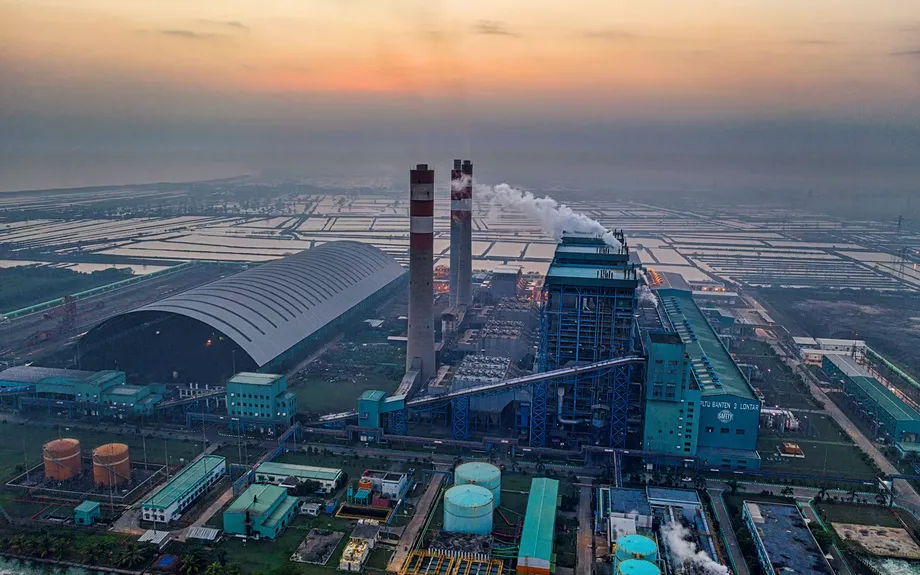
Thailand's water planners face pressure from several directions. Durian farms need reliable supplies, households face seasonal shortages, and industries along the eastern coast are expanding. Data centres, which can consume substantial amounts of water to cool their computers, are adding another large customer to that competition.
The Royal Irrigation Department says local needs would come first. It also envisages transferring up to 70 million cubic metres of surplus rainy season runoff annually toward neighbouring Rayong, part of the Eastern Economic Corridor. For villagers facing relocation, the question is whether the infrastructure will secure their livelihoods as well as water for the country's industrial ambitions.
Cabinet approval leaves another decision ahead
The reservoir would take seven years to build and become the fourth and largest in the Wang Tanot watershed, the area where rainfall drains into connected streams and rivers. Its purposes include supplying farms and households and reducing flooding downstream.
Cabinet approval came in August. Permission to use the protected forest remains outstanding, and the government has said newer environmental evidence can still be considered before that process is completed. No date has been given for the remaining approval or the start of construction.
The project has developed over decades, while the demands placed on eastern Thailand's water have changed:
- In the 1990s, the Royal Irrigation Department began studying the Wang Tanot watershed after serious shortages during the dry season.
- In August, the Cabinet approved the proposed reservoir, with construction planned over seven years.
- On October 24, 2026, the Khon Rak Chan people's network organised a protest in Chanthaburi against the project.
- By 2037, industrial water consumption in the Eastern Economic Corridor is projected to be 58% higher than in 2024.
The long planning history helps explain the disagreement. A scheme developed to address seasonal shortages now sits within a much larger debate over who receives water as farms, factories and digital businesses grow.
Villagers want a future after relocation
Ban Klong Yang village head Seeda Saengkla lives within the proposed reservoir area. She says many residents are willing to move, but fear compensation and relocation support will leave them unable to rebuild their lives.
Seeda described the community's concern as survival after losing familiar homes and sources of income:
What they want is for the government and relevant agencies to help them survive after relocating. They don't want to move somewhere else only to end up in debt. They don't want to feel abandoned.
For the village's 334 households, relocation would involve more than finding another roof. Residents would also need a way to earn a living after leaving land on which their daily lives depend. Their willingness to accept the reservoir is tied to whether that transition is affordable.
Seeda's account also shows that local opinion is more varied than a simple division between supporters and opponents. Some people accept the proposed sacrifice but want stronger protection from its costs. Other residents and conservation campaigners oppose flooding the land at all.
Farmers need water, but also access to it
Durian farmer Pornpimol Thongbo, in Kaeng Hang Maeo district, already knows the cost of unreliable water. Her family's trees need more water as they mature. During dry periods, the farm depends on ponds and groundwater, sometimes buying extra supplies when rain is insufficient.
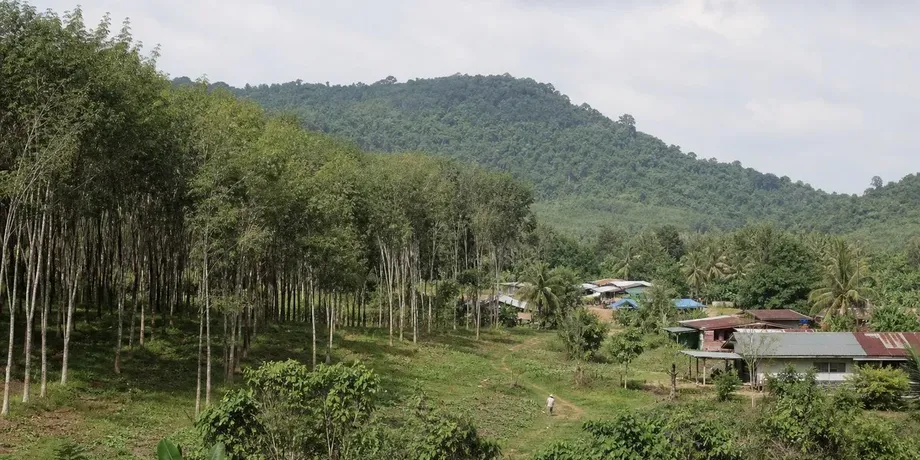
Durian orchards have increasingly replaced rubber plantations in the area, bringing greater water demand. Too little water can cost a farmer an entire harvest. More intense downpours and periods of drought also make storing and distributing rainfall harder to plan.
Pornpimol questions the value of another reservoir when many local farmers still lack access to water from the three already built. She said:
Right now, we still haven't seen anything that would convince local residents that building the reservoir will actually benefit them.
The Royal Irrigation Department's Thammanoon Innooch, director of the provincial Large-Scale Irrigation Construction Office, says the reservoir would help farmers and households that most need water. Some farmers support the project for that reason.
Water storage and water access are two separate practical needs. A reservoir can hold rain for use months later, but farms must also be able to receive that water when their crops require it. Pornpimol's concern centres on delivery and priority, alongside the amount stored.
Industry's demand is growing faster
The Eastern Economic Corridor covers Chachoengsao, Chonburi and Rayong provinces. Thailand's Office of the National Water Resources projects that industrial water consumption there will rise 58% between 2024 and 2037.
The World Bank estimates that total annual demand across the three provinces will reach 3.6 billion cubic metres by 2037. Even with planned water infrastructure investment, it projects a potential supply shortfall of nearly 40% under average conditions and up to 72% in dry years.
Those percentages describe the share of demand that supplies could fail to meet. Applied to 3.6 billion cubic metres, they suggest a gap of roughly 1.4 billion cubic metres in average conditions and about 2.6 billion in dry years. The figures show the scale of the regional problem that new reservoirs and other measures are intended to address.
Thammanoon says up to 70 million cubic metres of surplus runoff could be transferred each year from the Wang Tanot watershed toward Rayong, after local requirements are met. Actual transfers would depend on rainfall and other conditions.
That maximum annual transfer would equal about 1.9% of the corridor's projected annual demand of 3.6 billion cubic metres. The comparison puts the scheme in perspective: it could add a useful supply, while the wider region would still need other ways to close its projected gap.
Data centres add another claim on supplies
Three major data centre facilities are operating or expanding in the corridor, while nine are under construction. Government figures show that 29 projects in the corridor have applied for investment incentives, more than half of such applications nationwide.
Data centres house computers that process and store digital information. Those machines produce heat, which cooling systems must remove to keep them running. Water consumption depends on the cooling technology, but some facilities place heavy demands on local supplies.
WHA Utilities and Power says data centres can require 12 to 16 times as much water as conventional business customers. East Water began supplying Bridge Data Centres in Chonburi in May, presenting reliable water service as an advantage for Thailand's digital economy.
Kwankamol Chittrakul, a civil engineer specialising in water resources management, says Thailand sees an opportunity to attract investment and skilled jobs as projects move beyond more constrained markets such as Singapore and Malaysia. She also says developers are acting before stricter environmental regulations arrive.
The government is developing rules to tighten oversight of data centres' water and electricity use, environmental effects and locations. Those decisions will shape demand at the same time that agencies debate how much additional supply the eastern region can provide.
Elephants already live close to farms and villages
More than 100 elephants use Khao Sip Ha Chan National Park and adjacent forests, moving seasonally in search of food and water. Conservation officials warn that flooding feeding areas and familiar routes could push more animals toward agricultural land.
A wildlife corridor is a route connecting places where animals feed, drink and shelter. Losing part of that connection changes where elephants can travel. Around Wang Tanot, the concern is that displaced animals would enter places where people are already trying to protect crops and homes.
SEA Junction's A Fragile Coexistence exhibition account documents the wider pressures in eastern Thailand. It gives conservative figures for 2012 to 2023 of 105 people killed by elephants and 133 injured, alongside 92 elephants killed and 46 injured. Fifteen of the human deaths occurred in 2023.
The institution describes an estimated 600 wild elephants in the area around Khao Ang Rue Nai Wildlife Sanctuary, with more than half living permanently outside its boundaries. It also cites Thai researchers' estimate of an annual local elephant birth rate of 8%.
SEA Junction's wider regional figures describe a larger area than the reservoir's immediate wildlife corridor. They show the existing burden on nearby communities, where volunteer groups and forestry officials already work at night to move elephants away from crops. Flooding more habitat would add pressure in a region where dangerous encounters are already part of daily life.
A smaller reservoir is part of the debate
The Department of National Parks has proposed a smaller version of the project that would flood about 112 hectares of national park. Its approach would combine that reservoir with smaller reservoirs elsewhere, additional storage at existing dams and more efficient water management.
The Royal Irrigation Department considers those measures insufficient to meet expected demand. Thammanoon says the larger project was designed to limit its use of protected land:
"to use only as much land within the national park as necessary".
The disagreement is therefore also about how to assemble a reliable water system. The parks department proposes spreading the task across several measures while reducing the area of national park flooded. The irrigation department places greater weight on the storage capacity of the larger scheme.
The 112 hectares refers specifically to national park land under the smaller proposal. The broader project also affects community land and other habitat, making the eventual boundaries important for both relocation and wildlife protection.
Protesters propose improving existing dams
At the October 24 protest, the Khon Rak Chan network and forest conservation groups called for protection of Khao Sip Ha Chan, its wildlife and natural resources. Participants signed their opposition to the reservoir and raised concerns about habitat loss, damage to the ecosystem and hardship for residents.
Community leader Pacharadnai Chai-thiang proposed directing the stated 7.2 billion baht budget toward developing and managing the three existing dams. That demand brings the argument back to infrastructure already in place and whether it can serve communities more effectively.
Thailand faces several connected decisions: how much forest to flood, how to support households required to move, how to protect elephant movement routes and how to allocate water during shortages. The remaining protected land approval will determine whether the larger reservoir can proceed, while industrial expansion continues to increase pressure on supplies.
Key Points
- The proposed Khlong Wang Tanot reservoir would hold 99.5 million cubic metres and take seven years to build.
- Cabinet approval has been granted, but permission to use protected forest remains outstanding.
- Ban Klong Yang has 654 residents in 334 households within the proposed reservoir area.
- More than 100 elephants use the national park and adjacent forests threatened by habitat loss.
- Industrial water demand in the Eastern Economic Corridor is projected to rise 58% from 2024 to 2037.
- The parks department proposes a smaller reservoir and other water measures; protesters want investment in existing dams.