A warning about homes, farms and the ability to stay
Up to 40.5 million people in South Asia could move within their own countries by 2050 as climate pressures undermine water supplies, farming and coastal communities. Amy Pope, director general of the International Organization for Migration (IOM), highlighted that upper estimate during a visit to New Delhi on October 16, 2026, calling for earlier government action to protect livelihoods.
Contents
- A warning about homes, farms and the ability to stay
- What the 40.5 million estimate measures
- A regional warning within a global challenge
- Why other estimates reach nearly 63 million
- From Himalayan floods to failed harvests
- Cities offer work, but also face climate pressures
- Forecasting danger before people have to flee
- Paying for preparation instead of repeated emergencies
- Safer overseas work and skills for changing jobs
- Key Points
The figure has a specific foundation: the World Bank's 2018 modelling of internal climate migration. Its most pessimistic scenario produced a range of 30.9 million to 40.5 million people, with an average of 35.7 million. The projections concern movement within national borders as environmental conditions gradually worsen.
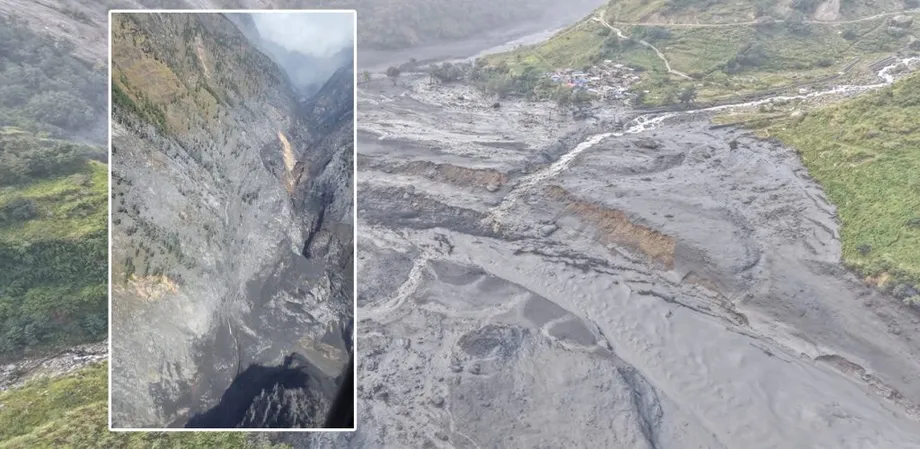
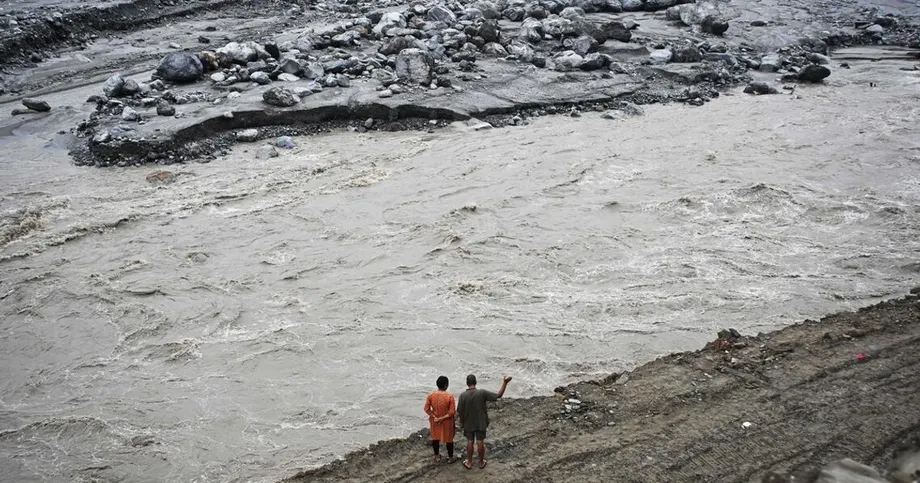
Pope described a wider emergency involving rising seas, drought, heat and destructive flooding. In Nepal, she pointed to an August 26 mountain and glacier collapse that triggered deadly floods and prompted IOM to send humanitarian assistance.
For farming families, the pressure to leave can begin before a home is destroyed. A failed harvest or the loss of fodder can remove the income and food that make staying possible. Pope explained how that loss of livelihood turns environmental stress into migration:
When they can't produce food, when they can't feed their livestock, it increases the likelihood of displacement. The first adaptation is often for people to move.
Government choices could change the scale of that movement. The World Bank's scenarios show much lower totals when development becomes more inclusive or global emissions fall. Pope's message was that better forecasts, practical support and safer employment routes can give people more control over whether, when and where they move.
What the 40.5 million estimate measures
The World Bank's 2018 South Asia note, part of its Groundswell research, examines migration driven by gradually changing water availability, crop productivity, sea levels and storm surges. These are pressures that can steadily make a place harder to live in or earn a living from.
The pessimistic scenario combines high greenhouse gas emissions with unequal development. Its upper estimate of 40.5 million represents about 1.8 percent of the region's projected population in 2050. Under that scenario, internal climate migration could increase sixfold between 2020 and 2050.
The same modelling gives an average of 21.1 million internal climate migrants under more inclusive development, compared with 35.7 million in the pessimistic scenario. A scenario with lower emissions gives an average of 16.9 million. Comparing those averages, the reductions are about 41 percent and 53 percent, respectively.
The World Bank describes these figures as a range of plausible outcomes for planning. The eventual number will depend on emissions, development policies and how environmental changes affect particular places. Its research also identifies people who may become trapped in dangerous areas because they lack the resources to move.
South Asia includes Afghanistan, Bangladesh, Bhutan, India, Maldives, Nepal, Pakistan and Sri Lanka. The region faces several overlapping pressures, from Himalayan hazards to coastal flooding and dependence on rainfall for agriculture.
A regional warning within a global challenge
The World Bank's 2021 Groundswell update put potential internal climate migration across six world regions at 216 million people by 2050. It listed about 40 million for South Asia, carrying forward the earlier regional research while adding analysis for other regions.
Sub-Saharan Africa had the largest projected total, at 86 million, followed by East Asia and the Pacific at 49 million. South Asia's 40 million amounts to roughly 19 percent of the global projection. The update said decisive action on emissions and development could reduce the global total by as much as 80 percent.
The research identified 2030 as an early point when areas of concentrated climate migration could emerge. That gives governments a nearer planning horizon than 2050: communities receiving new residents may need additional housing, water, schools and jobs within years.
The key dates span research, disasters and decisions that will shape future movement:
- 2018: The World Bank's first Groundswell study modelled internal climate migration in South Asia, Sub-Saharan Africa and Latin America.
- September 13, 2021: The expanded Groundswell findings projected up to 216 million internal climate migrants across six regions by 2050.
- August 26, 2026: A mountain and glacier collapse in Nepal triggered deadly flooding, according to Pope's account.
- October 16, 2026: Pope called in New Delhi for earlier intervention, better funding and safer migration routes.
- 2030: Concentrated areas of internal climate migration could begin emerging, according to the World Bank.
- 2050: The main horizon for the regional migration projections.
Why other estimates reach nearly 63 million
ActionAid International and Climate Action Network South Asia have estimated that migration associated with gradual climate impacts could reach 62.9 million by 2050 under the conditions they examined. Their research covered Bangladesh, India, Sri Lanka, Nepal and Pakistan, and considered water stress, declining crop yields, rising seas, ecosystem loss and drought.
That work projected 37.4 million migrations by 2030 and 62.9 million by 2050 under a pathway associated with about 3.2 degrees Celsius of warming. With warming limited to 2.2 degrees, its estimates fell to 22.5 million by 2030 and 34.4 million by 2050. Those temperatures describe the study's scenarios and the pledges assessed at the time.
The ActionAid and CANSA figures use different assumptions and coverage from the World Bank's modelling. Their analysis also excluded displacement caused by sudden disasters such as floods and cyclones. Each set of figures describes the results of its own modelling choices.
Sudden disasters already produce large movements. The 2020 Global Report on Internal Displacement recorded 9.5 million new disaster displacements in South Asia during 2019, including movements associated with monsoon floods and cyclones. A count of new displacements records movements during a period; a person forced to flee more than once can appear more than once in such a total.
From Himalayan floods to failed harvests
IOM's South Asia assessment lists floods, glacial lake outburst floods, storm surges, droughts, cyclones and heavy precipitation among the region's hazards. It draws on field research in Bangladesh, Maldives and Nepal, alongside reviews of migration trends, policies and institutions.
A glacial lake outburst flood occurs when water stored near a glacier escapes rapidly, sending a surge downstream. Other pressures develop more slowly: reduced water supplies or repeated poor harvests can gradually undermine a family's ability to stay. IOM's assessment cites the Intergovernmental Panel on Climate Change's warning that both gradual and sudden hazards will increase in severity and frequency.
Afghanistan shows how families can face repeated shocks. A drought in 2018 displaced more than 370,000 people after communities dependent on farming lost crops and livestock. Flash floods roughly a year later displaced about 42,000 people and damaged rural homes as well as camps where displaced families were living, according to figures cited from the International Federation of Red Cross and Red Crescent Societies.
Bangladesh's river communities face another form of loss. In September 2018, flooding and collapsing banks along the Padma River swallowed as many as 100 homes a day in Shariatpur District. For a household losing both land and shelter, moving means finding a new income as well as somewhere to sleep.
IOM's assessment includes model national action plans developed through consultations. Its approach connects environmental hazards with migration policy, giving governments a framework for addressing livelihoods and movement together rather than handling each disaster in isolation.
Cities offer work, but also face climate pressures
India's cities are already receiving people responding to climate stress, Pope said. She described heat as one force accelerating urbanisation:
As people seek shelter from heat, they're going into urban centres.
The World Bank's research maps a more varied geography of movement. Areas with worsening water supplies and crop productivity include parts of the Gangetic Plain and the corridor from Delhi to Lahore. Bangladesh's rice growing northeast is another area from which climate pressures could encourage people to leave.
Hyderabad and parts of Karachi could attract migrants seeking income beyond agriculture. Some southern Indian regions and western Bangladesh could also receive people as local water availability and crop conditions become more favourable in the modelled scenarios.
Coastal cities face pressures of their own. Parts of Mumbai, Dhaka, Chittagong and Chennai appear among areas where rising seas and storm surges could encourage departures, even as their populations continue growing for other reasons. Urban planning therefore needs to account for both new arrivals and the risks facing existing residents.
Bangladesh could account for up to 13.3 million internal climate migrants in the World Bank's pessimistic scenario. Harjeet Singh, identified in the earlier accounts as ActionAid's global climate lead, described how people arriving in cities can end up in areas exposed to floods and lacking basic services. Safe housing, reliable water and access to work are central to whether a move improves a family's life.
Forecasting danger before people have to flee
Artificial intelligence could help governments identify communities at risk earlier, Pope said. Combining weather forecasts with information about farming and other local livelihoods can show where a drought, heat episode or flood is likely to leave people unable to support themselves.
Pope argued that assistance should begin while families still have options:
If you know a community is at risk, we don't need to wait until they're displaced to respond.
Practical responses could include improving farming methods, training people for different jobs or relocating communities repeatedly struck by floods or drought. Climate adaptation means making changes that help people live with climate conditions, such as protecting an income when rainfall becomes less dependable.
The World Bank recommends preparing for each stage of migration: helping people stay where local adaptation is workable, supporting safe movement when necessary, and preparing receiving communities. Its proposals include skills training, legal support, infrastructure and registration systems that help migrants access services and employment.
Better data is part of that work. The World Bank recommends adding climate and migration questions to censuses and existing surveys, and improving local research. Forecasting a hazard becomes more useful when authorities also understand who lives in its path, how they earn money and what support they can reach.
Paying for preparation instead of repeated emergencies
Funding remains a major obstacle, Pope said. Governments can struggle both to secure money and to navigate the systems through which climate adaptation programmes are financed. She warned of insufficient urgency internationally about the risks facing vulnerable communities.
Pope compared the cost of responding after disaster with spending on measures that help people withstand shocks:
The cost of a humanitarian disaster is in the billions. The cost of investing in some of the resilience measures can be far less.
India's investments in warning systems, disaster response and technology gave her grounds for optimism. She also said the scale of the challenge exceeds what any government can manage alone. Her remarks gave no new funding total or deadline for a regional programme.
The World Bank's recommendations link migration planning with emissions reductions and broader development. Lower emissions reduce future pressure on water, crops and coastlines. Better access to education, health care, employment and social protection helps families cope with the pressures they already face.
Safer overseas work and skills for changing jobs
International employment offers another way for South Asian households to earn a living while filling labour shortages abroad, Pope said. Existing migration routes provide a foundation for expanding those opportunities, provided workers have safe and legal ways to take jobs.
Fraudulent overseas job offers can expose migrants to traffickers, smugglers and other forms of exploitation. Pope warned that rising demand for workers needs to be matched by lawful employment routes. For someone leaving an insecure livelihood, a promised job can otherwise lead to another dangerous situation.
Artificial intelligence creates a second challenge alongside its potential use in disaster forecasting. Pope said jobs involving routine analysis of documents and reports could be threatened, while other sectors would continue to need human labour. Training therefore needs to reflect the jobs employers are actually creating.
Pope argued that India's technological capacity could help workers prepare for those changes if it is connected with opportunities to work abroad:
If we can marry that capacity with the labour mobility, so that the workers are being skilled for those jobs as they're emerging, they will be ahead.
Her proposals connect support for people who can remain at home with preparation for those who move. Farming assistance, timely warnings, job training and safe employment routes address different parts of the same problem: preserving a dependable livelihood as environmental conditions change.
Key Points
- Amy Pope warned in New Delhi on October 16, 2026, that climate pressures are threatening homes and livelihoods across South Asia.
- The 40.5 million figure is the upper end of the World Bank's 2018 pessimistic projection for internal climate migration by 2050.
- The model's average falls from 35.7 million to 21.1 million with more inclusive development, or to 16.9 million under a scenario with lower emissions.
- The World Bank says concentrated areas of climate migration could emerge as early as 2030.
- Bangladesh could account for up to 13.3 million internal climate migrants under the pessimistic scenario.
- Pope called for earlier support, better forecasting, adaptation funding and safe, legal routes to overseas employment.