A vast water project meets resistance along the Ken
The Ken-Betwa river link promises irrigation across drought affected Bundelkhand, but its Daudhan reservoir would also submerge about 9,000 hectares, including 4,141 hectares of Panna National Park. Those figures, set out in a December 2012 environmental assessment, explain why a project promoted as a lifeline for farmers has become a struggle over the homes, forests and livelihoods it would displace.
Contents
- A vast water project meets resistance along the Ken
- What the engineering plan promises
- How many families face displacement?
- Why higher compensation has not ended the dispute
- Livelihoods cannot be measured by house walls alone
- A protest movement involving more than one project
- The forest loss is documented, not hypothetical
- The water balance remains contested
- Surveys and court proceedings remain unfinished
- Dates that explain the present dispute
- Key Points
The link between Madhya Pradesh and Uttar Pradesh has a reported cost of 44,605 crore rupees, or 446.05 billion rupees. It is the first major component of a wider national river linking programme described as costing about US$87 billion. The account describing the protests puts the Ken-Betwa component at about US$4.6 billion. The national programme and this individual project are different spending commitments, not competing estimates of the same scheme.
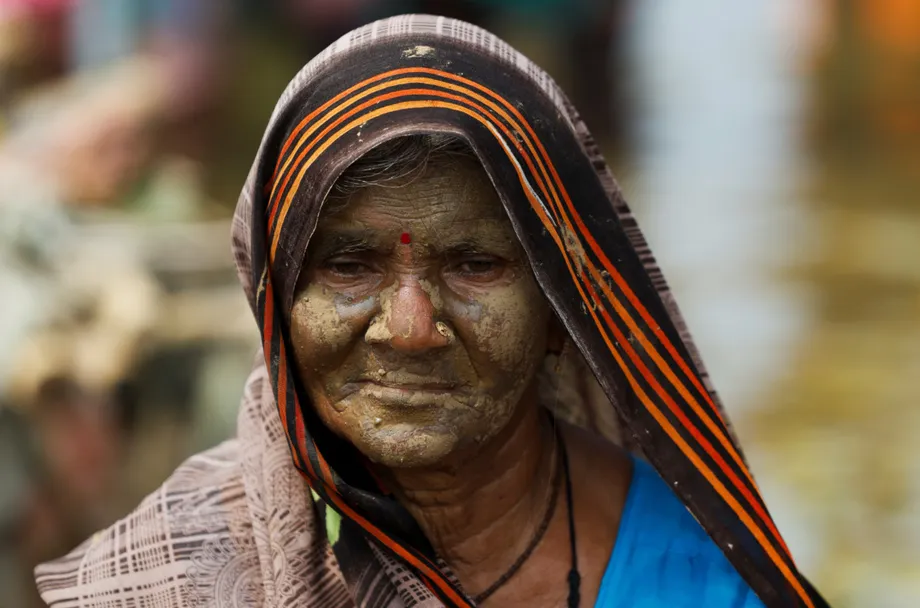
Among the protesters is Bitti Bai Kondar, a mother of four adult sons who are demonstrating alongside her. Standing in the Ken with mud smeared on her face, she describes a connection to land her family has farmed for more than a century. She says rising water associated with project work has flooded her village.
Kondar, an affected resident demanding better compensation and a place to live, described the loss in these words:
The government is taking our land and water without giving us another place to live.
Women lying on symbolic funeral pyres and residents standing in water have made the displacement dispute visible. Yet protests in neighbouring districts do not all concern the same dam. Separating those movements, and separating land payments from actual rehabilitation, is essential to understanding what remains unresolved.
What the engineering plan promises
The National Water Development Agency's environmental assessment summary, prepared by AFC India Limited in December 2012, describes a dam near Daudhan village, 2.5 kilometres upstream of the existing Gangau weir. It proposes a reservoir with gross storage of 2,853 million cubic metres and a canal approximately 218.7 kilometres long, ending at Barwa Sagar.
The canal was designed to carry 1,074 million cubic metres annually, with 591 million cubic metres diverted to the Betwa. Water transferred between river basins is water moved from one river system into another, rather than simply carried downstream within its original catchment.
The 2012 Phase I plan listed annual irrigation for 323,000 hectares in a new command area in Madhya Pradesh, 252,000 hectares in an existing Uttar Pradesh command area, and 60,294 hectares along the canal. Together, those categories total 635,294 hectares. A command area is the farmland an irrigation network is designed to serve.
The same assessment envisaged drinking water for about 1.342 million people and 78 megawatts of hydropower. More recent project descriptions give larger targets: irrigation for 904,000 hectares, 103 megawatts of hydropower and 27 megawatts of solar power, alongside nearly 194 million cubic metres of drinking water each year.
Those later descriptions also include the Lower Orr Project, Kotha Barrage, Bina Complex Multipurpose Project and restoration of the Ken Canal System. The difference in scope matters: the 2012 Phase I figures and the later project totals should not be treated as identical promises or evidence of benefits already delivered.
How many families face displacement?
The December 2012 assessment identifies about 1,585 affected households in ten reservoir villages. It separates 806 families assigned to project rehabilitation from 779 households in four villages inside Panna Tiger Reserve, whose relocation it assigns to the State Forest Department under National Tiger Conservation Authority provisions. That administrative split does not remove the latter households from the human cost.
A later rehabilitation plan is described as identifying 1,913 families and 8,339 people across ten villages. That is 328 more families than the earlier assessment counted. Another account gives a broader land acquisition footprint of 7,193 families across 21 villages, including 14 in Chhatarpur and seven in Panna. These totals cover different periods or areas and cannot be combined into one displacement figure.
The older assessment itself contains an inconsistency: one passage calls 1,585 the total population, while others identify that number as households and give a study area population of 7,224. A reconciled, current register would be needed to establish the final number of people affected.
Land figures also require care. The assessment gives total reservoir submergence as 9,000 hectares, but separately lists 2,171 hectares of acquired land for reservoir submergence. Later reporting describes the smaller figure as village land within the wider flooded area. The assessment additionally lists 4,209.67 hectares for the canal, Ken left bank canal and power houses, plus 42.37 hectares for a township and amenities.
Why higher compensation has not ended the dispute
Land compensation is described as at least 1.25 million rupees per hectare, up from an initial offer of 500,000 rupees. That is 2.5 times the earlier amount. The stated central government policy is to pay the higher of 1.25 million rupees per hectare or the amount calculated under the Right to Fair Compensation and Transparency in Land Acquisition, Rehabilitation and Resettlement Act, 2013.
Houses, trees, wells and other assets are supposed to be assessed separately. Reports describe a September 2023 special package of 1.25 million rupees per adult, with a married couple counted as one unit, and house payments ranging from 50,000 to 150,000 rupees. Another description gives eligible families assistance of 700,000 rupees with a plot, or 1.25 million rupees without one. These accounts describe different benefits; they do not establish one uniform payment for every household.
Usha Parmar, the district administrator identified in the protest account, said more than 90 per cent of people had been paid compensation. Chhatarpur Collector Parth Jaiswal separately said about 750 crore rupees had been disbursed and 30 to 35 Daudhan cases remained unresolved. Neither statement establishes that every asset was valued correctly or that replacement housing and services were ready.
Residents describe omitted names, disputed household classifications and payments below replacement costs. Sonu Saur of Sukvaha says he received 1 million rupees for two acres while nearby land was selling for 1.2 million rupees per acre. On his figures, buying an equivalent two acres would cost 2.4 million rupees. That comparison is a resident's account of local prices, not a verified market valuation.
Vinod Ahirwar of Kadwara says a house costing about 1 million rupees to build was valued at 131,000 rupees. Other protesters seek equal treatment of women and men and investigations into alleged payments to people who do not live in affected villages. Those allegations remain distinct from established findings of wrongdoing.
Livelihoods cannot be measured by house walls alone
The 2012 assessment found agriculture based activities supplied nearly 90 per cent of affected household income, with minor forest produce contributing another 8 per cent. Agricultural labour accounted for about 56.38 per cent of workers and cultivation for 38 per cent. Displacement therefore threatens access to work and resources as well as ownership of buildings.
Bhagwati Saur, a resident of Mainari, says her family has approximately five acres with mango, mahua and guava trees, but had received neither compensation nor a related notice when interviewed. Other residents say surveys missed houses, adult children or elderly relatives. Such omissions can determine whether a family receives a separate rehabilitation entitlement.
Dhaniram Bhatnagar, a local priest, says the temple where he worked was submerged and that compensation addressed his home rather than his lost income:
The temple was my only source of income and now it is gone.
The environmental assessment acknowledged that local temples would be affected and suggested they could be established in new settlement colonies. Rebuilding a temple, however, does not by itself demonstrate that a priest's income or the community supporting it has been restored.
Residents offered plots at Kawar Karondiya, roughly 25 to 30 kilometres by road from Daudhan, reportedly face an inadequate water supply. They pay 500 rupees for a 5,000 litre tanker delivery. An October 4, 2023 rehabilitation order provides for amenities including water, healthcare and schooling. The reported tanker dependence shows why payment records and completed rehabilitation are different measures.
A protest movement involving more than one project
Ken-Betwa protests have included an 18 day symbolic funeral pyre agitation in 2023, hunger strikes and demonstrations in 2026. Residents seek replacement farmland, including a demand for three acres per displaced family, and an eligibility cutoff of 2026. These are demands, not confirmed changes to the compensation policy.
Accounts of Daudhan describe demolitions on May 13, 2026. Officials say they removed homes belonging to people who had relocated and vacant structures on government land. Villagers allege inadequate warning. A July 8 report also describes alleged forced relocation and demolitions during the monsoon, alongside demands for fair rehabilitation.
On July 19, 2026, police reportedly detained activist Amit Bhatnagar and other demonstrators at Kupi, ending that phase of the protest. Residents describe the intervention as an attempt to suppress their movement. The differing accounts of demolitions and the allegations of force require investigation rather than an assumption that either version has been established.
A separate account dated October 9, 2026 describes a water protest in Panna district against the Madhya Pradesh government's Majhgaon irrigation project. At Banhari Kalan on October 6, women entered the water and some lay on symbolic pyres. The account distinguishes this movement from the preceding Ken-Betwa protests in Chhatarpur. Their methods and compensation concerns overlap, but the projects should not be conflated.
The forest loss is documented, not hypothetical
The 2012 assessment estimates that 5,258 hectares of forest would be submerged, including 4,141 hectares of Panna National Park. Forest therefore accounts for about 58.4 per cent of the 9,000 hectare reservoir footprint. The national park portion represents about 78.8 per cent of the affected forest.
Measured against the park's stated area of 54,300 hectares, the assessment puts the habitat reduction at 7.67 per cent. It warns that reservoir formation could affect tiger distribution and pose risks to terrestrial plants and animals. The dispute concerns both how much land is lost and where that land sits within a wildlife habitat.
The assessment also identifies changes to downstream river flow, water chemistry and temperature. It predicts improved groundwater recharge around the reservoir and irrigated areas, while warning that places where groundwater is already less than two metres below the surface after the monsoon could face waterlogging and salinity.
The government's position is that environmental damage is unavoidable but can be reduced through measures such as tree planting and wildlife conservation. The assessment allocates 2,915.06 crore rupees to compensatory afforestation and 3,543.98 crore rupees to its environmental management plan. Those are figures from the 2012 study, not a verified account of present expenditure or conservation results.
The water balance remains contested
The project's central argument is that water available in the Ken can help meet shortages in the Betwa basin. Himanshu Thakkar, coordinator of the South Asia Network on Dams, Rivers and People, disputes whether that premise has been demonstrated:
There is a big question mark over this project's feasibility because it rests on a hydrological presumption: a surplus in the Ken basin and a deficit in the Betwa basin.
Thakkar adds:
That presumption has never been conclusively established.
The 2012 assessment records allocations under the August 25, 2005 agreement between the central government, Madhya Pradesh and Uttar Pradesh. It describes commitments of 3,387 million cubic metres from the Ken at Daudhan, excluding ecological requirements, with 1,700 million cubic metres assigned to Uttar Pradesh and 1,687 million to Madhya Pradesh.
It then says increased water availability calculated during preparation of the detailed project report would allow Madhya Pradesh to use 2,379.62 million cubic metres. This makes the estimated water balance a central issue: projected transfers must fit alongside existing irrigation, drinking water and the flow needed to sustain the river.
A government spokeswoman did not immediately address the scientific assumptions when asked, instead referring to an August 21 statement about irrigation, drinking water and hydropower benefits for Bundelkhand. The year of that statement is not specified in the account. The assessment explains the project's calculations, but it does not settle Thakkar's challenge about dependable surplus water.
Surveys and court proceedings remain unfinished
Administrators have ordered further checks of compensation lists. In May 2026, Jaiswal said teams were verifying omitted names. Bijawar Subdivisional Magistrate Vijay Dwivedi described payments across 14 Chhatarpur villages of 84 crore rupees for inhabited areas and 267 crore rupees for private land, plus a 464 crore rupee package for 3,718 families. These categories should not be added to other reported totals without checking their dates and scope.
Collector Mrinal Meena subsequently announced 7.37 crore rupees sanctioned for 59 affected people in five villages and directed another survey. A complete village by village account of omissions, later additions and eligibility decisions has not been established in the reporting.
In Arihant Tiwari v Union of India, case WP/14875/2026, the Madhya Pradesh High Court sought the state's response on action concerning a 2019 report by the Supreme Court appointed Central Empowered Committee. The petition concerns Panna Tiger Reserve, Ken Gharial Sanctuary and displaced communities. The wildlife clearance challenge had moved from the National Green Tribunal to the Supreme Court, which referred it to the committee.
The High Court declined to create a separate grievance committee, reasoning that it would create a parallel system. It also declined to presume noncompliance with Supreme Court directions. Seeking a response is not a ruling that the project is unlawful, nor does it resolve the environmental objections.
The court requested clarification on Supreme Court proceedings and a response to a January 21, 2022 communication from the Forum for Policy Dialogue on Water Conflicts in India. The matter was listed for October 13 in the account concerning the 2026 case; no subsequent outcome is given. Separately, the reported environmental clearance condition requires rehabilitation and resettlement issues to be completed before commissioning.
Dates that explain the present dispute
The project developed over decades, while compensation packages and protests followed their own timetable. The main reported milestones are:
- August 25, 2005: The central government, Madhya Pradesh and Uttar Pradesh agreed to prepare a detailed project report.
- December 2012: The Phase I environmental assessment set out engineering plans, displacement estimates and forest losses.
- 2019: The Central Empowered Committee submitted its report.
- December 2021: The Union Cabinet approved the project.
- September and October 2023: A special rehabilitation package and an order covering allowances and amenities were announced.
- April 2025: Construction reportedly gathered pace.
- May to July 2026: Demolitions, compensation verification and protests were reported, followed by police detentions on July 19.
- October 2026: A separate Majhgaon protest was described in Panna, while the Ken-Betwa court matter was listed for October 13.
The unresolved tests are practical: a verified register of affected families, defensible asset valuations, functioning resettlement services and compliance with environmental and rehabilitation requirements. Construction progress and money disbursed are part of that picture, but neither alone demonstrates that displaced households can rebuild their lives.
Key Points
- The Ken-Betwa project has a reported cost of 44,605 crore rupees and aims to transfer water to support Bundelkhand.
- The 2012 assessment estimates 9,000 hectares of submergence, including 4,141 hectares of Panna National Park.
- Family counts differ by date and project footprint: 1,585 households in the older assessment, 1,913 in a later reservoir plan and 7,193 across a broader acquisition area.
- Residents dispute eligibility lists, asset valuations, livelihood compensation and conditions at replacement settlements.
- The Panna protest against Majhgaon is separate from the Ken-Betwa movement.
- Further surveys and court responses are pending in the accounts, with no later hearing outcome or completed rehabilitation established.