Rain Returns, but Farms and Herds Remain Under Strain
More than 700 animals have been moved from villages in Gujarat's Lakhpat taluka as shortages of grass and water force Maldhari pastoral families to leave. Across Kutch, cultivated land has fallen from about 650,000 hectares last year to 482,000 hectares, while daily milk procurement at Sarhad Dairy has dropped to roughly 400,000 litres against an expected 500,000 litres. Late monsoon rain has brought relief, but these losses show why a recovering rainfall total does not mean a recovering rural economy.
Contents
- Rain Returns, but Farms and Herds Remain Under Strain
- What the Rainfall Figures Actually Show
- A Smaller Crop Area, Mostly Without Irrigation
- Why Maldhari Families Are Leaving Lakhpat
- Fodder Costs Rise as Milk Income Falls
- What Banni's Herd Changes Reveal
- Reservoir Levels Do Not Tell the Whole Water Story
- Relief Has Begun, but Its Reach Is Uncertain
- Lost Water Bodies and the Case for Local Repair
- Key Points
The district's estimated 2.1 million livestock depend on a network of grazing land, village water bodies, purchased fodder and public supplies. When several parts of that network fail together, families must spend more to keep animals alive while earning less from milk. Farmers face a parallel squeeze as dry soil damages crops and reduces opportunities for agricultural labour.
By September 16, the reported rainfall deficit had narrowed to about 34%, compared with much larger shortfalls earlier in the season. Yet rain arriving after crops have suffered or herds have departed cannot immediately replace lost income. Its value also depends on where it falls and how much enters usable reservoirs, ponds and groundwater reserves.
The September accounts describe both emergency relief and continuing distress. Authorities had opened 52 grass depots by September 10, but pastoral representatives said supplies remained below requirements. Families leaving western Kutch were seeking places where canal water and fodder might keep their herds alive.
What the Rainfall Figures Actually Show
Early September figures attributed to the India Meteorological Department put Kutch's rainfall at about 29.5% of its normal seasonal amount. That corresponds to a shortfall of approximately 70.5%. Subsequent assessments described a deficit of around 60%, before the later estimate of 34% by September 16. These figures refer to different assessments and should not be treated as a single measurement.
There is also an unresolved inconsistency in the account of the later rain. One assessment gives 257 millimetres over two days and cumulative rainfall of roughly 389 millimetres. It separately says almost a quarter of the season's rain arrived within 28 hours. Since 257 millimetres is about 66% of 389 millimetres, the two descriptions cannot represent the same share over the same interval. They may use different observation windows or locations, but that distinction is not established.
The distinction matters because a district total can conceal severe local shortages. Some talukas were reported to have received less than 10% of normal rainfall earlier in the season. A heavy spell elsewhere does not necessarily refill their ponds or rescue their crops.
The main reported milestones are:
- December 2018: The government declared drought in Kutch during an earlier crisis.
- May 2019: Accounts of that crisis described 356 cattle relief camps and continuing distress sales of livestock.
- September 7: Kutch's 20 reservoirs were reported at 23.79% of total storage and 18.19% of live storage.
- September 8, 2026: A migration account described more than 700 animals leaving approximately 25 Lakhpat villages.
- September 10: Authorities were reported to have distributed 1.735 million kilograms of grass through 52 depots.
- September 16: A later assessment put the rainfall deficit at approximately 34%.
A Smaller Crop Area, Mostly Without Irrigation
Kutch's cultivated area has contracted by 168,000 hectares, or about 25.8%, from the previous year's 650,000 hectares. Of the 482,000 hectares cultivated this year, approximately 180,000 hectares have irrigation. That leaves around 302,000 hectares, nearly 63% of the cultivated area, dependent largely on rainfall.
This exposure explains why drinking water deliveries, although essential, cannot resolve the agricultural crisis. Crops need moisture at particular stages of growth. Rain that arrives after prolonged wilting may replenish some water sources without reversing damage already sustained in the field.
Reports from Lakhpat describe failed cultivation and a loss of local farm work. The combined effect is particularly difficult for households that rely on both livestock and agricultural wages: purchased feed becomes more expensive just as another source of earnings disappears.
Rapid crop assessments would establish how much land has suffered recoverable damage and how much has been lost. No verified district total for crop losses, compensation amount or payment timetable is established in the September accounts. The reduction in cultivated area is therefore a measure of exposure and contraction, not a final estimate of financial damage.
Why Maldhari Families Are Leaving Lakhpat
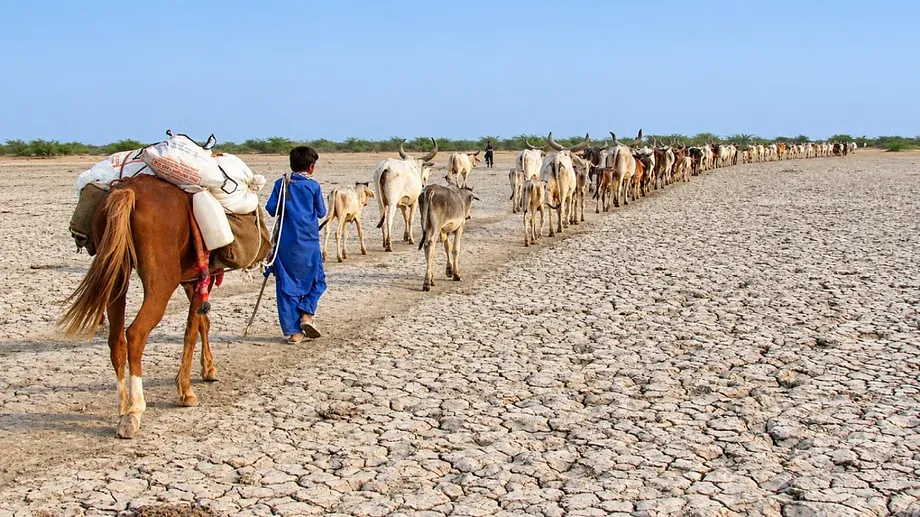
The September 8 migration account describes more than 700 cattle, buffaloes and goats leaving roughly 25 border villages in Lakhpat. The village count varies between about 25 and more than 25 within that account. Other descriptions refer to around a dozen or more migrating families, but no consolidated household count is given.
Herders are reported to be travelling on foot toward areas served by canals in central Gujarat, north Gujarat and Saurashtra. Other accounts describe livestock transport by truck and delays at toll points. These are different forms of movement, rather than evidence that every departing family is following the same route or using the same transport.
For Maldharis, pastoral communities whose livelihoods centre on livestock, moving animals can be an established response to variable rainfall. The present departures are nevertheless described as distress migration because nearby grass and water have become inadequate. Reports identify dried ponds, check dams and traditional water bodies as immediate reasons for leaving.
Pastoralists fear that 2,500 to 3,000 animals may eventually require relocation unless supplies improve. That is a warning about possible further movement, not a confirmed migration total. Local leaders have requested subsidised fodder depots, cash assistance, livestock camps and regular tanker deliveries for people and animals.
Fodder Costs Rise as Milk Income Falls
Dry fodder that normally costs around Rs 6 per kilogram has reportedly reached approximately Rs 12 at retail, a doubling of the price. Even without a verified daily feed requirement for each herd, the pressure is apparent: buying the same quantity now costs twice as much.
Sarhad Dairy's reported procurement decline from an expected 500,000 litres to about 400,000 litres a day represents a reduction of roughly 20%. Earlier descriptions put the fall in milk production at more than 100,000 litres daily. These figures point in the same direction, but dairy procurement and total milk production are not identical measures. Procurement records milk collected by a dairy, rather than every litre produced in the district.
Poor nutrition and insufficient water can reduce milk output, leaving families with less cash to purchase the feed needed to sustain their animals. The resulting squeeze also reaches milk collection centres, transport operators and other rural businesses that depend on a steady flow of dairy income.
The consequences of selling weakened livestock were evident during the earlier drought. Hussain Mutva, a pastoralist from Mithadi village, described his decision in the May 2019 account:
I cannot tolerate the sight of my weakened cattle. If someone else can take better care of them, then so be it, when it rains they will come back to me.
His words belong to the earlier crisis, not the current departures. They illustrate what distress sales can mean for a household: the loss of animals that provide income and represent wealth accumulated over years.
What Banni's Herd Changes Reveal
Research published by the Indian Council of Agricultural Research provides a longer view of why disruption to milk production is so consequential. The Banni livestock study, by B. L. Manjunatha and colleagues, examined population trends from 1977 to 2012 and interviewed 280 pastoralists between 2015 and 2017.
The researchers found that Banni buffalo numbers increased by 457% over the study period, compared with 70% for Kankrej cows. Annual growth rates were 5.89% for buffaloes and 1.78% for cattle, while goat and sheep populations declined slightly. The study linked the decline of goats and sheep to the severity and duration of drought.
The shift toward buffaloes also reflected changes beyond rainfall. The researchers identified reduced agricultural demand for Kankrej bullocks, lower cow milk productivity, expanding dairy infrastructure and improved road connections. Their rounded figures for 2012 put buffaloes at 72% of livestock, cattle at 16%, goats at 7% and sheep at 6%.
Those are historical Banni figures, not a current census of all Kutch. They nevertheless show how deeply pastoral incomes have become connected to dairy markets. The study also described a gradual shift from migratory pastoralism toward less mobile and settled herding. That makes dependable local water and fodder especially valuable when drought interrupts daily milk earnings.
Reservoir Levels Do Not Tell the Whole Water Story
The early September storage figures use several different measures. One account gives roughly 19% water availability across 19 medium irrigation reservoirs and around 13% across 170 small irrigation schemes. Another gives 23.79% total storage and 18.19% live storage across 20 reservoirs as of September 7. The reservoir counts differ, and the percentages should not be merged into one district figure.
Live storage is the portion of reservoir water normally available for withdrawal above the minimum operating level. Total storage includes water below that level. A reservoir's total percentage can therefore look more reassuring than the amount readily usable for irrigation or other supplies.
After the later rain, 20 medium irrigation schemes were reported to have received about 4.94% new water, although the basis for that percentage is not specified. Karaghogha dam in Mundra reached 100.1% of capacity, while several other reservoirs remained far below capacity. One full dam does not establish that water is accessible throughout Kutch.
Farmers and pastoralists have sought relief through infrastructure connected to the Narmada system. Any allocation must account for drinking water needs, delivery capacity and the locations of affected farms and herds. The September accounts do not establish a confirmed allocation, delivery schedule or list of villages that would receive additional livestock or irrigation supplies.
Relief Has Begun, but Its Reach Is Uncertain
By September 10, the administration was reported to have opened 52 grass distribution depots, issued 27,750 cards and distributed 17.35 lakh kilograms of grass, equivalent to 1.735 million kilograms. These are concrete measures of activity, but pastoral representatives said the supplies were far below requirements.
The distribution total alone cannot establish how adequately the programme is feeding animals. That would require information on the number of livestock served, the period covered, quantities delivered per household and how easily remote villages can reach depots. A card count does not necessarily represent either a unique herd or every household needing assistance.
Mobile families present another practical challenge. Relief tied only to a fixed village may miss herds already travelling or temporarily settled elsewhere. Regular water points, access to fodder along migration routes and veterinary care would address needs that a depot at the place of origin cannot meet by itself.
The proposed response also includes rapid crop loss assessments, compensation, employment support and immediate use of available government fodder reserves. These remain recommendations unless a specific programme or allocation has been confirmed. No formal drought declaration date or comprehensive relief deadline is established for the present episode.
Lost Water Bodies and the Case for Local Repair
Bhuj's water infrastructure shows why emergency transfers are only part of the response. A reported inventory says 38 of the city's 82 recorded lakes remain, with six in critical condition. Those figures imply the loss of 44 lakes. A separate headline claim of 54 lost lakes conflicts with that arithmetic and should not be treated as a verified total.
A survey conducted in 2010 and 2011 recorded 335 open wells, of which 21 are now reported defunct. These urban figures do not measure water availability across all Kutch, but they document the weakening of local storage and groundwater access in its principal city.
Earlier drought accounts described traditional jheels and virdas, systems used to collect or obtain fresh water, falling into disrepair as communities relied more on pipelines. The same accounts recorded inconsistent, insufficient or sometimes contaminated piped supplies. A historical count identified 57 moderate to severe droughts between 1901 and 1996, demonstrating that drought preparedness must operate between emergencies.
Grassland repair is equally complex. A 2019 account estimated that the invasive tree Prosopis juliflora occupied almost 60% of Banni's grassland, reducing pasture. Yet charcoal made from the tree also generated money for purchased fodder. The ICAR study separately associated regular feeding on its pods with serious harm to cattle. Restoration must therefore consider both grazing recovery and the income households currently derive from the plant.
Local initiatives offer examples of practical investment. Nearly 50 Bhuj homes have received roof modifications intended to reduce heat exposure, while community leader Fatmaben Hussainbhai Jat helped organise construction of a drinking water well in Bapadayalu Nagar. These efforts do not replace drought relief. They show how household health, local water access and community participation can form part of preparedness alongside restored ponds, protected grazing commons and fodder banks.
Key Points
- More than 700 animals have reportedly left Lakhpat villages because of grass and water shortages.
- Cultivated area has fallen about 25.8%, and nearly 63% of this year's cultivated land depends largely on rainfall.
- The rainfall deficit reportedly narrowed to about 34% by September 16, but local storage and livelihood losses persisted.
- Dry fodder prices reportedly doubled, while Sarhad Dairy's daily procurement fell about 20% against expectations.
- Authorities opened 52 grass depots and distributed 1.735 million kilograms of grass by September 10; pastoral representatives said more was needed.
- Rainfall descriptions and Bhuj lake loss claims contain unresolved numerical inconsistencies.
- Further relief depends on reliable fodder, livestock water, crop assessments and assistance that reaches migrating families.