

A $1 Million Project Targets a Much Larger Financing Need
Kazakhstan and the Green Climate Fund (GCF) have signed an agreement for a project worth more than $1 million to establish the Qazaqstan Climate Investment Platform (QCIP). Its task is to turn climate proposals into projects that financial institutions can assess and potentially fund, against national climate investment needs estimated at $175.6 billion for 2026 to 2035.
Contents
- A $1 Million Project Targets a Much Larger Financing Need
- From Technology Proposals to Financeable Projects
- Who Will Run the Platform?
- The $175.6 Billion Investment Agenda
- Why Affordable Finance Matters
- Connecting Climate Policy With Financial Instruments
- Domestic Lenders Already Have a Role
- How the Platform Fits the Policy Timetable
- What Will Demonstrate Results?
- Key Points
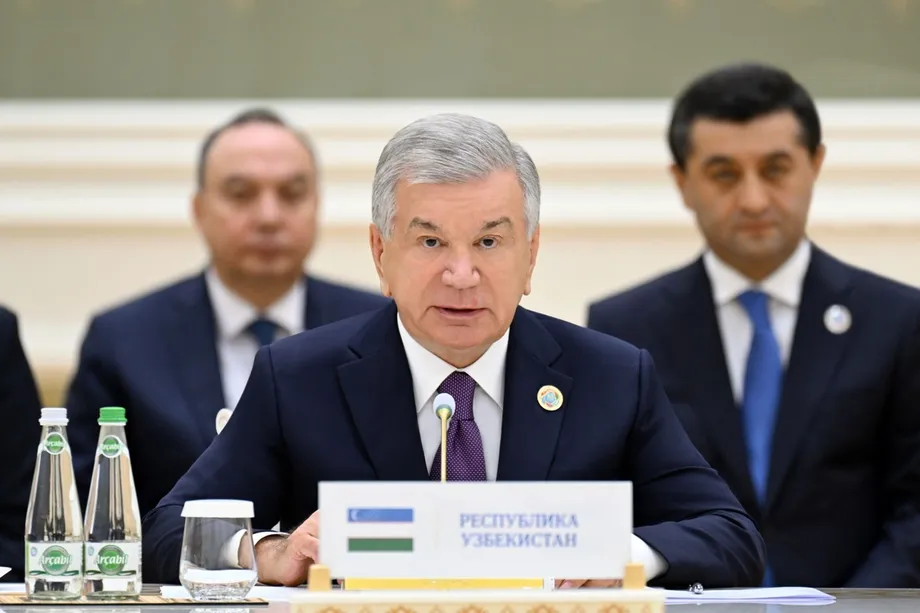
The agreement was signed during the GCF Regional Dialogue with countries of Eastern Europe and Central Asia under the new phase of the fund's Readiness III programme. Saken Kalkamanov, chairman of the Management Board of the International Green Technologies and Investment Projects Center (IGTIC), and Thomas Eriksson, GCF regional director for Eastern Europe, Central Asia and the Middle East, signed the agreement.
IGTIC's platform establishment announcement identifies Nurken Sharbiev, vice minister of Ecology and Natural Resources, as attending the ceremony. Another account describes him as first vice minister. Both identify the same official as present.
The distinction between the platform's budget and Kazakhstan's investment requirements matters. The sum exceeding $1 million is the value of the project to establish the mechanism, not a commitment to finance the country's climate investment programme. QCIP is intended to prepare a portfolio that can seek much larger amounts from domestic and international financial partners.
From Technology Proposals to Financeable Projects
QCIP will coordinate climate investment and prepare projects for potential financing from the GCF, the Development Bank of Kazakhstan (DBK) and other financial institutions. Its central objective is to move beyond separate technological initiatives and project proposals toward structured investments ready for financial assessment.
A promising technology does not automatically make a financeable project. Investors and lenders need a proposal they can evaluate, including how it fits national priorities and whether its financial structure supports investment. The platform's announced role is to organize that transition and connect developers with possible funding sources.
Neither the agreement announcement nor the climate plan identifies an initial list of QCIP projects, their individual costs or financing commitments. The platform therefore represents a project preparation and coordination step, rather than evidence that a new portfolio has already secured funding.
Who Will Run the Platform?
A steering committee chaired by Kazakhstan's Ministry of Ecology and Natural Resources will oversee QCIP's environmental and climate integrity. It will also coordinate engagement with government bodies responsible for tariff policy, finance, planning and economic regulation.
Those responsibilities connect directly to the financing problems identified in Kazakhstan's climate commitments. Tariffs affect the revenue that projects can earn, while financial and planning decisions influence whether climate proposals can proceed. Bringing these authorities into the platform gives it a role beyond matching developers with lenders.
The secretariat will be hosted by IGTIC, which will provide operational support and organize cooperation among government agencies, project developers, financial institutions and international partners. The announced structure separates ministry leadership and oversight from the center's daily coordination work.
Detailed arrangements for project selection, application procedures and the platform's operational timetable have not been specified in the announcement. These will determine how developers gain access to its support and how proposals move through preparation.
The $175.6 Billion Investment Agenda
Kazakhstan's third national climate contribution, known as NDC 3.0, covers 2026 to 2035. A nationally determined contribution is a country's climate commitment under the Paris Agreement. Kazakhstan's document links this decade of action to its strategy for achieving carbon neutrality by 2060.
The NDC estimates indicative investment requirements of about $175.6 billion over that period. It assigns $128.5 billion to mitigation, meaning action to reduce greenhouse gas emissions, and $47 billion to adaptation, meaning measures to reduce exposure and vulnerability to climate effects.
These component figures add up to $175.5 billion, slightly below the stated headline estimate. They should be read as approximate amounts rather than reconciled into a different official total. Using the headline figure, mitigation accounts for about 73% of the investment requirement and adaptation about 27%.
The document puts the total at roughly 5.5% of current gross domestic product annually. It also estimates $71.8 billion in additional costs above a business as usual scenario, equivalent to about 2.5% of GDP annually. These are different measures: the larger figure describes investment needs, while the smaller one estimates additional spending compared with the baseline trajectory.
Why Affordable Finance Matters
Kazakhstan estimates that around $20 billion in highly concessional international finance is required. Concessional funding provides more favorable terms than ordinary commercial financing, potentially through lower interest rates, longer repayment periods or other support that reduces the cost of investment.
The NDC identifies several reasons green projects face difficult financing conditions. These include low tariffs paid by end users, continuing fossil fuel subsidies and limited access to affordable finance over longer periods. Together, these conditions can make green investment less attractive than projects based on fossil fuels.
Kazakhstan's NDC also identifies a specific borrowing constraint involving new technology:
Innovative equipment is often not accepted as collateral, limiting borrowing options.
Collateral is an asset a lender can claim if a borrower fails to repay. If equipment cannot serve that purpose, a developer may struggle to obtain a loan even when the technology has a useful climate application. QCIP can help organize proposals and bring the relevant institutions together, but its establishment does not itself change collateral rules, tariffs or subsidies.
Connecting Climate Policy With Financial Instruments
The NDC already envisages a Country Platform for Climate Finance Mobilization linking government agencies, private businesses and international partners. IGTIC describes QCIP as a practical mechanism for implementing the updated NDC and its implementation plan, rather than an initiative separate from national climate policy.
The platform described in the NDC would connect Kazakhstan's emissions trading system, the Article 6 framework under the Paris Agreement, a Carbon Fund and enterprise transition plans. An emissions trading system places a limit on covered emissions and allows regulated participants to trade emission allowances. Article 6 provides a framework for international cooperation, including transfers of emission reductions under agreed rules.
The NDC's intended platform would bring project preparation, financing and monitoring into a unified framework. It would also develop projects suitable for blended finance, which combines sources such as public or concessional capital with commercial investment to make projects more attractive to investors.
Another stated task is to align domestic financial markets with international standards for green bonds, disclosure and the classification of green activities. The establishment announcement does not explain the detailed arrangements for connecting each of these instruments through QCIP, so that part of the implementation remains unspecified.
Domestic Lenders Already Have a Role
The Development Bank of Kazakhstan is named as a potential financing partner for QCIP, giving the platform a connection to a domestic institution with experience in renewable energy. The NDC records that DBK financed seven large wind, solar and hydropower projects with loans totaling approximately $237 million.
The document also records that Baiterek Holding and its subsidiaries had provided about $355 million for green projects as of July 1, 2023, through loans, leasing, guarantees and subsidies. These figures describe existing domestic financing activity, not money newly pledged through the QCIP agreement. They should not be added together as separate commitments without establishing whether their coverage overlaps.
Kazakhstan's Green Economy Action Plan for 2024 to 2030 seeks increased issuance of green loans and bonds by 2030. The NDC also calls for wider use of sovereign and municipal bonds, blended finance, guarantees, pooled funds and liquidity facilities.
For QCIP, the practical opportunity is to connect prepared projects with these financing channels. The climate plan identifies renewable energy, transport with lower emissions and adaptation infrastructure as areas where project pipelines should be developed to attract private capital. These are national priorities, not an announced selection of QCIP's first investments.
How the Platform Fits the Policy Timetable
QCIP sits within several overlapping planning periods. The NDC describes a ten year implementation stage, while the green economy plan and national development plan have earlier milestones. The platform is expected to connect project preparation with those policy commitments.
- July 1, 2023: The reference date for approximately $355 million in green project support recorded for Baiterek Holding and its subsidiaries.
- 2024 to 2030: The Green Economy Action Plan includes targets for greater issuance of green loans and bonds.
- 2026 to 2035: NDC 3.0 covers the next period of national climate action, with indicative investment needs of $175.6 billion.
- 2029: The National Development Plan runs to this year and is intended to help integrate climate objectives into development planning.
- 2060: Kazakhstan's carbon neutrality target provides the longer term framework, with investment needs estimated at $610 billion.
The NDC also refers to a forthcoming National Adaptation Plan that will integrate climate objectives into sectoral and territorial planning. No release date for that plan, QCIP project application deadline or first financing decision is specified in the announcements.
What Will Demonstrate Results?
The Ministry of Ecology and Natural Resources has identified a practical measure of QCIP's effectiveness: the number of projects brought to investment readiness and connected with specific funding sources. That measure distinguishes creating the institution from producing proposals that financial partners can act on.
Investment readiness and approved financing are still different stages. A prepared project can be assessed by a lender or investor without necessarily receiving funding. Evaluating the platform will therefore require attention both to the proposals it develops and to financing decisions that follow.
There is no announced numerical target for prepared projects, no published first portfolio and no detailed schedule for reaching those stages. The agreement creates an institutional basis for cooperation; it does not establish how quickly Kazakhstan's much larger investment requirements will be met.
The central test is whether QCIP can translate national commitments into concrete investments while addressing the financial conditions described in the NDC. Its ministry oversight, IGTIC secretariat and links to domestic and international partners provide a structure for that work. Results will depend on what projects emerge and which institutions agree to finance them.
Key Points
- Kazakhstan and the GCF signed an agreement for a project worth more than $1 million to establish QCIP under Readiness III.
- The platform will prepare climate projects for potential financing, rather than provide a newly announced investment fund.
- The Ecology Ministry will chair its steering committee, and IGTIC will host its secretariat.
- Kazakhstan estimates climate investment needs of $175.6 billion for 2026 to 2035, including $128.5 billion for mitigation and $47 billion for adaptation.
- The NDC identifies a need for around $20 billion in highly concessional international finance.
- No initial QCIP project portfolio, application deadline or financing decision timetable has been announced.