
From forest to table, and from local knowledge to new markets
A wild mushroom that appears only in the rainy season, a sour fruit turned into syrup and a fermented forest nut served like shrimp paste brought stories from Indonesian villages to a Jakarta dining table. The dishes were unfamiliar to many guests, but the knowledge behind them has been passed through generations.
Contents
- From forest to table, and from local knowledge to new markets
- How overlooked ingredients become products
- Food traditions carry knowledge of place
- Social forestry gives communities a basis to build
- Women seek a voice in decisions, not just more work
- Forest food businesses face a conservation test
- From Jakarta to Bangkok
- The Bottom Line
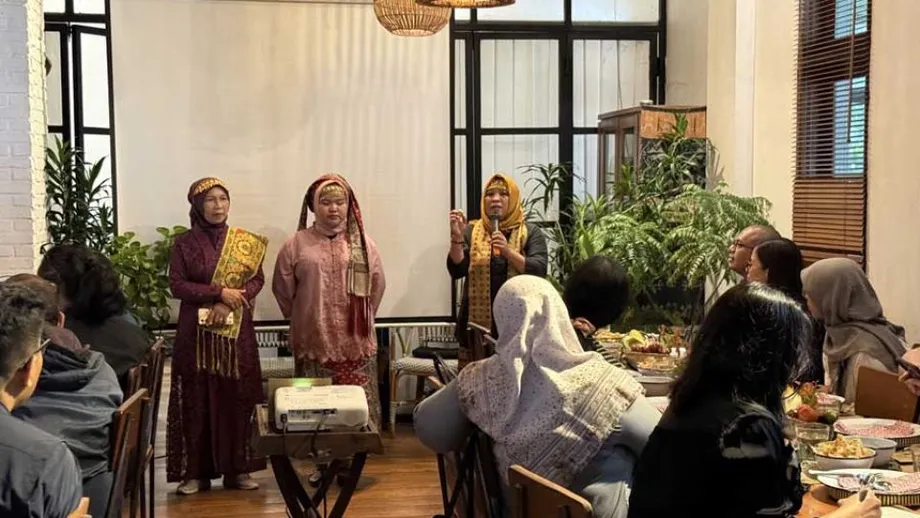
Seven women forest defenders from South Sumatra, North Kalimantan and West Nusa Tenggara presented the ingredients at the Puan Rimba banquet in South Jakarta on September 30, 2026. The meal featured wild splitgill mushrooms, rattan shoots, forest herbs, local fish and foods made from payang, also known as kluwek. A drink made with lobi-lobi, or batoko plum, offered another example of how women are finding new uses for ingredients that often go unharvested or are consumed only in their home regions.
The event was organized by The Asia Foundation with JAVARA and the Indonesian Food Artisan Association. Its long-table format connected each dish to the landscapes and communities where its ingredients grow. The women are part of the Women Forest Defenders program, which supports their work in forest management, monitoring and businesses based on forest products.
The effort reflects a practical idea: forests can support livelihoods when communities can manage them sustainably and retain more of the value from what they harvest. It also brings women’s knowledge and leadership into decisions about forests, where they have often had less access to formal roles, business resources and markets.
How overlooked ingredients become products
For Tessa Pranisti of Semende, Muara Enim, South Sumatra, a love of foraging led her to join the women-led social forestry business group KUPS Pandan Indah in 2023. The group works in a village forest area and gathers wild splitgill mushrooms, known locally as jamur gerigit, as well as processing coffee and fruit. Tessa has also taken part in forest monitoring, where members identify food and medicinal plants.
The mushroom is a seasonal delicacy, difficult to find and available mainly during the rainy season. At the banquet, Tessa said it can sell for as much as 1 million rupiah per kilogram. Its scarcity helps explain its value, while its dependence on forest conditions makes it a reminder that local foods rely on functioning ecosystems.
Members of Pandan Indah have taken other ingredients to market. Wild guava is made into jam, while robusta coffee once sold as unprocessed green beans is packaged for customers. The group has also developed products from coffee, including ground coffee, perfume, body scrubs and aromatherapy candles. Sales at exhibitions and village events have helped build group funds for packaging and other business needs.
In North Kalimantan, Noviana Liling and the 19 members of KUPS Femung Himet are developing familiar forest foods into products with a longer shelf life. Payang, or kluwek, is fermented into a more aromatic paste used in place of shrimp paste. Bekai leaves are dried and powdered as a seasoning, including as an alternative to monosodium glutamate. The group has also worked with coconut, weaving and plaited goods, and has learned to turn kuini mangoes that were once left to rot into jam.
Noviana helped establish Femung Himet in 2025 as North Kalimantan’s first women-only social forestry business group. Its members began with modest resources, including five coconuts contributed by each member. She has said training helped them learn to make products they had not previously known how to process. The group’s work shows that product development is not simply about finding a buyer: safe preparation, consistent quality, packaging and business skills all matter.
Food traditions carry knowledge of place
The banquet’s menu brought together ingredients and cooking traditions from the three regions. Lobi-lobi, which tastes sour when eaten fresh, can become sweeter when softened by hand and is also made into syrup. Other products from the communities include jackfruit, pineapple, forest guava and kuini jam, as well as packaged coffee.
Local dishes included rattan-shoot soup, wild mushroom with steamed gadung, forest herb urap and sambal made with payang. Some preparations require care. Gadung, a tuber eaten in parts of Indonesia, must be processed properly, including soaking and drying, because eating it raw or inadequately prepared can cause severe poisoning. The example underlines why traditional food knowledge is more than a collection of recipes: it includes practical understanding of how to identify, prepare and safely use local plants.
Hardian Eko Nurseto, an anthropology lecturer at Padjadjaran University and co-founder of the Indonesian Food Artisan Association, said different forest regions have ingredients particular to their ecosystems. Kluwek is used directly as a seasoning in Java’s rawon, while in North Kalimantan it can be fermented and used like shrimp paste. In South Sumatra, durian is fermented into tempoyak.
Food processing traditions also preserve relationships between people and their surroundings. They make visible the seasonal rhythms, plant knowledge and local preferences that can be overlooked when ingredients are treated only as commodities. At the same time, presenting these foods to new audiences can build demand for products that keep more income in the villages where they originate.
JAVARA founder Helianti Hilman has argued that Indonesian gastronomy begins with its landscapes, which shape food diversity and culinary culture. For products to succeed beyond their home communities, she said, they need dependable quality and flavors that appeal to consumers. The value created in the market should then return to the communities and villages behind them.
Social forestry gives communities a basis to build
Indonesia’s social forestry program gives communities legal access to manage designated forest areas, including through village forest schemes that can run for up to 35 years. The goal is to let communities manage forests while supporting local livelihoods. Access alone, however, does not automatically create a viable enterprise. Groups also need organizational support, business skills, equipment, financing and routes to market.
By 2025, the Forestry Ministry had granted communities access to about 8.32 million hectares of social forest, involving nearly 16,000 social forestry business groups nationwide. The Asia Foundation’s Women Forest Defenders program reports that, across four provinces, women participate in the management of 24,292 hectares. Its 2026 figures also include 16 women-led forest businesses generating income, 11 women-led forest monitoring groups and 21 businesses with expanded market access.
The program works with local partners on organizational development, leadership, forest monitoring and the processing of non-timber forest products. The Indonesian Food Artisan Association supports product development and market access. Groups have also received training in financial procedures and tools such as a smart patrol application, which can help record forest damage, landslides, illegal logging and medicinal plants.
These activities link enterprise with stewardship. Monitoring can help communities document changes in the areas they manage, while knowledge of food and medicinal plants adds detail to what is being protected. Processing products locally can also increase the share of income retained by the community instead of selling everything as an unprocessed commodity.
The program’s wider network includes 171 women active in forest stewardship across four provinces and at national level, with 42 in decision-making positions, according to program materials. Women’s roles vary by village: some lead business groups, others patrol forests, hold positions in customary forest institutions or participate in village councils. In Semende, Tessa’s customary role as a Tunggu Tubang, the eldest daughter with responsibilities tied to family land and home, is part of her connection to forest stewardship.
Women seek a voice in decisions, not just more work
Women’s participation in forest businesses does not by itself guarantee influence over forest governance. Community members may have detailed knowledge of local resources while remaining excluded from meetings, information and funding. The challenge is to make women’s roles meaningful, with authority and benefits, rather than adding unpaid work to existing responsibilities.
Dorta Pardede, an environmental governance program officer at The Asia Foundation, said women in forest communities have distinctive knowledge but do not have equal access to information, decision-making spaces and resources for enterprise. She said the program combines work on women’s positions in institutions, forest monitoring and fair management of forest businesses.
“Women in forest communities have unique knowledge of forests. The problem is that access to information, decision-making spaces and resources to run businesses is not yet equal,” Pardede said.
Examples from the participating provinces show how leadership can extend beyond production. In South Sumatra, Ani Tasriah became secretary of a customary forest management institution and helped establish a women’s business group. In West Nusa Tenggara, Marwita, who leads a coffee and food processing group, was elected to her village consultative body in 2026. Such roles give women a formal place in local decisions, although representation remains uneven.
There are also practical limits to growth. Some groups still rely on manual equipment, while shipping costs to cities can make products expensive to transport. Women may remain absent from meetings about forest management. Nationwide, only 120 of 15,769 social forestry business groups were rated in the highest category in 2025, according to figures cited in program materials. Reaching more advanced levels of business readiness takes time and sustained support.
Forest food businesses face a conservation test
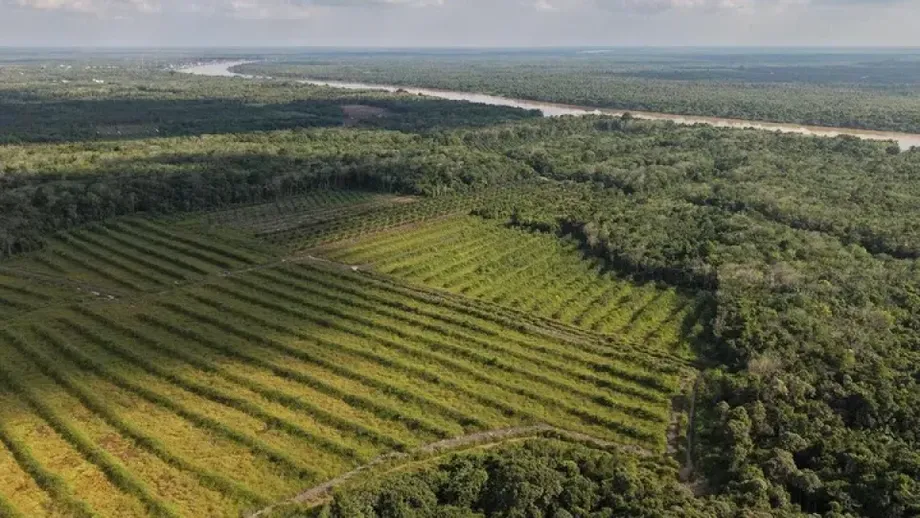
The economic case for forest foods sits alongside a conservation concern. Indonesia lost 433,751 hectares of natural forest in 2025, a 66 percent increase from the previous year, according to figures attributed to conservation organization Auriga Nusantara. Forest conversion for timber plantations, mining and palm oil is among the pressures cited. When forests are cleared or degraded, communities can lose both wild food sources and the conditions that sustain local knowledge.
Indonesia has more than 77 types of carbohydrate sources, 228 kinds of vegetables and 389 kinds of fruit, according to the National Food Agency. That diversity represents a broad range of potential foods, but it depends on ecosystems and the communities that know how to use them. Global food systems also contribute substantially to greenhouse gas emissions. The Food and Agriculture Organization has estimated that nearly one-third of emissions come from food systems, with a substantial share linked to deforestation, fires and damage to peatlands for agricultural production.
Forest-based businesses are not automatically sustainable simply because their ingredients are wild or locally sourced. Growth in demand needs to be matched with responsible harvesting, attention to seasonal availability and safeguards against depletion. For products such as rare mushrooms, a higher price can help recognize local value, but it also makes careful management important. Forest monitoring and community rules can help balance income with the long-term health of the resource.
The initiative describes this approach as regenerative economics: earning livelihoods while sustaining natural resources and strengthening community systems. In practice, that means the groups need reliable markets without pressure to harvest beyond what forests can support. It also means women should share in the decisions about what is produced, how much is gathered and where revenue goes.
From Jakarta to Bangkok
The Puan Rimba banquet was designed as more than a food showcase. It introduced urban diners to ingredients from forest communities and connected each plate to the people who gather, process and monitor them. Some products are sold through local markets and social media, while others have appeared at festivals, cafes, premium shops and hotels. Forest gastronomy has also been linked to ecotourism, including river journeys in North Kalimantan and village dining in West Nusa Tenggara.
On October 3 and 4, 2026, the seven women are scheduled to bring their experiences and products to Bangkok Climate Action Week. Their program, titled “Watching the Forest, Growing the Future,” is set to feature discussions of women’s leadership, forest monitoring, advocacy and livelihoods based on forest products, alongside Indonesian ingredients presented in Bangkok.
The international visit gives the women a platform to speak about forest governance as well as food. Their products may attract new buyers, while their accounts of village-level work can show how climate action connects to land, livelihoods and food systems. The measure of success will be whether visibility leads to lasting market access and greater influence in the decisions that shape their forests.
The Bottom Line
- Seven women from South Sumatra, North Kalimantan and West Nusa Tenggara presented forest foods and local knowledge at a Jakarta banquet on September 30, 2026.
- Women-led groups are turning ingredients such as payang, bekai leaves, wild guava, jackfruit and lobi-lobi into products including seasonings, jam, syrup and packaged coffee.
- The Women Forest Defenders program reports women’s participation in managing 24,292 hectares of forest, alongside 16 income-generating businesses and 11 women-led monitoring groups across four provinces.
- Market growth depends on processing skills, business support and responsible harvesting, while women continue to seek fair access to resources and decision-making.
- The seven representatives are scheduled to share their work at Bangkok Climate Action Week on October 3 and 4, 2026.