A shrinking window for 2.2 million new workers a year
Bangladesh has until around 2045 to make the most of its rising share of people of working age, yet about 2.2 million people enter its workforce each year while formal job creation remains weak. A World Bank report released on November 3, 2026, puts the challenge in concrete terms: around 84% of workers are informally employed, and 44% of graduates also work in informal jobs.
Contents
- A shrinking window for 2.2 million new workers a year
- The growth benefit is already getting smaller
- Why employment numbers alone are not enough
- Skills and women's employment belong in the same plan
- Businesses need finance and places to grow
- South Asia is ageing before becoming wealthy
- Retirement security starts with today's workers
- Longer lives require healthier years
- Paying for both generations at once
- Key Points
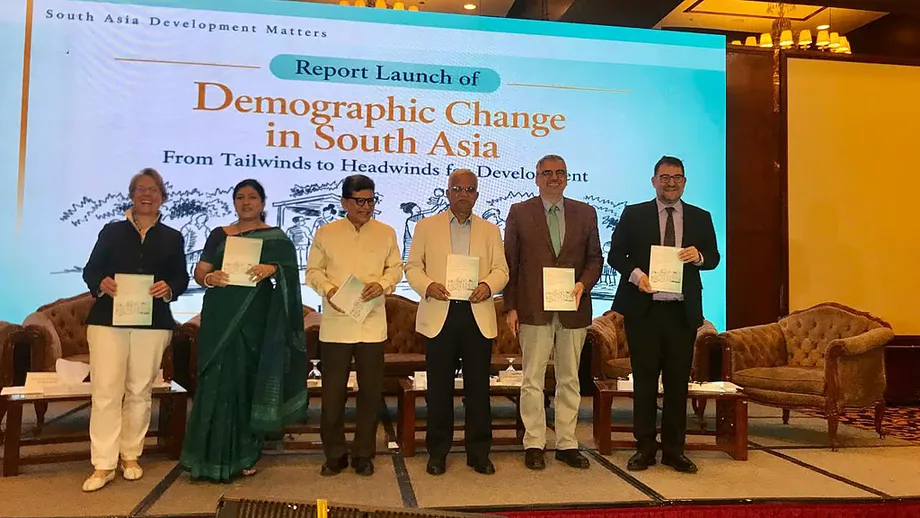
The report, Demographic Change in South Asia: From Tailwinds to Headwinds for Development, says Bangladesh must pursue two tasks together: help today's young people become more productive and prepare healthcare, pensions and care services for a growing older population.
The country's share of people of working age is projected to peak around 2045, leaving roughly 19 years from the report's publication to capture this demographic advantage. The transition towards an older society starts much sooner. People aged 65 and above are expected to reach 7% of the population in 2027 and 14% in 2051.
A demographic dividend is the economic boost a country can gain when a larger share of its population is old enough to work. More earners can support households, produce goods and services, and save for the future. Bangladesh's problem is turning that potential into secure employment, higher earnings and financial protection before the population grows older.
The World Bank's central warning is that the calendar alone will deliver little. Young people need useful skills and employers willing to hire them. Women need fewer barriers to paid work. Older people need income and healthcare systems that can support longer lives.
The growth benefit is already getting smaller
Changes in Bangladesh's age structure added about 0.4 percentage points a year to growth in gross domestic product per person between 2000 and 2024, according to the report. GDP measures the value of goods and services produced in an economy; GDP per person divides that output by the population.
The demographic contribution is projected to fall to 0.2 percentage points annually during 2025 to 2044, half its earlier level. From 2045, the contribution is expected to turn negative as the population's age balance becomes less favourable for growth.
Bangladesh therefore faces a gradual weakening of an economic advantage before the 2045 turning point. Productivity, meaning how much workers produce, becomes more important as the boost from population structure fades. Better skills, equipment, infrastructure and health can help people produce more during their working lives.
The main dates in the report show how employment and ageing pressures overlap:
- 2000 to 2024: Age structure changes added about 0.4 percentage points annually to Bangladesh's GDP growth per person.
- 2025 to 2044: That annual contribution is projected to fall to 0.2 percentage points.
- 2027: People aged 65 and above are projected to reach 7% of the population, the threshold used for an ageing society.
- 2045: Bangladesh's share of people of working age is projected to peak, and the demographic contribution to growth turns negative.
- 2049: South Asia is projected to reach the aged society threshold, with 14% of its population aged 65 and above.
- 2051: Bangladesh is projected to reach the same 14% threshold.
Why employment numbers alone are not enough
Informal employment accounts for roughly 58 million workers in Bangladesh, according to the World Bank figures. About 80% of workers in their prime working years hold informal jobs, while the figure for employment across all ages is around 84%.
Informal work often brings lower earnings, limited job security and little access to employment protections or pension arrangements. For a household, finding work can therefore solve today's immediate income problem while leaving illness, unemployment and retirement difficult to manage.
Graduates face this insecurity too. The finding that 44% are informally employed connects the education debate directly to the shortage of formal jobs. Bangladesh needs both learning that matches employers' needs and businesses capable of creating positions that use those skills.
Formal firms are adding jobs slowly. Small firms have recently reduced their workforce on average, and employment in medium sized firms has also contracted. Those trends make the annual arrival of around 2.2 million workers harder to absorb into productive employment.
The report also projects that, by 2050, the number of people available to work will exceed the employment needed to sustain a benchmark of 2.5 workers for each older adult. Its labour market warning is practical: Bangladesh must create enough jobs to turn the potential workforce into people actually earning and supporting households.
Skills and women's employment belong in the same plan
Jean Pesme, the World Bank Division Director for Bangladesh and Bhutan, identified job creation, relevant skills and women's access to employment as immediate priorities.
Bangladesh's demographic opportunity depends on what it does now: help firms create better jobs, equip young people with market-relevant skills, and remove barriers that keep women out of work,
Practical training, entrepreneurship and learning in the workplace can connect education more closely to employment. A qualification is more useful when a worker can apply it to tasks that businesses need, while employers also require the finance and confidence to expand.
Women's participation is a major part of the report's diagnosis, especially as Bangladesh seeks more employment outside agriculture. Childcare and safe transport are among the practical measures identified to help women enter and remain in paid work.
A training course and a safe journey to work address different parts of the same problem. A woman may have the skills for a vacancy but be unable to accept it because she has no childcare or reliable transport. Increasing participation therefore requires attention to the conditions surrounding a job as well as the job itself.
The World Bank also places early childhood nutrition and development within this agenda. Preparing a productive workforce begins before vocational training or university: children's health and development shape their ability to learn and work later in life.
Businesses need finance and places to grow
Micro, small and medium enterprises are central to the World Bank's proposed response. The report recommends expanding their access to finance and simplifying business regulations so that firms can invest, operate and employ more people.
Bangladesh's recent experience with industrial zones provides a concrete example of investment and employment moving together. An October announcement put employment created with World Bank support at around 42,000 jobs, alongside nearly $300 million in private investment, following efforts to develop Bangladesh's economic zones.
The earlier programme behind that work supplied industrial land, roads, electricity and water facilities, and training for more than 21,000 people. Those are practical inputs that businesses need before they can turn an investment decision into production and hiring.
Forty two thousand jobs amount to about 1.9% of Bangladesh's annual inflow of 2.2 million workers. The zone employment figure is a cumulative result, while the workforce inflow recurs every year. The comparison shows the scale of the employment challenge facing the wider economy.
The demographic report also identifies labour mobility and technologies such as artificial intelligence as tools for raising productivity. Helping people move towards employment opportunities and use better technology belongs alongside support for firms, education and infrastructure.
South Asia is ageing before becoming wealthy
South Asia has 1.17 billion people of working age, but its demographic window is closing faster than Bangladesh's. The regional population of working age is expected to peak in less than a decade, and the region is projected to reach the aged society threshold in 2049, two years before Bangladesh.
Since 2000, demographic changes have contributed about 0.4 percentage points to annual regional GDP growth and helped raise labour productivity by 1.1% a year, according to the report. By 2050, the annual contribution to GDP growth is projected to shrink to about 0.1 percentage points.
Johannes Zutt, the World Bank Vice President for South Asia, described the timing of the transition as a particular concern for the region.
South Asian economies are ageing faster and earlier in their development journeys,
South Asian countries are reaching older population structures at lower income levels than comparable emerging and developing economies. That gives governments less financial room to build services while demand for healthcare, care and retirement support increases.
Bangladesh's later peak gives it somewhat more time than much of the region. Its own shift towards an ageing society in 2027 means institutions must begin adapting while the workforce advantage is still present.
Retirement security starts with today's workers
Only 3% of adults in Bangladesh reported saving specifically for old age in illustrative figures from 2018 cited by the report. That dated measure points to a weak starting position for retirement preparation; the report does not provide an updated equivalent figure.
Social pensions reach around half of older people in Bangladesh, but benefit levels are insufficient to provide adequate financial security. Social pensions are payments intended to support older people, including those who have not built up a pension through regular contributions during employment.
South Asia's wider pension system has narrow coverage. Only 17% of people of working age contribute to a pension scheme, and 10% of older people receive pension benefits. Bangladesh's social pension coverage and the regional pension figures describe different measures and populations.
Informal and gig workers need particular attention because their earnings and work arrangements can make regular pension contributions difficult. Expanding social protection and retirement coverage would connect the employment agenda with protection later in life.
Secure savings also depend on financial institutions. Bangladesh signed a banking repair agreement worth $450 million on October 30, 2026, to strengthen deposit protection, banking supervision and the handling of troubled lenders. The demographic report's call for greater savings sits alongside this broader need for banks that can protect deposits and finance businesses.
Longer lives require healthier years
Bangladesh has a gap of around 10 years between life expectancy and healthy life expectancy, according to the report. Life expectancy describes how long people can expect to live on average. Healthy life expectancy estimates how many of those years are lived in good health.
A gap of that size means many people spend a substantial part of later life with illness or health limitations. Families may face both medical expenses and the need to provide daily support, while older people can lose earnings when their health prevents them from working.
Stronger healthcare and long term care are therefore part of economic preparation as well as social protection. Long term care includes continuing help with daily activities for people who cannot manage them independently.
The report identifies opportunities in the silver economy, the goods and services used by older consumers. Healthcare, elderly care and related services could create employment as demand increases. Preparing workers for those roles can connect the needs of younger jobseekers with the needs of older households.
Healthier ageing can also allow people who are able to continue contributing through paid work, enterprise and other activities. The World Bank describes a second demographic dividend in which better health, stronger savings and investment help sustain productivity as the population grows older.
Paying for both generations at once
Bangladesh must finance education and employment opportunities while expanding healthcare, pensions and care services. The report recommends pursuing these priorities together, supported by stronger capacity to raise domestic revenue and mobilise public and private financing.
Pesme said the financing requirements of the ageing transition would require stronger domestic resource mobilisation. In plain language, Bangladesh needs to collect and manage more resources at home so that essential services can grow as demand changes.
Productive employment can support that effort by improving household earnings and expanding the economy from which public revenue is collected. Better health and education, in turn, help people work more effectively. The report treats these priorities as connected investments across a person's life.
The November report sets out recommendations rather than a Bangladesh implementation schedule. It gives no national deadlines for delivering the proposed employment, pension or care reforms. The nearest demographic milestone is 2027, when the country is projected to enter the ageing society category.
Bangladesh's remaining opportunity is substantial, but the work is immediate: help employers create productive jobs, give women and young people a fairer route into them, and build financial and health protection before today's workers grow old.
Key Points
- Bangladesh's share of people of working age is projected to peak around 2045, roughly 19 years after the report's release.
- About 2.2 million people enter the workforce annually, while around 84% of employment is informal.
- Some 44% of graduates work informally, linking the skills challenge to weak formal job creation.
- The demographic contribution to annual GDP growth per person is projected to halve from 0.4 to 0.2 percentage points before turning negative from 2045.
- People aged 65 and above are projected to account for 7% of the population in 2027 and 14% in 2051.
- The World Bank recommends simultaneous investment in productive jobs, women's employment, skills, healthcare, pensions and care for older people.