A higher cooking gas bill amid scarce supplies
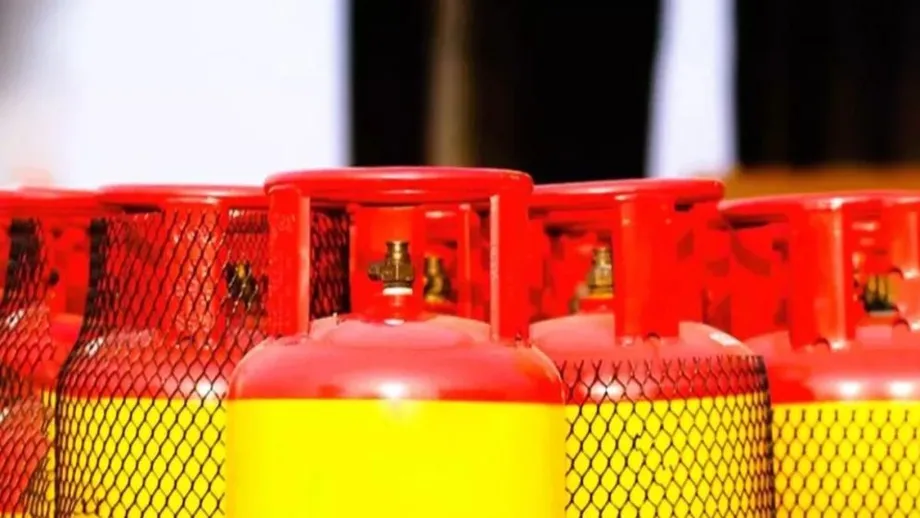
Bangladesh has raised the regulated price of a 12kg liquefied petroleum gas cylinder by Tk 223 to Tk 2,060, effective from 8 pm on November 2, 2026, while consumers continue to face shortages and prices above the official rate. The latest increase follows an October rise and brings the combined increase over those two adjustments to Tk 475.
Contents
- A higher cooking gas bill amid scarce supplies
- How the price reached Tk 2,060
- What households actually pay
- Why families fear a Tk 4,000 monthly bill
- Why supplies remain under scrutiny
- The final price exceeded the committee's proposal
- Businesses cite financing and delivery costs
- Consumer advocates demand verified cost figures
- Autogas, shared supplies and restaurants also face increases
- Key Points
Bangladesh Energy Regulatory Commission (BERC) chairman Jalal Ahmed announced the November revision, and commission secretary Md Nazrul Islam Sarkar confirmed the new cylinder price. The retail rates include value added tax and remain effective until further notice.
Consumers were already paying Tk 2,200 to Tk 2,500 for cylinders during the shortage, which has lasted more than six weeks. Private company employee Moinul Hasan said his latest purchase cost Tk 2,350. He now expects to pay more than Tk 2,500, although that is his expectation rather than a newly announced retail price.
About 10 million customers use LPG in Bangladesh, according to industry estimates. Household cooking accounts for roughly 80 percent of consumption, with industry and transport using the rest. Private businesses control about 99 percent of the sector and supply imported fuel.
The November decision therefore reaches far beyond a monthly price notice. Families need cylinders they can actually buy at the regulated rate, while distributors say interrupted deliveries and transport expenses make that increasingly difficult. Consumer representatives accuse businesses of withholding supplies; operators argue that their permitted charges no longer cover costs.
BERC's January price was Tk 1,306. The November rate is Tk 754 higher, an increase of about 57.7 percent. For households whose incomes have not kept pace, the additional expense comes before any extra amount demanded by a retailer.
How the price reached Tk 2,060
BERC raised the 12kg cylinder price from Tk 1,585 to Tk 1,837 on October 4, an increase of Tk 252. The October rise was initially reported as Tk 212, but the Tk 252 figure matches those starting and ending prices. November's Tk 223 increase takes the combined rise to Tk 475, or about 30 percent above Tk 1,585.
The latest decision followed a public hearing on proposed increases in charges for importing, bottling and selling LPG. BERC announced its final rate on the same day that the deadline for written opinions expired.
- October 4: BERC raised the regulated 12kg cylinder price to Tk 1,837.
- October 12: LPG traders announced plans to suspend cylinder sales on October 15 and 16 over commissions, supplies and enforcement disputes.
- October 29: BERC held a public hearing in Dhaka, where businesses sought higher charges and consumer representatives opposed another increase.
- November 2: The deadline for written opinions expired, and BERC announced the Tk 2,060 rate, effective at 8 pm.
The announced October sales shutdown had already exposed the depth of the dispute. Traders wanted distributor commissions raised from Tk 50 to Tk 150 per cylinder, accurate transaction prices on invoices and arrangements to refill cylinders belonging to companies unable to maintain supplies.
What households actually pay
Retail prices have varied by location, seller and brand throughout the shortage. Recent accounts put many purchases between Tk 2,200 and Tk 2,500, while October shortages and overcharging included demands for as much as Tk 2,700 after the official price rose to Tk 1,837.
A Tk 2,350 purchase is Tk 290 above November's regulated rate, or about 14.1 percent more. At Tk 2,500, the extra payment would be Tk 440, about 21.4 percent. Raising the official price changes the size of that gap, but consumers still need reliable deliveries and enforcement to bring their actual bills into line.
Hasan, the private company employee, described the price he had already paid and his concern about his next purchase:
The last time I bought one, I paid Tk 2,350. Now that the price has gone up, I am sure I will have to pay more than Tk 2,500.
Why families fear a Tk 4,000 monthly bill
Consumers Association of Bangladesh (CAB) president AHM Shafiquzzaman estimates that a family of four to five people uses about one and a half 12kg cylinders each month. At the new official rate, that amount of gas costs Tk 3,090, compared with Tk 2,755.50 at October's rate.
The November adjustment alone therefore adds Tk 334.50 to that household's monthly bill if it can buy at the regulated price. At Tk 2,350 per cylinder, the same consumption costs Tk 3,525; at Tk 2,500, it costs Tk 3,750. Those calculations help explain CAB's warning that families could spend Tk 3,500 to Tk 4,000 a month on LPG.
Shafiquzzaman said CAB had repeatedly urged the government to avoid another November increase. He argued that ordinary consumers account for most LPG use and would bear much of the additional expense.
Homemaker Fahmida Akter described the difficulty of finding a cheaper alternative. She bought an electric cooker two months earlier to reduce LPG spending, then returned to using more gas after her electricity bill rose.
Akter said the latest cylinder increase had again disrupted that attempt to manage her household budget:
Now the LPG price has gone up again. We consumers are just swinging like a pendulum at the mercy of market prices.
Why supplies remain under scrutiny
Industry accounts indicate that LPG imports had not fallen substantially over the preceding two months, even as retail supplies became harder to obtain. CAB submitted a written complaint at the October 29 hearing alleging that businesses were withholding gas despite available stocks and import records.
National Board of Revenue figures cited in the debate show 35 actively registered LPG importers, of which 23 have the infrastructure and capacity to import. Only 10 imported LPG in September, equivalent to about 43 percent of the companies with import capacity.
Orion LPG chief operating officer Anik Kumar Sen told the hearing that operators unable to import still had an estimated 15 million cylinders in circulation. He proposed allowing companies with available gas to fill those cylinders, arguing that this could ease supply bottlenecks.
Distributors' association official Abu Taher Qureshi blamed interruptions further up the supply chain. He said importers stop deliveries during shortages, forcing distributors to spend more on transport and procurement. The competing explanations leave the cause of the shortage unresolved, with no date announced for normal supplies to resume.
The final price exceeded the committee's proposal
BERC's technical evaluation committee recommended a 12kg cylinder price of Tk 1,976, an increase of Tk 139 over October. The commission's final decision was Tk 84 higher than that recommendation and raised the price by Tk 223 instead.
The committee proposed increasing the importer margin from Tk 200 to Tk 280 per cylinder, the distributor margin from Tk 50 to Tk 80, and the retailer margin from Tk 45 to Tk 70. A margin is the amount allowed at a stage of the supply chain to cover expenses and provide earnings.
Companies sought larger importer margins. Omera proposed Tk 478 per cylinder, Petromax Tk 349, Delta Tk 360 and Meghna Group Tk 300. Distributors separately sought Tk 150, three times their existing Tk 50 allowance, while retailers sought Tk 70.
Operators also presented proposals expressed per kilogram. They wanted bottling charges raised from Tk 15–16 to Tk 25–30, distribution charges from Tk 4.17 to Tk 8.33, and retail charges from Tk 3.75 to Tk 10. These were requests presented during the hearing; the commission's announced retail price was Tk 2,060.
Businesses cite financing and delivery costs
Meghna Fresh LPG chief financial officer Abu Sayeed Raja told the hearing that the industry had attracted investment of around Tk 400 billion. He said the pricing structure adopted following the previous public hearing in 2021 did not adequately reflect present financing and logistics expenses.
Raja described imports arriving through the Kutubdia area of Cox's Bazar before being moved by smaller vessels and road transport. Each stage adds costs before a cylinder reaches a household or restaurant.
He proposed allowing interest costs of 15 percent on bank loans and a 30 percent return on equity in tariff calculations. Equity is money invested by a company's owners, and a return on equity is the profit earned against that investment. Raja also proposed Tk 120 for distributors and Tk 150 for retailers per cylinder.
Industry representatives said operators may need as many as 31 licences and pay roughly Tk 30 million in fees. BERC's technical committee said transport costs vary substantially with distance and remain allocated at the importer level under its existing method. The debate centres on which expenses should enter the regulated price and how much consumers should pay for them.
Consumer advocates demand verified cost figures
CAB challenged the evidence behind requests for higher charges. Its complaint called for verification of shipping expenses, foreign exchange rates and other costs, alongside disclosure of changes in the Saudi contract price, freight, trade premiums and insurance.
Shafiquzzaman, CAB's president, said consumers had not received a clear explanation of the increase:
The price was raised on the pretext of rising costs, but the public never learned how much costs had actually gone up.
The pricing explanation accompanying November's announcement referred to Saudi Aramco contract prices of US$720 per tonne for propane and US$780 for butane, dated August 2026. Using a mixture of 35 percent propane and 65 percent butane produces the stated weighted average of US$759 per tonne. A weighted average accounts for how much of each gas is in the mixture.
CAB adviser Khalilur Rahman urged BERC to enforce existing rates rather than approve another increase. CAB energy adviser M Shamsul Alam called for changes to energy policy and a regulator more effective at protecting consumers. Their demands put both the calculation of prices and their enforcement at the centre of the dispute.
Autogas, shared supplies and restaurants also face increases
BERC raised autogas, the LPG used in vehicles, from Tk 84.62 to Tk 91.95 per litre. The Tk 7.33 increase is about 8.7 percent. Privately marketed cylinder LPG was set at Tk 171.68 per kilogram, with prices increased across cylinder sizes from 5kg to 45kg.
The revised schedule includes Tk 2,575 for a 15kg cylinder, Tk 3,434 for 20kg, Tk 5,150 for 30kg and Tk 7,726 for 45kg. Larger cylinders matter to businesses that use more fuel than a typical household.
For reticulated systems, which distribute LPG through pipes from a shared installation, BERC set liquid LPG at Tk 165.85 per kilogram. LPG supplied in gaseous form was set at Tk 0.3685 per litre, equivalent to Tk 368.50 per cubic metre. Those rates also include VAT.
Bangladesh Restaurant Owners Association general secretary Imran Hossain warned that higher gas costs would burden small restaurants already struggling with weak customer spending. Passing the expense into food prices could drive customers away, he said. Keeping menu prices unchanged would leave operators absorbing more of the increase themselves.
BERC has set LPG prices since April 2021, when a 12kg cylinder was initially priced at Tk 975. November's Tk 2,060 rate is more than twice that amount. The immediate challenge for households and small businesses is securing fuel at the announced price while the dispute over supplies and trading charges continues.
Key Points
- The regulated price of a 12kg LPG cylinder rose by Tk 223 to Tk 2,060 from 8 pm on November 2, 2026.
- October and November's increases total Tk 475. The November price is about 57.7 percent above January's Tk 1,306.
- Consumers have reported paying Tk 2,200 to Tk 2,500 during the shortage, above the regulated rate.
- BERC's technical committee recommended Tk 1,976 per cylinder, Tk 84 below the final decision.
- CAB alleges supplies were withheld and wants cost claims verified; businesses cite higher financing and delivery expenses.
- Autogas rose to Tk 91.95 per litre. No date was announced for normal cylinder supplies to resume.