Bangladesh loses ground in a shrinking market
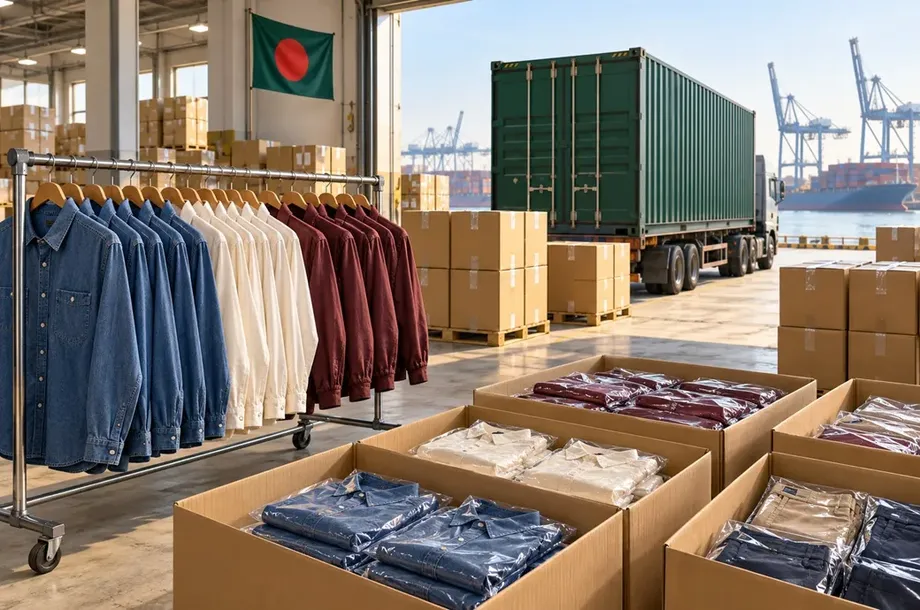
Bangladesh supplied €11.93 billion worth of clothing to the European Union in January to August 2026, down from €13.50 billion a year earlier, according to Eurostat figures compiled by Bangladesh Apparel Voice. The decline of 11.67%, or about €1.57 billion, came as China and Vietnam increased their sales into the same market.
Contents
- Bangladesh loses ground in a shrinking market
- Less clothing shipped, less earned per kilogram
- A recovery is visible, but the losses remain large
- China and Vietnam capture more business
- Vietnam's advantage includes materials and delivery
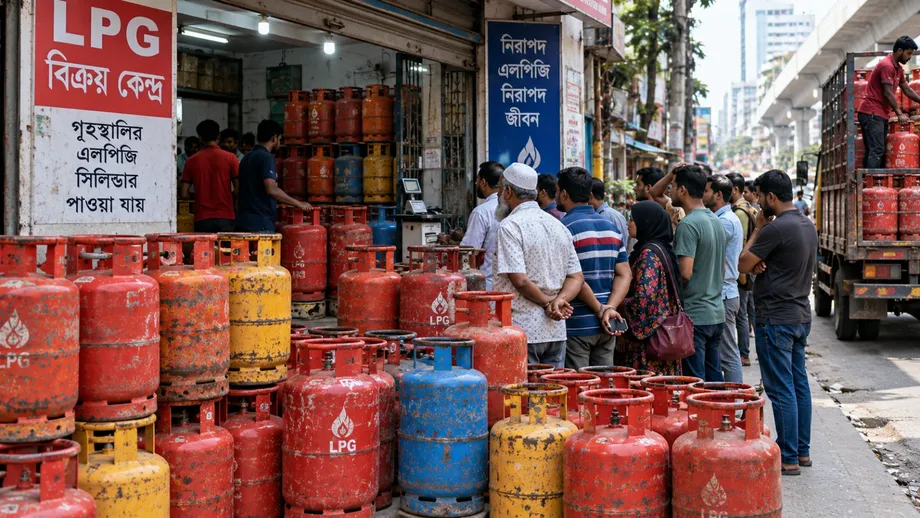
- Energy shortages turn orders into a delivery problem
- European demand remains vulnerable
- Local yarn offers control at a higher quoted cost
- Trade preferences require preparation beyond November
- Key Points
The EU's total apparel imports fell 3.83% to €60.29 billion from €62.69 billion. Bangladesh's decline was roughly three times that rate, while its share of the market dropped from 21.54% to 19.78%. For every €100 the EU spent on imported clothing, Bangladesh received about €19.78, compared with €21.54 a year earlier.
TexPro figures put Bangladesh's EU export decline at 11.4%, the sharpest fall among its major destinations. The Eurostat compilation puts the decline at 11.67%; another published figure places it at 12.67%. The detailed figures on shipment weight, value and market share used here follow the Eurostat compilation by Bangladesh Apparel Voice.
The pressure extends beyond fewer shipments. Bangladesh exported less clothing by weight and earned less per kilogram, while factories faced unreliable energy supplies, delivery delays and demands for discounts. Europe's improving import figures offer some encouragement, but Bangladesh is still competing for a smaller share of the business.
Less clothing shipped, less earned per kilogram
Bangladesh shipped 866.76 million kilograms of apparel to the EU during the eight months, down 4.58% from 908.37 million kilograms. Average unit value fell more sharply, dropping 7.43% from €14.87 to €13.76 per kilogram.
Unit value means the total recorded value of imports divided by their weight. It changes when buyers pay different prices, but also when the mix of garments changes. A shipment containing more basic T-shirts and fewer expensive jackets can have a lower value per kilogram even if the price of each product stays unchanged.
Bangladesh's figures therefore show two pressures on earnings: lower shipment weight and lower average value for that weight. Together, those changes explain why export receipts fell much faster than the physical volume of goods.
The EU average unit value was €19.65 per kilogram, compared with Bangladesh's €13.76, a gap of €5.89. China's average was €19.82, while Vietnam's reached €28.82. Those differences reflect the products being sold as well as commercial terms, making the composition of orders central to understanding export performance.
A recovery is visible, but the losses remain large
January was particularly difficult. EU apparel imports fell 15.48% from a year earlier to €7.03 billion, while imports from Bangladesh dropped 25.25% to €1.43 billion. Bangladesh's shipment quantity fell 17.49% that month and its unit value declined 9.41%.
Later figures show a gradual improvement. EU apparel imports were down about 10% in January to April, but rose approximately 2.6% in May to August compared with the same period of 2025. Bangladesh's cumulative decline also narrowed as the year progressed.
- January 2026: Bangladesh's apparel export value to the EU fell 25.25% from January 2025.
- January to June: The cumulative decline stood at 16.43%.
- January to July: The decline narrowed to 13.65%.
- January to August: Export value was down 11.67%, at €11.93 billion.
Mohiuddin Rubel, founder and chief executive of Bangladesh Apparel Voice and a former director of the Bangladesh Garment Manufacturers and Exporters Association, described the improvement in recent trading.
"Bangladesh has performed better in the European market over the last three months than in the first five months of this year. European imports have also increased gradually," he said.
Bangladesh entered 2026 after a stronger year: its EU apparel exports rose 5.97% in 2025 to €19.41 billion from €18.31 billion in 2024. The narrowing decline in 2026 means the accumulated shortfall is becoming smaller, although receipts remain below the comparable period last year.
China and Vietnam capture more business
China's EU apparel exports increased 2.38% to €19.71 billion in the Bangladesh Apparel Voice compilation. Shipment weight rose 3.45%, while average unit value slipped 1.04%. China's market share increased from 30.71% to 32.70%, approaching one third of EU apparel import spending.
An alternative Eurostat tabulation puts China's exports at €19.25 billion, down 2.38%. The Bangladesh Apparel Voice figures, which show growth, place the difference between Chinese and Bangladeshi sales at about €7.8 billion, compared with approximately €5.75 billion a year earlier.
Vietnam increased export value by 4.46% to €3 billion even though shipment weight fell 5.13%. Its average unit value rose 10.11%. Vietnam earned more from a smaller weight of garments, offering a concrete contrast with Bangladesh's simultaneous declines in weight and average value.
Other suppliers also struggled. Turkey's exports fell 11.02% to €5.10 billion, India's declined 10.84% to about €3.08 billion, and Pakistan's dropped 9.63% to approximately €2.30 billion. Cambodia's exports fell about 4.5% to €2.81 billion.
Pakistan illustrates the difficulty of relying on shipment growth alone. Its export weight increased 3.82%, but average unit value fell 12.96% to €10.88 per kilogram. The result was lower export earnings despite moving more goods.
Vietnam's advantage includes materials and delivery
Fazlee Shamim Ehsan, executive president of the Bangladesh Knitwear Manufacturers and Exporters Association, linked Vietnam's performance to its capacity to make garments from manmade fibres, including polyester, and its access to raw materials from China.
Manmade fibres are manufactured rather than grown like cotton. They are used in many types of clothing, including sportswear and garments designed for particular performance features. Ehsan said Vietnam's stronger position in these materials helps it serve orders that require speed and flexibility.
Ehsan explained the ordering pattern facing manufacturers:
"MMF-based garment orders are placed for small quantities with fast delivery," he said.
Vietnam also has a delivery advantage of approximately 15 to 20 days over Bangladesh, according to Ehsan. For a retailer placing a small order for an approaching season, those days affect how quickly clothing reaches shelves and how soon it can respond to changing demand.
Bangladeshi manufacturers that need to import the required materials must fit that purchasing and transport time into the production schedule. Expanding local material capacity could give factories more control over delivery, alongside the need to keep costs competitive.
Energy shortages turn orders into a delivery problem
A survey by the Bangladesh Knitwear Manufacturers and Exporters Association found that 55% of participating factories had international orders cancelled or reduced. The association surveyed 20% of its member factories between August 21 and September 14, covering locations including Narayanganj, Gazipur, Chattogram and Dhaka.
Among respondents, 78% reported partial production shutdowns, 87% experienced shipment delays and about 60% gave buyers discounts. Approximately 89% reported a risk to buyer confidence, 59% faced a risk of defaulting on bank loans, and 7% had stopped production completely. The percentages describe participating factories rather than a count of every factory in Bangladesh.
Mahmud Hasan Khan, president of the Bangladesh Garment Manufacturers and Exporters Association, said unreliable energy was affecting both costs and production schedules.
"However, rising energy prices, inadequate supply and frequent power outages have increased production costs and severely disrupted operational efficiency in the RMG sector," he said.
Factories facing missed deadlines may use expensive air freight or generators to complete and deliver orders. Those extra costs arrive at the same time that buyers are pressing for lower prices, leaving manufacturers less money from each sale.
Ha-Meem Group's reported daily energy bill rose from roughly $200,000 to $300,000, an increase of 50%. The garment industry generated $38.7 billion in exports last year and directly employs about 4 million people, making production reliability a concern for workers and the wider economy as well as factory owners.
European demand remains vulnerable
The European Commission's spring 2026 forecast projected EU economic growth of 1.1% in 2026, compared with 1.5% in 2025, followed by 1.4% in 2027. Inflation was forecast at 2.4% in 2027. Energy costs and the course of the Middle East conflict remain important conditions behind that outlook.
European households facing larger bills for fuel, food and housing have less room for clothing purchases. Retailers also have to decide how much stock to buy when they are uncertain about sales. Bangladesh Apparel Voice linked the weak start to 2026 partly to inventories carried over from the previous year.
Ehsan, who is also chief executive of Fatullah Fashion Limited, said a French buyer had put an agreed order on hold amid concern about protests and purchasing power. Other manufacturers placed more weight on Europe's broader economic slowdown than on demonstrations alone. No firm estimate was given for the value of Bangladeshi orders affected by the protests.
Dr Mohammad Abdur Razzaque, chairman of Research and Policy Integration for Development, warned that winter could bring higher gas demand and prices in Europe. Rubel said Europe accounts for nearly half of Bangladesh's apparel exports, making even a modest change in buying patterns consequential for manufacturers.
Local yarn offers control at a higher quoted cost
Bangladesh's changes to yarn import arrangements add another cost question. Bonded warehouse facilities were withdrawn for imports of yarn in the 10 to 30 count range used in knitwear. Under the revised arrangement, importers must provide a bank guarantee equivalent to the yarn's value, released after export and submission of the required documents.
A bank guarantee ties up financial capacity while the manufacturer buys materials, produces garments and completes export paperwork. Exporters say the arrangement pushes them towards domestic yarn when they are already facing tight prices from buyers.
Fakir Kamruzzaman Nahid, managing director of Fakir Fashions Limited, quoted imported 30-count combed yarn at $3.15 per kilogram, against $3.75 domestically. The domestic quote was $0.60 higher, or approximately 19% above the import price. He estimated that using local yarn would add an average of $0.15 per garment.
Local sourcing can shorten the supply chain and make materials easier to obtain. Manufacturers must weigh that control against the quoted cost difference. Preferential tariffs are a separate calculation: eligibility depends on the applicable rules of origin, which specify the materials or manufacturing processes a product needs to qualify for lower duties.
Trade preferences require preparation beyond November
Bangladesh's scheduled graduation from the United Nations category of least developed countries in November 2026 creates another planning deadline. Rubel urged exporters to prepare for changes to preferences under the EU's Generalised Scheme of Preferences, which gives eligible developing countries reduced tariffs.
Graduation and the end of EU preferences follow different timetables. The EU framework provides a transition for countries leaving the least developed category, so businesses need to plan for the rules applying after that transition rather than assume tariffs change immediately in November.
Trade policy changes expected in 2027 also matter. A revised EU preference framework is due to take effect in January, while tariff reductions under the EU-Vietnam Free Trade Agreement are progressing towards the scheduled elimination described for 2027. Exporters also face uncertainty over a planned India-EU trade agreement and its eventual terms.
Rubel's recommendations connect the immediate commercial pressures with that longer timetable: invest in products with greater value, diversify fibres and garment types, maintain compliance and sustainability standards, and strengthen relationships with international brands. For buyers, delivery records, material availability, compliance and dependable production remain practical measures of supplier reliability alongside price.
Bangladesh's recent improvement gives factories a better starting point than January's steep fall. Regaining market share will require converting that improvement into reliable deliveries and stronger earnings from the garments they sell, while preparing for the trading rules that follow graduation.
Key Points
- Bangladesh's EU apparel export value fell 11.67% to €11.93 billion in January to August 2026 in the Bangladesh Apparel Voice compilation of Eurostat data.
- Shipment weight declined 4.58%, while average unit value fell 7.43% to €13.76 per kilogram.
- Bangladesh's EU market share dropped from 21.54% to 19.78%, while China and Vietnam gained in the main compilation.
- The cumulative export decline narrowed from 16.43% through June to 11.67% through August.
- A knitwear association survey found shipment delays at 87% of participating factories and cancelled or reduced orders at 55%.
- Energy reliability, material costs, delivery speed and preparations for future EU preference rules are central concerns for exporters.