Cooking gas sales face a nationwide stoppage
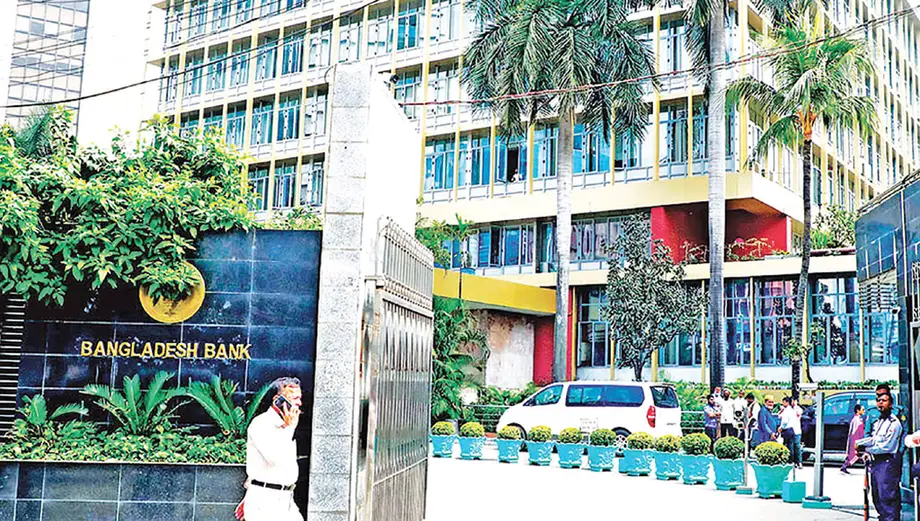
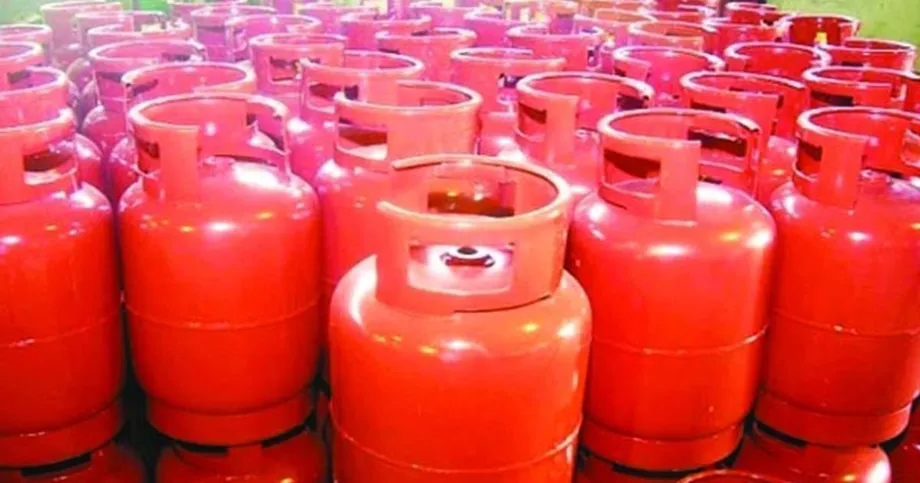
Bangladesh's LPG traders have announced a nationwide suspension of cylinder sales for October 15 and 16, 2026, threatening an indefinite closure if demands over commissions, supplies and alleged administrative harassment are not addressed. The announcement comes eight days after the regulated price of a 12kg cylinder rose by Tk 252 to Tk 1,837, with consumers still paying hundreds of taka more.
Contents
- Cooking gas sales face a nationwide stoppage
- Seven demands behind the protest
- Why distributors want three times their current commission
- What buyers are paying above the official price
- Imports and shop supplies tell different stories
- Can unused cylinders return to circulation?
- Enforcement complaints meet calls for stronger monitoring
- BERC faces a dispute over costs and hearings
- April's price gap shows the pressure is not new
- Demand shifts complicate the supply picture
- Dates to watch and decisions still pending
- Key Points
Md Selim Khan, president of the LP Gas Traders Cooperative Society Limited, announced the programme on Monday, October 12, at the National Press Club in Dhaka. The association said LPG shops across the country would close on Thursday and Friday. This is an announced protest, not confirmation that every outlet will participate or that sales have already stopped.
The dispute reaches beyond the proposed closure. Distributors say a Tk 50 commission set five years ago cannot cover their costs, while importers insist they supply cylinders at regulated rates and want action against sellers who overcharge. Traders also allege that only six or seven companies remain active, leaving large numbers of cylinders unused.
For households, the immediate risk is a further interruption to purchases in a market where the official price has not guaranteed either availability or affordability. Bangladesh has nearly 10 million LPG customers, and household cooking accounts for about 80 percent of consumption.
Seven demands behind the protest
The association's seven demands combine a larger distributor commission with changes to pricing, deliveries and enforcement. Traders want companies to stop changing prices independently after the Bangladesh Energy Regulatory Commission (BERC) announces its monthly rates.
The demands presented at the press conference were:
- Set distributor commissions at Tk 150 per cylinder or 7 percent of the selling price.
- Require any further price changes within a month to be announced through BERC.
- Arrange refilling of cylinders belonging to companies unable to maintain supplies.
- Record the actual transaction price on company invoices.
- Provide fair transport payments when companies do not deliver to distributors' warehouses.
- Stop cases against cylinder transport vehicles solely over safety railings when their documents are otherwise valid.
- End consumer protection fines that traders describe as unreasonable or improper.
Khan warned that an indefinite nationwide sales suspension would follow if the dispute was not resolved during the two days. No agreed settlement was announced at the briefing.
Why distributors want three times their current commission
The requested Tk 150 commission is three times the current Tk 50 payment, an increase of Tk 100 per cylinder. The association says fuel, transport, handling, warehouse rent and licensing expenses have risen since the existing allowance was set.
Its cost calculation assigns Tk 50 to moving a cylinder from a company to a distributor's warehouse, Tk 35 to loading, unloading and delivery to retailers, and Tk 25 to salaries, rent, electricity and other expenses. Those costs total Tk 110. Adding a proposed Tk 40 profit produces the Tk 150 request.
These are the traders' submitted calculations, not an independently audited assessment. They suggest the present commission falls Tk 60 short of claimed operating expenses before profit. The association's stated Tk 100 gap compares its existing payment with the requested amount including profit.
The alternative demand, 7 percent of the selling price, would not produce the same payment at October's regulated retail rate. Seven percent of Tk 1,837 is Tk 128.59, about Tk 21 below the flat Tk 150 proposal. The association has not explained how the alternatives would be applied or which price would form the percentage calculation.
Accounts also differ over the date of the commission submission. One places a letter to BERC on October 8; another describes a letter dated October 6 from a platform identified as the LPG Gas Traders Welfare Association, also headed by Selim Khan. It is not established whether these were separate submissions.
What buyers are paying above the official price
BERC's October 4 adjustment raised the 12kg cylinder price from Tk 1,585 to Tk 1,837, an increase of about 15.9 percent. Prices for other cylinder sizes also rose. The new rates took effect at 6pm that day.
Reported retail prices vary by place, brand and timing. Some accounts put a 12kg cylinder at Tk 2,000–2,400; others describe Tk 2,300–2,500 or an extra Tk 500–600 above the official rate. These are different market observations, not a single nationwide price.
At Tk 2,000, a buyer pays Tk 163 extra, about 8.9 percent above the regulated rate. At Tk 2,500, the excess is Tk 663, or about 36.1 percent. Tamanna Akhter, a resident of Shewrapara in Mirpur, was reported to have paid Tk 2,500 for a cylinder delivered to her home.
The continuing shortage after October's increase had already left some consumers facing quotes of up to Tk 2,700. The proposed closure adds another threat to access without resolving the disagreement over who is responsible for the extra charges.
Imports and shop supplies tell different stories
Traders say several companies have stopped operating or cannot open letters of credit to import LPG. A letter of credit is a bank's payment guarantee to an overseas supplier. Problems obtaining one can prevent a company from buying cargo even when customers need its fuel.
Khan said only six or seven companies were active. Distributors identified Meghna Fresh, Omera, iGas, Jamuna, Petromax and BM as the main regular suppliers. Other accounts of industry activity use different measures: Omera chief operating officer Stevan Matheendra De Zoysa said six to eight of 27–28 registered operators had imported cargoes in recent months, while Fresh LPG chief marketing officer Abu Sayed Raza said about 10 of 23 operators imported in the previous month.
Those figures refer to different periods and company totals, so they cannot be treated as one verified count. They nevertheless point to a gap between the number of registered businesses and those actively bringing in fuel.
Import totals also differ. Figures attributed to BERC put September imports at 158,000 tonnes, compared with 157,000 tonnes in August. The LPG Operators Association of Bangladesh (LOAB) gave 156,000 tonnes for September and 158,000 tonnes for August. Both accounts show broadly stable imports, although their exact totals disagree.
BERC chairman Jalal Ahmed said the import figures did not indicate a supply problem at the import stage. That does not establish that cylinders reached shops normally. Of 10 Dhaka retailers contacted before the October increase, eight said they had received no cylinders since September 20–22.
Hasin Parvez, secretary general of the LPG Filling Station Owners Association, described a similar delivery problem for vehicle fuel outlets: a station needing 30 tonnes monthly was receiving only five or six tonnes. That is roughly one sixth to one fifth of its requirement.
Can unused cylinders return to circulation?
The traders want the government or active companies to arrange refilling of cylinders belonging to businesses that can no longer supply gas, then distribute them through authorised dealers. Their argument is that existing cylinders should not sit empty while buyers struggle to obtain replacements.
The scale is uncertain. Most accounts describe several hundred thousand unused cylinders, while another reports a claim of millions. No verified inventory has been published to settle that difference, and no approved refilling arrangement was announced.
Empty cylinders and available LPG are separate parts of the problem. Returning containers to circulation would still require fuel, filling capacity and an agreed delivery process. The proposal does not by itself demonstrate that those requirements have been secured.
Enforcement complaints meet calls for stronger monitoring
Khan accused police, executive magistrates and the Directorate of National Consumer Rights Protection of harassment and unreasonable fines. He cited a distributor in the Khulna–Bagerhat region who allegedly faced a large fine and confiscation of goods over 40 additional cylinders. The precise fine, legal basis and authorities' response to that case were not established.
Accounts differ on the vehicle complaint. Some say police cases concerned missing mandatory safety railings; others say vehicles were penalised because railings were fitted. Khan's detailed demand was that properly documented pickups and trucks should not face cases solely because of their railings. The disagreement leaves the specific enforcement issue unclear.
The consumer protection agency has described its inspections as action against inflated LPG prices. Its director, Atia Sultana, said 242 drives between September 2 and October 6 resulted in penalties against 478 distributors and retailers, with fines totalling Tk 1.125 million.
Importers take a different position from the protesting traders. LOAB says imports and supplies are adequate and supports action against sellers charging above BERC's rates. At a recent industry dialogue, Mohammed Amirul Haque, the association's president, called for government agencies to intervene.
We cannot monitor every retail outlet. Local administrations, law enforcement agencies and consumer rights authorities must act against sellers charging above the government-set prices.
Fresh LPG's Raza also questioned whether existing distributor and retailer margins cover expenses, while saying inadequate margins do not justify overcharging. He cited allowances of Tk 50 and Tk 100 respectively. A separate account of BERC's October structure gives a Tk 1,742 wholesale price and Tk 1,792 distributor selling price, leaving Tk 45 before the Tk 1,837 retail ceiling. Those descriptions do not reconcile the retailer allowance.
BERC faces a dispute over costs and hearings
BERC attributed October's increase to higher international propane and butane prices, the main components of LPG, and higher shipping costs. Average import costs rose from $593 per tonne in July to $712, about 20 percent. Shipping costs including premiums rose from $160 to $250 per tonne, about 56 percent.
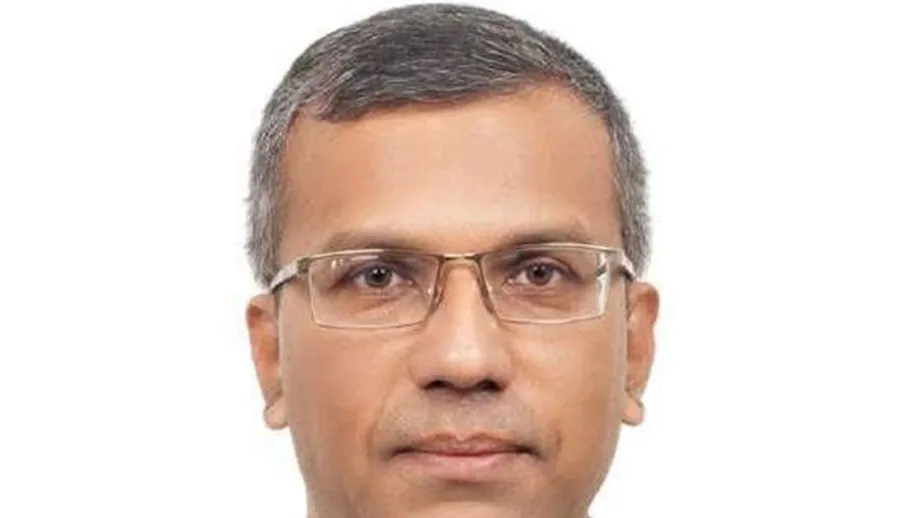
The regulator's method is itself contested. Ahmed says monthly adjustments follow a pricing framework using international contract prices, freight, exchange rates and fuel costs. His position is that changing fixed cost allowances, such as distributor commissions, requires a public hearing, while recalculating the existing monthly formula does not.
M Shamsul Alam, energy adviser to the Consumers Association of Bangladesh (CAB), disputes that interpretation. He says Section 34 of the Bangladesh Energy Regulatory Commission Act and a High Court instruction require public hearings for price setting. A reported August 2020 court direction led to a hearing in April 2021, after which BERC began monthly adjustments.
Accounts differ on the framework's hearing history: the hearing is generally dated to April 2021, while Ahmed's explanation refers to consultation over the pricing structure in October 2021. CAB also rejects the claim that consumer representatives authorised dispensing with further hearings. No new court decision resolving this dispute has been announced.
Alam has urged BERC to use its formal process for resolving disputes between suppliers and distributors. Commenting on the October increase, he questioned how imported costs are assessed.
If international LPG prices and shipping costs increase, there is no question that prices may have to rise. The question is: by how much, and how will that increase be determined?
Jamaat-e-Islami secretary general Mia Golam Porwar also called for withdrawal of the increase and alleged market syndication. The allegations of coordinated supply restrictions have not been established by a published investigation.
April's price gap shows the pressure is not new
In April 2026, Dhaka buyers were paying Tk 2,000–2,200 for a 12kg cylinder against a regulated Tk 1,728. At that time, retailers described abundant supplies but procurement costs that made compliance difficult.
Nurun Nabi, a dealership manager, said cylinders cost about Tk 1,775 to procure before roughly Tk 30 in transport expenses and other operating costs. April import figures attributed to the National Board of Revenue put supplies at 186,000 tonnes against estimated monthly demand of 150,000 tonnes, about 24 percent more.
That comparison matters because higher retail prices were occurring even when reported import volumes exceeded estimated demand. October's complaints add interrupted deliveries and inactive companies to a pricing problem that was already visible.
Aklima Begum, a resident of Korail in Banani, described how her household rationed LPG in April.
We use LPG only when we need to cook quickly in the morning. The rest of the time, we use a clay stove.
Her family of five had a monthly income of Tk 18,000–20,000 and spent about Tk 800 a month on wood. Small businesses faced similar pressure. Mirpur tea stall owner Dulal Hossain said a cylinder lasted less than a week and that higher tea prices would drive customers away.
Demand shifts complicate the supply picture
Industry accounts describe households reducing LPG use while some industrial users increase it because of unreliable supplies of liquefied natural gas (LNG). LNG feeds the pipeline gas network, while LPG is the bottled fuel used for cooking, vehicles and some industrial processes.
Omera's De Zoysa said industrial LPG consumption had risen from 15,000–16,000 tonnes to 30,000–32,000 tonnes, approximately doubling. Other industry estimates put monthly demand at 150,000–160,000 tonnes, while a separate October account estimated 130,000 tonnes after households cut consumption. These estimates describe different demand conditions and do not establish one agreed current total.
Fresh LPG's Raza put national storage capacity at about 178,000 tonnes. Storage capacity is not the same as filled stocks or deliveries, particularly when some operators are inactive.
LOAB's Haque said some operators faced spot market premiums of about $320 per tonne, compared with roughly $95 under longer supply contracts. He sought permission for larger import volumes and land at Moheshkhali for terminals serving multiple companies. No implementation timetable for those proposals was announced.
A regional price comparison also shows why subsidies matter. Kolkata's reported domestic price of 968 rupees for 14.2kg converts to about Tk 1,233 at the cited exchange rate, or roughly Tk 87 per kilogram. Bangladesh's October ceiling is about Tk 153 per kilogram. Taxes, transport and subsidies differ: eligible Indian households receive targeted assistance, and a September notice described indirect support of about 210 rupees per cylinder. The retail comparison alone cannot establish equivalent supply costs.
Dates to watch and decisions still pending
The protest follows an earlier stoppage on January 8, which traders withdrew that afternoon after a meeting with BERC and assurances that their demands would be addressed. October's announcement shows that commissions and enforcement remain unresolved.
The recent sequence is:
- September 20–22: Distributors and retailers identify this period as the start of sharper delivery interruptions.
- October 4: BERC raises the 12kg cylinder price by Tk 252 to Tk 1,837.
- October 6 and 8: Accounts place commission submissions to BERC on these dates.
- October 12: Khan announces the nationwide sales closure in Dhaka.
- October 15–16: The association schedules its protest and warns of an indefinite suspension afterward.
Khan said BERC chairman Jalal Ahmed contacted the traders during the press conference and promised to examine their demands. That assurance was relayed by Khan; BERC did not immediately provide a separate confirmation of the conversation.
Ahmed had previously said the proposals would be discussed at a commission meeting the following Sunday and that cost allowances could not change without a public hearing. No dated hearing notice, approved commission increase or binding settlement was announced. The next practical test is whether an agreement is reached before the scheduled closure and whether shops participate.
Key Points
- LPG traders announced a nationwide sales shutdown for October 15–16, 2026, with a possible indefinite extension.
- They seek Tk 150 per cylinder or 7 percent commission, regulated company price changes and relief from alleged harassment.
- The official 12kg price is Tk 1,837, but reported purchases and quotes remain substantially higher.
- Import totals appear broadly stable, while retailers and filling stations report interrupted deliveries.
- Importers support action against overcharging; traders dispute fines and say their costs are not covered.
- No commission revision, hearing date or settlement had been announced when the protest was declared.