
Buyback Removes About a Quarter of a Large Bond Repayment
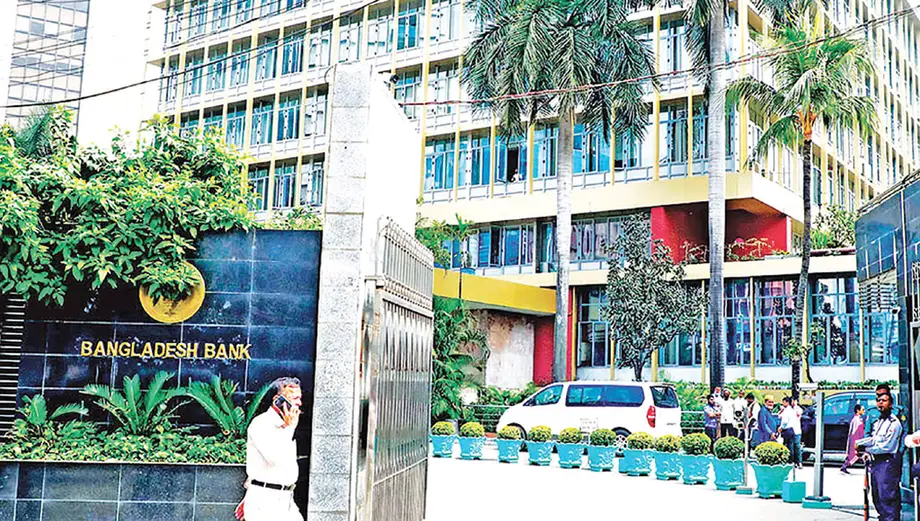
Bangladesh has repurchased Tk1,716.14 crore in Treasury bonds through an auction held on 8 October, reducing a large repayment approaching in November while testing a more active approach to managing government debt. Bangladesh Bank conducted the operation on behalf of the Finance Division, accepting 56 submitted bids only where their prices met the auction committee's requirements.
Contents
- Buyback Removes About a Quarter of a Large Bond Repayment
- What the Auction Accepted and What It Left Behind
- How Bondholders Submitted Their Prices
- The Dates and Historical Claims Need Care
- A High Coupon Met Falling Market Yields
- Lower Interest Payments Are Not the Same as Proven Savings
- What Banks Gain From Receiving Cash Earlier
- Future Auctions Will Depend on Cash and Market Conditions
- Key Points
The bond targeted by the operation had Tk6,666.58 crore outstanding and carried an annual coupon of 12.30%. The amount accepted represents about 25.7% of that outstanding balance, leaving roughly Tk4,950 crore to be repaid at maturity. A crore is 10 million taka, making the accepted amount approximately Tk17.16 billion.
The Finance Ministry said the operation was intended to spread repayment pressures, reduce refinancing risk and make the government's debt repayment schedule more balanced. Refinancing risk is the possibility that a borrower cannot raise replacement funding when existing debt falls due, or can do so only at an expensive rate.
The result also shows the limits of the auction. Holders offered only about 30.2% of the targeted bond for sale, and the government rejected approximately Tk300 crore of those offers. Most of the debt therefore remained outstanding, despite an initial plan that covered nearly the entire issue.
There is a historical qualification to descriptions of the transaction as Bangladesh's first bond buyback. Statements attributed to the central bank and Finance Ministry presented it as a first or new initiative, while other reports identify a previous government securities buyback in December 2009. The operation introduces a tool into the current debt management programme, but its status as the country's first such transaction is disputed.
What the Auction Accepted and What It Left Behind
A senior Bangladesh Bank official said 20 commercial banks participated. The central bank's press release put the value of the 56 submitted bids at Tk2,016.14 crore. A separate account gives Tk2,016.18 crore, a difference of Tk0.04 crore, or Tk400,000. Both accounts give the accepted amount as Tk1,716.14 crore.
Using the central bank's bid total, the government accepted about 85.1% of the amount offered. That relatively high acceptance rate should not be confused with broad participation across the entire bond issue: the accepted amount was only about one quarter of the outstanding balance.
The initial auction target was approximately Tk6,667 crore. Bangladesh Bank officials had made clear before the auction that the government was not obliged to purchase the full amount and could accept less depending on market yields. The final result was therefore below the announced target without necessarily breaching the auction's intended terms.
The remaining balance can be calculated directly: Tk6,666.58 crore outstanding minus Tk1,716.14 crore accepted leaves Tk4,950.44 crore. This means the operation reduced the maturity payment by about a quarter, rather than eliminating the November obligation. The government still needs to provide for almost three quarters of the original principal.
How Bondholders Submitted Their Prices
The transaction used a multiple price reverse auction. In a conventional government bond auction, investors bid to lend money to the government by buying securities. In this reverse auction, existing holders offered to sell securities back and stated the prices they were willing to accept.
Each successful bidder receives its own accepted offer price, rather than every seller receiving one uniform price. The auction committee can reject offers that do not meet its pricing or yield requirements. Approximately Tk300 crore of bids were rejected on that basis.
Primary dealer banks, which participate directly in government securities auctions, could submit bids themselves. Other banks and financial institutions could participate through linked primary dealers using Bangladesh Bank's Financial Market Infrastructure system. The settlement terms called for payment of the accepted price plus interest accrued up to the settlement date.
The Dates and Historical Claims Need Care
The bond was identified as ISIN BD0926191026. Reports describe it as a two year Treasury bond carrying a 12.30% annual coupon, with maturity scheduled for 6 November. Settlement of the buyback was scheduled for 12 October.
The reported sequence places the auction and payment ahead of the November maturity:
- December 2009: An earlier government securities buyback accepted Tk503 crore in offers from four private banks and one financial institution outside the banking sector.
- 4 or 6 November 2024: Reports give different original issue dates for the bond targeted in the latest operation.
- 8 October: Bangladesh Bank held the buyback auction and accepted Tk1,716.14 crore.
- 12 October: Settlement was scheduled, with sellers to receive accepted prices plus accrued interest.
- 6 November: The remaining bond principal was scheduled to mature.
The central bank press release, as described in reports, gives the original issue date as 4 November 2024. Another account identifies it as 6 November 2024. The maturity year is not explicitly stated in those accounts, so the dates should not be used to infer a definitive calendar year for the latest auction.
There is also a distinction between the auction date and the settlement date. One account describes the purchase as taking place 28 days before maturity, while others call it roughly a month early. The scheduled settlement date of 12 October is 25 calendar days before 6 November. Settlement matters when assessing interest because the announced terms provide for accrued interest through that date.
Some reports describe the transaction as a return after 17 years, citing the December 2009 precedent. Without a consistently stated year for the latest operation, the precise elapsed interval cannot be independently established from these dates. The documented earlier transaction nevertheless makes an unqualified claim of a first ever government securities buyback difficult to sustain.
A High Coupon Met Falling Market Yields
The auction took place as yields on newly issued government bonds were declining. Earlier that week, a two year Treasury bond auction produced a yield of 8.2499%, compared with 8.8685% at the previous auction. That is a decrease of 0.6186 percentage points, or approximately 62 basis points. One basis point equals one hundredth of a percentage point.
The bond being bought back carried a much higher coupon, 12.30%. A coupon is the contractual interest rate paid on a bond's face value. A yield measures the return implied by the price paid for the bond and its remaining payments. The two figures are related, but they are not interchangeable.
One account gives a buyback cutoff yield of 7%. Another says Bangladesh Bank did not disclose the cutoff price. Those statements do not necessarily contradict each other: a yield threshold and a purchase price are different measures. However, the transaction prices are needed to determine how much the government actually paid and whether sellers received a premium above face value.
Bond prices generally move in the opposite direction to yields. When investors accept a lower yield, they will usually pay a higher price for a given stream of payments. This matters here because a bond with a 12.30% coupon does not automatically become cheap for the government to repurchase simply because current market yields are lower.
The limited amount offered is consistent with holders having an attractive coupon and little time left before repayment. Keeping the bond would preserve the remaining contractual payments, while selling would require investors to decide where to place the cash. The central bank did not give an official explanation for the participation level, and the auction figures alone cannot establish individual banks' reasons for holding or selling.
Lower Interest Payments Are Not the Same as Proven Savings
A Bangladesh Bank official said buying the bonds back approximately a month before maturity would remove the government's obligation to pay interest for that remaining month. That describes the interest no longer payable on debt that has been retired. It does not, by itself, establish the transaction's net saving.
The arithmetic gives a useful sense of scale. At a 12.30% annual coupon, one twelfth of a year's interest on Tk1,716.14 crore is approximately Tk17.59 crore. This is an illustrative monthly amount, not a confirmed saving. The actual remaining interest depends on settlement timing and the bond's contractual calculation rules.
The government must also account for the price paid to buy the securities back, accrued interest through settlement and any cost of funding the purchase. A premium paid to holders can offset some of the future interest avoided. If the purchase is financed through new borrowing, that replacement borrowing also has a cost.
Lower yields on new Treasury bonds create the possibility of replacing expensive borrowing with cheaper funding. The decline from 8.8685% to 8.2499% provides evidence that new borrowing rates were easing. It does not prove that this specific buyback was financed through a replacement issue at either rate.
The strongest conclusion supported by the auction is that the government brought forward part of its repayment obligation and removed the associated future payments on the bonds acquired. A precise net interest saving cannot be calculated without the accepted prices and financing details.
What Banks Gain From Receiving Cash Earlier
For participating banks, the buyback converts a government security into cash before its scheduled repayment date. That provides an additional route to exit a holding and allows banks to redeploy funds into new government securities, lending or other investments.
Syed Mahbubur Rahman, managing director and CEO of Mutual Trust Bank, described the expected benefits for borrowing costs and market liquidity:
By holding the buyback auction a month in advance, Bangladesh Bank can help reduce the government's interest expense to some extent. Besides, this will make the market more liquid and help keep interest rates lower.
Md Mahmudur Rahman, assistant vice president of wealth management in Prime Bank's Consumer Banking Division, described the operation as a way for both the government and investors to manage their positions:
The buyback mechanism is a welcome development for Bangladesh's government securities market. It will enable the Government to manage its borrowing cost and maturity profile more efficiently, while providing investors with an additional liquidity window to rebalance or exit their Treasury holdings.
These are expectations about how the mechanism may work, rather than measured outcomes from this auction. Receiving cash early can make participating institutions more liquid, but the buyback does not automatically create new money. Its wider effect depends on how the government funds the payment and what banks subsequently do with the proceeds.
Future Auctions Will Depend on Cash and Market Conditions
The Finance Division placed the operation within reforms aimed at balancing borrowing costs and risks, maintaining sustainable debt management and developing the government securities market. It said similar operations could be undertaken in line with the Medium Term Debt Management Strategy.
Bangladesh Bank described the mechanism as adding flexibility to financing management and bringing government liability management closer to international standards. Liability management means actively adjusting existing debt obligations, rather than managing public borrowing solely through new issues and repayments at maturity.
Officials also described the auction as an exploratory exercise to assess market response. Future operations will depend on market conditions, the government's cash position, market liquidity, investor demand and the structure of outstanding debt. No date or amount for another auction has been announced in the accounts of this operation.
The practical achievement is a smaller payment at the targeted maturity date. That does not establish that the government's total debt has fallen by the same amount, because the effect on total debt depends on whether the buyback was financed with available cash or new borrowing. The next assessment will require settlement details, purchase prices and evidence of how later debt payments and borrowing costs change.
Key Points
- Bangladesh Bank accepted Tk1,716.14 crore in Treasury bond buyback offers at the 8 October auction.
- The accepted amount was about 25.7% of Tk6,666.58 crore outstanding, leaving approximately Tk4,950 crore due at maturity.
- The targeted bond carried a 12.30% annual coupon; settlement was scheduled for 12 October and maturity for 6 November.
- Reported bid totals differ slightly, and accounts disagree on the original issue date and the operation's status as a first ever buyback.
- An earlier government securities buyback in December 2009 accepted Tk503 crore.
- Net savings remain unquantified because accepted purchase prices and financing details have not been disclosed in the auction accounts.
- Further auctions will depend on government cash, market pricing, liquidity and investor demand.