
A new mainland electricity link with major decisions still open
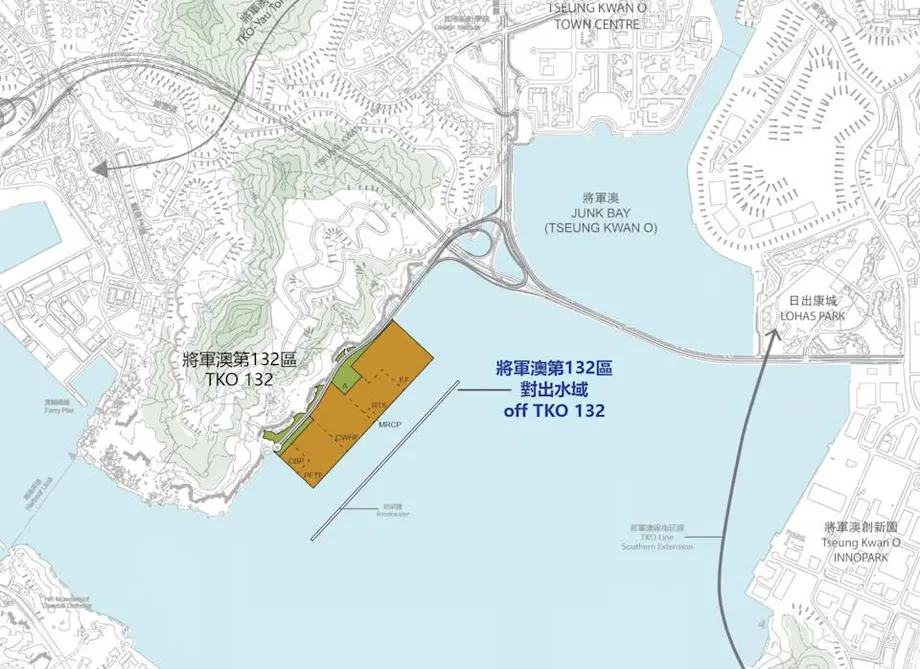
Hong Kong plans to build a large electricity receiving station in Area 132 of Tseung Kwan O, bringing more nuclear and renewable power from mainland China into the city as it prepares for growing demand from artificial intelligence, data centres and computing centres. The project would connect to the grids of both CLP Power and Hongkong Electric, while their Scheme of Control Agreements expire in 2033.
Contents
- A new mainland electricity link with major decisions still open
- What the Tseung Kwan O station would do
- The timetable has shifted across official accounts
- What the electricity targets actually measure
- Existing connections provide the first increase
- Lower bills are an ambition, not a priced agreement
- The 2033 review will test the market model
- Businesses need proof as well as cleaner power
- Dedicated supply proposals remain undecided
- Key Points
Secretary for Environment and Ecology Tse Chin-wan said on October 10 that the government had applied to the Legislative Council for project funding and was preparing to begin construction. A working group involving government departments, the two utilities and mainland enterprises is discussing engineering, financing, ownership and sources of cheaper electricity.
Tse linked the electricity expansion directly to Hong Kong's ambitions for AI, describing power supply as a basic requirement for developing the industry.
The end of AI is electricity.
The ambition is substantial: zero carbon energy is meant to account for 60% to 70% of Hong Kong's electricity generation fuel mix by 2035. Yet a completion date for the new station, its purchase contracts and its effect on household bills are not settled. Official documents also give a later commissioning timetable than the estimate of around 2033 previously associated with the project.
What the Tseung Kwan O station would do
The proposed facility is a receiving and conversion station, not a power plant. Its purpose is to accept electricity transmitted from outside Hong Kong and make it available through the local networks. Plans involve reclaimed land at Area 132 and a new transmission cable from the mainland.
In its June 2026 legislative reply, the government confirmed that land had been reserved for a strategic electricity facility. Departments and both power companies were discussing implementation, while the choice of transmission arrangements remained under discussion.
The intended connection to both utilities matters. The government says the facilities would strengthen their interconnection and ability to transmit electricity, rather than simply add another import route serving one network. That could help distribute additional mainland power across Hong Kong.
However, the latest ministerial remarks do not establish who will own or operate the station. The working group is examining design and construction, financial arrangements, contribution shares and the roles of each participant. An application for funding is also not the same as confirmation that all funding and construction arrangements have been approved.
The timetable has shifted across official accounts
The project has been discussed for several years, but its commissioning date should not be treated as fixed. A March 2023 government reply described approximately ten years of planning and construction, with commissioning expected before 2035. A June 2025 paper scheduled the Area 132 facilities for around 2035.
Those dates differ from the earlier estimate of around 2033. The June 2026 government reply confirmed continued planning but did not announce a replacement commissioning date. The expiry of the utility agreements in 2033 and completion of the station are therefore separate milestones, even though both shape the electricity debate.
- March 15, 2023: The government described preliminary planning for Area 132, estimating about ten years to complete transmission and receiving facilities.
- June 30, 2025: A legislative panel paper listed commissioning of the Tseung Kwan O facilities for around 2035.
- March 2026: Reinforcement of the existing clean electricity transmission system was completed, according to the government.
- June 24, 2026: The government confirmed the Area 132 land reservation and said transmission options remained under discussion.
- October 10: Tse said funding had been sought and preparations for construction were under way.
- 2033: The Scheme of Control Agreements with CLP Power and Hongkong Electric expire.
The existing transmission upgrade also took longer than initially forecast. The March 2023 reply expected completion in 2025; the June 2025 paper expected 2026. The government subsequently reported that the work was completed in March 2026.
What the electricity targets actually measure
Hong Kong's 60% to 70% target applies to the entire electricity generation fuel mix, not just the share of power imported from mainland China. Some reports describe it as an import target, but the official policy includes nuclear electricity and renewable energy used to meet Hong Kong's electricity needs.
The baseline figures also differ. Tse's radio remarks and the June 2025 paper put zero carbon energy at about one quarter of the mix. The June 2026 government reply gives approximately 28% for 2024, alongside less than 20% coal and more than half natural gas. These are different reference figures, rather than one consistent measurement for the same date.
The June 2025 climate paper sets out the transmission expansion supporting the 2035 ambition. Tse also gives an interim target of 30% zero carbon energy by 2030. Using that target as the starting point, reaching 60% to 70% five years later would require an increase of 30 to 40 percentage points, taking the share to between twice and about 2.3 times its 2030 level.
Hong Kong separately aims to raise locally generated renewable energy to 7.5% to 10% by 2035. Renewable energy and zero carbon energy are not identical categories: wind, solar and hydro are renewable, while nuclear power is included in the government's zero carbon category but is not renewable.
Existing connections provide the first increase
Hong Kong already receives nuclear electricity from Daya Bay through CLP's Clean Energy Transmission System, which also connects to China Southern Power Grid. The government says the reinforcement completed in March 2026 will allow zero carbon energy to rise gradually to about 35% of the city's electricity generation fuel mix.
That is a potential increase, not a statement that the 35% share has already been reached. The upgrade expands the ability to transmit electricity; the amount delivered still depends on supply and operating arrangements.
The government's March 2023 legislative reply said the new Tseung Kwan O facilities could allow the share of imported zero carbon electricity to increase by a further 30% when commissioned. It did not provide a final procurement package or plant by plant allocation.
That reply also explained the existing Daya Bay model: CLP participates in investment and management through its wholly owned Hong Kong Nuclear Investment Company, and Hong Kong has imported electricity from the plant since 1994. The government said it would not rule out mainland nuclear power or any type of renewable electricity, and was discussing increased supply with the National Energy Administration.
Lower bills are an ambition, not a priced agreement
Tse argues that a more diverse electricity supply could reduce Hong Kong's exposure to international fossil fuel price swings. He said renewable energy prices had fallen substantially over the past decade and cited nuclear and wind power as sources that were not affected by the energy crisis in the same way as conventional fuels.
His cost argument also concerns infrastructure replacement. As existing generating units age and retire, the utilities may otherwise need expensive new local generation. Importing comparatively cheap mainland electricity could, in the government's view, reduce generation costs and fuel spending over time.
However, Hong Kong has not announced the purchase price of the new electricity, transmission charges, total project cost or final tariff arrangements. Without those figures, there is no basis for calculating a household saving or judging how quickly construction spending might be recovered through lower operating costs.
Reliability involves more than securing additional energy. Following sudden outages affecting several buildings, Tse said the government had repeatedly asked CLP to improve equipment maintenance and system management. A larger import connection would not remove the need to maintain the local network that carries electricity to customers.
The 2033 review will test the market model
The Scheme of Control Agreements provide the regulatory framework for the relationship between the government and the two utilities. Their 2033 expiry creates a decision point over how electricity investment, service obligations and tariffs should be governed as the city uses more imported power.
Tse has promised a careful and comprehensive review, saying the market must change to provide more stable supply and more competitive prices for emerging industries. He has not announced whether Hong Kong will admit additional suppliers, alter the current operating model or change tariff regulation.
This leaves two related but distinct negotiations. One concerns the physical station, its financing and electricity contracts. The other concerns the rules under which suppliers and networks operate after 2033. Building an import facility does not by itself settle who can sell the electricity or how its costs reach customers.
Yuan Xu, an associate professor at the Chinese University of Hong Kong, argues that data centre investment depends on several conditions at once. Electricity is among the sector's highest operating costs, so a cleaner supply cannot be assessed separately from its price and dependability.
"You cannot separate carbon emissions from affordability, reliability, and energy security," Xu said.
Businesses need proof as well as cleaner power
The commercial case extends beyond AI. Life sciences, advanced manufacturing and financial services are also identified as industries with substantial electricity needs that could benefit as the Northern Metropolis develops.
Lawrence Iu, executive director at Civic Exchange, says corporate reporting requirements are increasing demand for electricity with lower associated emissions.
"More companies are now required to disclose emissions linked to the electricity they use, making access to cleaner power increasingly important," Iu said.
Christine Loh, chief development strategist at the Institute for the Environment at the Hong Kong University of Science and Technology, has proposed a certification system through which businesses could purchase verified zero carbon electricity. That is a proposal, not an announced Hong Kong purchasing scheme.
The government has described an existing mainland instrument: each Chinese Green Electricity Certificate represents 1,000 kilowatt hours of renewable electricity and is valid for two years. The National Energy Administration's system records issuance, trading and cancellation, with information synchronised across platforms to prevent duplicate counting.
These certificates concern renewable energy, rather than every source included in Hong Kong's zero carbon target. They provide evidence of renewable electricity attributes; they do not replace the physical transmission infrastructure. Hong Kong says it is exploring certificate development within the Greater Bay Area, but has not announced how certification would apply to electricity supplied through Area 132.
Dedicated supply proposals remain undecided
Legislative Council member Elizabeth Quat has suggested that Hong Kong consider investing in a dedicated power plant using the Daya Bay model. She also proposed discussions with China Southern Power Grid and a green electricity corridor serving AI computing and other industries.
Council member Chan Yung argues that stable, affordable electricity is central to Hong Kong's competitiveness in supercomputing and AI. He pointed to mainland wind and hydro resources and said electricity from the northwest can already reach Shenzhen. Those remarks support his case for extending regional cooperation; they are not confirmation of an approved route or supply contract for Hong Kong.
The government has not announced a dedicated corridor or a power plant reserved for these industries. Its confirmed direction is broader: increase imports, connect the new facilities to both utilities and examine the electricity market before the agreements expire.
Demand reduction remains part of the equation. Loh advocates retrofitting older buildings to cut consumption, with opportunities for green finance and contracts that link payment to measured performance. Iu expects electricity infrastructure investment over the next five to ten years and more rooftop solar under the feed in tariff programme, which pays eligible producers for their renewable electricity.
The transition also includes a planned end to coal for daily generation by 2035, retaining it only as backup. The government says coal fell from about half of Hong Kong's fuel mix in 2015 to less than 20% in 2024. Regional cooperation extends to hydrogen trials and safety standards, but those programmes are separate from the station's electricity procurement.
The next decisive announcements will concern construction approval and timing, ownership, contracted supply and costs, followed by the regulatory framework after 2033. No date has been given for publication of the final transmission option or market review proposals.
Key Points
- Hong Kong plans a mainland electricity receiving station at Tseung Kwan O Area 132, connected to both local utilities.
- Design, financing, ownership, supply contracts and final tariff arrangements remain undecided.
- Official documents place commissioning before or around 2035, differing from an earlier estimate of around 2033.
- The existing transmission reinforcement was completed in March 2026 and could gradually support a zero carbon share of about 35%.
- The 2035 target of 60% to 70% covers the entire electricity generation fuel mix, not imports alone.
- The utility agreements expire in 2033, prompting a market review without an announced replacement model.
- Cheaper electricity and dedicated supply for AI remain ambitions or proposals, not confirmed consumer savings or approved projects.