
A $50 Billion Target Before a Commercial Product
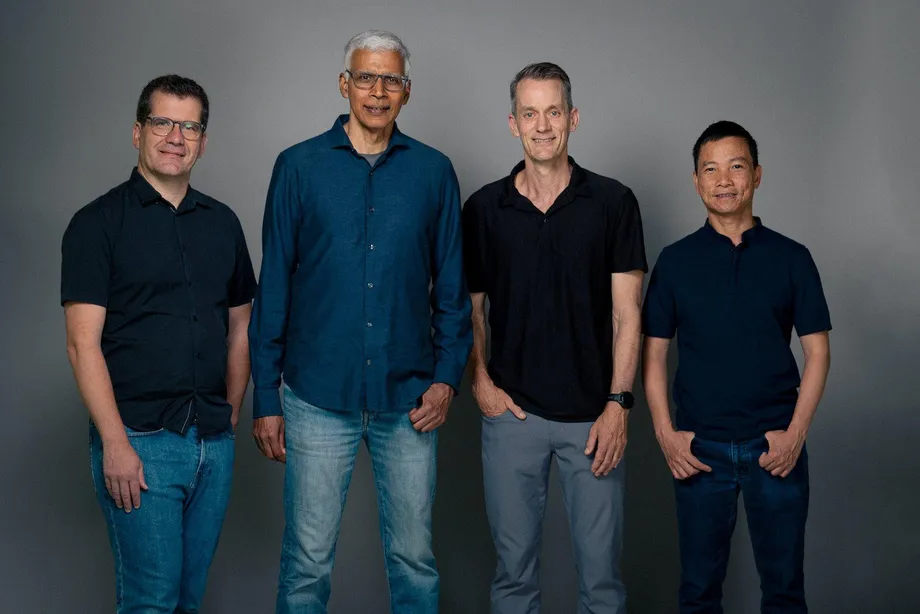
Discovery Loop, the artificial intelligence company founded by Jeff Dean, Sanjay Ghemawat, Oriol Vinyals and Vietnamese scientist Le Viet Quoc, is reportedly seeking financing at a valuation of about $50 billion, just weeks after its August 5, 2026 launch. The company has not announced a commercial product, and the proposed valuation is not a completed transaction.
Contents
- A $50 Billion Target Before a Commercial Product
- What Happened Between August and September?
- Automating the Experiment, Not Just the Answer
- Why Le Viet Quoc's Research Fits the Mission
- Four Founders With Complementary Experience
- Google Remains an Investor and Computing Partner
- Where AlphaEvolve Fits, and Where It Does Not
- A Public Benefit Mission With Commercial Questions
- What Investors Are Paying For
- The Bottom Line
Reports dated September 11 describe a sharp increase from discussions in August about raising approximately $1 billion at a valuation of around $10 billion. The newer valuation target is five times that earlier figure, a $40 billion difference. Neither figure establishes how much investors have actually committed, and the amount sought in the latest discussions has not been disclosed.
The founding team wants to build AI that can propose hypotheses, design and execute experiments, analyze results and use those findings to choose its next investigation. Its first subject will be AI itself: Discovery Loop plans to automate research on machine learning algorithms and systems before expanding into other scientific and engineering fields.
The company's law firm, Wilson Sonsini Goodrich & Rosati, confirmed the August 5 launch in its launch and financing announcement. It identified Discovery Loop as a Delaware public benefit corporation and named Radical Ventures and Khosla Ventures as the leaders of its initial financing, with Lightspeed, Kleiner Perkins, Doerr Capital and Alphabet participating.
The distinction between an announced financing process and a completed funding round matters here. Discovery Loop declined to comment on the reported $50 billion target, and Dean did not respond to a request for comment. Terms could change, and there is no guarantee that investors will agree to that valuation.
What Happened Between August and September?
Discovery Loop's rapid emergence combines three separate developments: its public launch, efforts to assemble an initial team and infrastructure, and reported talks about further financing. Those events should not be treated as proof that the company has already reached the scale suggested by its fundraising target.
- August 5, 2026: Discovery Loop announced its launch and initial financing, with four former Google researchers as founders.
- August 9, 2026: Dean's announcement, reproduced by Radical Ventures, said the team expected to close its seed round over the following weeks and would seek office space and hire staff.
- August 2026: Reports described discussions about raising approximately $1 billion at a valuation of around $10 billion.
- September 11, 2026: Reports described a new valuation target of approximately $50 billion, without confirming a completed deal.
Accounts differ in how they describe the initial round's status. Some describe the seed financing as having been led by Radical Ventures and Khosla Ventures. The August 5 legal announcement says the round was being co-led by those firms, while Dean's August 9 statement says closing was expected in the following weeks. Those statements identify the participants, but do not establish a final closing date or amount.
Hiring information also reflects different moments rather than necessarily conflicting accounts. Before launch, the company had not rented an office or begun recruiting. Dean subsequently announced plans to hire, and a later report said its careers page listed one open role. Radical Ventures described the intended workplace as an in-person team in Palo Alto.
Automating the Experiment, Not Just the Answer
Discovery Loop's central ambition is to automate an experimental cycle. Instead of asking an AI system only to answer a question or write code, the company wants it to identify a promising idea, decide how to test it, execute the test, interpret the result and revise its approach.
In machine learning research, that could involve proposing a new model architecture, training or testing it, measuring its performance and choosing the next variation. An architecture is the arrangement of a model's computational components, which affects how it learns and processes information. Discovery Loop has not disclosed a working commercial system that performs this entire process.
Dean, Discovery Loop's CEO, described the immediate focus in his company launch statement, reproduced by Radical Ventures on August 9. He explained that the founders intend to use their own research needs as the first testing ground:
We'll also start building our infrastructure, AI models, and systems to tackle our first domain: automating large-scale experimentation for ML research and engineering. In doing so, we're going to be our own first customers
The proposed scale is thousands of experiments running in parallel. Running tests simultaneously could allow the system to compare many candidate approaches without waiting for each one to finish before beginning another. That remains a development objective, not a disclosed performance result.
Why Le Viet Quoc's Research Fits the Mission
Le Viet Quoc, also known professionally as Quoc Le, brings a research history closely connected to the company's initial goal. Born in 1982 in Huong Thuy, Hue, Vietnam, he attended the specialized Quoc Hoc Hue high school before earning a software engineering degree at the Australian National University. He later completed a doctorate in computer science at Stanford University under Andrew Ng.
His childhood included living in a village without electricity until he was nine. His subsequent career took him into research on how computers can learn useful representations from large amounts of data. He joined Google Brain in 2011 and became one of the researchers associated with its early deep learning work.
In 2012, Le participated in a project that trained a large neural network on millions of images taken from YouTube videos. Some units in the network responded strongly to images of cats, despite the system not having been trained in the conventional way on a fully labeled collection of cat pictures. The result demonstrated learning of visual features, not human understanding of what a cat is.
In 2014, Le, Ilya Sutskever and Vinyals published research on sequence to sequence learning, a method that converts an input sequence into an output sequence. Translation is one example: a sentence in one language becomes a sentence in another. Le was also recognized in the TR35 program for young innovators that year.
His later work on automated machine learning, including neural architecture search, is especially relevant to Discovery Loop. That research seeks to automate parts of choosing and testing model designs, tasks that otherwise require researchers to explore many possibilities manually. Discovery Loop's ambition extends that idea to a broader cycle of planning, experimentation and revision.
Four Founders With Complementary Experience
Dean joined Google in 1999, helped establish Google Brain, served as chief scientist across Google DeepMind and Google Research, and participated in technical leadership of Gemini. His background connects AI research with the large computing systems required to make it practical.
Ghemawat, another longtime Google researcher, helped develop Google File System and Bigtable. These technologies address the storage and processing of information across many computers. That experience is relevant to a company proposing to coordinate thousands of experiments, which would require reliable scheduling, data management and computing infrastructure.
Vinyals was a vice president of research at Google DeepMind and helped lead Gemini development. His research includes sequence modeling and reinforcement learning, in which systems learn through feedback from actions and their outcomes. He and Le also bring experience from their earlier joint work on sequence to sequence models.
Radical Ventures, an investor in the company, describes this combination of skills in its investment announcement. The firm points to experience spanning chips, large AI models and distributed computing. Its assessment comes from a financial backer, rather than an independent evaluation of Discovery Loop's technology.
The founders said they had worked together for between 14 and 30 years. Their pitch materials listed Google Search, Ads, Gemini and Gmail among the products they had contributed to. Those credentials explain investor interest, but they do not establish that the new company has already built an autonomous research system.
Google Remains an Investor and Computing Partner
The departure does not amount to a complete separation from Google. Alphabet is a founding investor, and Discovery Loop has established a partnership for cloud and computing resources. The company and Google also anticipate collaboration on machine learning systems and related infrastructure.
Descriptions of the partnership differ in their time frame. Reports describe cloud support for the company's first year, while Wilson Sonsini calls the arrangement a long-term partnership with Alphabet. The published details do not specify the full duration, financial terms, computing capacity or whether the agreement is exclusive.
That relationship leaves Alphabet in two roles: investor in the new business and supplier of resources it needs for research. Discovery Loop gains access to computing capacity while Google retains a connection to researchers who helped develop important parts of its AI operations. No disclosed figures show the value of either the investment or the computing agreement.
Sundar Pichai, Alphabet's CEO, reportedly held repeated discussions aimed at persuading the founders to remain at Google. Vinyals described the difficulty of making major changes within a large organization as part of the reason for creating a separate company. Their choice to leave, while keeping an investment and infrastructure relationship, suggests a search for organizational independence rather than an end to collaboration.
Where AlphaEvolve Fits, and Where It Does Not
Google DeepMind's AlphaEvolve offers a concrete comparison for part of Discovery Loop's proposed work. AlphaEvolve searches for and improves algorithms, using AI to generate candidates and evaluate whether they perform better.
Google has said the system improved the efficiency of its Spanner data storage system and supported work on a subsequent generation of tensor processing units, or TPUs. These are specialized chips used for AI computation. Dean previously presented a circuit design found by AlphaEvolve that was incorporated into a new TPU.
The distinction is one of scope. AlphaEvolve focuses on algorithm discovery and optimization. Discovery Loop proposes to automate a broader experimental process, eventually beyond machine learning. A successful search for better code or a circuit design does not by itself demonstrate that an AI can conduct reliable research in medicine, materials or energy.
For now, machine learning provides the company's chosen starting point because it can use its own systems as experiments and evaluate the results directly. Expansion into drug development, chip design, materials science and clean energy remains an intention. No completed discoveries in those fields have been announced.
A Public Benefit Mission With Commercial Questions
Discovery Loop's incorporation as a Delaware public benefit corporation gives its stated scientific mission a formal place in its business structure. Such a corporation can balance financial interests with a defined public benefit and the interests of people affected by its activities. The designation is not the same as being a charity or a nonprofit.
Dean has said the founders might make decisions that prioritize wider social benefit over the company's financial interests. The published announcements, however, do not detail the specific public benefit language in its governing documents or explain how particular tradeoffs would be decided.
The mission stretches beyond improving AI models. Radical Ventures lists engineering, medicine, materials science and clean energy as intended areas of work. Dean also identified possible applications to subproblems within the National Academy of Engineering's fourteen Grand Challenges, a set of major engineering goals.
These statements establish ambition, not a schedule for deployment. The company has not disclosed when it expects to offer an external product, how customers would pay for it, or what results would justify moving from internal AI experimentation into other disciplines. Revenue and customer interest remain undisclosed, which is different from a confirmed statement that either is absent.
What Investors Are Paying For
Discovery Loop's financing discussions belong to a wider pattern of large investments in AI research teams before commercial products arrive. Thinking Machines Lab, founded by former OpenAI chief technology officer Mira Murati, raised approximately $2 billion at a valuation of $12 billion in July 2025, when it had no revenue or commercial product.
Safe Superintelligence, co-founded by former OpenAI chief scientist Ilya Sutskever, reportedly reached a $32 billion valuation in an April 2025 financing that included Alphabet and Nvidia. Discovery Loop's proposed $50 billion valuation would exceed those cited figures, but it remains a negotiating target rather than a confirmed transaction.
One reported tally puts the number of US companies reaching valuations of at least $10 billion in 2026 at 19, compared with a record of 22 in 2021. That is three short of the earlier record. A company in this valuation category is commonly called a decacorn. Discovery Loop should not be treated as having secured its latest target simply because it is discussing one.
Vinod Khosla, founder of Khosla Ventures, expressed the investment case in a public statement about the team. His firm is helping lead Discovery Loop's initial financing, and his wording made the outcome conditional:
This team can redefine how research in engineering and science is done. If successful, the impact won't be measured in software features, or benchmarks but in new science to improve billions of lives
The immediate uncertainties are more concrete than the ambition: whether the latest round closes, what valuation and amount it achieves, how much computing capacity the company secures, and what its internal experiments demonstrate. Dean's August statement anticipated closing the seed round within weeks, but no confirmed deadline for the reported $50 billion financing or commercial launch has been disclosed.
The Bottom Line
- Discovery Loop launched on August 5, 2026, with Jeff Dean, Sanjay Ghemawat, Le Viet Quoc and Oriol Vinyals as founders.
- It is reportedly seeking a $50 billion valuation, five times the approximately $10 billion target discussed in August. No deal at that valuation has been confirmed.
- The initial focus is automating machine learning experiments, with the company acting as its own first customer.
- Radical Ventures and Khosla Ventures are leading the initial financing. Alphabet is both an investor and a computing partner.
- Discovery Loop is a Delaware public benefit corporation building an in-person team in Palo Alto.
- No commercial product, revenue figures, customer commitments or timetable for expansion into other scientific fields have been disclosed.