
A technology push with a warning against investment bubbles
China's Communist Party Central Committee and State Council issued guidelines on October 9, 2026, setting out 19 measures across five areas of innovation to develop what Beijing calls new quality productive forces. The package combines support for artificial intelligence, industrial research and clean energy with explicit warnings against speculative investment, neglect of existing industries and local governments copying the same development plans.
Contents
- A technology push with a warning against investment bubbles
- Why Beijing is correcting the approach
- Enterprises get a larger role in research
- AI testing moves closer to factory production
- Regions are told to avoid copying one another
- Zero carbon parks expose a measurement problem
- Clean power needs markets as well as equipment
- Reform, talent and openness complete the package
- The dates and decisions to watch
- Key Points
The guidelines arrive in the opening year of the 15th Five Year Plan, covering 2026 to 2030. That plan identifies 28 major projects related to new quality productive forces out of 109 projects, or 25.7 percent. The new document supplies a common framework for pursuing that agenda, including stronger enterprise participation in research, national testing bases for industrial AI applications and construction of factories and industrial parks designed to reach zero carbon emissions.
The central test is a substantial increase in total factor productivity, rather than simply more factories, investment or technology projects. Total factor productivity describes how efficiently labor, capital and other inputs are combined to produce output. Better technology and organization can raise production without a matching increase in those inputs.
The document also carries an accountability message. Officials must not misuse policies under the banner of developing new quality productive forces. Those responsible for major losses caused by indiscriminate investment or a rush into fashionable industries are to be held accountable. The policy therefore asks local authorities to pursue innovation while preventing industrial gaps, hollowing out of production and investment bubbles.
Why Beijing is correcting the approach
An unnamed official from the National Development and Reform Commission, or NDRC, identified three reasons for issuing the guidelines: putting President Xi Jinping's ideas into practice, guiding development during the current planning period and correcting problems already appearing in implementation.
Those problems include treating new quality productive forces as synonymous with emerging or future industries, while overlooking upgrades to traditional production. Another concern is that different regions have selected similar industrial sectors without accounting for their resources, capabilities or market conditions.
The document establishes four principles: innovation should lead; reform should support development; policies should suit local conditions; and new sources of growth should be established before old ones are phased out. Lin Xiaofeng, deputy director of the NDRC's Innovation Driven Development Center, explained that these principles respectively define the driving force, institutional support, practical approach and pace of change.
This distinction matters for implementation. A traditional manufacturer that improves productivity through digital systems, cleaner processes or intelligent equipment can serve the policy's objectives. An investment labeled as a future industry does not automatically qualify as productive innovation. The guidelines focus on the quality of production, not merely the sector name attached to it.
Enterprises get a larger role in research
The scientific agenda spans original and disruptive research, breakthroughs in core technologies, coordination of national research capabilities, a stronger role for enterprises and faster conversion of research results into actual production. Major science and technology projects are to focus on strategic, landmark and leading products, serving economic development, national needs and public health.
National laboratories are expected to organize major research projects and build innovation platforms. The roles and distribution of research institutions, universities and leading technology enterprises are also to be improved. Alongside these public institutions, capable private companies are to receive support to lead major technological breakthrough tasks.
For businesses, the package calls for an enterprise research and development reserve fund system and an increase in the additional tax deduction ratio for research expenses. Such a deduction allows qualifying research spending to reduce taxable income by more than the amount actually spent. The reports do not specify the new ratio, eligibility details or an implementation date.
Wang Shengxiao, a researcher at the Party School of the Communist Party of China Central Committee, described the strategic case for strengthening innovation capacity:
The new round of scientific and technological revolution and industrial transformation has opened up broad prospects for developing new quality productive forces. Seizing this historic opportunity requires moving faster to achieve greater self-reliance and strength in science and technology and raising innovation capacity across the board to maintain strategic initiative,
AI testing moves closer to factory production
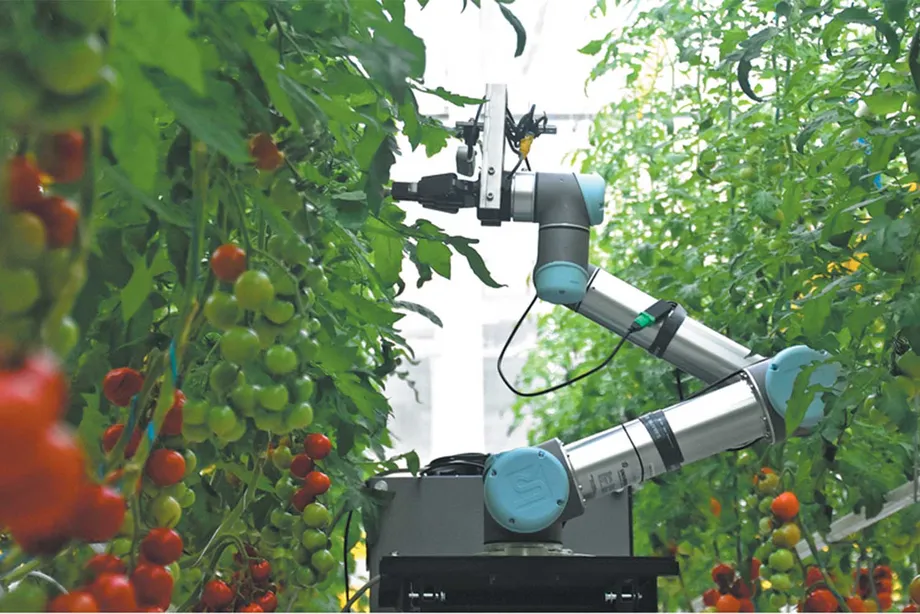
The guidelines call for full implementation of the AI Plus initiative, using artificial intelligence to transform traditional industries and expand applications across the economy. National pilot and testing bases are intended to connect laboratory technologies with actual industrial conditions.
Liu Zhenzhong, an NDRC researcher working on industrial and technological economics, explained that the bases could help address the cost and difficulty of deploying AI in production. Testing technology in industrial environments can expose practical problems before companies commit to wider adoption, reducing the expense and risk of experimentation.
The policy does not present AI as a reason to abandon existing industries. Liu argued that intelligent technologies should upgrade them and strengthen the real economy. The guidelines also call for digital transformation of manufacturing, better planning and operation of national data infrastructure, and internationally competitive digital industrial clusters.
Safety requirements accompany this expansion. The document calls for systems covering technology monitoring, early risk warning and emergency response so that AI remains safe, reliable and controllable. The broader policy framework also addresses technology ethics, data security and industrial risks through laws, ethical review rules and regulation.
Regions are told to avoid copying one another
Industrial upgrading is to include traditional production, emerging sectors and industries still at an early stage of development. The guidelines encourage digital, intelligent and green technologies in existing industries, alongside more specialized producer services and improvements in the quality, variety and convenience of consumer services.
For emerging industries, the document calls for coordination across sectors and regions, including measures against destructive competition. The concern is that repeated investment in similar activities can lead businesses and local governments into contests that consume resources without producing stronger capabilities.
Eastern regions are encouraged to help central, western and northeastern regions develop emerging industries suited to their conditions. For future industries, existing fiscal policies should support development while private and other investment grows steadily. These instructions sit alongside the warning against rushing into projects simply because other regions have selected the same sector.
The practical standard is therefore broader than building a new industrial cluster. Local authorities must connect investment to regional capabilities and preserve continuity between established production and new activity. The guidelines explicitly reject both industrial hollowing and disruption caused by dismantling existing capacity before replacements are ready.
Zero carbon parks expose a measurement problem
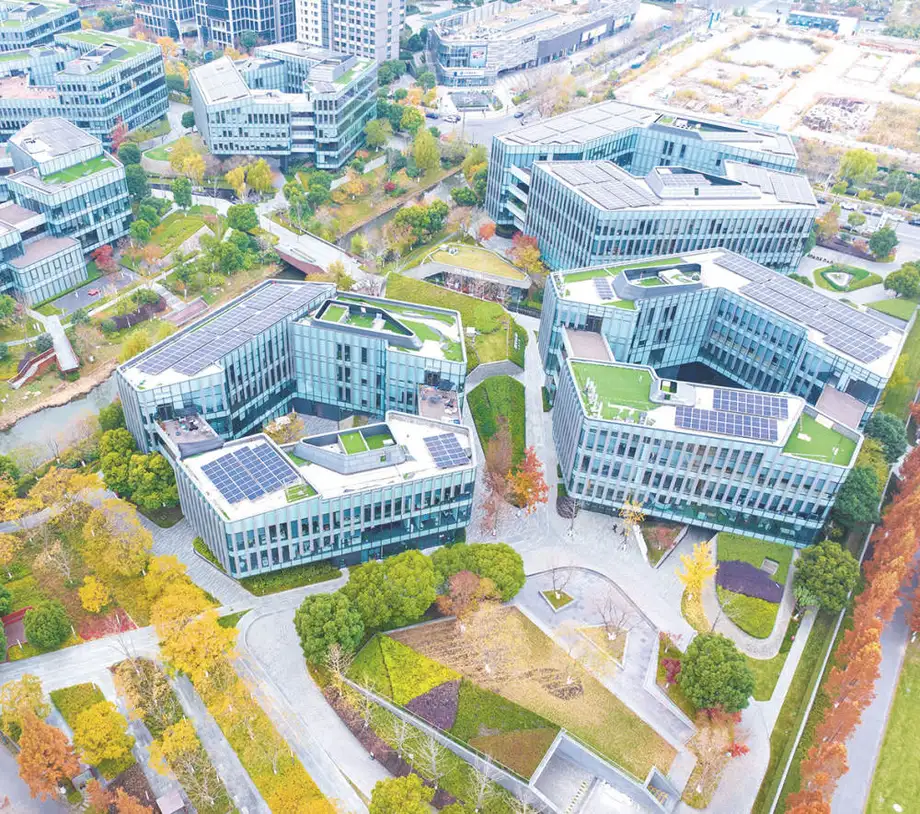
The green development agenda calls for a group of zero carbon factories and industrial parks, stronger green manufacturing and services, and a larger green energy industry. It also requires better carbon emissions statistics, measurement standards, product carbon labels and product carbon footprint management. A product carbon footprint measures emissions associated with a product under a defined accounting method.
Wang Minna, chair of Chaoteng Energy, said the Ministry of Industry and Information Technology has proposed a target of 1,000 national zero carbon factories by 2030. She also put the number of completed national zero carbon parks at 52, with hundreds of provincial parks under construction. These figures concern different categories, so they should not be treated as a direct comparison of progress against the factory target.
The NDRC is seeking views on guidance for a second batch of national zero carbon parks. Wang Wentang, deputy director of the expert committee at the Beijing Green Industry Development Promotion Association, identified two practical issues: whether park administrators can obtain reliable emissions data and whether they have sufficient authority to secure action from resident companies.
Wang said national parks generally have greater administrative influence than many provincial and smaller parks. He recommended clearer responsibilities for data collection and implementation, a basic carbon emissions statistics system, and rewards and penalties to encourage participation.
He also identified a mismatch in electricity accounting. Under his description of the existing indicators, purchased green electricity and certificates can count toward the share of nonfossil energy consumption, but electricity bought through the main grid does not count toward a separate measure of physically recognized nonfossil electricity consumption. That measure recognizes supplies such as electricity generated and used on site, dedicated direct connections and park microgrids.
Wang recommended changing the recognition rules to include qualifying green electricity purchased through the main grid. This is a proposal, not an announced change. It illustrates why investment incentives alone may not be enough: companies also need clear rules determining whether their purchases satisfy certification requirements.
Clean power needs markets as well as equipment
The energy proposals include orderly development of advanced nuclear fission technologies, a power system with a high share of renewable energy, and better policies for renewable integration and grid regulation. The NDRC explanation gives three reasons for this focus: energy is a major field of industrial transformation, it supports carbon peaking and carbon neutrality, and it provides reliable power for new productive activity.
Yue Hao, a senior expert at State Grid Jibei Electric Power, identified opportunities in direct green electricity connections and coordinated systems combining generation, grids, demand and storage. Computing centers, advanced manufacturing and production of green hydrogen, ammonia and methanol have demand for stable, affordable electricity with a traceable renewable origin.
Yue also pointed to virtual power plants and interaction between electric vehicles and the grid. A virtual power plant coordinates distributed resources, such as batteries and adjustable electricity demand, so they can respond together to power system needs. Vehicle and grid interaction can allow charging to respond to supply conditions and, where supported, vehicles to return electricity to the system.
Zhong Ming, a senior expert at the China Electric Power Research Institute, said market arrangements remain incomplete. Flexible thermal generation and storage help balance renewable output, but mechanisms for passing their costs through the market are not yet adequate. Coordination between markets for grid support services, capacity, green electricity and certificates also needs improvement.
These concerns connect the document's energy and industrial goals. More renewable generation must be matched by the ability to use it when and where it is available, and by payment arrangements that support balancing resources. Zhong identified industry as a difficult area because of long production chains, widely differing technologies and the persistence of established processes.
Reform, talent and openness complete the package
The guidelines propose an open, shared and secure nationally integrated data market, improved market regulation and a greater supply of innovative financial products. They also seek closer connections between science and the economy, rather than treating research policy and industrial policy as separate activities.
Liu Zhenzhong, a researcher at the NDRC's Institute of Industrial and Technological Economics, explained why institutional change is part of the agenda:
New quality productive forces are primarily driven by transformational technological breakthroughs, which bring profound changes to how innovation is organized, industries evolve and resources are allocated,
He added:
These changes require deeper reforms to reshape institutional frameworks and remove obstacles to development.
The talent measures focus on training people urgently needed for new productive activity and improving policies governing their employment and movement. The NDRC official highlighted domestic training, incentives and evaluation, and reasonable mobility. The issue is not just producing more skilled workers, but ensuring that institutions can recruit, reward and use them effectively.
The document pairs greater technological independence with international cooperation. It calls for a global innovation cooperation network and encourages foreign venture capital institutions and international standards organizations to develop in China. At a September seminar in Beijing, Nigeria's ambassador to China, Abdulrahman Bello Dambazau, said the attention to talent, research and industrial upgrading could provide a useful reference for developing countries.
The dates and decisions to watch
The policy sits within a sequence extending from discussion of international cooperation to implementation during the current planning period. The main dates and milestones are:
- September 2026: A Beijing seminar discussed new quality productive forces and potential opportunities for countries at different stages of development.
- October 9, 2026: The Central Committee and State Council issued the guidelines, and an NDRC official explained their objectives and implementation principles.
- 2026 to 2030: The 15th Five Year Plan includes 28 related major projects among its 109 projects.
- 2030: The national zero carbon factory target cited by Wang Minna is 1,000 factories.
Several operational decisions are still unspecified in the reports, including the size and timing of the increased research tax deduction, detailed arrangements for industrial AI testing bases and any change to green electricity certification rules. No closing date is given for consultation on the second batch of zero carbon park guidance.
The immediate instruction is for regions and departments to develop practical paths, coordinate their work and account for local conditions. The measure of success will be whether research, investment and reform translate into more efficient production, without the duplication and speculative expansion the guidelines warn against.
Key Points
- China issued 19 measures across five areas of innovation on October 9, 2026.
- The framework prioritizes productivity, enterprise research, industrial AI and green development.
- Traditional industries are to be upgraded, not abandoned in favor of fashionable sectors.
- Research tax support is proposed, but the new deduction ratio and implementation date are unspecified.
- Zero carbon factory and park development faces unresolved data, administrative and electricity recognition issues.
- Energy market reform is needed alongside renewable generation, storage and grid technology.
- Officials face accountability for major losses caused by indiscriminate investment or policy misuse.