

Two months to inspect every registered facility
Thailand has ordered inspections of all 1,203 registered facilities caring for older people and people dependent on others, following complaints of confinement and assault and the revocation of a Kanchanaburi nursing home's licence. The checks must be completed within two months and will examine premises, safety and services, including whether operators are providing psychiatric treatment beyond their legal authority.
Contents
- Two months to inspect every registered facility
- How the investigation spread
- Kanchanaburi licence revoked after capacity breaches
- Confinement claims and conflicting resident counts
- Nonthaburi inspection uncovers additional premises
- Existing rules require protection against abuse
- Psychiatric care has limits, even in a licensed home
- Penalties depend on the offence
- Registry totals and oversight still need clarification
- Key Points
The nationwide response follows inspections at Sothornchai Nursing Home in Tha Muang district, where officials reported 129 beds against 50 declared in its application, and at care premises in Nonthaburi, where an investigation extended to two additional buildings operating without licences.
Deputy government spokesperson Ploythalay Laksameesaengjan outlined the national inspection programme on October 11, 2026. Public Health Minister Pattana Promphat directed the Department of Health Service Support, its central office and all 12 regional support centres to work with provincial public health offices.
The inspections will apply the Health Business Establishments Act 2016 and ministerial standards issued in 2020. Those rules go beyond building conditions: they require regular assessments of residents, protection against abuse, appropriate staffing and emergency referrals. The immediate issue is whether the care actually delivered matches both those requirements and each establishment's licence.
Licensing action and criminal investigations are proceeding separately. Officials have reported operating breaches in Kanchanaburi and Nonthaburi, while police are gathering evidence about alleged assault and unlawful detention. The allegations against individual staff and operators should not be treated as criminal convictions.
How the investigation spread
The sequence moved from a complaint about one Kanchanaburi facility to inspections of connected premises in Nonthaburi and a nationwide order. The main developments were:
- October 5, 2026: Crime Suppression Division officers inspected the Tha Muang care centre after a former resident alleged assault and confinement.
- October 6: Health and social welfare officials examined the Kanchanaburi facility, its licensing conditions and residents' welfare.
- October 7: The Department of Health Service Support revoked the Kanchanaburi home's operating licence following the previous day's inspection.
- October 8: Officials inspected Baan Sermsuk Nursing Home and related care premises in Soi Rewadee, Mueang Nonthaburi district.
- October 11: The government detailed the order to inspect all 1,203 registered elderly and dependent care facilities within two months.
The nationwide inspection instruction was already being described by officials on October 7. The October 11 announcement set out the precise registered total and the three areas inspectors would examine. No exact calendar date for completion was given, so the two month instruction should not be converted into a fixed deadline without further confirmation.
Kanchanaburi licence revoked after capacity breaches
Department of Health Service Support director general Dr Puwadet Surakhot inspected Sothornchai Nursing Home on October 6 and signed the revocation notice the following day. Officials reported substandard premises and care, unauthorised psychiatric services, unlawful confinement and medical records lacking the required detail and accuracy.
The inspection found 129 beds compared with the 50 specified in the application. That is 79 additional beds, or 2.58 times the declared number. About 4,300 square metres were in use against 1,600 declared, approximately 2.69 times the stated area. These discrepancies concern the scale and layout of the operation, not simply the condition of individual rooms.
Puwadet said action covered both the business and management licences, which were held by the same person. The licence had been renewed online under Public Sector Development Commission rules. Although the department conducts annual visits, the next scheduled inspection was not due until November.
The owner had told police that the licence was most recently renewed on August 3 and that the centre underwent annual inspections. Social welfare officials identified an authorisation date of October 28, 2021. The owner said the home began operating at its present location around 2006 and changed to elderly and dependent care in 2021.
A separate corporate account identified Sothonchai Nursing Home Co Ltd as registered on September 17, 2024, with capital of 2 million baht. Its latest reported revenue was 7.43 million baht, with a net profit of 474,102 baht. Those company figures describe the business entity and should not be confused with the earlier dates given for the care operation or its licence.
Confinement claims and conflicting resident counts
The Kanchanaburi investigation began after a former resident alleged that her son and daughter in law had placed her at the home against her will for more than two years. She alleged assault, threats and forced medication, and said she secretly contacted her sister for help. Her claim that relatives wanted control of her business also remains an allegation.
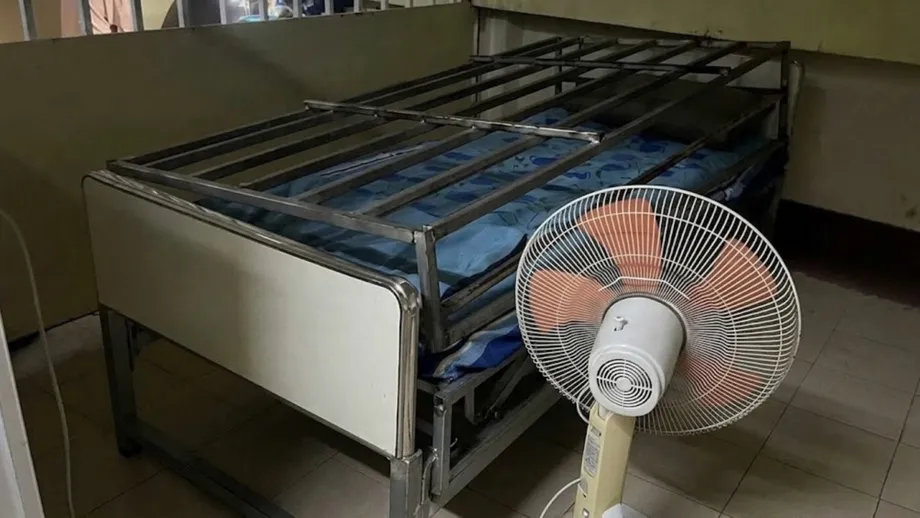
Police inspection images showed iron bars or cages around sleeping areas, externally padlocked rooms, barbed wire and reinforced steel framing around the premises. Investigators were collecting CCTV footage and witness evidence, interviewing staff and residents, and considering possible unlawful detention and mistreatment charges.
Reports differ on the number and classification of residents. Police inspection details gave 92 residents, comprising 75 men and 17 women, with 19 staff. Separate health inspection accounts described around 100 people, including 92 psychiatric patients. A later account referred to more than 100 other patients, more than 90 of them psychiatric patients, mostly aged 18 to 59. Another gave almost 90 psychiatric patients.
These figures cannot be treated as a single verified census. They may describe different stages or groups, but no reconciliation has been announced. They also show why the investigation concerns more than elderly care: many people reportedly receiving psychiatric services were working age adults.
Teerapop Rangsisukanon, the owner's son, said he designed the locked metal structures to prevent residents from harming themselves or others. He also said he would accept responsibility for shortcomings in assessments and medical record reviews. He reported that five residents had left, including three members of one family.
The owner defended barred rooms as intended for residents considered prone to violence or self harm. That explanation does not settle whether the restraints were lawful or clinically appropriate. Authorities were examining individual conditions and treatment records rather than accepting the presence of a licence as proof that every practice was permitted.
Nonthaburi inspection uncovers additional premises
The October 8 inspection in Soi Rewadee 22 began amid reports that Baan Sermsuk Nursing Home was accommodating more than 81 psychiatric patients without doctors or specialist staff. Dr Sirisak Thitidilokrat, deputy director general of the Department of Mental Health, led the inspection with health regulators, provincial officials, police and other agencies.
Supachai Singho, director of Health Service Support Centre 4, initially said the licensed facility had permission for nine beds, while preliminary information suggested capacity for 81. Officials were checking licence validity, service conditions, bed numbers and possible related buildings.
A subsequent account of the inspection described three premises. The original single storey building had 14 beds and 11 people receiving care, despite authorisation for nine beds. Officials reported that it failed premises, safety and service standards.
An adjacent three storey building was described as providing 66 beds beyond the authorised operation and accommodating 59 psychiatric patients. A detached two storey house about 200 metres away had 19 beds and 14 psychiatric patients. Officials said neither of those additional buildings held a health establishment licence.
The preliminary reference to capacity for 81, the report of more than 81 psychiatric patients, and the later building by building figures differ. The later account listed 73 psychiatric patients across the two unlicensed buildings, plus 11 people in the original premises. It did not explain how those figures related to the earlier estimates.
Residents alleged chaining, restricted movement, assaults and inadequate medication. One said they had been restrained on arrival but had not been assaulted. Another, who said he had lived there since 2023, alleged beatings and a lack of medication when his diabetes worsened. He said his parents supplied his medicine, while the home provided three meals daily.
Complaints also included alleged food deprivation and restraints hidden beside a staircase. These allegations were not independently established in the initial inspection account. Officials later reported licensing and standards breaches, gathered evidence for legal action, and prepared to consider suspension or revocation. No completed criminal judgment was announced.
Existing rules require protection against abuse
The Department of Health Service Support's care establishment document, hosted by the Department of Older Persons, brings together licensing information, the 2016 law and the 2020 ministerial regulations. It defines the regulated business broadly, covering daytime activities, assistance with daily living, accommodation, rehabilitation and supportive care for older or dependent people with health problems.
The definition excludes services conducted within medical facilities governed by medical facility legislation. This distinction matters because permission to run a care establishment does not automatically authorise the operator to run a psychiatric treatment facility.
The 2020 service standards require an assessment of care needs and communication ability when a person is admitted, followed by reassessment every three months. The rules also require respect for privacy and human dignity, with measures to prevent physical, psychological, financial and other abuse, including sexual abuse.
Relevant employees must receive training on protecting older people's rights. Facilities providing extended stays or overnight activities must have appropriate, effective and sufficient personnel monitoring residents at night. An emergency referral system is also required.
For the specified category providing overnight care and supportive treatment, the rules require coordination with professionals from different disciplines according to a practitioner's treatment plan. They also set a maximum of five people receiving care for each care provider. That ratio applies to this category, rather than being a universal rule for every type of establishment.
These provisions give inspectors concrete matters to check alongside cleanliness, accessible entrances and exits, alarms, firefighting equipment, first aid supplies and continuous safety measures. A building can have basic equipment yet still fail service standards if residents are not assessed, protected or cared for by qualified personnel.
Psychiatric care has limits, even in a licensed home
Initial Kanchanaburi inspection statements said an elderly or dependent care establishment could look after psychiatric patients classified at the permitted green level. Officials described that level as not involving severe agitation, serious disturbance or a risk of harming others. Patients beyond that level must be transferred to an appropriately licensed medical or psychiatric facility.
This is more precise than treating every resident with a psychiatric diagnosis as automatically prohibited. The legal concern is the condition of the person, the services being delivered and whether those services require medical authorisation and specialist staff.
Department of Mental Health director general Dr Kittisak Aksornwong said some aggressive or severely agitated patients requiring behavioural control need dedicated isolation rooms with strong doors and interiors made safe for patients. He said enclosing beds in cages, or caging psychiatric patients showing no abnormal symptoms, was not standard treatment and could not be used.
Deputy health service support director general Arkhom Praditsuwan similarly said nursing homes are not specialist medical facilities and should not admit psychiatric patients with severe symptoms or needs for special control when they lack resident psychiatric doctors and nurses.
The Department of Mental Health planned individual assessments before transfers from Kanchanaburi. In Nonthaburi, operators were instructed to contact relatives. Mental health officials, the Ministry of Social Development and Human Security, and provincial health authorities were to help arrange suitable care for people whose relatives could not be reached. Final transfer totals were not announced.
Penalties depend on the offence
The government warned of up to six months in prison, a fine of up to 50,000 baht, or both, under the Health Business Establishments Act 2016. The official document identifies that penalty in Section 42 for contravention of Section 12, so it should not be assumed that every failure of a care standard attracts exactly the same punishment.
Providing psychiatric treatment as an unlicensed medical facility can carry a separate maximum penalty of five years in prison, a fine of 100,000 baht, or both, under the 1998 medical facility legislation. English accounts call that law the Medical Facilities Act or the Sanatorium Act; the Thai accounts identify the same 1998 statute.
These are maximum penalties, not sentences already imposed. Licence revocation, corrective orders and suspension are regulatory measures. Allegations of assault or unlawful detention require separate investigation and decisions about criminal proceedings.
Registry totals and oversight still need clarification
The government gave the current inspection target as 1,203 registered facilities, while earlier statements rounded it to about 1,200. Puwadet described the planned scope in these words:
The DHSS will inspect standards at all 1,200 elderly care centres registered with it nationwide and complete the checks within the next two months,
The official licensing document presents a different total of 927, with category figures of five, 17 and 905. Another line in the same document lists four, 16 and 888, which add to 908. The document does not resolve that internal discrepancy or establish a directly comparable reference date for the October total of 1,203.
The difference between 927 and 1,203 is 276 facilities, but it cannot responsibly be described as measured growth without matching dates and definitions. The document also lists establishments by province, including their category, telephone number and authorisation date, offering a way to check an operator's recorded licensing details.
Social Development and Human Security Minister Nikorn Somklang assigned assistant minister Chanok Chanthathong and welfare agencies to the October 6 Kanchanaburi visit. The ministry planned to bring the case before the National Committee on Older Persons to review oversight of both public and private care establishments.
The ministry also proposed further development of the Nirun care monitoring system to support tracking of private facilities and information sharing. No committee meeting date or implementation deadline was announced. Questions still requiring answers include the final resident counts, completed transfer arrangements, criminal charging decisions and the results of the national inspections.
People can report unlicensed or substandard establishments to the Department of Health Service Support or their provincial public health office. Concerns about rights violations, neglect, violence or inappropriate care can also be reported through the Social Development and Human Security Ministry's free 1300 hotline, available 24 hours a day.
Key Points
- Thailand ordered inspections of all 1,203 registered elderly and dependent care facilities within two months.
- Kanchanaburi inspectors reported 129 beds against 50 declared, followed by licence revocation on October 7, 2026.
- The Nonthaburi investigation identified excess beds at licensed premises and two additional unlicensed care buildings.
- The 2020 rules require assessments every three months, protection against abuse, appropriate night staffing and emergency referrals.
- Psychiatric care must remain within permitted limits; severe cases require an appropriately licensed medical facility.
- Resident counts differ between reports, and police investigations into alleged confinement and assault remain separate from licensing action.
- Rights and welfare concerns can be reported through the free 1300 hotline at any time.