Slower growth and rising prices squeeze the recovery
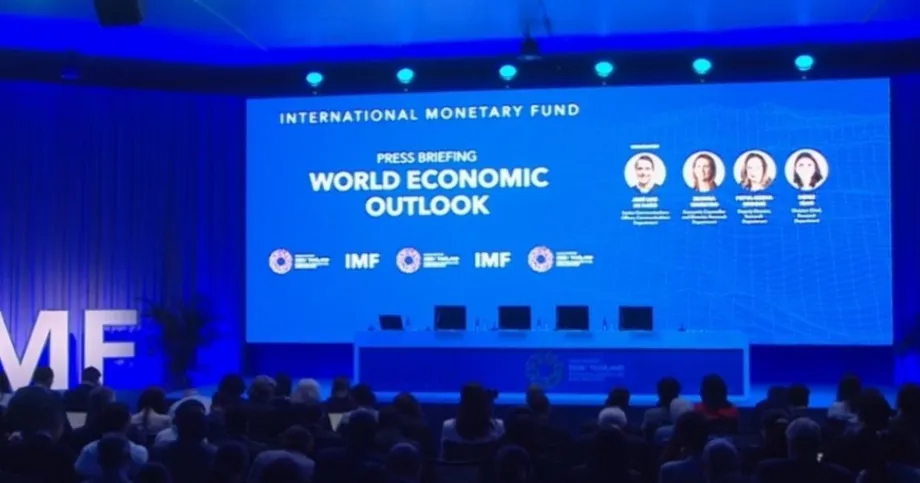
The International Monetary Fund has cut its growth forecast for Bangladesh to 3.2% for fiscal 2026/27 and raised its inflation projection to 10.9%, putting the country below the growth estimates of both the World Bank and the Asian Development Bank. The figures were released on October 13, 2026, in the IMF's World Economic Outlook during the institutions' annual meetings in Bangkok.
Contents
- Slower growth and rising prices squeeze the recovery
- Three lenders lower their expectations
- How the outlook changed during 2026
- Why the dates and growth estimates need care
- Inflation threatens to reverse last year's easing
- Industry, lending and public investment remain weak
- Higher energy costs add external pressure
- Bangladesh trails the regional growth forecasts
- Financing talks have not produced a confirmed package
- Key Points
The revision reverses much of the recovery anticipated earlier this year. In April, the IMF expected Bangladesh to grow by 4.3%, with average inflation of 6%. Its latest assessment lowers growth by 1.1 percentage points and raises inflation by 4.9 percentage points. Since July alone, the growth forecast has fallen from 3.5% to 3.2%.
If realised, the growth rate would be below the 3.45% expansion recorded during the pandemic in fiscal 2019/20. Bangladesh Bureau of Statistics figures cited in reports put growth at 3.11% in fiscal 1988/89, the historical comparison behind descriptions of the new forecast as the weakest in nearly four decades.
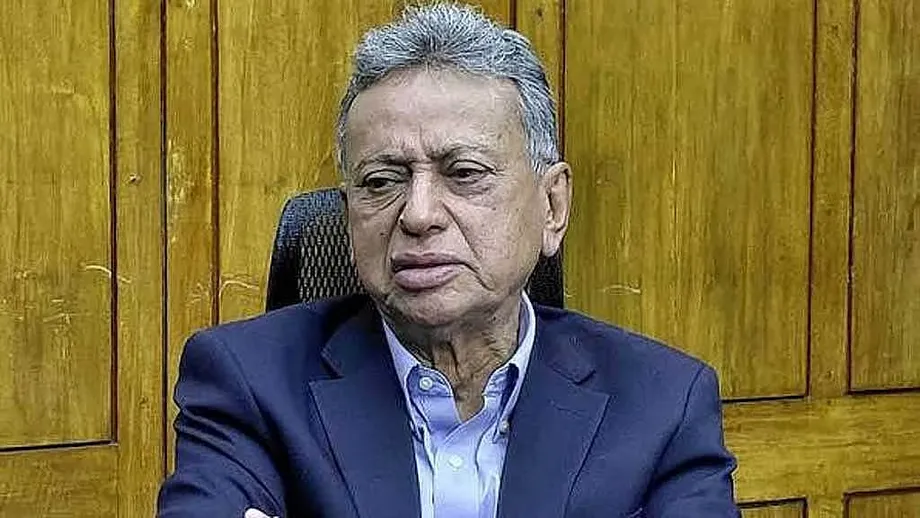
Finance Minister Amir Khosru Mahmud Chowdhury sought support from development partners in Bangkok and met IMF Executive Director Urjit Patel and World Bank Managing Director of Operations Anna Bjerde on October 13. The discussions come as Bangladesh seeks financing while trying to repair banks, address energy shortages and protect households from persistent price increases.
The central concern is the combination of the two forecasts. A growing economy can still leave households worse off when prices rise faster than earnings. Slower expansion also makes it harder for businesses to increase hiring and for the government to collect the revenue needed to fund support.
Three lenders lower their expectations
The IMF now has the lowest growth forecast among the three major development lenders. The World Bank projects 3.4% for fiscal 2026/27, while the Asian Development Bank expects 4%. The IMF estimate is 0.2 percentage points below the World Bank's and 0.8 points below the ADB's.
All three have reduced their expectations, although their forecasts do not follow identical paths. The World Bank cut its estimate from 4.6% in April to 3.4% on October 6, a reduction of 1.2 percentage points. The ADB's September Asian Development Outlook lowered its forecast from 4.5% to 4%; one account dates that earlier estimate to July.
The World Bank attributes the weaker outlook to energy shortages, banking vulnerabilities, weak investment, subdued credit and tighter fiscal constraints. The ADB also identifies structural energy deficits, banking stress and persistent inflation as obstacles to expansion.
The World Bank described why its expected recovery had failed to arrive:
"This deterioration reflects a more protracted drag from energy shortages, banking sector weakness, subdued credit growth, and tighter fiscal constraints than previously anticipated. Export growth is expected to remain weak," the World Bank said.
The institutions also disagree about the scale of future price pressures. The World Bank forecasts inflation of 8.6%, and the ADB projects 9%. The IMF's 10.9% estimate is 2.3 percentage points above the World Bank's and 1.9 points above the ADB's. These are separate forecasts, not a single agreed assessment.
How the outlook changed during 2026
The successive revisions show that the deterioration was not confined to one October announcement. Expectations weakened over several months, while lending and industrial indicators pointed to constraints on recovery.
- April: The IMF projected growth of 4.3% and inflation of 6% for fiscal 2026/27. The World Bank expected growth of 4.6%.
- June: Private sector credit growth fell to 4.5%, described as its lowest rate in 33 years.
- July: The IMF's growth forecast stood at 3.5%.
- September: The ADB lowered its growth projection to 4% from 4.5%.
- October 6: The World Bank projected growth of 3.4% and inflation of 8.6%.
- October 12: Bangladesh outlined its financing needs and reform priorities in Bangkok.
- October 13: The IMF released its 3.2% growth and 10.9% inflation projections, while Chowdhury met senior lender representatives.
The IMF estimates growth of 3.6% in fiscal 2025/26, compared with 3.5% in the preceding year. On that series, the latest forecast represents a slowdown of 0.4 percentage points after a small improvement.
Why the dates and growth estimates need care
Reports differ over the periods covered by the IMF figures. Most describe 3.2% growth and 10.9% inflation as forecasts for fiscal 2026/27. Another account presents the same figures as calendar year 2027 projections, with growth of 3.5% in 2025 and 3.6% in 2026.
That distinction matters because a fiscal year and a calendar year cover different periods. Bangladesh's fiscal 2026/27 runs from July 2026 through June 2027. A calendar year 2027 forecast covers January through December. The figures should not be treated as interchangeable without checking the country notes attached to the IMF dataset.
There are also differences between institutions' estimates of past growth. The IMF's latest figure for fiscal 2025/26 is 3.6%, while the World Bank estimate discussed in the poverty and growth outlook was 3.4%. The IMF's latest 3.5% estimate for fiscal 2024/25 also differs from the 3.7% cited in its earlier January assessment.
The World Bank warns of a fourth consecutive year of slowing growth, whereas the IMF's latest figures show a slight increase between fiscal 2024/25 and 2025/26. Both point to weak activity, but they should not be combined into one seamless historical series. Likewise, 3.2% remains a forecast, not confirmation that Bangladesh has recorded its weakest growth in decades.
Inflation threatens to reverse last year's easing
The IMF's price outlook suggests that the relief experienced in the previous year may not last. Average inflation fell from 10% in fiscal 2024/25 to 8.7% in fiscal 2025/26, according to the reported figures. A rise to 10.9% would reverse that decline and exceed the earlier 10% rate by 0.9 percentage points.
Headline inflation in the first three months of fiscal 2026/27 was 8.32%, 8.26% and 8.34%, respectively. Their simple arithmetic average is about 8.31%, below all three lenders' forecasts for the full year. That comparison does not establish the eventual annual figure, but it shows how much higher the IMF expects average price pressure to be.
Inflation measures the rate at which prices rise, rather than whether prices are high or low. A fall from 10% to 8.7% means prices are increasing more slowly, not returning to their earlier levels. Households therefore enter the projected renewed acceleration after already absorbing substantial increases.
The household risks are visible in the World Bank's poverty estimates: national poverty rose from 18.7% in 2022 to an estimated 22.5% in 2026 and could reach 22.8% in fiscal 2027. These are modelled estimates, but they underline why weak income growth and renewed inflation would be especially difficult for families with little financial cushion.
Industry, lending and public investment remain weak
Industrial output grew by just 2% in fiscal 2025/26, according to the World Bank's assessment. Industry contracted in the third quarter for the first time since the pandemic, indicating that production difficulties extended beyond a slower rate of expansion.
Energy uncertainty and banking weakness are restricting private investment. Credit growth of 4.5% in June 2026, the reported low in 33 years, means lending to private businesses was expanding only slowly. It does not by itself measure investment spending, but it supports the picture of limited financial momentum.
Government investment also reached a historic low amid fiscal constraints and implementation problems. Reduced public investment weakens immediate demand for construction, equipment and services. Delayed projects can also postpone the infrastructure improvements businesses need to produce and transport goods.
The World Bank expects economic weakness to persist through fiscal 2027/28. Its growth projection for that year is 3.9%, a modest recovery from its 3.4% forecast for fiscal 2026/27. The bank had anticipated stronger activity following the return of political stability, but energy, credit and budget constraints have continued to hold back the rebound.
Higher energy costs add external pressure
The October World Economic Outlook, titled Resilience Under Strain, Urgent Choices, describes a global economy facing pressure from Middle East conflict, expensive energy and trade tensions. Bangladesh's dependence on imported fuel exposes it to those costs while domestic energy shortages already restrict production.
The IMF projects average crude oil prices in 2026 to be 41% above their 2025 level and natural gas prices to rise by 48%. The account of its analysis puts crude oil at $126 a barrel at the end of March and around $100 in early June. Gulf crude exports had recovered to 88% of their level before the war by September, still 12% short of that benchmark.
Higher import prices require more foreign currency for the same quantity of fuel. They can also raise electricity, transport and factory costs. Those pressures provide a connection between the energy constraints identified by the lenders and their warnings about weak output and high inflation.
The IMF figures presented on a calendar year basis also project Bangladesh's current account deficit widening from 0.3% of GDP in 2026 to 2.1% in 2027, after a balance close to zero in 2025. That is a deterioration of 1.8 percentage points between 2026 and 2027.
The current account records trade in goods and services alongside income and transfers, including remittances. A larger deficit indicates a greater need for external financing, but does not by itself establish how far reserves or the exchange rate will change. Capital inflows, borrowing and other financial transactions also matter.
Bangladesh trails the regional growth forecasts
The reported IMF projections put India at 7% growth and Bhutan at 6.9%, compared with Bangladesh's 3.2%. Those gaps are 3.8 and 3.7 percentage points, respectively. The Maldives is projected to grow by 3.8%, while Nepal and Sri Lanka are each forecast to expand by 3.7%.
Bangladesh also has the highest inflation projection among those economies. The IMF estimates 4.4% for India, 6.5% for Bhutan, 2.5% for the Maldives, 5.8% for Nepal and 5.4% for Sri Lanka. Bangladesh's 10.9% forecast is more than twice India's, combining weaker expected expansion with faster price increases.
Another account gives 2026 growth forecasts of 8.4% for Vietnam, 5.1% for Indonesia and 4.5% for China, against Bangladesh's 3.6%. These comparisons indicate the scale of Bangladesh's weak outlook, although differences in national reporting periods require care when ranking countries.
Financing talks have not produced a confirmed package
Bangladesh's appeal in Bangkok follows its budget support request of around $4 billion for fiscal 2026/27. The government has described a five year recovery strategy centred on repairing banks, raising tax revenue, protecting poor households and reopening closed factories. Agreement with lenders on broad goals does not amount to approval of funding.
The status of the previous IMF arrangement also remains disputed following Chowdhury's programme cancellation statement. He said on October 4 that he had cancelled the programme, while officials described continuing discussions about a replacement and differed over whether the existing arrangement remained active.
The IMF's wider policy advice favours temporary assistance directed at poor and vulnerable households rather than broad measures to suppress market prices. Its analysis estimates that broad price suppression can require three to 22 times as much public money as targeted support. That is a general comparison, not a cost estimate for a particular Bangladesh programme.
For Bangladesh, the practical tension is between protecting purchasing power and conserving limited public funds while energy and banking reforms proceed. The new forecasts increase the urgency of those decisions, but do not establish the terms, amount or approval date of additional financing.
The annual meetings run through October 18. No confirmed deadline for a new loan decision or detailed timetable for the proposed reforms has been announced in these accounts. The next concrete developments will be any financing agreement and the commitments attached to it, rather than the fact that discussions are continuing.
Key Points
- The IMF forecasts Bangladesh's growth at 3.2% and inflation at 10.9%, compared with April estimates of 4.3% and 6%.
- The World Bank projects growth of 3.4%, while the ADB expects 4%. Both have lowered their forecasts.
- Energy shortages, banking weakness, subdued lending and restricted public investment are weighing on recovery.
- Reports differ over whether the IMF figures refer to fiscal 2026/27 or calendar year 2027.
- The IMF also projects a wider current account deficit and substantially higher global fuel prices.
- Bangladesh is seeking further support, but a new financing package and its conditions have not been confirmed.