Reform agreement meets an urgent financing need
Bangladesh is seeking around $4 billion in budget support for fiscal 2026/27 while pursuing a five year recovery strategy that its government says shares key goals with the International Monetary Fund and World Bank. The priorities include repairing banks, raising tax revenue, protecting poor households and reopening closed factories, alongside financing to absorb higher energy import costs.
Contents
- Reform agreement meets an urgent financing need
- Bangladesh wants reforms on its own terms
- A replacement IMF programme is still being negotiated
- Energy costs drive the request for a financial cushion
- Bank repair requires more than fresh money
- Tax collection must support the spending promises
- Poverty protection needs a reliable baseline
- Factory financing carries an unanswered interest rate question
- Thailand talks target food processing and shipping
- Key Points
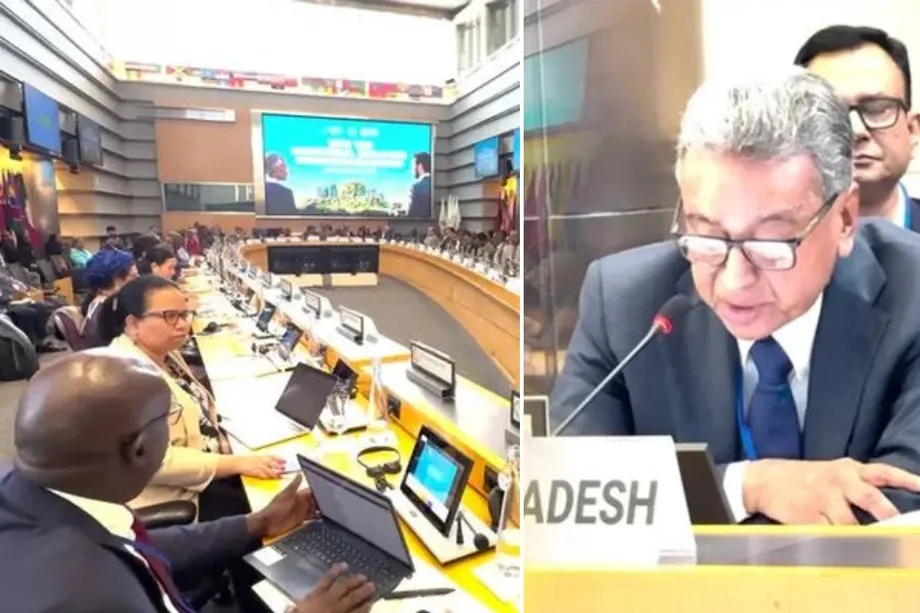
Speaking in Bangkok on October 12, 2026, Prof Dr Rashed Al Mahmud Titumir, the prime minister's adviser on finance and planning, said the government and the two institutions had reached broad policy alignment. Finance and Planning Minister Amir Khosru Mahmud Chowdhury said IMF negotiations were continuing and a new World Bank partnership framework was being discussed.
That alignment does not yet amount to an approved financing package. The minister did not disclose the size or terms of potential additional support, and the status of Bangladesh's previous IMF arrangement remains contested. The government also faces practical differences with lenders over banking regulation, energy pricing and the pace of reform.
The economic starting point is difficult. The IMF recorded growth of 3.7 percent in fiscal 2024/25, down from 5.8 percent two years earlier, and tax revenue equivalent to just 6.9 percent of gross domestic product. Its January assessment warned that weak banks, persistent inflation and insufficient revenue were weighing on recovery.
Titumir said the government would retain responsibility for choosing and implementing reforms. He described investment, industrial production and social protection as connected parts of the recovery plan, rather than separate programmes that could succeed independently.
Bangladesh wants reforms on its own terms
The delegation to the October 12–18 annual meetings at Bangkok's Queen Sirikit National Convention Centre is led by Chowdhury. It also includes Bangladesh Bank Governor Md Mostakur Rahman, Finance Secretary Dr Md Khairuzzaman Majumder, Acting National Board of Revenue Chairman Ahsan Habib and Titumir.
Bangladesh intends to present its own reform plan, with measures phased according to national priorities and economic conditions. Titumir, explaining the public expectations behind that plan, said:
The people want discipline in the financial sector, higher tax collection relative to GDP, increased spending on social protection and employment generation through industrialisation.
The IMF's Article IV assessment, published January 30 after its Executive Board concluded the consultation on January 26, also called for stronger revenue collection, expanded social safety nets and a credible banking reform strategy. Article IV consultations are regular reviews of a member country's economy, not approvals of new loans.
The assessment concerned the interim authorities and the period before national elections. It stressed that ownership by the incoming administration would be critical. The October government's insistence on directing reform therefore fits one part of the IMF's position, although agreement on goals does not establish agreement on every condition or deadline.
A replacement IMF programme is still being negotiated
Bangladesh entered a $4.7 billion IMF programme in January 2023, which the interim government subsequently expanded to $5.5 billion. A current account describes the elected government as having exited that arrangement in May, eight months before expiry, and later seeking a fresh package.
However, the dispute over programme cancellation detailed on October 11 included officials saying the existing arrangement remained active, with a stalled sixth instalment still potentially subject to review. Other officials interpreted the minister's cancellation statement as rejection of the old agreement, not abandonment of negotiations for a replacement.
Disbursement figures also differ. The current account puts receipts at $3.8 billion in five tranches, while Finance Division figures cited in the October 11 coverage put them at $3.64 billion in five instalments. No reconciliation of those totals has been established.
The sequence of events shows why continued talks should not be confused with approval:
- January 2023: Bangladesh entered the original $4.7 billion IMF programme.
- May 2026: The government reportedly decided to exit the existing arrangement.
- June 3, 2026: The IMF confirmed Bangladesh had requested a replacement programme.
- October 12, 2026: Chowdhury said discussions were continuing in Bangkok.
- October 13 or 14, 2026: Another round of IMF talks was expected.
The roughly $4 billion sought in budget support for fiscal 2026/27 is a target across multilateral and bilateral lenders. It is not a confirmed IMF commitment. Budget support helps finance government expenditure, unlike financing tied to a specific construction or development project.
Energy costs drive the request for a financial cushion
Chowdhury said the World Bank had responded positively to Bangladesh's request for support against rising energy import costs. Existing cooperation was continuing while the new partnership framework remained under negotiation, and World Bank teams were expected to visit Dhaka for further discussions.
The finance minister explained why Bangladesh wanted support beyond its current projects:
Our cooperation with the World Bank under the partnership is not only about existing projects. A global disaster is going on in the energy sector, and we need a cushion for this.
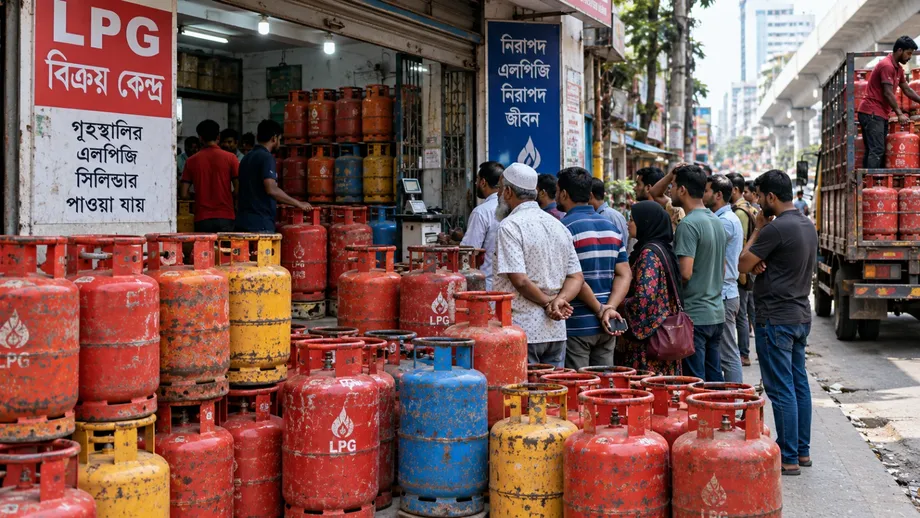
Titumir attributed the additional pressure to the Middle East conflict that he said began on February 28. The government had not fully adjusted domestic energy prices to international market levels, he said, because it wanted to limit the burden on consumers. Protecting households in this way leaves additional costs to be financed elsewhere.
The World Bank's October development recommendations put energy security and governance among three immediate reform priorities. They called for more domestic gas production, improved infrastructure for liquefied natural gas, stronger electricity transmission and distribution, and investment in renewable energy, storage and efficiency.
Those recommendations also proposed a transparent pricing framework that gradually brings energy prices closer to actual costs. The government's immediate consumer protection policy and the lender's pricing recommendation create a practical issue for negotiations: how to fund relief now while reducing dependence on costly imported fuel.
No amount, financing terms or approval date has been disclosed for the requested energy cushion. Financing needs for climate resilience and essential infrastructure are also on the government's agenda.
Bank repair requires more than fresh money
Titumir said restoring confidence in banks would require refinancing support, with discussions underway involving the International Finance Corporation and other institutions. The IFC is the World Bank Group institution focused on private sector development. Its expected involvement has not been accompanied by a disclosed financing amount or list of participating banks.
The IMF's January assessment set out a broader repair programme: estimates of capital shortages, defined government support, legally sound restructuring plans and reviews of bank assets. An asset quality review examines whether loans and other assets are worth what a bank reports, including whether losses have been properly recognised.
By the World Bank's October development update, Bangladesh Bank had completed such reviews for six Islamic banks, but further reviews were progressing slowly. Greater disclosure and closer alignment with international accounting and regulatory standards had exposed previously underreported defaulted loans and substantial capital shortages, particularly in state banks and Islamic banks.
The World Bank also identified a regulatory reversal. A 4 percent ceiling on bank intermediation spreads was reinstated in June 2026, reversing part of the market based interest rate framework introduced in May 2024. The spread is the difference between what banks earn on lending and what they pay for funding.
The institution recommended removing restrictions that interfere with credit allocation, completing reviews and restructuring banks according to their viability. The IMF separately cautioned against unsecured liquidity injections into weak banks. These positions suggest that international support will depend on how bank losses, governance and public financial exposure are addressed, rather than simply on supplying more funds.
Tax collection must support the spending promises
The IMF's January figures show the scale of the revenue challenge. Tax receipts were 6.9 percent of GDP in fiscal 2024/25. Its projections put them at 7.2 percent in fiscal 2025/26 and 9.3 percent in fiscal 2026/27, an increase of 2.4 percentage points from the recorded starting level. Those are projections, not evidence that the increase has occurred.
Titumir blamed excessive exemptions and irregularities in tax administration for weak collections. He said the resulting shortage of revenue had widened the fiscal deficit and restricted spending on development and social protection.
The IMF's account adds a distinction: the fiscal 2024/25 deficit was contained partly because capital and social spending fell short of planned levels. The deficit, including grants, was 2.9 percent of GDP. Containing a deficit by spending less than intended is different from strengthening the revenue base.
The World Bank reported limited progress on revenue reform in fiscal 2025/26. It called for separating tax policy formulation from tax administration, integrating taxpayer databases and using digital systems to improve compliance. It also recommended gradually removing exemptions that cost revenue without producing sufficient economic benefits.
A comprehensive tax expenditure report was not published in the previous fiscal year despite a policy requirement. Such a report measures revenue forgone through exemptions and concessions. Mandatory electronic returns and the A Challan payment system were cited as progress, but the missing report limits scrutiny of who benefits from tax relief and how much it costs.
Poverty protection needs a reliable baseline
Titumir said the government intended to assist poor households through programmes such as the Family Card. He cited assessments by independent research institutions suggesting such initiatives could reduce the poverty rate by around five percentage points over five years.
That is a projected effect, not a measured result. The institutions and calculations behind the estimate were not identified in his remarks, and details of programme eligibility, benefit levels and financing were not disclosed.
His description of poverty trends also needs qualification. Titumir said a recent World Bank report showed poverty increasing under the previous government. The World Bank's Poverty and Equity Assessment, dated November 27, 2025, describes poverty declining between 2010 and 2022, with progress slowing after 2016.
That assessment found that more than one third of the population remained vulnerable to falling back into poverty. Expanded access to electricity, sanitation and education had lifted 34 million people out of multidimensional poverty, a measure of deprivation beyond income alone.
The assessment therefore supports concern about vulnerability and slowing progress, but not a blanket claim that poverty rose throughout the period it examined. It also does not settle trends after 2022. The distinction matters for measuring whether new assistance produces the promised reduction.
Inflation makes household protection more pressing. In January, the IMF projected average inflation of 8.9 percent for fiscal 2025/26 and 6 percent for fiscal 2026/27. These forecasts preceded the energy pressure described by ministers in October and should not be treated as updated estimates of its effects.
Factory financing carries an unanswered interest rate question
The government is arranging special financing to reopen closed factories and encourage new investment. One account of Titumir's October 12 remarks described a proposed negative interest rate of 7 percent. Other accounts described special financing without specifying a rate.
No terms or implementation method were disclosed. It is consequently unclear whether the negative rate refers to a contractual lending rate, a rate after inflation or a subsidy calculation. These interpretations would have different costs for borrowers, lenders and the government, so the figure cannot yet be presented as an established loan product.
Titumir linked the initiative to rising unemployment among young people and graduates while factories remain closed. He credited migrant workers, garment entrepreneurs and women in formal employment with contributing to Bangladesh's economic progress, and said expanded production needed to accompany broader social protection.
Capital and bond markets are another proposed source of development finance. The delegation is seeking greater use of private capital alongside external borrowing and domestic revenue. Discussions at the World Bank meetings also include artificial intelligence, job creation and attracting private investment, although no Bangladesh agreement on those subjects has been announced.
Thailand talks target food processing and shipping
Investment discussions with the Thai Chamber of Commerce focused on agricultural products, fruit, dairy and halal food processing. Titumir pointed to mangoes, jackfruits and lychees as products whose value is reduced by inadequate cold storage and processing facilities.
The proposed commercial link is specific: better preservation and processing could reduce spoilage, improve farmers' returns and create products for export. No investment amounts, factory locations or delivery schedules were disclosed.
Bangladesh also wants production networks linking the two countries. Titumir described arrangements in which raw materials could be produced in Bangladesh, intermediate goods manufactured in Thailand and finished goods assembled for export. The reverse arrangement could apply to other products.
Discussions covered maritime connections between Chattogram Port and Thailand's Ranong Port, alongside agriculture and fisheries resources in the Bay of Bengal. These are areas of prospective cooperation, not confirmation of a new shipping service.
The government is exploring free trade agreements with members of the Association of Southeast Asian Nations and opportunities associated with the Regional Comprehensive Economic Partnership. The remarks did not establish that Bangladesh has secured new tariff preferences or access under that framework.
Elsewhere, Titumir said Chinese investment had begun and cited contacts with Toyota, Marubeni Corporation, Plug and Play and major technology companies, plus a visit by a US delegation. Those contacts should be distinguished from signed investment commitments.
He also said the Asian Development Bank had announced $5 billion in assistance and described expanding cooperation with the Asian Infrastructure Investment Bank and Islamic Development Bank. The ADB figure has no disclosed timetable or breakdown here and should not be added to the separate $4 billion budget support target as though all funding were approved and immediately available.
Key Points
- Bangladesh says its recovery priorities broadly align with IMF and World Bank reform goals, but new financing remains under negotiation.
- The government seeks around $4 billion in budget support from multiple lenders for fiscal 2026/27.
- Further IMF talks were expected on October 13 or 14; World Bank teams were expected to visit Dhaka.
- The previous IMF programme's status and reported disbursement totals remain disputed.
- Bank reviews, tax collection and energy reform are central tests of implementation.
- The World Bank poverty assessment records declining poverty through 2022, with slower progress after 2016 and substantial vulnerability.
- Factory financing terms, Thai investment commitments and the timing of reported ADB assistance have not been disclosed.