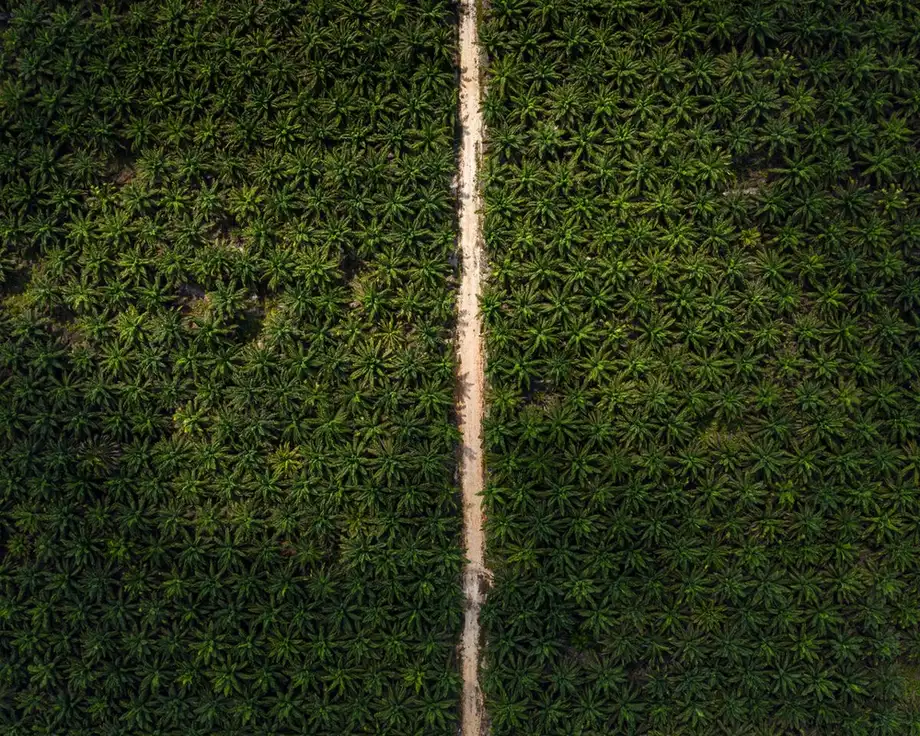
A widening gap between fuel ambitions and supply
Indonesia's biofuel ambitions face a basic supply constraint: a study led by Yayasan Madani Berkelanjutan estimates that biodiesel and bioethanol supply will reach 26.6 million kiloliters in 2030, against projected demand of 42 million kiloliters for road transport alone. That leaves a gap of 15.4 million kiloliters. Even if all that supply went to roads, it would cover about 63% of the projected requirement, leaving nothing for other sectors.
Contents
- A widening gap between fuel ambitions and supply
- Two decades of mandates, uneven results
- Why ships and aircraft enter the debate
- Higher blends put pressure on palm oil
- Can existing plantations produce enough?
- Who receives the rural benefits?
- Ethanol plans and the food security test
- Import savings are not the whole balance sheet
- Degraded land and algae still need proof
- Key Points
The findings arrive as Indonesia moves toward B50, a diesel blend containing 50% biodiesel, and develops plans to replace more gasoline with ethanol. Reports describe B50 taking legal effect on July 1, 2026, launching on July 9 and reaching full implementation on October 1 after a transition period. The government has also discussed B60, while its gasoline plans range from E10 to E50.
These policies serve a substantial energy security goal. Energy and Mineral Resources Minister Bahlil Lahadalia puts fuel consumption at approximately 1.6 million barrels daily and domestic crude production at about 600,000 barrels daily, describing an import gap of roughly 1 million barrels. Those figures illustrate the scale of dependence, although crude production and finished fuel consumption are different measures rather than a complete refinery balance.
The central finding of Madani's reassessment is that replacing imported fuel cannot be the only measure of success. Developed with the Institute for Essential Services Reform (IESR), Koaksi Indonesia and Landscape Alliance, the study examines who receives economic benefits, who bears environmental costs and which transport sectors most need limited biofuel supplies. It places those choices within Indonesia's target of reaching net zero emissions by 2060.
Two decades of mandates, uneven results
Madani's biofuel policy assessment traces the modern program to Presidential Regulation No. 5 of 2006 on National Energy Policy and Presidential Instruction No. 1 of 2006 on the Provision and Utilization of Biofuels. Mandatory blending followed in 2008. Rural development was an original objective alongside energy security and reduced dependence on fossil fuels.
Nearly two decades later, implementation remains concentrated on biodiesel made from palm oil. Bioethanol, which replaces part of gasoline, and bioavtur, aviation fuel made from biological feedstocks, have developed more slowly. Madani describes supply chains organized around production rather than a full assessment of demand, with limited farmer and community participation and concerns over incentive governance.
The policy sequence helps separate earlier standards from later announcements:
- 2006: National energy policy and presidential instructions established the foundations for biofuel development.
- 2008: Mandatory blending began, initially with a 2.5% biodiesel blend according to the account of B50 implementation.
- 2015: The Palm Oil Plantation Fund Management Agency (BPDPKS) was established.
- 2025: B40, containing 40% biodiesel, was introduced.
- July to October 2026: B50 took legal effect, was formally launched and entered its scheduled implementation transition.
- September 29, 2026: Madani and its partners launched their reassessment of biofuels and a just energy transition.
- 2027: Bahlil says mandatory ethanol implementation is planned to begin.
Earlier academic reviews discuss B30 and B35. Those references describe preceding stages, not the 2026 standard. The distinction matters because each increase in blending changes the demand for agricultural feedstocks, processing capacity and financial support.
Why ships and aircraft enter the debate
The Madani study projects road transport demand for biodiesel and bioethanol rising from 42 million kiloliters in 2030 to 81.6 million kiloliters in 2050, almost doubling. Its estimate for maritime biofuel demand in 2030 is much smaller, at 0.09 million kiloliters, or 90,000 kiloliters.
Riza Egi Arizona, Madani's lead for its community energy transition program, argues that policy should focus more on maritime transport and aviation because electrification is advancing on roads, while replacing liquid fuels in ships and aircraft is harder. His proposal is to allocate biofuels according to supply, technology readiness and the availability of other ways to reduce emissions.
The study points to hydrotreated vegetable oil (HVO) for certain maritime uses and sustainable aviation fuel (SAF) for aircraft. HVO is produced by treating oils with hydrogen. SAF refers to aviation fuels intended to reduce emissions across production and use compared with conventional jet fuel. Neither is simply interchangeable with the biodiesel and ethanol used in road blending mandates.
The 26.6 million kiloliter projection therefore cannot be treated as a ready supply of aviation fuel. Directing resources toward aircraft or ships would also require suitable conversion facilities and fuels that meet the relevant technical standards. The argument is about where scarce biological feedstocks can provide the greatest value, not an immediate transfer of existing road fuel into aircraft tanks.
Higher blends put pressure on palm oil
Different estimates show the scale of the palm oil commitment, but they do not give one settled requirement. A Madani scenario analysis puts crude palm oil (CPO) demand for B40 at 14.2 million metric tons and for planned B50 at 18 million metric tons. Another account of the B50 program projects 16.7 million to 18 million kiloliters of biodiesel requiring 15.2 million to 16.3 million metric tons of CPO.
These are differing estimates of B50's feedstock requirement, not matching figures expressed in different units. The explanations given do not establish whether their assumptions about coverage, output or conversion efficiency are comparable. Within Madani's own comparison, however, moving from B40 to B50 raises CPO demand by 3.8 million metric tons, about 27%.
The Indonesian Palm Oil Producers Association estimates B60 would require 22 million to 23 million metric tons of CPO. The Plantation Fund Management Agency projects national CPO output of about 60 million metric tons by 2045. Those figures concern different periods and cannot establish whether an earlier B60 rollout would have sufficient supply after food and export needs are met.
WWF Indonesia's biodiesel policy paper, developed with researchers from Gadjah Mada University's Faculty of Forestry, warns that rising domestic consumption could produce a CPO deficit of up to 5 million metric tons by 2030. It identifies declining productivity, slow replanting, labor shortages, inadequate soil and nutrient management, and pests and diseases as contributing pressures.
Weather adds another risk. The palm oil industry has warned that El Niño could reduce Indonesian CPO output by around 3 million metric tons. A mandate guarantees demand for biodiesel feedstock, but it cannot guarantee the harvest needed to supply it.
Can existing plantations produce enough?
Madani's alternative scenario seeks to raise yields from 3.41 to 6 metric tons per hectare by improving agricultural practices and upgrading 9 million hectares of aging plantations, many belonging to smallholders. That is a proposed yield increase of about 76%, a substantial productivity gain rather than a modest adjustment.
Under its scenario of continued expansion, Madani estimates an additional 4.72 million hectares of plantations and up to $4.72 billion in ecological and social damage. Its community centered alternative projects no need for plantation expansion and no external ecological or social costs. Those are modeled outcomes dependent on the scenario's assumptions, not a guarantee that changing ownership or feedstocks eliminates every risk.
A separate assessment by Madani, Sawit Watch and Satya Bumi estimates an ecological carrying capacity of 18.15 million hectares for Indonesian oil palm, with 17.3 million hectares already planted. The proposed ceiling is based on 14 limiting variables, including water availability, conservation areas, peatlands and biodiversity. It is an ecological estimate, not a stated legal plantation limit.
The difference between the estimated ceiling and existing plantations is only 850,000 hectares. Madani's projected expansion of 4.72 million hectares would far exceed that margin. Another model, from the Clean Transition Coalition, estimates B50 could require 5.36 million additional hectares by 2039, potentially causing 1.5 million hectares of deforestation. The estimates differ in size and timing, but both point toward land pressure.
WWF recommends improving yields, accelerating smallholder replanting and increasing production through social forestry farmer groups before considering expansion as a last option. Its paper also says approximately 20% of Indonesia's plantation area was indicated to be inside forest areas in 2020. That historical estimate highlights land governance problems; it does not establish the current legal status of every plantation.
Who receives the rural benefits?
Madani's alternative proposes that village enterprises and cooperatives could produce up to 10% of biodiesel supply. It identifies used cooking oil, rubber seeds and nyamplung seeds as potential alternatives to palm oil, alongside other local crops. The aim is to give rural communities a role in processing and supplying energy rather than leaving them primarily as raw material sellers.
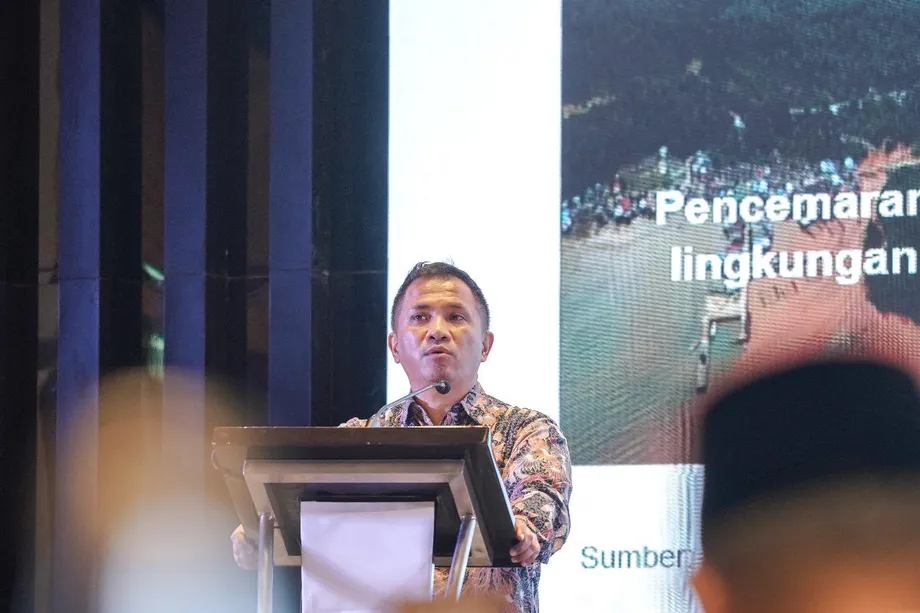
Giorgio Budi Indrarto, Madani's deputy director, described the proposal at a media briefing in Jakarta:
So we advocate that local areas produce their own biodiesel from local commodities.
Madani estimates its alternative could generate $2 billion in direct rural economic benefits over 10 years. It also projects a net economic benefit of $37.1 billion, compared with $31.36 billion under continued expansion. The latter scenario's gains would go mainly to large corporations, according to the analysis. These modeled totals should not be confused with observed income increases for farmers.
WWF offers specific institutional changes: revise Energy and Mineral Resources Regulation No. 24 of 2021 to strengthen farmers' role as biodiesel feedstock suppliers, establish quality standards for smallholder palm oil and work with farmer cooperatives. Those measures connect the rural development objective to the actual purchasing and processing system.
The research record supports examining benefits more carefully. An academic sustainability review of Indonesia and Malaysia finds environmental indicators received more attention than socioeconomic ones. It identifies smallholder yields and income, land tenure and conflict, market share and prices, and food security as relevant measures of sustainability.
The review covers literature published between 2000 and 2019. Its abstract reports 96 articles, while parts of its methods and results describe 95. That internal inconsistency warrants caution about exact article totals, but does not change its central finding about uneven research attention. It also reports that Indonesia and Malaysia together produce around 85% of global palm oil and describes Indonesian bioenergy policy as more vigorous and dynamic.
Ethanol plans and the food security test
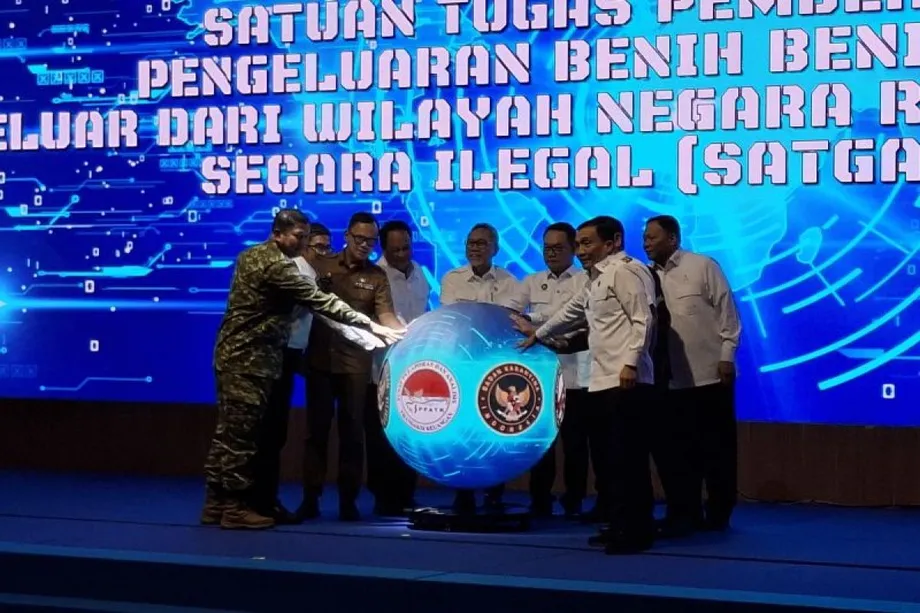
Indonesia's ethanol announcements do not yet form one consistent timetable. Bahlil describes mapping agricultural hubs in Java, Sumatra and Papua for E10, assessing domestic industrial capacity through 2028 and preparing for E50 using sugarcane, cassava and corn. He says mandatory implementation would begin in 2027, with dedicated buyers and processing infrastructure for cassava.
Bahlil, who also holds a coordinating role for energy downstreaming and transition, said the policy should not replace dependence on imported gasoline with dependence on imported ethanol:
For up to 2028, we are assessing our current industrial capacity. We want to ensure that introducing this mandate does not force us to import ethanol. That is unacceptable,
A separate announcement by Coordinating Minister for Food Affairs Zulkifli Hasan sets an E20 target within five years. It says President Prabowo Subianto instructed Agriculture Minister Andi Amran Sulaiman at a September 16 cabinet meeting to dedicate 2 million hectares of existing sugarcane plantations to ethanol. In that account, sugarcane was selected over corn and cassava because of its existing land footprint, and BPI Danantara was tasked with preparing domestic industry.
Presidential special envoy Mari Elka Pangestu, meanwhile, says more than 12 million hectares of degraded land could support food and biofuel production, making a previously announced allocation of 2 million hectares unnecessary. These statements may refer to different land programs, but their relationship is not explained. Nor is the sequence between E10, E20 and E50 settled by the announcements.
Food competition also affects biodiesel. Palm oil supplies cooking oil as well as fuel. The FAO vegetable oil price index reportedly reached its highest level since June 2022 in August 2026, partly reflecting expectations of tighter Indonesian export availability. The Palm Oil Agribusiness Strategic Policy Institute projects CPO prices of $1,650 to $1,720 per metric ton. These pressures could reach households and small food businesses, recalling Indonesia's 2022 cooking oil crisis without establishing that the same outcome will recur.
Import savings are not the whole balance sheet
The government estimates B50 could save about Rp170 trillion, or $9.5 billion, in fuel import costs in 2026. A separate account puts the additional foreign exchange savings associated with the move to B50 at Rp36.7 trillion, or $2.1 billion. Those figures appear to use different scopes and should not be treated as interchangeable estimates of the same benefit.
Biodiesel production still depends on imported inputs. Methanol imports could cost approximately Rp20 trillion, or $1.1 billion, annually. Reduced palm oil exports can also affect earnings and the revenue used to support biodiesel through export levies, including a reported 12.5% CPO levy.
Subsidized Biosolar cost around Rp6,800 per liter in July 2026. Its price difference from premium diesel cannot be attributed entirely to biodiesel support, because the products serve different markets and operate under different pricing arrangements. Affordable pump prices therefore do not, by themselves, reveal the program's full fiscal cost.
An academic implementation review, describing the earlier B35 standard, identifies quality, volume and cost as essential to program sustainability. It explains that economic feasibility depends on the Biodiesel Market Index Price formula and fiscal policy, and recommends considering a carbon tax and incorporating environmental costs under the principle that polluters should pay.
Presidential Regulation No. 110 of 2025 is reported to establish a carbon pricing framework covering carbon trading, carbon taxes and payments tied to results. Its existence does not establish how particular biodiesel environmental costs will be measured or charged. Likewise, projected additional B50 emissions savings of up to 4.8 million metric tons of carbon dioxide concern combustion rather than a full lifecycle calculation. Forest clearance and peatland drainage can substantially change the climate balance.
Degraded land and algae still need proof
Mari says the Agriculture and Forestry ministers have agreed to direct future feedstock production toward degraded land, alongside forestry programs for afforestation, reforestation and revegetation. As the president's special envoy for international trade and multilateral cooperation, she stated:
We are committed to no longer deforesting to expand food production. Thus, the plan to allocate 2 million hectares announced last year for food production is no longer necessary,
The reported stock of more than 12 million hectares is a statement of potential, not a verified inventory of suitable, uncontested farmland. The announcements do not identify all parcels, their existing uses or how production would be reconciled with forest restoration. Mari also calls for better seeds, more efficient fertilizer and water use, and research into crops suited to hotter conditions and limited water.
For aviation, climate and energy envoy Hashim Djojohadikusumo says Prabowo has instructed him to assess microalgae. Cultivation could use carbon dioxide from the oil and gas industry, while oils produced by the organisms could become fuel. Used cooking oil is another SAF feedstock under consideration.
Microalgae remain an exploratory option. Cultivation costs, processing technology, capacity and lifecycle emissions are unresolved. Absorbing carbon dioxide during growth does not automatically make the resulting fuel carbon neutral, because cultivation, conversion and eventual combustion also count. Hashim additionally identifies animal feed and protein products, including Spirulina and Chlorella, as possible uses connected to the Free Nutritious Meals program.
The next concrete milestones include B50's scheduled full implementation on October 1, 2026, the proposed ethanol mandate in 2027 and the industrial assessment extending through 2028. No formal date is given for B100. Whether Indonesia can meet its expanding mandates while protecting food supply and forests depends on demonstrated yields, functioning processing capacity and safeguards that reach farmers and communities.
Key Points
- Projected biodiesel and bioethanol supply of 26.6 million kiloliters in 2030 falls 15.4 million kiloliters short of projected road transport demand.
- B50 took legal effect in July 2026, with full implementation scheduled for October 1.
- B50 palm oil requirements differ across estimates; higher blending increases pressure on food, export and fuel supplies.
- Madani proposes higher plantation yields, alternative feedstocks and community production rather than continued expansion.
- E10, E20 and E50 announcements have different targets and timelines that are not yet fully reconciled.
- Shipping and aviation are proposed priorities because alternatives to liquid fuel are more limited than on roads.
- Import savings and combustion emissions estimates do not capture all imported inputs, fiscal costs or land related emissions.
- Degraded land and microalgae proposals still require evidence of suitability, commercial capacity and environmental performance.