New crackdown targets the people financing smuggling
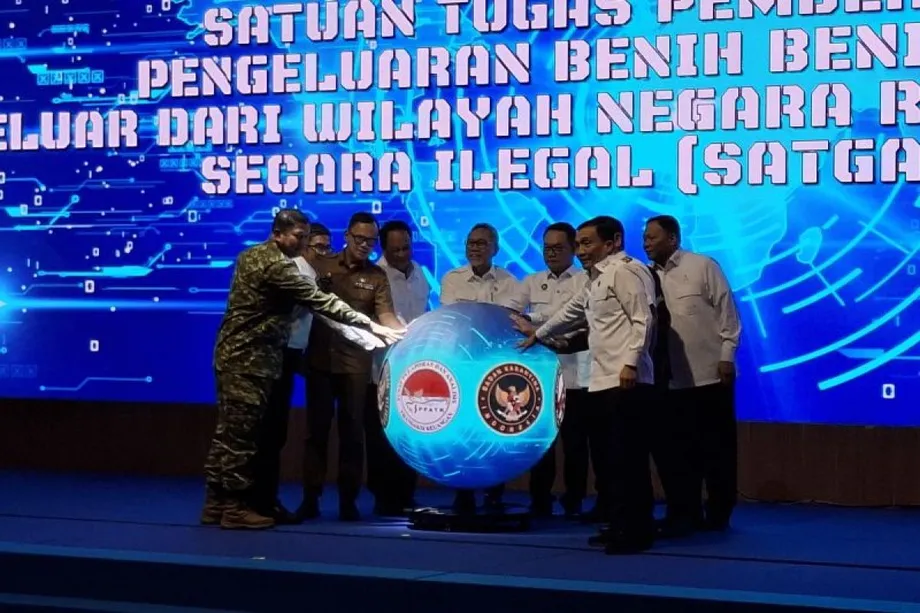
Indonesia launched a national task force on October 12, 2026, to combat lobster seed smuggling, with orders to pursue financiers and network controllers rather than stop at couriers. The launch at the Marine Affairs and Fisheries Ministry's Mina Bahari III building in Central Jakarta accompanied a permanent halt to clear lobster seed exports and a renewed push to raise lobsters inside Indonesia.
Contents
- New crackdown targets the people financing smuggling
- How the task force will work
- What the permanent export ban changes
- A policy that has repeatedly changed direction
- Recent interceptions show several transport routes
- What the billion dollar estimate measures
- Domestic farms face a much larger production target
- Enforcement comes before new foreign talks
- Operational readiness and results still need definition
- Key Points
The task force, known as Satgas P2BBL, was established under Presidential Regulation No. 69 of 2026. Coordinating Minister for Political and Security Affairs Dudung Abdurachman chairs its steering body, Marine Affairs and Fisheries Minister Sakti Wahyu Trenggono serves as executive chair, and Deputy Minister Didit Herdiawan Ashaf oversees daily operations.
The stakes extend beyond intercepted shipments. Dudung put Indonesia's annual lobster seed potential at 465.8 million, while the fisheries ministry uses an estimate of approximately 500 million. Trenggono valued the latter figure at about US$1 billion using an assumed price of US$2 per seed. These are estimates of resource potential, not measurements of annual smuggling losses or realized revenue.
Authorities have recently intercepted seeds on a toll road, at an international airport and in a Jakarta police operation. Those cases illustrate why the government wants enforcement to cover the chain from collection sites to overseas exit points, while domestic farms provide a legal destination for harvested seeds.
Dudung, explaining the task force's investigative priorities at the launch, said officers must identify the people directing and paying for illegal shipments:
The task force must apply a 'follow the network' and 'follow the money' approach to uncover networks, money flows, financiers, and controllers.
How the task force will work
The new body is intended to coordinate existing institutions, not replace their powers. Its responsibilities include gathering data and information, organizing prevention and response measures, and identifying targets for law enforcement.
Dudung described the arrangement as a way to combine authority, information, resources and operational capacity across ministries and agencies. Trenggono called for cooperation involving the Maritime Security Agency, prosecutors, police and the military. The practical aim is to make investigations work across institutional boundaries as shipments move between land, sea and air transport.
The task force has been asked to map seed collection areas, transit locations and exit points vulnerable to smuggling. That means examining collectors and holding sites as well as the transporters who deliver packages to ports or airports. Integrating agency data is intended to support earlier detection and more precise enforcement targets.
Dudung also plans monthly evaluations and briefings to President Prabowo Subianto on performance and achievements. He said success should be judged by the disruption of networks, identification of financiers and controllers, and sustained reductions in smuggling, rather than simply the number of seeds seized.
What the permanent export ban changes
Ministerial Regulation No. 5 of 2026 amends Regulation No. 7 of 2024 on the management of lobster, crab and swimming crab. Under the new framework, harvesting clear lobster seeds is restricted to regulated quotas for domestic aquaculture, and the subsequent raising of those seeds must take place within Indonesian territory.
Clear lobster seeds, also known by the Indonesian abbreviation BBL, are young lobsters collected for farming. Aquaculture is the raising of aquatic animals under managed conditions. In this case, the policy seeks to retain the seeds in Indonesia until they have grown into a more valuable product.
The ban on seed exports is not a ban on all lobster exports. Farmed lobsters weighing at least 50 grams may still be sold abroad if they carry an official certificate of origin. The distinction separates the export of young animals intended for further raising from the export of lobsters already farmed in Indonesia.
Trenggono said foreign parties seeking access to Indonesian lobster resources must pursue direct, legal cooperation. That invitation does not announce an exemption from the seed export ban. His stated course is cultivation in Indonesia, with any foreign cooperation requiring discussion of a lawful arrangement.
A policy that has repeatedly changed direction
The permanent halt follows several reversals in Indonesia's lobster seed export policy. Earlier governments alternated between prohibiting exports and allowing them under conditions intended to support domestic aquaculture.
- 2016: Regulation No. 56 of 2016 prohibited lobster seed exports during Susi Pudjiastuti's tenure as fisheries minister.
- May 4, 2020: Regulation No. 12 of 2020, signed under Minister Edhy Prabowo, reopened exports.
- 2021: Regulation No. 17 of 2021 closed seed exports again under Trenggono.
- 2024: Regulation No. 7 of 2024 again allowed exports, including cultivation outside Indonesia, while requiring foreign investors to invest in and conduct cultivation in Indonesia.
- October 16, 2025: Pung Nugroho Saksono, director general of marine and fisheries resource surveillance, said the ministry was moving toward a seed export moratorium.
- 2026: Regulation No. 5 amended the 2024 framework, and Presidential Regulation No. 69 established the task force launched on October 12.
The 2024 approach sought to develop Indonesian production through cooperation with countries already experienced in lobster farming, including Vietnam. Cooperation with Vietnam has since been halted. Trenggono said two years of bilateral efforts had failed to stop illegal trade, prompting the shift toward domestic enforcement.
Coordinating Minister for Food Affairs Zulkifli Hasan supported the new approach at the launch. He argued that export permits were not an effective answer to smuggling because legal shipments could remain small while illegal outflows continued. His position connects the export prohibition with coordinated enforcement rather than treating either measure as sufficient on its own.
Recent interceptions show several transport routes
Three reported operations in September and October involved approximately 274,235 lobster seeds in total. That calculation combines an approximate Jakarta seizure with two more precise counts, so it should be read as an approximate total, not an exact national tally.
- September 3, 2026: Jakarta Metropolitan Police thwarted an attempt to smuggle approximately 150,000 lobster seeds.
- September 18, 2026: The Indonesian Quarantine Agency and a joint enforcement team intercepted 48,800 seeds bound for Singapore at Juanda International Airport in East Java. They were concealed in 18 plastic bags inside a prospective passenger's suitcase.
- October 1, 2026: The Navy's Cirebon Naval Base found 75,435 seeds in 13 boxes on the Cikopo-Palimanan Toll Road in Indramayu District, West Java. The shipment lacked required transport documents, and two people were taken for questioning.
The cases show seeds being moved through both road transport and passenger luggage. They support the task force's focus on transit routes as well as final departure points. Intercepting a suitcase at an airport addresses one shipment; tracing the collectors, storage sites and payments behind it could reach other parts of the operation.
The accounts do not establish whether the three cases were connected. They also do not provide final court outcomes or identify financiers behind the shipments. Those distinctions matter because seizures and questioning are not equivalent to convictions or proof that an entire network has been dismantled.
What the billion dollar estimate measures
Trenggono's valuation uses straightforward arithmetic: 500 million seeds multiplied by US$2 each equals US$1 billion. Using the rupiah price he cited, approximately Rp35,800 per seed, the same calculation produces Rp17.9 trillion.
Dudung's annual potential estimate of 465.8 million is 34.2 million below the ministry's approximate 500 million figure, a difference of about 6.8% relative to the ministry estimate. No explanation was given for the different totals, so neither should be presented as an exact count.
The valuation describes a theoretical seed resource at an assumed unit price. It is not a forecast of farm profits, government income or the value of lobster exports. Regulated harvest quotas also mean the estimated wild seed population should not be treated as the number automatically available for legal collection.
The economic strategy is to retain more of the production process inside Indonesia. Instead of exporting seeds for raising elsewhere, domestic farms would grow them and sell the resulting lobsters. Whether that produces the expected benefits will depend on actual farm production, costs and sales, none of which can be established from a seed valuation alone.
Domestic farms face a much larger production target
The Directorate General of Aquaculture's strategic plan sets a target of 1,100 tons of farmed lobster production in 2026. National production was 437 tons in 2023 and 481 tons in 2024.
Production therefore rose by 44 tons between 2023 and 2024, approximately 10.1%. The 2026 target is 619 tons above the 2024 result, requiring an increase of about 128.7%, or production roughly 2.3 times the 2024 level. The target represents a much larger expansion than the latest annual increase given.
A pilot project in Batam, Riau Islands, provides a concrete example of the intended trade. On September 10, 2026, the ministry reported that the project had exported 339.5 kilograms of farmed lobsters to Singapore. That shipment shows a route for selling domestically raised lobster abroad, but it does not establish that the national production target has been reached.
Trenggono, describing the purpose of retaining lobster seeds for cultivation, connected resource management with local economic benefits:
This potential must be managed properly to support aquaculture development, generate greater added value, and deliver economic benefits to communities.
Dudung also said enforcement must accompany improvements in seed governance and support for farmers. Fishers, collectors and coastal communities depend on this trade for income, making the availability of legal domestic buyers an important part of the policy rather than a separate issue.
Enforcement comes before new foreign talks
Trenggono said Indonesia is prioritizing action at home after bilateral efforts failed to end illegal shipments. At the launch, he made clear that the government was not immediately seeking fresh talks with destination countries:
We do not want to communicate just yet; that can wait. Let's focus on the domestic side first.
He nevertheless left open cooperation if foreign governments approached Indonesia about legal arrangements. That position combines a refusal to accept continuing illegal outflows with an invitation to discuss lawful trade based on cultivation inside Indonesia.
Trenggono also asserted that all seeds used to raise lobsters abroad originate in Indonesia. No supporting dataset was presented for that broad claim. It is therefore a ministerial assertion, separate from the specific interception figures and national production totals.
Singapore appears in both sides of the trade described: as the intended destination of the intercepted airport shipment and as the buyer of farmed lobster from Batam. The difference is the commodity and its legal status, not simply where it is going.
Operational readiness and results still need definition
Trenggono said the task force was ready to begin operating immediately after inauguration. Dudung, however, also called for completion of its organizational structure, administration and operational guidelines. Those statements distinguish a declared start to operations from the work needed to put all procedures in place.
Dudung urged careful selection of personnel with integrity from the military, police and prosecutor's office. He warned that poorly controlled operations could affect communities. That concern is especially relevant to a mandate covering collection sites and local trading chains as well as large shipments.
The announced accountability mechanism is monthly evaluation followed by reporting to President Prabowo. No exact date was given for the first review, and no numerical target for arrests, prosecutions, network disruption or reduced illegal outflows was announced.
The immediate test is whether coordinated investigations reach financiers and controllers while legal farming expands. The record so far establishes new rules, a task force and recent interceptions. It does not yet establish a reduction in national smuggling, achievement of the 1,100 ton production target or higher incomes for coastal communities.
Key Points
- Indonesia launched Satgas P2BBL in Central Jakarta on October 12, 2026, under Presidential Regulation No. 69 of 2026.
- Investigators were told to trace smuggling networks, payments, financiers and controllers, rather than focus only on couriers.
- Regulation No. 5 of 2026 restricts seed harvesting to quotas for domestic farming, with cultivation required inside Indonesia.
- Farmed lobsters weighing at least 50 grams may still be exported with an official certificate of origin.
- Three recent reported interceptions involved approximately 274,235 seeds. Their connection and final legal outcomes have not been established.
- The 2026 farmed lobster target is 1,100 tons, compared with production of 481 tons in 2024.
- Monthly evaluations are planned, but no exact first review date or numerical enforcement targets were announced.