A court challenge over warnings, smoke and state responsibility
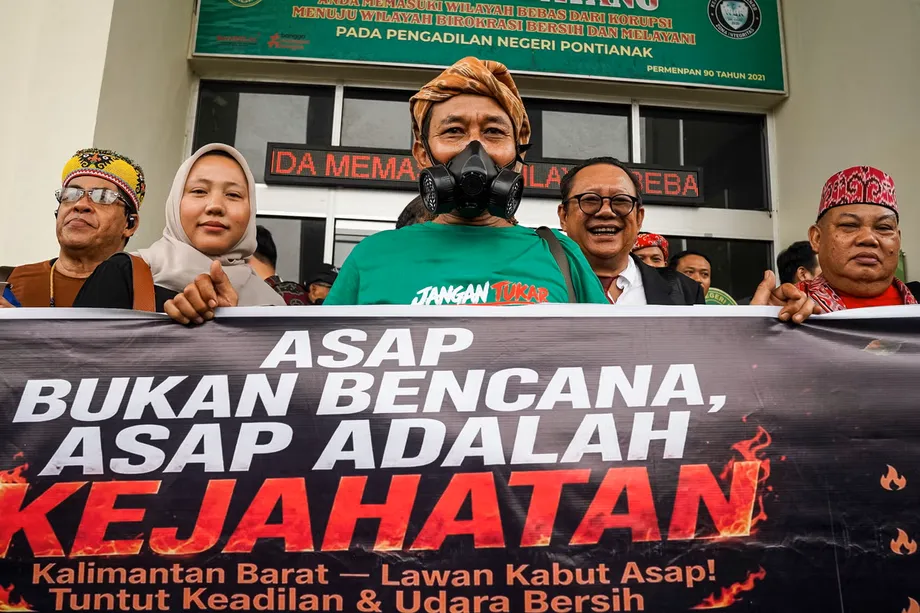
Indigenous representatives and civil society groups in West Kalimantan are taking Indonesia's government to court over recurring wildfires, seeking a national disaster declaration, stronger prevention and healthcare for people breathing smoke. Their case comes as respiratory infection figures reach about 175,000, police investigate 96 companies and rescuers move endangered orangutans away from burning habitats.
Contents
- A court challenge over warnings, smoke and state responsibility
- What the plaintiffs want the government to do
- How the crisis and legal challenge developed
- Smoke enters homes and interrupts schooling
- Drought and land clearing are competing explanations
- Investigations and firefighting figures measure different things
- Neighbouring governments offer help
- Orangutan rescues expose the loss of safe habitat
- Public pressure grows, but legal remedies are undecided
- What to Know
The plaintiffs accuse authorities of gross negligence, arguing that a prolonged drought associated with El Niño was forecast before the dry season. Their central claim is that a crisis which returns almost every year should have prompted earlier preparation, rather than a response concentrated on fighting fires after communities were already exposed.
The case is being heard in Pontianak, the capital of West Kalimantan on Borneo. Reports differ on two basic procedural details: one account places the opening hearing on October 7 and names 10 defendants, while another gives October 8 and describes 27 individuals and agencies as accused. President Prabowo Subianto is named in both accounts. The precise defendant list and opening date need confirmation from the court record.
Both accounts say none of the defendants attended and that proceedings were adjourned until October 21. No ruling on the negligence allegations has been reported. The absence at the opening hearing does not establish the claims against the government.
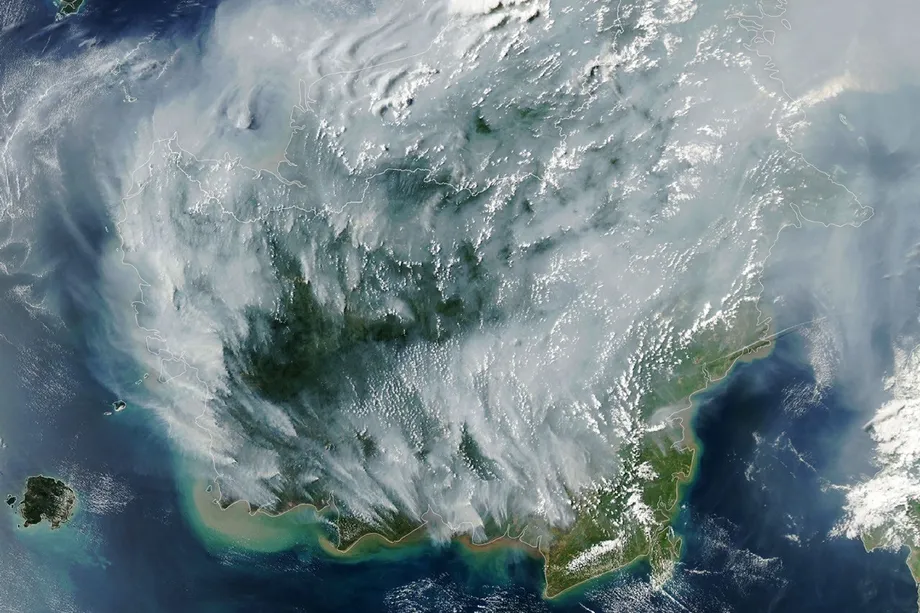
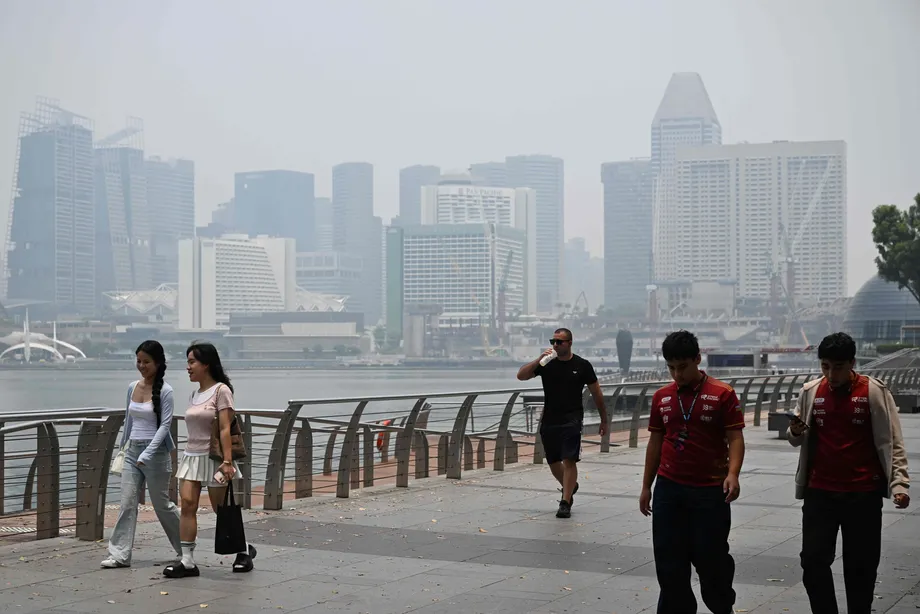
The dispute reaches beyond the courtroom. Smoke has disrupted schools, transport and daily life in Indonesia and crossed into Malaysia and Singapore. The wider haze has also reached the Philippines. Indonesia's government says protecting communities and containing fires remain its priorities, while the plaintiffs want the state to address prevention, enforcement and recovery together.
What the plaintiffs want the government to do
The coalition calls itself Nafas Kalbar, meaning Breath of West Kalimantan. The four plaintiffs include Indigenous and religious youth representatives, a representative of the peatland foundation Lembaga Gemawan, and Sisilius Rami, identified as the group's only independent plaintiff.
The requested remedies include declaring a national emergency or disaster, strengthening fire mitigation, providing free healthcare for vulnerable groups, prosecuting those responsible and arranging rehabilitation for affected communities. These demands make the case broader than a complaint about the immediate firefighting operation.
Tono, head of the West Kalimantan Indigenous Peoples Alliance, described the suit as an effort to make the state fulfil its responsibility to protect people and the environment. Glorio Sanen, legal coordinator for Nafas Kalbar and lawyer for the plaintiffs, said the group was prepared to substantiate its allegations.
Sanen questioned why a predicted weather threat had not produced greater readiness:
We actually find it a bit strange because El Niño had been predicted well before this dry season began," he said. "Yet it seems as though we were not prepared to deal with this prolonged drought.
His argument separates the weather conditions that made fires more dangerous from the government's duty to prepare. A drought forecast does not establish legal negligence by itself. The court will need to examine what authorities knew, what measures they took and whether those measures met their responsibilities.
How the crisis and legal challenge developed
Reports describe fires continuing for more than three months, with the current outbreak beginning in July. The dates available trace an expanding emergency, followed by enforcement action, a court challenge and diplomatic discussions.
- January to July: Around 202,000 hectares burned across Indonesia, according to government figures cited in reports.
- July onward: Forest and land fires spread smoke across affected Indonesian provinces and neighbouring countries.
- August and September: Respiratory infection totals reached about 175,000; orangutan rescues also took place during this period.
- September: Nafas Kalbar reportedly filed its lawsuit in Pontianak.
- October 7 or 8: Reports give different dates for the opening hearing, which was adjourned after the defendants did not attend.
- October 9: A local conservation official's count of orangutans rescued from fire threats reached 46.
- October 10: Government communications chief Syahganda Nainggolan publicly discussed the fires and concerns raised by Malaysia and Singapore.
- October 21: The court scheduled proceedings to resume.
- November: Authorities warned fires could continue until this month, when the wet season was expected to arrive in much of Indonesia.
The warning about November is not a guaranteed end date. It describes the expected weather window, while the immediate course of the fires also depends on local rainfall, water supplies and efforts to extinguish burning peat.
Smoke enters homes and interrupts schooling
Indonesia's Health Ministry figures put respiratory infections associated with the fires at roughly 175,000. Accounts describe the total differently, as nearly 175,000 between August and September or at least 175,000 since August. Without the underlying dated release, those figures should be treated as an approximate measure of the health burden, rather than a single precise count.
Residents describe exposure that continues indoors. Arniyanti, a Pontianak resident who runs Lembaga Gemawan, explained how smoke entered her home:
It's hard for us to breathe inside our houses, because the smoke enters through the ventilation.
Independent plaintiff Sisilius Rami said his eyes stung whenever he went outside and that he wore masks every day. His account illustrates why the request for healthcare is central to the lawsuit: people can remain exposed even when they avoid outdoor activities.
Sanen said schools in West Kalimantan had been closed for about two months. Hundreds of flights were also disrupted. Malaysian states temporarily closed schools because of poor air quality, including in Johor, while Singapore announced plans for closures if its Pollution Standards Index entered the unhealthy range.
These disruptions impose costs beyond illness. Extended school closures interrupt education, and cancelled flights restrict travel and access to services. The plaintiffs' request for rehabilitation seeks a response to those continuing effects, although the precise scope and funding of any remedy have not been decided.
Drought and land clearing are competing explanations
El Niño, a warming of the tropical Pacific that changes weather patterns, can reduce rainfall in Indonesia. The unusually strong episode described in the reports has prolonged dry conditions and made vegetation and peat more likely to burn.
Peat consists of partly decomposed plant material accumulated in wet ground. When drained, it can become combustible and burn beneath the surface. That helps explain why a blaze may continue after visible flames disappear and why firefighters need substantial water supplies to bring it under control.
The challenge was already evident during the September peatland firefighting effort, when volunteers worked against underground fires that could reappear after seeming to be extinguished. An August fire response also described limited water, difficult access and stronger El Niño conditions.
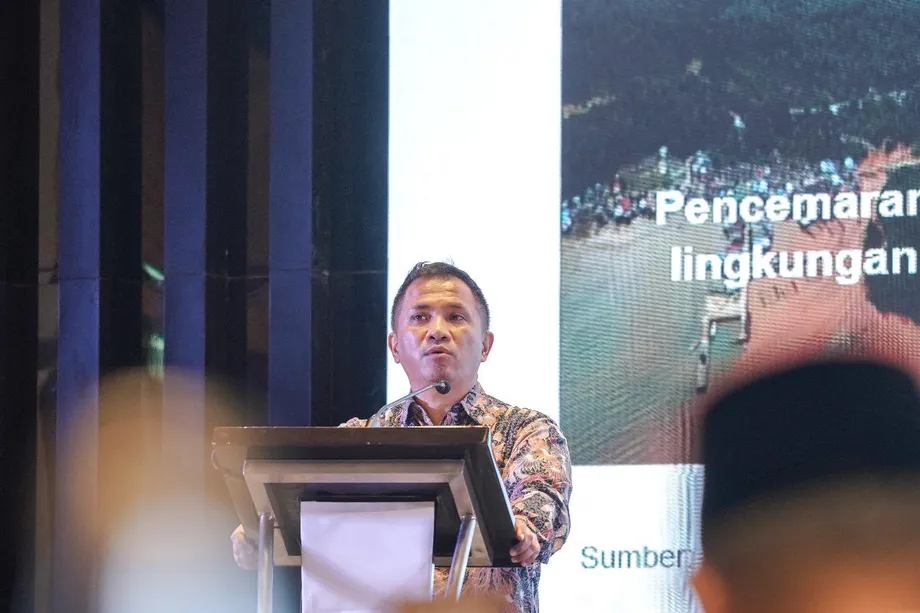
Environmental groups point to burning vegetation to prepare land for plantations and other agriculture as a major cause of the recurring fires. Indonesia is the world's largest palm oil producer, and Arniyanti said damaged and dried peatlands associated with monoculture planting were particularly vulnerable.
Arniyanti attributed more than 70 per cent of fire spots to company concession areas, based on her group's findings. That is an allegation requiring scrutiny: a fire detected inside a concession identifies its location, but does not by itself establish who ignited it or whether a company bears legal responsibility.
Syahganda Nainggolan, head of Indonesia's Government Communications Agency, offered a different explanation on October 10:
"We hope our neighbours understand that this is beyond human error; this is truly nature," he said.
That framing contrasts with the government's own investigations into suspected fire starters and corporate involvement. Dry weather can make fires easier to spread, while human activity can still supply the ignition. The court challenge concerns whether authorities adequately managed those risks.
Investigations and firefighting figures measure different things
Police identified 196 people suspected of starting forest fires and investigated 96 companies in connection with blazes affecting more than 25,000 hectares. The timing differs between accounts, which place the announcement in August or describe it as occurring the month before the October proceedings.
Authorities also announced administrative sanctions against 26 corporations, including permit suspensions, permit revocations and orders to restore damaged land. Administrative penalties are separate from criminal convictions. Investigations into corporate involvement were continuing, with potential charges carrying prison sentences of up to 15 years.
The Government Communication Agency said firefighting operations had treated about 467 hectares across six priority provinces against a target of about 654 hectares. That is approximately 71 per cent of the stated target, leaving about 187 hectares untreated within that particular measure.
Those operational figures should not be read as a national estimate of burned land. Government figures put the area burned from January through July at around 202,000 hectares. Nongovernmental organisations estimated at least another 600,000 hectares had burned afterward, but no subsequent official national total was reported.
Combining those two figures would suggest at least 802,000 hectares, but it would mix an official count with a separate estimate. The resulting number is not a verified government total. Likewise, the 25,000 hectares associated with police investigations covers a different scope from the national fire figures.
The agency said more than 69,000 military personnel, police, disaster management staff, volunteers and private sector participants supported joint operations. It described coordinated ground and aerial work focused on active fire points, underground peat fires and places with limited water or difficult access.
Neighbouring governments offer help
Malaysia and Singapore have expressed readiness to assist Indonesia as smoke crosses their borders. Malaysian Prime Minister Anwar Ibrahim raised concerns with President Prabowo, while discussions also involved the countries' foreign ministries, according to Syahganda.
Singapore's Minister for Sustainability and Environment, Grace Fu, said she had been in contact with Indonesian counterparts to offer support. Indonesian officials welcomed the willingness of both neighbouring countries to help.
Berton Panjaitan, acting spokesman for Indonesia's National Disaster Mitigation Agency, said ground personnel were preferred over aircraft because low visibility could obstruct aviation operations. That practical constraint shows how the haze can hamper the response to the fires producing it.
The Government Communication Agency also said it respected the right of citizens and civil society organisations to seek legal action. Its spokesperson explained the government's position:
As the matter is now before the court, the government will address the issues raised through the legal process and will allow the proceedings to take their due course.
The offer of regional assistance and the court case address different parts of the crisis. Additional personnel could help contain active fires, while the lawsuit seeks decisions about preparation, public protection and accountability.
Orangutan rescues expose the loss of safe habitat
Indonesian authorities and the wildlife rehabilitation foundation YIARI relocated eight orangutans to Batu Nyambu Protected Forest in West Kalimantan. The group consisted of three mother and infant pairs and two adolescent males, rescued from locations threatened or damaged by fires during August and September.
The destination is a 23,000 hectare reserve with primary and secondary forest. YIARI operational director Argitoe Ranting said it was selected for available food and water and connections to other forests. Conservationists checked the animals' health before the move.
The journey took six hours by car, one hour by boat and two more hours on foot, with cages carried on bamboo poles. Local natural resources agency head Murlan Dameria Pane said authorities and YIARI had rescued 46 orangutans from fire threats between August and October 9.
Karmele Llano Sanchez, YIARI's chief executive, explained why relocation becomes necessary when habitat protection is insufficient:
"Protection of habitats will always be a top priority to ensure orangutans continue to have safe forests to live in, but as long as their habitat remains threatened, rescue is one of the best options we can take to help them survive," Sanchez said.
WWF estimates that around 104,000 orangutans remain in Borneo and Sumatra, compared with more than 230,000 a century ago. The International Union for Conservation of Nature warned that fires were burning in habitats containing 52 per cent of Borneo's orangutan population. That figure describes the population within affected habitats, not a count of animals killed or directly injured.
Public pressure grows, but legal remedies are undecided
The crisis has drawn appeals from Indonesian entertainers as well as affected communities. Teuku Wisnu called attention to continuing fires in Kalimantan and Sumatra. Nana Mirdad criticised the official response to smoke disrupting cities, while Denny Sumargo appealed to the president, cabinet secretary and forestry minister for help.
Luna Maya solicited donations for forests and wildlife in Kalimantan. These campaigns broaden public attention, but they do not establish the allegations before the court or substitute for a funded government recovery programme.
The plaintiffs also face a mixed legal history. Seven residents brought a case in 2016 over the government's handling of the 2015 fire crisis under former president Joko Widodo. A district court initially ruled in their favour, but that decision was overturned in 2022. A separate case filed in South Sumatra in 2025 was dismissed.
Sanen said the current plaintiffs were prepared with evidence. Their case remains unresolved, including whether the court will order a disaster declaration, healthcare, stronger mitigation or other rehabilitation measures. The next scheduled hearing is October 21. A confirmed court record would also resolve the conflicting accounts of the opening date and number of defendants.
What to Know
- Nafas Kalbar accuses Indonesian authorities of negligence in preparing for and responding to recurring fires.
- The plaintiffs seek a national disaster declaration, stronger mitigation, healthcare and rehabilitation.
- Reports differ on the opening hearing date and defendant count; both give October 21 as the next hearing.
- Health Ministry figures put respiratory infections linked to the fires at about 175,000.
- Police identified 196 suspected fire starters and investigated 96 companies; 26 corporations faced administrative sanctions.
- Malaysia and Singapore offered assistance as haze disrupted schools, travel and daily life.
- Eight rescued orangutans were moved to protected forest, among 46 rescued from fire threats by October 9.
- No ruling on the current negligence allegations has been reported.