
A Hidden Fire With a Human Cost
About 200,000 hectares of forest and farmland across Indonesian Borneo have been affected by fires since early July, as volunteers struggle to extinguish burning peat beneath the ground. Smoke has spread from Kalimantan to Malaysia, Brunei, Singapore and the Philippines, disrupting schools, transport and daily life while sending people to hospitals with breathing problems.
Contents
- A Hidden Fire With a Human Cost
- Why Wet Peat Becomes Underground Fuel
- Stored Carbon Becomes Smoke and Greenhouse Gases
- Haze Disrupts Life Across National Borders
- Drainage and Land Clearing Leave a Lasting Risk
- Volunteers Face Exhaustion, Smoke and Scarce Water
- Indonesia Expands Ground and Aerial Operations
- From Forest Loss to a Regional Emergency
- Keeping Peat Wet and Holding Land Users Accountable
- Key Points
Indonesia's Health Ministry recorded more than 50,000 respiratory infection cases linked to land and forest fires between July and August. More than 12,000 involved children younger than five. Thousands of hot spots have been detected across the country during a prolonged dry season intensified by a powerful El Niño pattern.
Kalimantan's amber, smoke laden sky reveals only part of the danger. A fire can look modest above ground while continuing to travel through dry peat below it. Volunteers dig into the soil, pump water into underground channels and work through the night, knowing that a blaze can return days after it appears to have been extinguished.
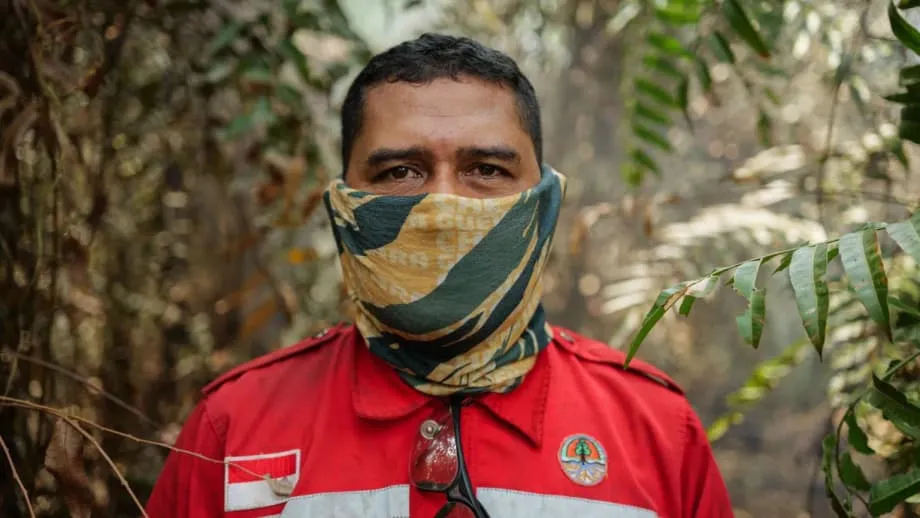
Dwi Sujatmoko, a volunteer firefighter aged 35, has spent more than a month working in the smoke. He describes air that feels like tear gas, immediately irritating the nose and eyes. His concern extends beyond the people living near the flames to the animals and plants caught in their path.
Once a fire becomes uncontrolled, it harms many people. Not just humans, but also animals and plants. If underground fire spreads and can no longer be controlled, the losses are enormous.
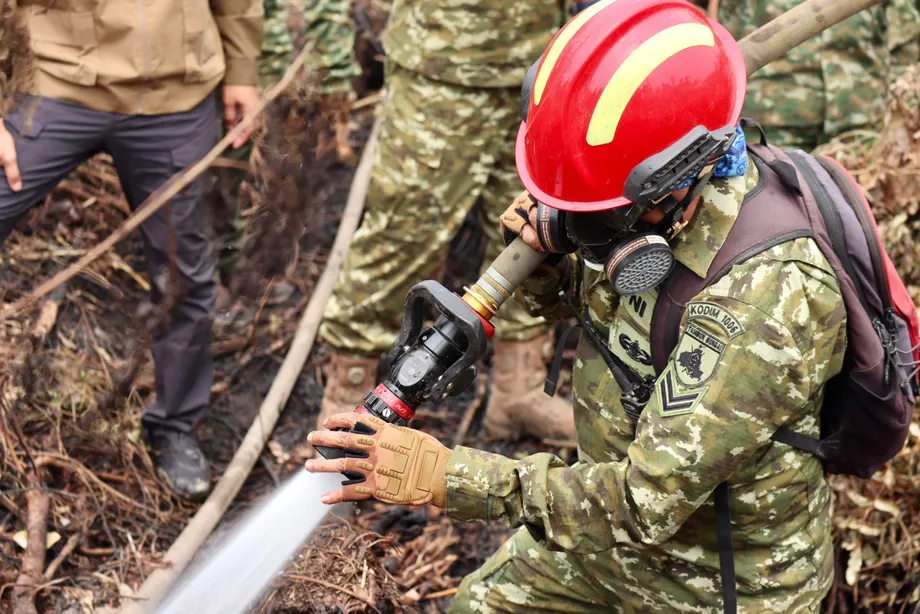
Many volunteers are Indigenous Dayak and Banjar people familiar with the land and its waterways. Their equipment includes hand tools, portable pumps, carts, pipes and improvised wells. Their task is to reach a fire that can move without a visible flame, through soil holding carbon accumulated over thousands of years.
Why Wet Peat Becomes Underground Fuel
Peat forms from partly decomposed plants in waterlogged ground. Water limits the oxygen available to organisms that break down dead vegetation, slowing decomposition. Organic material then accumulates in layers that can exceed 20 metres in depth in parts of Kalimantan.
Plants absorb carbon as they grow. In a wet peatland, much of that carbon stays underground instead of returning quickly to the atmosphere as the vegetation decays. Indonesia's tropical peatlands are among the most important natural carbon reserves on Earth.
Dr Nisa Novita, a peatland researcher with the Indonesian conservation group Yayasan Konservasi Alam Nusantara, explains that deep peat can hold more than 6,000 tonnes of carbon per hectare. The researcher compares that store with the annual carbon dioxide emissions of about 4,800 cars.
Peatlands are incredibly effective carbon stores because their waterlogged conditions slow decomposition, allowing carbon to accumulate underground for thousands of years. But this also means they can become a carbon bomb when they are drained or burned, because that carbon can be rapidly released into the atmosphere.
Plantation development usually involves canals and pumps that lower the water table, the level below which the ground is saturated. Once peat dries, it becomes easier to ignite and can remain combustible through long periods without rain. A landscape that once held water becomes a deep bed of potential fuel.
Fire can smoulder within that material for weeks. Water poured onto the surface may never reach the burning layer. Firefighters have to soak the ground until the peat becomes almost like porridge, then return repeatedly to check for heat and smoke beneath it.
Burning also removes vegetation that helps keep peat wet and stable. Exposed ground can dry more quickly after a fire, increasing the chance of another blaze. Repeated fires can leave damaged land progressively harder to restore, extending the emergency beyond the first season in which it burns.
Stored Carbon Becomes Smoke and Greenhouse Gases
Peat fires release carbon dioxide, carbon monoxide and methane. Carbon dioxide and methane contribute to global warming. Carbon monoxide is poisonous at high concentrations, while the fine particles in smoke can reach the deepest parts of the lungs and move into the bloodstream.
Susan Page, a professor at the University of Leicester who has studied Asian peatlands for three decades, describes the mixture inhaled by people living beneath the haze. The alveoli she refers to are the tiny air sacs where the lungs exchange gases with the blood.
They are breathing in carbon monoxide, which is toxic, and they are breathing in the very finely divided particulate matter, which can pass through the alveoli in the lungs into the bloodstream and cause further problems elsewhere in the body, including issues with the heart.
The term carbon bomb describes the risk of a large, rapid release from a store that accumulated slowly. The amount released from any hectare depends on how much peat burns. Drainage and fire can quickly turn part of an ancient underground carbon reserve into greenhouse gases.
Page says drained peatlands also emit carbon dioxide when they are not burning. Flames are therefore the most visible part of a wider problem involving drainage, land conversion and emissions continuing over long periods.
Indonesia faces two connected costs: hazardous air affecting people now, and the release of carbon that contributes to warming. Keeping peat wet addresses both because water helps preserve the carbon store while reducing the ground's ability to burn.
Haze Disrupts Life Across National Borders
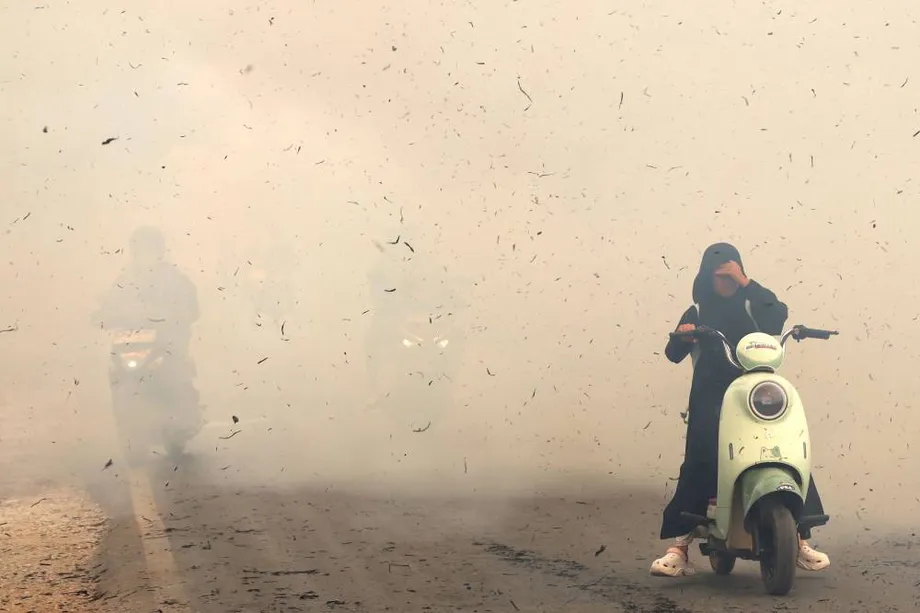
Smoke has reached Malaysia, Brunei, Singapore and parts of the Philippines. Air quality in some areas has fallen to unhealthy levels, with pollution reported at almost 75 times the World Health Organization's recommended level in the most severe cases.
Banjarbaru, one of the worst affected Indonesian cities, has closed schools as visibility deteriorated. A teaching assistant described conditions in which people could barely see their feet. Residents have reported coughing, sore throats, runny noses, headaches and burning eyes.
Malaysia's Sarawak state closed nearly 600 schools during a period of severe pollution, affecting about 200,000 students. Singapore has stockpiled N95 masks and prepared to reduce outdoor activities at schools if air quality worsens. Residents of Palawan province in the Philippines have reported a burnt smell and irritation in their eyes and throats.
The Health Ministry's figures for July and August show how heavily the crisis is affecting young children: more than 12,000 cases among children under five within a total exceeding 50,000 fire linked respiratory infections. Families closest to the burning land face the greatest exposure, even as smoke carries the danger across borders.
Poor visibility also creates problems for motorists and can affect airports, shipping routes and road traffic. Communities far from the original fires bear economic costs through disrupted travel and daily activity. The emergency stretches from the underground fire itself to classrooms, homes and transport networks across the region.
Drainage and Land Clearing Leave a Lasting Risk
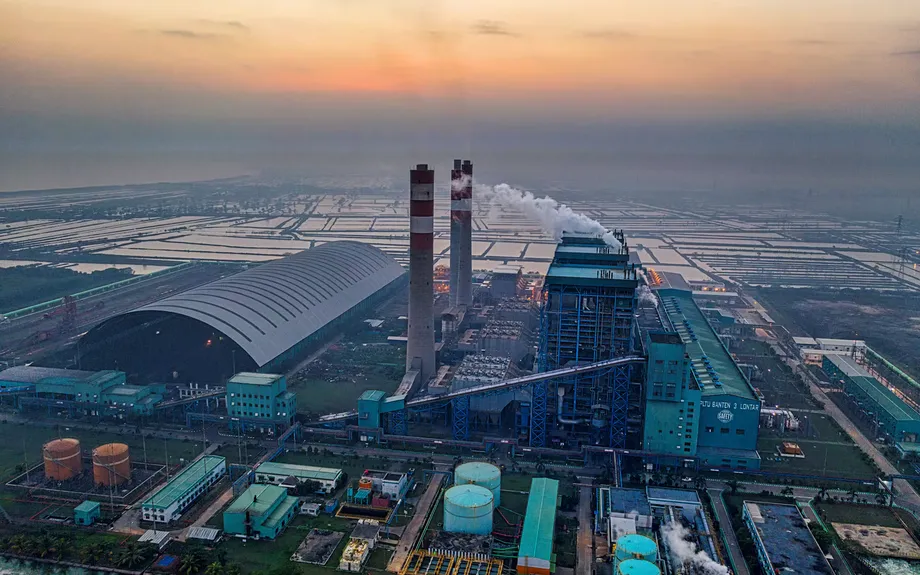
Indonesia's peatland crisis has roots in decades of changes to land use. During the Suharto era, large areas of rainforest and swamp in Kalimantan were opened for logging, plantations and major development projects. Canals drained land that had remained wet for centuries.
Plantation agriculture is often associated with oil palm and other crops grown across large, uniform areas. These developments can bring jobs and investment, while clearing and drainage leave surrounding land more vulnerable to fire. Strong winds, dry vegetation and a low water table then allow flames to spread quickly.
Kalimantan lost almost 160,000 hectares of forest in 2025, more than one third of Indonesia's nationwide forest loss. Much of the cleared land was converted for plantations and other agriculture based on a single crop.
Indigenous communities have sometimes been blamed because certain traditional farming practices use controlled burning to clear small plots. Tono, a representative of the Dayak Kanayatn people in West Kalimantan, says those communities are often treated as scapegoats. He describes a practice guided by inherited knowledge and care.
Hill farming is rooted in the idea of maintaining balance with nature. The traditional practice involves planning, caution and knowledge passed between generations.
Small controlled burns and industrial land clearing differ in scale and risk. Traditional farmers may operate within narrow time windows and local rules. Large concessions can cover thousands of hectares and change water systems across entire peat landscapes, affecting land beyond the place where clearing occurs.
Investigations into individual fires are still needed. The wider record points to a combination of drainage, weak enforcement, dry weather and unsafe clearing practices. Prevention therefore requires attention both to ignition, when a fire starts, and to the condition of land that allows it to spread.
Volunteers Face Exhaustion, Smoke and Scarce Water
Volunteer crews face health risks even when they avoid direct contact with flames. Smoke exposure is continuous, protective equipment is limited in some areas, and heat can rise suddenly through cracks in the soil. Two volunteers in Central Kalimantan reportedly died after their health deteriorated while fighting fires.
Some crews have slept close to the fire line so they can respond when underground burning breaks through the surface. Their work involves watching the same ground repeatedly, because a quiet surface can conceal persistent heat below.
Water is among their greatest challenges. Firefighters dig ponds and wells, open or repair canals, and push pipes into peat to deliver water beneath the ground. Remote locations may be inaccessible to vehicles, leaving crews dependent on small pumps and supplies carried by hand.
Sujatmoko says fatigue and separation from family have become part of the volunteers' daily experience. He explains that responsibility to their communities keeps them working despite the strain.
We are definitely tired. We get exhausted, we miss our families, our children, our wives. But for now, all of us are putting those things aside. We are doing everything we can to help deal with this haze disaster because it is our duty.
Rain would help suppress the fires, but lasting recovery requires water levels to be restored and maintained. That can involve blocking drainage canals, replanting damaged vegetation and monitoring future land use so that the ground stays wet after the emergency passes.
Indonesia Expands Ground and Aerial Operations
Authorities have deployed more than 24,000 ground firefighters on Sumatra and Borneo, although some hot spots remain inaccessible. Officials have requested additional aircraft to drop water on places that crews cannot reach.
Indonesia has also authorized 35 aircraft registered abroad to support water bombing and aerial patrols, provided they meet national aviation safety rules. Aircraft can extend the response into remote areas, while crews on the ground continue the work of locating and soaking burning peat.
Data cited by Indonesian authorities recorded 1,429 hot spots in South Sumatra, 1,226 in West Kalimantan, 811 in Central Kalimantan, 576 in East Kalimantan and 503 in Riau. A hot spot is a location detected as unusually hot and used to help identify possible fire activity. Forestry data indicated that nearly 94,000 hectares burned in July alone.
President Prabowo Subianto visited affected areas in Central Kalimantan, Riau and South Sumatra. The government has promised more helicopters for water bombing and oxygen supplies for firefighters. Military and police personnel are also being deployed to help regional officials with public education and fire prevention.
Indonesia and Malaysia have begun cloud seeding, dispersing salt particles into suitable clouds to try to trigger rain. Malaysia has received permission to send aircraft into Indonesian airspace for cloud seeding near the shared border and has offered further assistance if requested.
Aerial water drops may cool a fire without reaching the deepest burning peat. Cloud seeding depends on suitable clouds and cannot end the dry season. Both measures can reduce immediate danger, while restoring water across drained landscapes remains necessary for lasting protection.
From Forest Loss to a Regional Emergency
The crisis connects damage accumulated over years with fires and illness recorded over recent months. The sequence runs from forest conversion and drainage to dry ground, underground burning and smoke carried across national borders.
The main dated developments show the scale of that progression:
- 2025: Kalimantan lost almost 160,000 hectares of forest, more than one third of Indonesia's nationwide forest loss.
- Since early July: About 200,000 hectares of forest and farmland across Indonesian Borneo have been affected by fires.
- July: Forestry data indicated that nearly 94,000 hectares burned.
- July and August: The Health Ministry recorded more than 50,000 respiratory infection cases linked to land and forest fires, including more than 12,000 among children younger than five.
The figures describe different parts of the emergency: forest loss, land affected by fire, land burned during a particular month, and recorded illness. Together, they show why the response must deal with both the immediate smoke and the changes to land that make repeated fires possible.
Keeping Peat Wet and Holding Land Users Accountable
The most reliable way to reduce peat fires is to prevent the ground from drying. Restoring natural water levels, blocking drainage canals, protecting remaining forests and limiting development on deep peat deposits can reduce the supply of combustible material.
Satellite monitoring helps identify hot spots so communities can act before a small fire spreads. Local teams can inspect the ground for heat that satellites may miss through smoke or vegetation. Training and equipment for villages can reduce the need for dangerous emergency responses later.
Indonesian police have arrested 72 people suspected of starting some fires. Four companies are under investigation for allegedly using fire as a cheap way to clear land. Investigations need to examine deliberate clearing, accidental ignition and traditional practices, along with whether companies maintained legally required water management and fire controls.
Dayak, Banjar and other Indigenous communities have knowledge of seasonal weather, soil conditions and local waterways that can support monitoring and prevention. Including them in planning, rather than treating them as automatic suspects, can help make use of that knowledge. Clear rules are also needed for any burning in dry conditions, especially near drained peat.
Indonesia, Malaysia, Brunei, Singapore and the Philippines share the consequences of smoke that crosses national borders. Information sharing, aircraft access, health alerts and coordinated emergency planning are practical parts of a regional response.
The immediate human cost includes children missing school, families breathing polluted air and volunteers spending weeks away from home. Some firefighters have died while trying to protect their communities. Rain may bring temporary relief, while stronger oversight of land clearing, support for local crews and consistent water management between fire seasons are needed to reduce the chance of the same disaster returning.
Key Points
- About 200,000 hectares of forest and farmland across Indonesian Borneo have been affected since early July.
- Drained peat can burn underground for weeks, releasing greenhouse gases, toxic gases and fine particles.
- Smoke has spread to Malaysia, Brunei, Singapore and parts of the Philippines.
- Indonesia recorded more than 50,000 fire linked respiratory infections in July and August, including more than 12,000 among children under five.
- Volunteers use pumps, wells, canals and pipes to reach burning peat beneath the surface.
- More than 24,000 ground firefighters have been deployed, with aerial operations and cloud seeding supporting the response.
- Police have arrested 72 suspected fire starters, and four companies are under investigation.
- Lasting prevention depends on keeping peat wet, protecting forests, controlling land clearing and supporting local communities.