Aircraft offer faces a visibility crisis
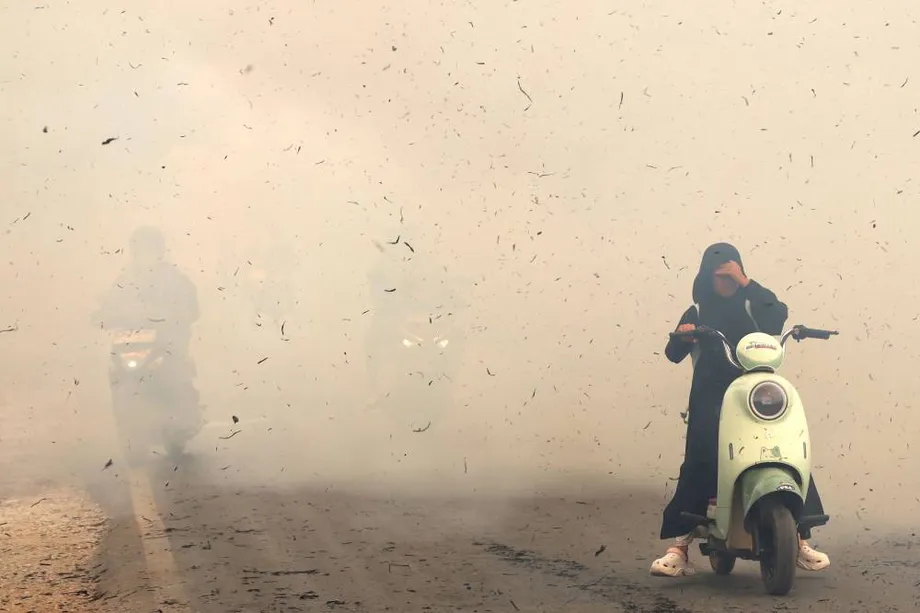
Malaysia is preparing possible assistance for Indonesia's forest and peatland fires, including helicopters and aircraft that drop water, as smoke makes some of the proposed rescue flights too dangerous to operate. Foreign Minister Datuk Seri Mohamad Hasan said visibility in affected areas had reportedly fallen below 50 metres, while pollution readings in parts of Kalimantan had reached 1,000.
Contents
- Aircraft offer faces a visibility crisis
- Why more aircraft may still have to wait
- Ground teams carry the main burden
- How much land has burned?
- Rainmaking depends on clouds
- Schools and hospitals feel the strain
- Smoke disrupts flights and threatens a conservation area
- What happens next to foreign assistance?
- Regional cooperation and prevention proposals
- Key Points
The offer comes as Indonesia deploys more than 60,000 personnel on the ground and Malaysia faces school closures and worsening air quality. Deputy Prime Minister Datuk Seri Dr Ahmad Zahid Hamidi previously described a proposed Malaysian contribution of one firefighting aircraft, three helicopters and 52 officers and personnel.
Mohamad said senior officials from Malaysia's Foreign Ministry, National Disaster Management Agency and National Security Council were discussing suitable assistance with their Indonesian counterparts. Their recommendations would go to Malaysia's Cabinet for approval. No deployment date was announced.
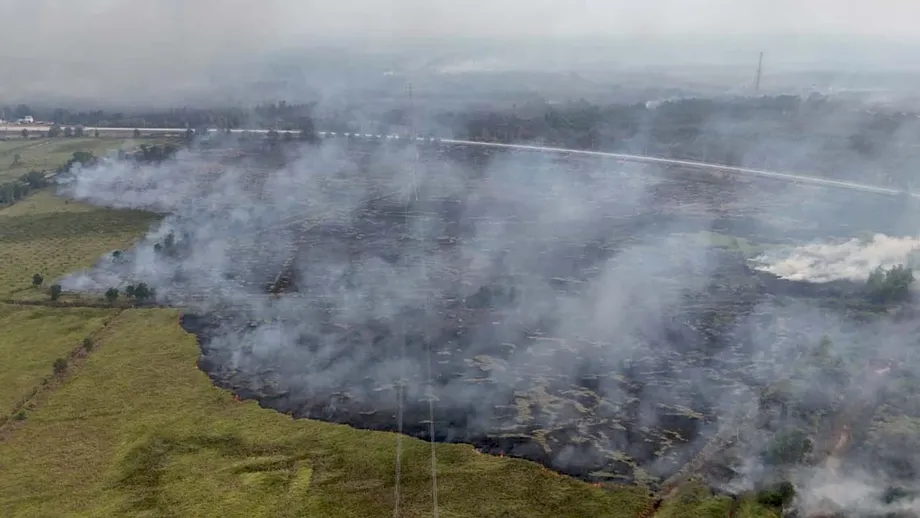
Indonesia has agreed to accept international assistance, while assessing individual offers against operational needs. The central problem is practical: fires deep in the interior are difficult to reach by road, yet the smoke they produce can also prevent aircraft from reaching them.
Speaking in Melaka on October 18, Mohamad said Malaysia would put the safety of pilots and crews first. He described the limits the government would place on any mission:
We have to be careful. We cannot force pilots to fly in dangerous conditions. We will not do that.
Why more aircraft may still have to wait
Central Kalimantan has already experienced prolonged interruptions to aerial firefighting. At an October 12 meeting chaired by President Prabowo Subianto, disaster officials said helicopters dropping water in the province had been unable to fly for about a week. Operations from Palangka Raya and Banjarmasin were affected.
Regional military commander Major-General Zainul Arifin described visibility of about 500 metres around Tanjung Puting National Park. Mohamad later cited visibility below 50 metres in affected areas, without specifying the same location. Both accounts describe smoke severe enough to obstruct firefighting flights.
Indonesia's National Disaster Mitigation Agency, known as BNPB, had documented the same difficulty weeks earlier. Its Central Kalimantan assessment recorded visibility of about 500 metres on September 21 and said helicopters had to remain on standby because flying conditions were unsafe.
Water bombing means releasing water over a fire from an aircraft. Crews need enough visibility to navigate, approach a target and release their load safely. Adding aircraft helps only when those aircraft can reach the burning areas and find usable water supplies.
Mohamad said a Japanese team had previously returned home after conditions prevented it from continuing its assistance mission. His account underlined why Malaysia's discussions cover the type of help required, rather than simply the number of aircraft available.
Ground teams carry the main burden
BNPB's September assessment put about 10,700 personnel into the Central Kalimantan response, drawing on the military, police, disaster agencies, forest firefighters, volunteers and local government. It also listed 946 provincial Forestry Service personnel operating through 19 posts and about 1,220 military personnel.
Three thermal drones and about 300 portable pumps were prepared for field teams. Thermal drones detect heat, helping crews locate burning areas that may be difficult to identify through smoke. Pumps allow firefighters to move water through hoses to places vehicles cannot reach.
By the October 12 national meeting, Cabinet Secretary Teddy Indra Wijaya said more than 60,000 personnel were supporting ground operations. Coordinating Political and Security Minister Dudung Abdurachman said joint teams could cover up to 692 hectares a day, with personnel rotated to limit exhaustion.
Tanjung Puting presents a particularly difficult combination of scattered fires, swampy terrain and limited equipment. Zainul said some pumps were still needed to cool areas where flames had already been extinguished, while replacement equipment sometimes had to come from Java.
When Zainul requested 50 additional pumps, Prabowo pledged 200. The president also promised two billion rupiah for 200 water drilling points. At the stated cost of 10 million rupiah per point, the funding matches the proposed number of wells. Zainul said groundwater could be reached at depths of about 10 to 15 metres and local residents could help with drilling.
How much land has burned?
Indonesia's Forestry Ministry recorded 107,465 hectares affected by fires from January to June, an increase of 110% from the same period in 2023. That means the burned area was slightly more than twice the earlier figure. By the October 12 briefing, BNPB chief Suharyanto put the cumulative area burned at nearly 130,000 hectares, with 639.23 hectares still ablaze across six priority provinces.
BNPB's more detailed provincial assessment recorded over 142,000 hotspots and about 3,800 fire incidents in Central Kalimantan between January 1 and September 19, 2026. Satellite analysis by the Forestry Ministry measured 7,634 hectares burned there, while the area handled by response teams approached 13,000 hectares.
Those measurements describe different parts of the emergency. A hotspot is a satellite detection of unusual heat; repeated detections can occur around a continuing fire. The area handled records the reach of response operations, while satellite analysis measures land identified as burned.
Indonesia identified Riau, Jambi and South Sumatra on Sumatra island, and West Kalimantan, Central Kalimantan and South Kalimantan on Borneo, as its six priority provinces. By October 12, officials reported improvement in Riau, Jambi, West Kalimantan and South Kalimantan, with operations concentrated on Central Kalimantan and South Sumatra.
Other regions have also suffered fires. At Mount Bromo in East Java, local disaster mitigation agency head Gatot Soebroto said at least 899 hectares had been damaged and the fire was mostly extinguished.
Rainmaking depends on clouds
Indonesia has combined ground operations with aircraft and attempts to encourage rainfall. Chief security minister Djamari Chaniago said 43 helicopters and 15 aircraft with fixed wings had been deployed. He also described the difficulty of cloud seeding when rain clouds are scarce.
Cloud seeding introduces substances such as salt into suitable clouds to encourage droplets to grow and fall as rain. It needs existing cloud conditions that can produce rainfall. Dry skies therefore restrict the operation at the very moment firefighters need water most.
BNPB's September assessment scheduled weather modification operations for September 20 to 29. Indonesia's meteorological agency identified possible rain clouds between September 21 and 28, prompting plans to move weather modification aircraft from Palangka Raya to Banjarmasin and Pangkalan Bun so crews could attempt missions for Central Kalimantan.
Later October briefings described disruption to both weather modification flights and water bombing. Environment Minister Jumhur Hidayat also identified limited water supplies as a continuing constraint on firefighting.
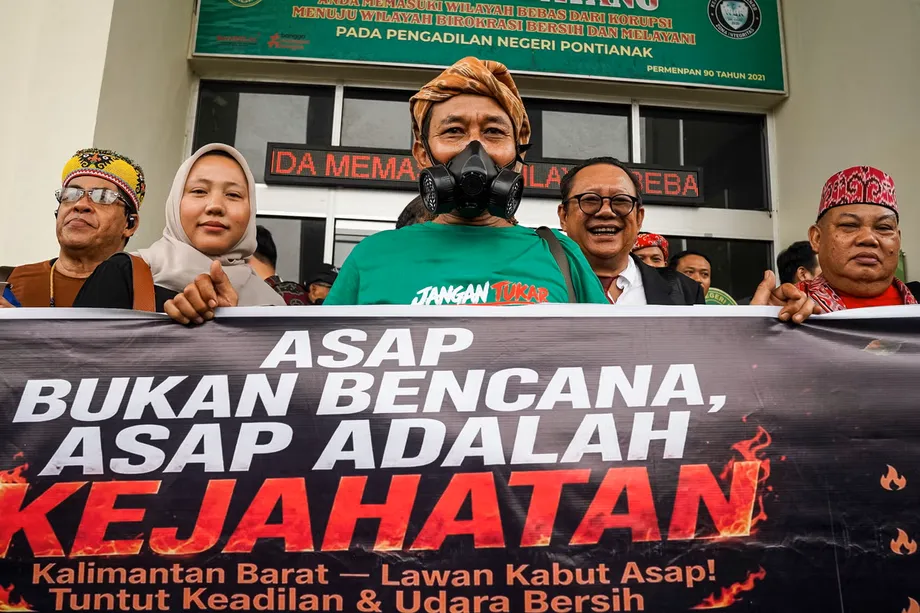
Dana Prima Tarigan of the Indonesian environmental group WALHI attributed the fires mainly to land clearing for plantations, mining and other uses, worsened by El Nino. El Nino is a Pacific Ocean climate pattern that can reduce rainfall in Indonesia, leaving vegetation and land drier for longer.
Schools and hospitals feel the strain
Malaysia's Prime Minister Datuk Seri Anwar Ibrahim said on October 18, 2026, that the fires were affecting public health and daily life, including school closures in several states and areas. In Johor, schools and educational institutions were ordered to remain closed until October 23.
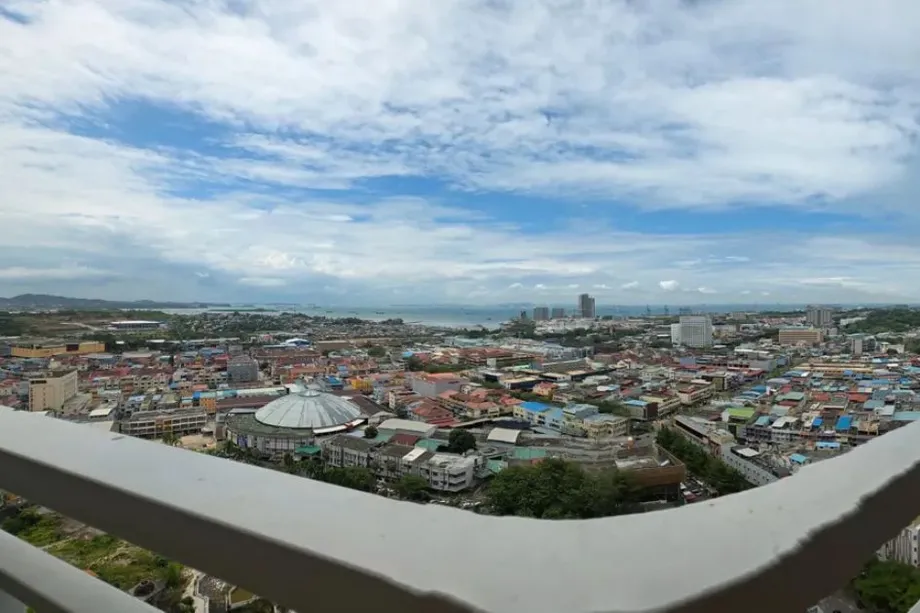
Pontianak, the capital of West Kalimantan, moved all student classes online as air quality deteriorated. In Malaysia's Sarawak state, 11 areas recorded unhealthy air quality, and the education department instructed schools to suspend outdoor activities when air quality index readings exceeded 100 or temperatures became too high.
Indonesia's Health Ministry recorded close to 175,000 cases of acute respiratory infections in areas affected by forest and land fires between August 18 and September 21. More than 40,000 involved children younger than five. The ministry said it was strengthening health posts and hospitals to serve people experiencing health problems during the fires.
Acute respiratory infections affect the breathing system and develop over a relatively short period. Smoke also contains small particles that can enter the lungs and irritate airways, making polluted air especially difficult for people who already have breathing problems.
AA Alive, a medical equipment company based outside Kuala Lumpur, reported a 35% increase in oxygen cylinder sales. Sales team member Rafinia Fardet attributed the increase to the haze. Suppliers also reported air purifier sales rising 600% between September 28 and October 12 compared with the same period a year earlier, equivalent to seven times the earlier level.
An AA Alive technician said filters in oxygen equipment that normally lasted about 1,000 hours were lasting roughly half as long amid the pollution. For households already using such equipment, the haze was adding maintenance needs as well as concern about the air outside.
Smoke disrupts flights and threatens a conservation area
Indonesia's Transportation Ministry counted 1,673 scheduled domestic flights affected by forest fires between August 11 and October 9. Civil aviation director-general Lukman F Laisa said 745 were delayed, 907 were cancelled or postponed, 15 were diverted and six returned to base.
The cancellations and postponements accounted for about 54% of the affected flights. Lukman said restrictions were imposed to protect passengers and crews when visibility fell below operational standards. The same smoke limiting emergency flights was disrupting ordinary travel.
Tanjung Puting National Park and surrounding parts of West Kotawaringin and Seruyan regencies had more than 500 hectares burning, according to details presented around the October 12 meeting. Prabowo directed officials to prioritise firefighting in the area, an internationally known centre for orangutan conservation and rehabilitation.
Zainul said 247 foreign tourists visited the park on October 12, bringing its 2026 total to 66,000. Firefighters entering the affected terrain needed coordination with local disaster officials, police and regional authorities because of difficult access and wildlife hazards.
Forest and peatland fires create different demands for crews. Peat is a layer of partly decomposed plant material that can burn beneath the surface. Extinguishing visible flames may therefore need to be followed by sustained cooling and wetting, which helps explain the continuing demand for pumps and nearby water.
What happens next to foreign assistance?
Malaysia's offer has moved through discussions about international acceptance, Indonesian operational needs and Malaysian Cabinet approval. Indonesian officials said offers from Malaysia and Singapore were not discussed at Prabowo's October 12 meeting, which focused on the domestic response.
Jumhur said on October 13 that Indonesia would assess foreign assistance by how effectively it could accelerate firefighting. He said small personnel deployments could have limited impact alongside tens of thousands of Indonesian responders, while aircraft also needed to match conditions on the ground.
The main developments span several weeks:
- August 31 to September 29: Central Kalimantan's declared fire emergency response period, as recorded by BNPB.
- September 21: BNPB documented visibility of about 500 metres and called for stronger ground operations.
- October 12: Prabowo chaired a response meeting and pledged additional pumps and funding for water drilling.
- October 13: Jumhur said foreign offers would be assessed for effectiveness and expressed hope that the fires could be extinguished in less than a month.
- October 18: Anwar reaffirmed Malaysia's readiness to help, while Mohamad described discussions over suitable assistance and crew safety.
- October 23: The stated end date of the Johor school closure order.
Jumhur's target was an estimate tied to declining fire intensity and discussions with BNPB. Water shortages, access and flying conditions remain the practical factors governing how quickly crews can finish the work.
Regional cooperation and prevention proposals
Anwar has proposed cooperation through the Association of Southeast Asian Nations, or ASEAN, to strengthen preparations and joint action against smoke crossing national borders. On October 18, the prime minister described the proposal:
We have proposed a cooperation mechanism at the ASEAN level to strengthen coordination, preparedness, and collective action in dealing with transboundary haze.
Mohamad said Malaysia would raise transboundary haze at the next ASEAN foreign ministers' meeting in Manila in November. Regional coordination would address a problem whose effects extend beyond the country where fires begin: disrupted schooling, breathing difficulties and aviation restrictions are already being felt across borders.
Indonesia is also considering changes to fire prevention rules. Jumhur said the government planned to remove the exemption allowing burning on plots of up to two hectares per household under traditional practices. It was considering prohibiting plantation crops, including oil palm, from being replanted on concession land burned before commercial planting.
Those measures remained proposals. Jumhur also warned of strict sanctions for intentional burning in concession areas. Prabowo called for prevention work beginning at village level and reiterated a request for 70,000 forest police officers, with possible training support from the military and police.
Malaysia's immediate decision concerns assistance that can operate safely and usefully. Indonesia's response is simultaneously focused on reaching isolated fires, securing water and preventing new outbreaks, while communities wait for cleaner air and the reopening of schools.
Key Points
- Malaysia has offered one firefighting aircraft, three helicopters and 52 officers and personnel, with suitable assistance under discussion and subject to Cabinet approval.
- Dense smoke has grounded firefighting aircraft in Central Kalimantan, making ground crews, pumps and water access central to the response.
- Indonesia reported nearly 130,000 hectares burned cumulatively by October 12 and deployed more than 60,000 personnel for ground operations.
- Johor schools were ordered closed until October 23, while Pontianak moved classes online.
- Indonesia recorded close to 175,000 acute respiratory infection cases in affected areas between August 18 and September 21.
- Malaysia proposed stronger ASEAN cooperation, while Indonesia considered changes to burning exemptions and plantation rules.