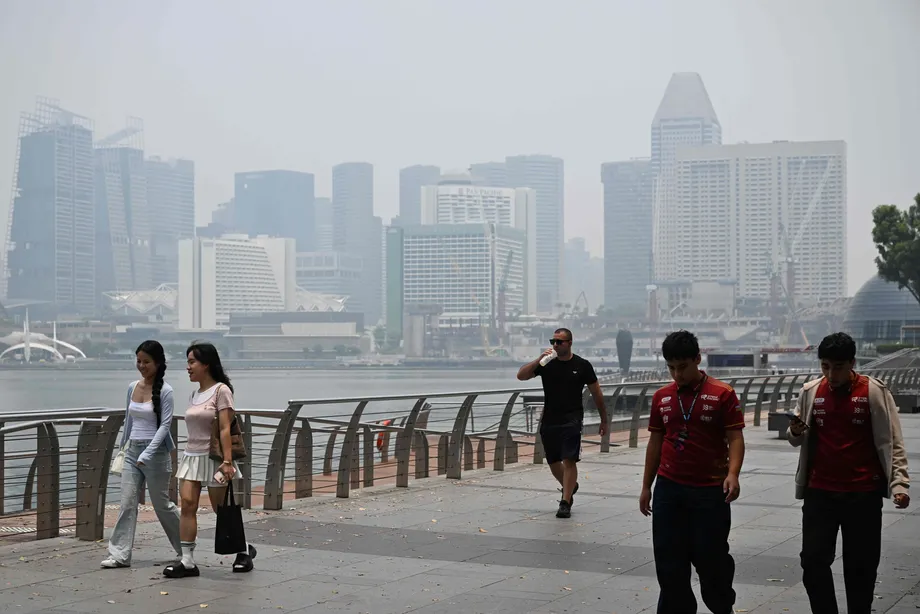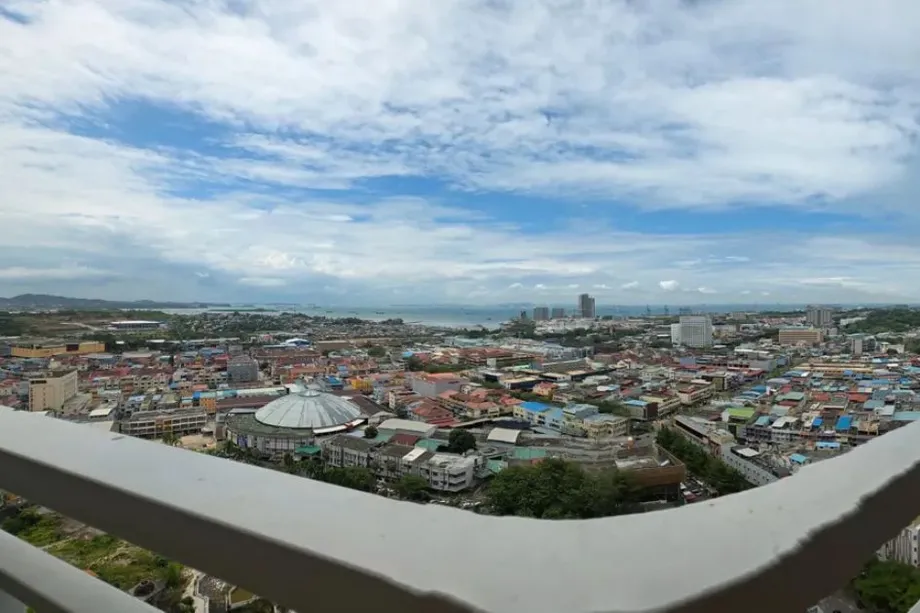
Dry taps confront a growing digital industry
Batam's data centre investment exceeded $6.7 billion by mid 2026, yet residents near its flagship digital park say they spent three months without reliable piped water. On October 5, protesters carrying empty bottles, jerry cans and household utensils blocked access to Nongsa Digital Park, demanding that authorities restore supplies before approving more industrial expansion.
Contents
- Dry taps confront a growing digital industry
- Buying water means cutting spending elsewhere
- A reservoir system already under strain
- What authorities say about industrial water supplies
- How large could future water demand become?
- Desalination plans have different capacities and deadlines
- Electricity planning faces a steep increase
- Singapore's constraints helped redirect investment
- Cooling choices and regulation shape the burden
- Recovery work continues without a firm restoration date
- Key Points
The dispute has exposed a gap between investment ambitions and public infrastructure on an Indonesian island of about 1.3 million people that depends on rainfall stored in reservoirs. BP Batam, the government agency overseeing the island's development, denies that household water has been diverted to data centres. Residents suspect the facilities because their shortages worsened as construction expanded.
Neither suspicion nor denial establishes how much the operating facilities contribute to pressure on Batam's water system. Their actual water consumption remains unclear. Meanwhile, projections attributed to BP Batam put future demand from nine Nongsa facilities at approximately 29 million litres daily by 2032.
Dewi Susanti, a resident of Bakau Serip village who joined the protest, described the loss of household supply:
Not a single drop has come through our taps for the last three months. Our water supply had been reliable until the data centres came.
Reports differ on the demonstration's size and location. Several describe about 300 participants entering or gathering at the compound, while others describe dozens blocking its gate. They agree that residents targeted Nongsa Digital Park on October 5 after months of disrupted water service.
Buying water means cutting spending elsewhere
The shortage reaches beyond inconvenience. Residents describe waiting overnight for tanker deliveries, disputes over limited supplies and money intended for food being spent on water. Nongsa subdistrict officials estimated that 700 to 800 people were affected in several Sambau neighbourhoods. Water operator PT Air Batam Hilir put the affected customer count at approximately 160 homes.
Susanti said two drums cost Rp125,000 and lasted only a day. Another resident, Juniardi Adinda, described prices of Rp125,000 to Rp130,000 for 1,000 litres, enough for one or two days. Those accounts describe different quantities and should not be treated as a single price per litre.
Residents also reported monthly bills of Rp150,000 to Rp200,000 despite interrupted service. An Air Batam Hilir service manager said the fixed subscription charge should be no more than Rp33,000 and asked customers with higher charges to report them. That leaves the difference between residents' bills and the operator's stated fixed charge unresolved.
The operator said it had dispatched eight water tankers. Responding to complaints about dirty water, its service manager attributed the problem to a rusty tank and said that vehicle would not return. Residents' descriptions of cloudy or muddy smelling deliveries underscore that emergency distribution must provide usable water, not simply a delivery count.
Susanti explained how collecting water was affecting her household:
My husband has to wait up overnight to get water, and then go straight to work the next morning.
A reservoir system already under strain
Batam has no major river or dependable natural freshwater source to fall back on. Most accounts identify six main reservoirs: Sei Harapan, Nongsa, Sei Ladi, Duriangkang, Tembesi and Muka Kuning. Other accounts refer to seven. The difference in how reservoirs are counted is not explained, but all describe a system heavily dependent on rain.
Akar Bhumi Indonesia estimated that Nongsa reservoir levels were falling by about four centimetres daily, with a cumulative decline of 4.5 metres by early October. Its simulation indicated approximately 34 days of supply without rain. An Air Batam Hilir account instead described a fall of about two centimetres daily since June. These are different reported rates, not a verified single trend.
Production figures also differ. The operator described output falling from around 80 to 30 litres per second. BP Batam deputy Denny Tondano gave figures of approximately 90 falling to 25 litres per second. Both accounts indicate a severe reduction, but they do not establish an identical baseline or measurement period.
Local government rainfall records put Nongsa's January to July 2026 total at 925.50 millimetres, compared with a normal annual range of 1,800 to 2,500 millimetres. Because seven months are being compared with a full year, these figures alone cannot establish the annual rainfall deficit.
Officials attribute the crisis to prolonged drought and El Niño. Earlier reporting also identified reduced catchment function, rising demand and distribution weaknesses. BP Batam had identified 18 areas with water stress, with some higher areas receiving water for only two hours daily, showing that the vulnerability predates the latest protest.
What authorities say about industrial water supplies
Denny Tondano, BP Batam's deputy responsible for business operations, said cooling water for Nongsa data centres came from Kabil Industrial Estate, which has its own treatment infrastructure and rainwater storage. He denied that the facilities were using water from Nongsa or Duriangkang reservoirs, including a claim that 160 litres per second from Duriangkang had been allocated to them.
He also said the facilities were not all operating and that Equator remained under construction. Other accounts describe two operating data centres, while BP Batam figures cited for September 2026 identify one. The dates and definitions differ, making it unsafe to present every announced facility as already consuming its full projected water allocation.
On October 13, Telkom Indonesia network director Budi Satria Dharma Purba said NeutraDC Nxera Batam was nearing completion and that its water and electricity requirements had been anticipated. An earlier account had expected its first building to open in early 2026. The later statement does not establish whether that earlier opening target was met.
Agus Hasan, a professor at the Norwegian University of Science and Technology, identified the information gap behind the dispute:
Reliable data on data centre water use in Indonesia remains scarce, partly because companies treat it as proprietary information.
Independent supplies could reduce direct competition with household distribution networks. Their existence does not, by itself, quantify industrial consumption or show whether the wider water catchment can support all planned demand.
How large could future water demand become?
The most frequently cited BP Batam projection is 29 million litres daily for nine Nongsa data centres operating in 2032. Some accounts describe that as 8.4% of Batam's total supply. An earlier account applies the same percentage to Nongsa's demand combined with a separate Kabil project expected to use up to 3 million litres daily.
That earlier account gives Batam's daily reservoir supply as approximately 382 million litres. Using those figures, 29 million divided by 382 million is about 7.6%. Adding Kabil's 3 million litres produces 32 million litres, or approximately 8.4%. The distinction matters: the percentage depends on which projects are included and which supply baseline is used.
The $600 million NeutraDC Nxera project at Kabil has a planned capacity of 56 megawatts. Its projected water demand of up to 3 million litres daily would equal about 41% of the industrial estate's stated current supply of 7.4 million litres daily. It is a forecast, not a measurement of present consumption.
Another planned Nongsa facility, Golden Digital Gateway, has a stated capacity of 5.2 megawatts and projected water demand of approximately 881,000 litres daily by 2032. These project figures show why demand needs to be assessed facility by facility rather than inferred from electricity capacity alone.
Donal Pangihutan of the Indonesian Data Center Ecosystem Council gave a separate estimate of current data centre requirements at 600 to 700 litres per second. Converted to a full day, that is approximately 51.8 million to 60.5 million litres. The scope of that estimate is unclear, and it cannot be reconciled directly with the Nongsa forecast or treated as verified current consumption.
Desalination plans have different capacities and deadlines
After protests in August and September, authorities instructed data centre developers to build desalination facilities rather than rely on freshwater reservoirs. Seawater reverse osmosis, known as SWRO, uses pressure to push seawater through membranes that remove salt, producing water suitable for further treatment and use.
Denny described a system with a capacity of 1,200 litres per second, expected within roughly a year. Another account of his remarks described 1,200 litres per second as the first phase's water requirement, to be supplied independently within eight to 12 months. The distinction between plant capacity and customer demand is not resolved.
A separate account citing BP Batam describes planned SWRO facilities at Nongsa and Kabil adding 750 litres per second initially over the following two to three years, then rising to approximately 1,000 litres per second. Transmigration Minister Muhammad Iftitah Sulaiman Suryanagara supported that approach to protect household reservoir supplies.
These descriptions may concern different facilities or stages, but they do not establish one agreed delivery schedule. At continuous output, 750 litres per second would produce 64.8 million litres daily, while 1,200 would produce 103.7 million. Neither conversion means that the capacity is already available or entirely allocated to Nongsa.
BP Batam has also described a planned water treatment facility supplying 30 million litres daily to the Nongsa special economic zone. Freshwater treatment and seawater desalination are different processes, so their announced capacities should not automatically be added together as independent new supplies.
Electricity planning faces a steep increase
Water is only one part of the infrastructure challenge. In its September energy statement, BP Batam mapped existing facilities, investment commitments and planned projects at 1.47 gigawatts of information technology capacity. That is a combined development pipeline, not electricity already being consumed.
Investment deputy Fary Djemy Francis presented the figures at a September 25, 2026 briefing on Energy and Mineral Resources Ministerial Decree No. 354.K/TL.04/MEM.L/2026 concerning PLN Batam electricity tariffs. BP Batam said utility readiness should precede investment and identified five priorities: competitive tariffs, reliable energy, infrastructure construction, water resilience and coordination between investment and utility capacity.
The statement projects that data centres could account for more than half of Batam's peak electricity load in 2029. PLN Batam forecasts peak demand rising from 841 megawatts in 2026 to 2,540 megawatts in 2035, approximately three times the starting figure, with planned supply capacity of 3,691 megawatts.
Other official estimates cited in reporting put data centre demand above 1,100 megawatts by 2030. This is not directly interchangeable with the 1.47 gigawatt pipeline: information technology capacity refers to computing equipment, while facility electricity demand can also include cooling and supporting systems.
Globally, the International Energy Agency estimates that data centres used 415 terawatt hours in 2024, about 1.5% of world electricity consumption, and projects 945 terawatt hours in 2030. Those figures explain the pressure to expand supply, but they do not determine what Batam's grid or reservoirs can support.
Singapore's constraints helped redirect investment
Batam attracts investors through lower operating costs, proximity to Singapore and access to major submarine cable routes. Singapore suspended new data centre construction in 2019 because of land and energy constraints, then reopened development in 2022 with tighter efficiency conditions. Its initial new allocation was 60 megawatts.
Batam's announced projects are much larger. DayOne signed an agreement with an Indonesian state utility in April for a development of approximately 450 megawatts. In June, DayOne, Nvidia and Firmus Technologies announced a 360 megawatt AI facility. These announced capacities should not be added without evidence that they represent separate, nonoverlapping developments.
Other projects include a 13,000 square metre Nongsa facility backed by Gaw Capital and Sinar Primera. BP Batam also supported a planned $5 billion AI development covering 30 hectares in May 2026.
Project counts vary: one account lists 10 approved Batam facilities, six in Nongsa, while another describes around 18 across the pipeline. Nongsa alone is variously described as having nine planned facilities, at least 10, or nine with four more expected. Approved, operating and proposed projects are different categories, and no single consolidated count resolves them.
Nearby Johor has also attracted substantial investment while facing complaints about construction and resource pressure. Its approval process includes technical assessment of water, electricity and cooling requirements before a coordinating committee recommendation. Malaysia's proposed sustainability guideline would exclude new facilities from areas with a Water Stress Index of at least 0.8, a measure of severe pressure on water availability.
Cooling choices and regulation shape the burden
Servers produce heat, and cooling design determines how much water a facility needs. Evaporative systems lose water as they remove heat. Systems that circulate water repeatedly can reduce consumption, although energy needs, climate and operating conditions still matter. Direct seawater cooling, used at Google's Hamina facility in Finland, is different from desalinating seawater first.
Water withdrawal means water taken from a source; consumption means the portion not returned, including evaporation. Disclosure needs to distinguish the two. Figures from other countries, including a United States estimate of 66 billion litres directly consumed by data centres in 2023, are context rather than evidence of Batam's usage.
Indonesia's Water Resources Law No. 17 of 2019 prioritises basic community needs. Business licensing under Government Regulation No. 28/2025 and Communication and Digital Ministry Regulation No. 15/2025 operates alongside separate water management rules under Government Regulation No. 30/2024 and environmental approval rules under Government Regulation No. 22/2021.
IDPRO chairman Hendra Suryakusuma has called for a national plan covering suitable locations, additional energy supply, household needs, measurable efficiency, transparency and economic benefits. Walhi campaigner Wahyu Eka Setyawan has urged a development moratorium and specific safeguards. Efficiency proposals include water source and recycling disclosures, and power usage effectiveness below 1.3. That ratio compares total facility electricity with electricity used by computing equipment.
In Purwakarta, West Java Governor Dedi Mulyadi temporarily halted BDx's planned 640 megawatt project over missing environmental and building approvals. Reports give different water projections: approximately 6 million litres daily initially, or 384 litres per second, about 33.2 million litres daily. The figures may describe different stages, but the distinction has not been established.
Recovery work continues without a firm restoration date
BP Batam is connecting Duriangkang's drinking water system to Nongsa's distribution network and linking the Nongsa Botanical Garden reservoir to Nongsa reservoir. Tankers remain part of the response while this work proceeds. Earlier proposals included cloud seeding if shortages continued.
Mayor and BP Batam head Amsakar Achmad has outlined a broader programme: renewing pipes said to be 30 to 50 years old, assessing additional raw water sources including an underwater pipeline from Lingga Regency, and installing SCADA monitoring. SCADA allows operators to track network conditions remotely and detect disruptions more quickly. Earlier repair estimates reached Rp1.4 trillion, approximately $85 million.
The sequence shows both immediate action and unfinished commitments:
- December 2024: Teluk Mata Ikan residents protested intermittent water service; supply reportedly improved within days.
- August and September 2026: Further protests preceded instructions for developers to provide desalination.
- October 5: Sambau residents blocked Nongsa Digital Park.
- October 9: About 500 residents attended a rain prayer at Nongsa reservoir.
- October 10 and 11: Rain returned to parts of Batam, without confirmation that reservoir supplies had recovered.
- October 13: Minister Meutya Hafid said coordination across ministries and agencies was continuing.
No firm date for complete household supply restoration, final government findings or a completed national data centre policy has been announced in these accounts. Rain and temporary deliveries do not settle the central issue: whether households can receive reliable water as industrial demand grows.
Key Points
- Residents protested at Nongsa Digital Park on October 5 after prolonged water interruptions.
- BP Batam blames drought and denies diverting household reservoir water to data centres.
- Actual consumption by operating facilities remains unclear.
- Nine planned Nongsa centres could require 29 million litres daily by 2032.
- Desalination proposals carry different capacities and delivery schedules.
- BP Batam's 1.47 gigawatt development pipeline includes operating capacity, commitments and planned projects.
- Pipe connections, tanker deliveries and wider network planning are underway, without a firm restoration date.