Departure confirmed as authorities investigate Long Bay
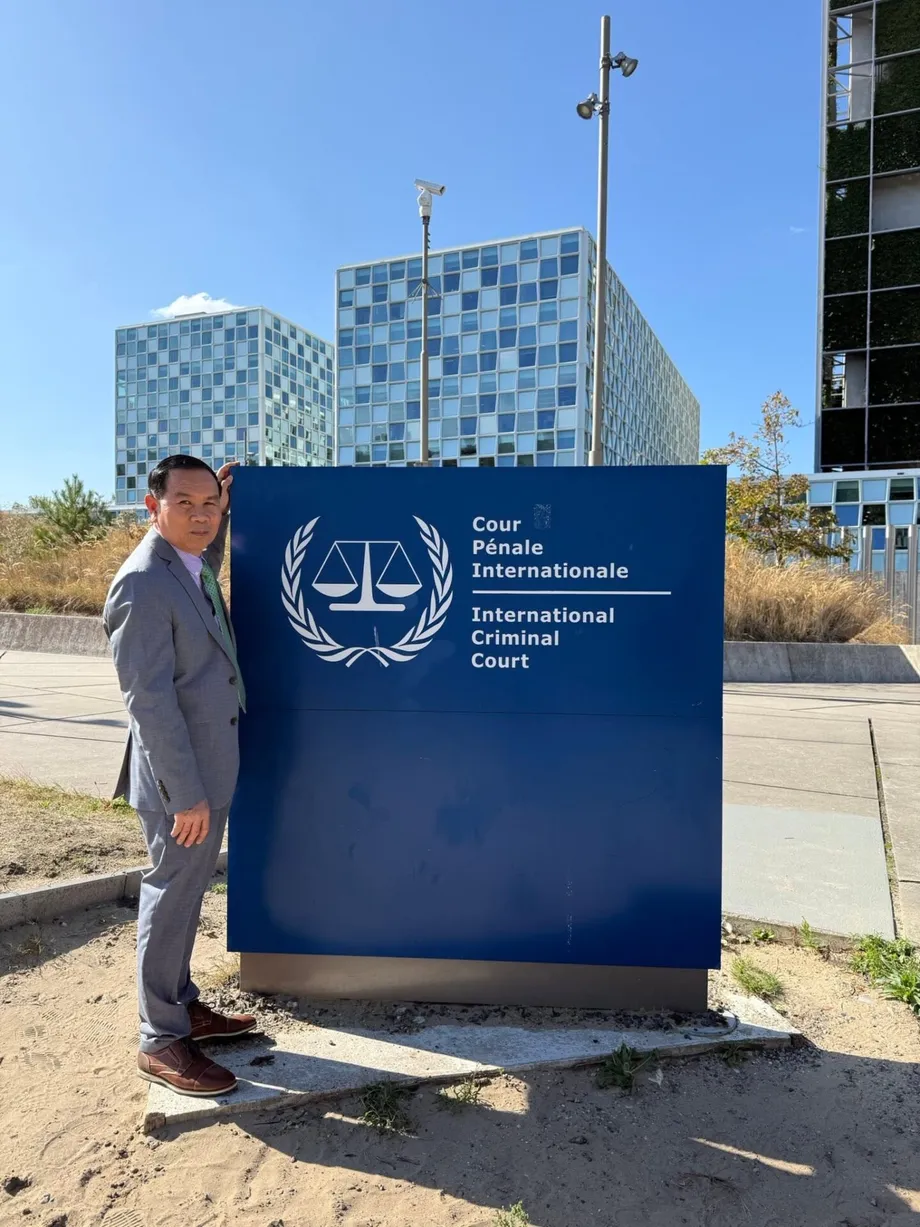
Deng Pibing, the developer behind the Long Bay project in Cambodia's Koh Kong province, left the country in late May 2026, according to immigration information cited by Senior Minister Chhay Sinarith. Authorities had discovered several buildings suspected of involvement in online scams at the development in February 2026, after suspected criminal groups had fled and left evidence behind.
Contents
- Departure confirmed as authorities investigate Long Bay
- What the February operation found
- A timeline with important gaps
- What the reported Red Notice means
- Tourism promotion and allegations inside the complex
- Claims of police protection require investigation
- Amnesty documents a pattern of compounds surviving raids
- Workers may also be victims
- The regional scale and unanswered questions
- Key Points
Sinarith, head of the Secretariat of the Commission for Combating Online Scams (CCOS), said information from specialised sources indicated that Deng had been issued an Interpol Red Notice. That assertion has not been accompanied by a published notice, a description of the underlying charges or details of the authority seeking him.
The government says Koh Kong authorities detained several suspects, confiscated evidence and sealed the suspected premises. Its account comes alongside allegations that a project promoted as a coastal tourism destination housed scam operations and benefited from police protection.
These are distinct strands of the case. Cambodian authorities have confirmed an investigation into suspected activities at Long Bay and described enforcement measures. Allegations about Deng's conduct, protection payments and the operation of the complex go further and have not been established by a court ruling identified in the accounts of the case.
What the February operation found
According to Sinarith, several buildings suspected of links to online scams were discovered during the February operation. The suspected groups had already departed, although provincial authorities subsequently detained several suspects and secured evidence for investigation. No exact number of buildings or detainees has been disclosed.
The distinction between securing premises and identifying their operators matters here. Evidence left inside buildings may help investigators establish what happened, but the government's description does not identify the people detained, their roles or whether they have been formally charged.
Sinarith said the national campaign includes prosecuting ringleaders and accomplices, freezing criminal assets and continuing investigations into cases before the courts. He did not identify a specific asset freeze, charge sheet or court proceeding involving Deng in the details made public about Long Bay.
Prime Minister Hun Manet visited sites under official control in Koh Kong on September 5 to monitor progress, Sinarith said. The prime minister instructed authorities to maintain strict control over the premises and evidence and to conduct thorough investigations. The year of that visit is not specified in the account, limiting how precisely it can be placed alongside the February and May 2026 events.
A timeline with important gaps
The chronology separates the discovery of suspected scam buildings from Deng's recorded departure. It also shows where dates remain uncertain:
- June 2025: Amnesty International published findings on scamming compounds across Cambodia, including repeated police interventions at a site in Botum Sakor.
- July 2025: A U.S. government commission published a regional assessment of scam centres, trafficking and alleged official connections.
- February 2026: Cambodian authorities discovered suspected scam buildings at Long Bay after suspected criminal groups had fled.
- Late May 2026: Deng left Cambodia, according to a General Department of Immigration report cited by Sinarith.
- September 5, year unspecified: Hun Manet visited sites under official control in Koh Kong and ordered continued security and investigation.
The date of the undercover visit that generated allegations about Long Bay has not been established. It has been described as appearing to have taken place in 2025 or earlier, but that remains an estimate rather than a confirmed filming date.
Hong Lei, an associate of Deng also known as Martin, alleged that Deng received advance warning of a crackdown several days before sanctions and subsequently left Cambodia. The sanctions authority and date are not identified. That account cannot be precisely matched to the immigration record, and it does not establish that Deng left before the February operation.
What the reported Red Notice means
Sinarith's statement describes a Red Notice based on information from specialised sources. Another account uses the term Red List. The relevant Interpol mechanism is a Red Notice, a request to authorities internationally to locate and provisionally arrest a person pending extradition, surrender or similar legal action.
A Red Notice is not an international arrest warrant or a finding of guilt. Each country applies its own laws when deciding whether to arrest someone. Notices are also not all made publicly accessible, so the absence of a published notice would not by itself disprove Sinarith's statement.
For Deng, the unresolved details remain substantial: his present location, the country or authority requesting the notice, the alleged offences and whether an extradition request exists. No date for a hearing, surrender or return to Cambodia has been announced in the accounts of the investigation.
The immigration information establishes a departure date as relayed by Sinarith. It does not, on its own, establish Deng's reason for leaving or whether he was subject to a travel restriction at the time.
Tourism promotion and allegations inside the complex
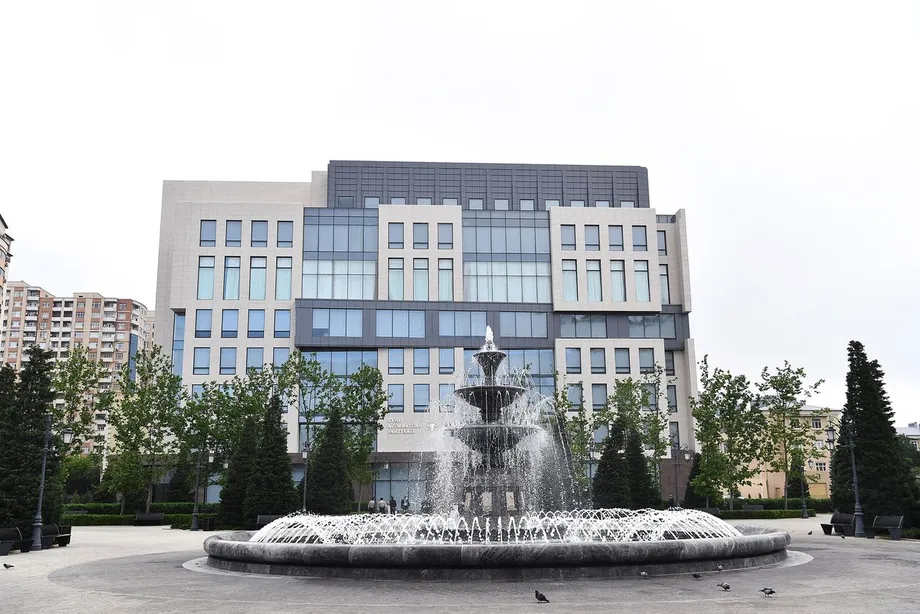
Long Bay has been promoted as a major coastal destination for culture and tourism. Deng, a businessman born in China, has cultivated a public image as a successful investor contributing to Cambodia. Allegations about the development describe a very different use of some of its premises.
An undercover investigation alleged online scam operations, recreational ketamine use and corruption within Deng's business network. Hong Lei and an operator identified only as Mr. Lin described a complex with more than 300 security guards and over 1,000 workers. Those figures are claims by associates, not an official count of scam workers or trafficking victims.
The investigation also alleged that some workers were targeting Chinese nationals with scams. Neither the number of people allegedly defrauded nor their losses has been disclosed. The reported workforce cannot be treated as proof that every person at the complex participated in fraud.
Long Bay lies within a 36,000 hectare economic land concession held by Union Development Group. The concession led to the eviction of more than 1,000 families in the late 2000s. That land history is separate from the current criminal investigation, but it places Long Bay within a much larger development area rather than a single isolated building.
Claims were also made about the purpose of an airstrip on Union Development Group land. No documentary confirmation of those claims has been identified, and they do not establish the nature of the suspected scam activity at Long Bay.
Claims of police protection require investigation
Among the most serious allegations is that financial support to police helped protect Long Bay from raids. Footage described in the investigation showed Deng travelling in a van bearing Cambodian police logos and discussing donations for a police station and salaries.
Deng, the Long Bay developer, was recorded describing that support:
The police station is being built opposite. We donated the money and the salaries.
The remarks were presented as part of a claim that financial support would keep the compound secure from enforcement action. A statement by Deng about protection does not establish that police accepted an unlawful arrangement or acted on it. Investigators would need to determine what payments occurred, who received them and whether they affected police conduct.
Officials who responded to allegations in the undercover investigation either rejected them or said they were unaware of the operations. Those responses should be distinguished from the government's later confirmation that suspected scam buildings at Long Bay were under investigation.
The central test is therefore wider than whether authorities entered and sealed premises. It includes whether they investigate alleged protection arrangements and pursue the people directing or financing criminal activity. Sinarith's promise to prosecute ringleaders and accomplices sets out that intention, but the disclosed Long Bay details do not yet demonstrate its outcome.
Amnesty documents a pattern of compounds surviving raids
Amnesty International's June 2025 report on scamming compounds identified at least 53 compounds across 16 Cambodian towns and cities, along with 45 additional suspected sites. Researchers visited all but one of the 53 identified compounds during 18 months of research.
The organisation interviewed 58 survivors of eight nationalities, including nine children, and reviewed records for 336 other victims. These figures describe the reach of its investigation, not a national census of people held in compounds.
More than two thirds of the identified compounds continued operating after police raids or rescues, Amnesty said. At a site in Botum Sakor, it documented repeated police interventions while the compound remained open. The organisation's published account does not establish that this site and the Long Bay buildings are identical.
Amnesty described instances in which police collected people at compound gates without entering to investigate, allowing operations to continue. Some survivors said compound managers discovered their requests for police help and punished them. The organisation concluded that the evidence suggested coordination and possible collusion between compound bosses and police.
Montse Ferrer, Amnesty International's Regional Research Director, said the interventions it documented fell short of ending the abuses:
The police interventions documented appear to be merely 'for show'.
That finding provides a concrete benchmark for Long Bay: whether premises remain closed, evidence is preserved and investigations lead to accountable decisions. It is not proof that the same failures occurred in this particular operation.
Workers may also be victims
Amnesty's findings show why an investigation into online scams must distinguish organisers from people forced to carry out fraud. All 58 survivors it interviewed had experienced forced labour under threats of violence, and all but one were victims of human trafficking.
In 32 cases, Amnesty concluded that the treatment amounted to slavery under international law because managers exercised control comparable to ownership. Forty of the 58 survivors reported torture or other ill treatment, about 69 percent of the interview group. Five of the nine children interviewed had suffered such abuse.
Survivors described being recruited through promises of legitimate, well paid employment before being confined and ordered to conduct scams. Operations included false romances, fraudulent investments and sales of products that would never arrive. Some people were sold between compounds or told they had debts they had to work to repay.
These findings concern compounds across Cambodia, not confirmed victims at Long Bay. Authorities have not disclosed how many people, if any, were identified as trafficking victims during the Long Bay investigation or what assistance they received.
Amnesty also found that people rescued from compounds were sometimes held for months in immigration detention rather than recognised and supported as trafficking victims. Cambodia's obligations include investigating trafficking and torture while protecting victims. The number of arrests alone therefore cannot measure whether an operation has addressed the full range of harm.
The regional scale and unanswered questions
The U.S. China Economic and Security Review Commission's July 2025 regional scam centre report placed Cambodia alongside Burma and Laos at the centre of a vast criminal economy. It cited an estimate that scam centres in the three countries generated approximately $43.8 billion in 2023, equivalent to about 40 percent of their combined official gross domestic product.
The report also cited an August 2023 United Nations estimate that 220,000 people from dozens of countries were held as forced labourers in scam centres in Cambodia and Burma. That estimate has a different geographic scope from the revenue figure, which includes Laos, and should not be treated as a current count.
The commission discussed alleged ties between Cambodian officials and scam networks. It cited Hun To's board role at Huione Group, which has been accused of laundering scam proceeds, and reported business connections between Sar Sokha and Chen Zhi involving the Jinbei Casino. Sar Sokha became interior minister in 2023, placing him in a leading enforcement role.
Those allegations concern other businesses and networks. They do not establish a connection to Long Bay or criminal responsibility for Deng. Their relevance is the commission's broader warning that enforcement can be compromised when commercial interests and political protection overlap.
For Long Bay, the outstanding questions are more specific. Authorities have not disclosed the identities and legal status of the detainees, the evidence recovered, any confirmed victim count, a named court case involving Deng or a specific freeze of his assets. No next court date or investigation deadline has been announced. Preserving the site is a necessary step, but a public account of charges, victim protection and proceedings would show what the investigation has actually achieved.
Key Points
- Deng Pibing left Cambodia in late May 2026, according to immigration information cited by Chhay Sinarith.
- Authorities discovered suspected scam buildings at Long Bay in February 2026 after suspected groups had fled.
- Koh Kong authorities detained several suspects, seized evidence and sealed premises, but exact numbers and charges have not been disclosed.
- Sinarith reported an Interpol Red Notice; its requesting authority, underlying allegations and Deng's whereabouts remain undisclosed.
- Allegations of scam operations and police protection at Long Bay have not been established by an identified court ruling.
- Amnesty's findings show that lasting closures and protection for trafficking victims are essential measures of enforcement beyond raids.