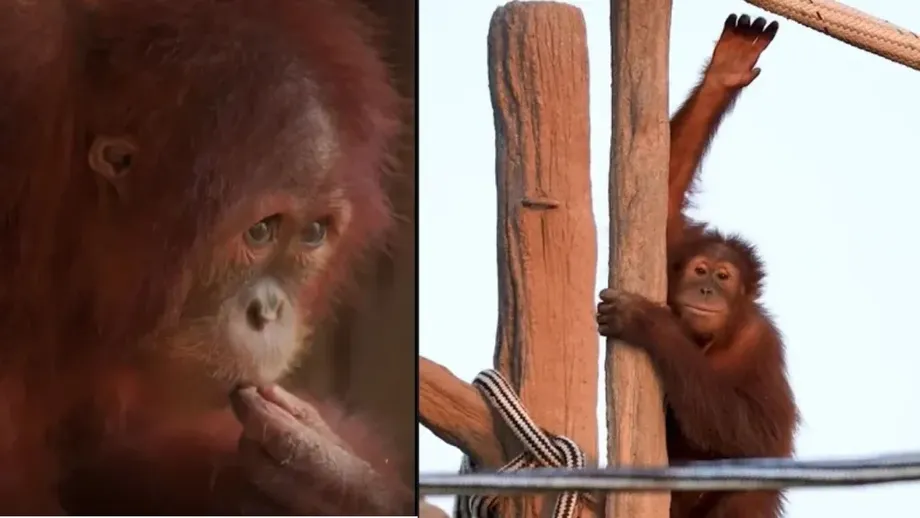
From a bathroom cage in Dombivli to care in Sumatra
Rocky, a young male orangutan rescued from a cage inside a bathroom in Maharashtra in November 2024, arrived in Indonesia on October 19, 2026, after nearly two years of veterinary care and negotiations over his return. His next destination is quarantine, followed by rehabilitation in North Sumatra, where conservation workers hope to prepare him for life in the forest.
Contents
- From a bathroom cage in Dombivli to care in Sumatra
- What rescuers found in Maharashtra
- Illness and paperwork delayed his return
- The route from rescue to repatriation
- Why crossing the border required more than a flight
- Forest school comes before freedom
- Five babies in Odisha await their own decision
- Returning animals also requires places to recover
- Key Points
The Indian Embassy in Indonesia said the animal arrived at Kualanamu International Airport in Medan after being repatriated from Gujarat. Officials from the Indian Consulate General in Medan attended a reception organised by Indonesia's Ministry of Forestry. Jakarta was also named as the arrival city in descriptions of the journey, but the embassy's statement specifically identified Kualanamu.
Believed to be about three years old and of Sumatran origin, Rocky travelled aboard a chartered aircraft under the supervision of personnel from India's Wildlife Crime Control Bureau, Western Region, Vantara staff and Indonesian government officials. Indian officials accompanying him were to oversee his handover into quarantine.
Yogesh Nilkand Warkad, the assistant management authority of the Convention on International Trade in Endangered Species of Wild Fauna and Flora, or CITES, in Mumbai, described the operation as India's first successful repatriation of a seized CITES animal. His office oversaw the Indian side of the return.
What rescuers found in Maharashtra
The Thane Forest Division discovered Rocky during a raid on a suspected wildlife trafficking consignment at the Palava City housing complex in Dombivli, in Maharashtra's Thane district. He was confined in a cramped cage kept inside a bathroom, far from the forests where orangutans normally grow up.
Rocky was estimated to be about one year old when seized. Officials also described reptiles at the apartment: one description put their number at 15, including pythons and iguanas, while another listed six pythons and a star tortoise.
A tip led Maharashtra forest officials to the apartment. Rocky was subsequently taken to the Balasaheb Thackeray Gorewada International Zoological Park in Nagpur before being moved to the Greens Zoological Rescue and Rehabilitation Centre, a Vantara facility in Gujarat.
The circumstances made this return different from sending an intercepted animal back from an airport. Rocky had already been taken into a private home inside India. Authorities then had to arrange his care, establish a receiving arrangement in Indonesia and complete the permissions needed to transport him across a national border.
Illness and paperwork delayed his return
Warkad attributed the nearly two years between rescue and repatriation to procedural difficulties and Rocky's poor health. The orangutan had a respiratory problem when he was about one and a half years old and later recuperated at Vantara, according to the authorities.
Vivek Khandekar, Maharashtra's chief wildlife warden at the time of the initial placement, was involved in consultations over Rocky's transfer to Gorewada. A later directive, dated March 1, 2025, came from then chief wildlife warden M Srinivasa Rao and instructed Gorewada to move the animal to the Gujarat rehabilitation centre until repatriation.
Official records cited the view of a Supreme Court appointed high powered committee that keeping the orangutan in a local zoo might not be suitable. The committee, headed by retired Supreme Court judge Justice Deepak Verma, ordered the move to Vantara.
Indonesia had already issued an import permit, and coordination over Rocky's return was underway in 2025. His departure nevertheless required the care arrangements, health needs and administrative process to come together.
The Indian Embassy said wildlife authorities had provided veterinary healthcare and appropriate habitat facilities after the rescue. India also waived all historical costs for Rocky's care and maintenance before repatriation. No amount was disclosed.
The route from rescue to repatriation
Rocky's journey involved several institutions in two countries. The main dates show how much happened between the raid in Maharashtra and his arrival in Indonesia:
- November 2024: Maharashtra forest officials rescued the young orangutan from an apartment in Dombivli. He was initially placed at Gorewada zoo in Nagpur.
- March 1, 2025: Maharashtra's then chief wildlife warden directed his transfer to the Vantara rehabilitation facility in Gujarat. Coordination with Indonesia was already underway in 2025.
- October 19, 2026: Rocky arrived in Indonesia after a supervised flight from Gujarat, with the Indian Embassy identifying Kualanamu Airport in Medan as the arrival point.
- After arrival: Quarantine and rehabilitation in North Sumatra were planned, followed by training intended to prepare him for a possible return to the wild.
The return was coordinated by the CITES management authorities of India and Indonesia. These are the national bodies responsible for administering the treaty's permits and related requirements for international movement of protected animals and plants.
Warkad, the CITES official overseeing the operation in India, described the outcome in these terms:
This is the first successful repatriation of a seized CITES animal from India and my office (Asst. Management Authority CITES) did everything in our capacity to make it happen,
Why crossing the border required more than a flight
Orangutans are listed in Appendix I of CITES, the treaty's category providing its strictest trade protection. Commercial international trade is generally prohibited, while exceptional movements, such as certain scientific or conservation transfers, require permission under the treaty's rules.
Repatriation means returning an animal to its country of origin. CITES encourages that option when feasible, and India's Wildlife Protection Act provides for return after consultation with the likely country of origin or export.
For Rocky, the practical work included securing Indonesia's agreement to receive him, arranging transport and identifying a place for care after arrival. The accompanying wildlife officials and animal care staff connected those arrangements across the journey.
India's decision to waive the costs of his earlier care removed those charges from the return arrangements. The two governments' CITES authorities coordinated the movement in accordance with applicable procedures and requirements.
Forest school comes before freedom
Rocky is due to undergo rehabilitation at the Sumatran Rescue Alliance facility in Bukit Mas, Langkat Regency, North Sumatra. His arrival in Indonesia begins another period of managed care, starting with quarantine before he joins a rehabilitation programme.
Young orangutans normally learn essential forest skills from their mothers. At rehabilitation facilities, forest school helps rescued animals practise climbing, finding and processing food, building nests and moving through the forest. Rocky will also need opportunities to interact with other orangutans.
Panut Hadisiswoyo, founder of the Orangutan Information Centre, said preparations to receive the animal had been underway for two years. He expressed confidence that rehabilitation could eventually lead to release.
He can certainly be rewilded. Even sub-adults can be rehabilitated and released into the wild. We have done it successfully in the past,
Sinan Serhadli, a conservation scientist based in Kuala Lumpur and an adviser to Yayasan Orangutan Sumatera Lestari-Orangutan Information Centre, said Rocky would enter jungle school after quarantine. His estimate places a possible release several years away.
If all goes to plan, he can be released in the wild in about four years,
That timetable would put a possible release around 2030. Rocky's progress through rehabilitation will determine when he is ready; no release date or forest location has been announced.
Five babies in Odisha await their own decision
Five other young orangutans remain at Nandankanan Zoological Park in Bhubaneswar after being found near Badapali village in Odisha's Balasore division on September 9, 2026. Their discovery prompted an investigation into their origins and suspected trafficking.
Orangutans are native to Borneo and Sumatra, rather than India. Authorities must confirm the five animals' species and origins and complete the required permissions before arranging their return.
Indonesia proposed sending a delegation of seven people, including government officials, veterinarians and orangutan specialists, to assess their health, welfare and origins. Indian authorities agreed to the visit in principle, with arrangements being coordinated for November 2026. The Indian Embassy in Jakarta is helping organise the visit.
Indonesia's Ministry of Forestry said it was working with authorities in both countries on the case:
The Ministry of Forestry is seriously following up on the discovery of five baby orangutans in a forest area in Balasore District, Odisha State, India. The Indonesian government has taken several concrete steps in coordination with relevant authorities in India and domestically to ensure proper handling, verify their origins, and seek their repatriation to Indonesia,
Hadisiswoyo said the Odisha discovery brought renewed attention to Rocky's case and prompted another approach to Indian authorities. He hopes the five babies can follow Rocky to Indonesia once the necessary work is completed.
Returning animals also requires places to recover
India has encountered young orangutans before these cases. In 2022, two babies were discovered at a checkpoint near the Assam and Mizoram border. Officials suspected they had been brought from Myanmar. The Maharashtra and Odisha cases now place further attention on how rescued apes are cared for and returned.
Indonesia's rehabilitation network also faces demands from threats inside the country. During the recent orangutan fire rescues in Kalimantan, animals with burns, smoke exposure and dehydration were taken into care. Indonesia's Forestry Ministry recorded 96 Bornean orangutans receiving assistance by October 8, including evacuation, treatment and rehabilitation.
Those rescues concern Borneo, while Rocky is heading to Sumatra. Together, they show the range of work involved in getting orangutans back into forests: treating injuries and illness, teaching survival skills and finding habitat where release is possible.
For Rocky, the immediate change is concrete. He has left the country where he was seized and entered Indonesia's care system. For the five babies in Odisha, the next planned step is the Indonesian experts' visit in November, when identification and return procedures are expected to advance.
Key Points
- Rocky, a male orangutan rescued in Dombivli in November 2024, returned to Indonesia on October 19, 2026.
- The Indian Embassy identified his arrival airport as Kualanamu in Medan.
- He received care at Gorewada zoo and later at Vantara before repatriation.
- India waived the historical costs of his care and maintenance.
- Quarantine and rehabilitation in North Sumatra will precede any possible release into the wild.
- Five young orangutans rescued in Odisha remain at Nandankanan zoo, with an Indonesian assessment visit planned for November 2026.