Burned hands, stranded families and a shrinking refuge
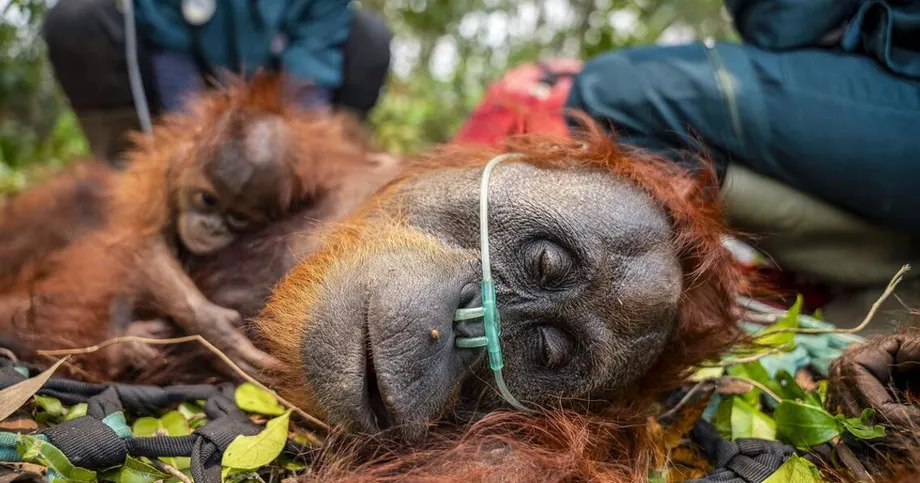
A mother orangutan with burns on her hands and feet, her infant son and an adult male coughing after exposure to smoke are among the animals caught in Indonesia's forest fires. Their rescue in West Kalimantan on September 12, 2026, shows what the regional haze crisis means on the ground: injured wildlife, damaged forests and rehabilitation centres waiting for safe places to release their patients.
Contents
- Burned hands, stranded families and a shrinking refuge
- How residents helped save Mama Penja and Kumbang
- Novita's recovery depends on more than healing burns
- What the rescue timeline tells us
- National parks are losing the habitat rescuers need
- Why drought and peat make the fires difficult to stop
- Respiratory illness rises as smoke crosses borders
- Flights, firefighting and disputed damage estimates
- Rain forecasts and the next steps for wildlife
- Key Points
Indonesia's Forestry Ministry identified the three as Mama Penja, about 20 years old; her son Penja, aged one; and Kumbang, about 15. By October 8, the ministry recorded 290 wild animals receiving assistance nationally, including 96 Bornean orangutans. Assistance covered evacuation, movement toward safer habitat, relocation, treatment and rehabilitation.
West Kalimantan's conservation agency and the Indonesian conservation organisation YIARI subsequently reported evacuating 51 orangutans since August 6. Across Kalimantan, Indonesia's portion of Borneo, rescue teams have found animals burned, dehydrated or stranded as fires consume the forest around them.
The emergency reaches far beyond wildlife habitat. Indonesian authorities recorded 283,270 respiratory illness cases in seven provinces by October 13. Haze disrupted about 2,400 flights from the middle of August, while schools closed and outdoor activities were restricted in Indonesia and neighbouring countries.
The rescue figures describe different parts of the response. The ministry's 96 orangutans received several kinds of assistance across Kalimantan; the 51 figure concerns evacuations in West Kalimantan. The ministry also clarified that 25 orangutans handled in Central Kalimantan were counted across that province, rather than solely inside Tanjung Puting National Park.
How residents helped save Mama Penja and Kumbang
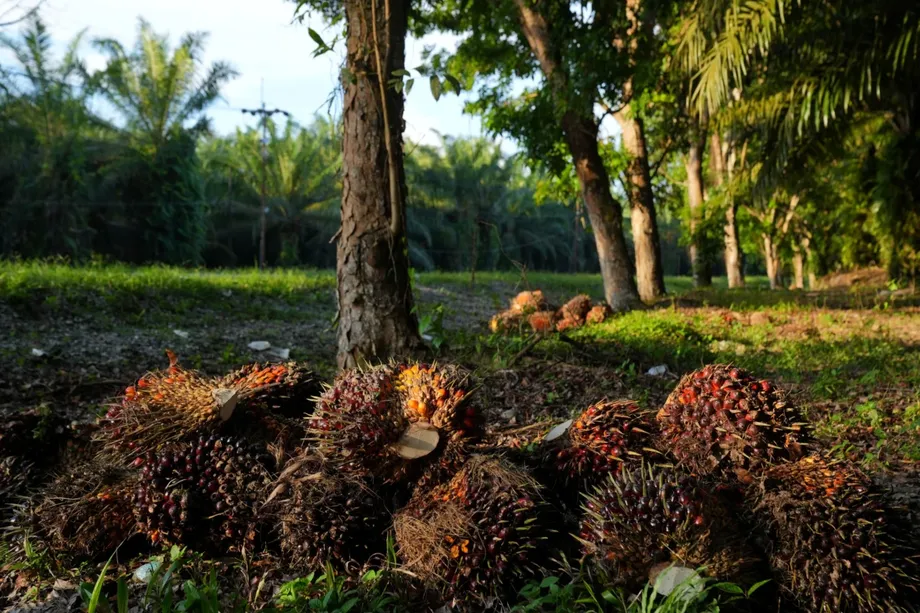
The Forestry Ministry's September 17 statement gives a detailed account of the Kayong Utara rescues. A resident named Ade reported an orangutan in his oil palm plantation in Penjalaan village on September 10. A joint team reached the area on September 12.
Rescuers sedated Mama Penja and recovered her with Penja. YIARI veterinarians found burns on the mother's hands and feet, administered treatment and antibiotics, and collected medical samples before taking both animals to the organisation's rehabilitation centre. Conservation workers also described the pair as severely dehydrated and emaciated.
The team then travelled to Padu Banjar village, where a local village forest management organisation had reported an adult male entering gardens and approaching homes after surrounding forest burned. Rescuers evacuated him at 12:59 p.m. on September 12.
A microchip identified the animal as Kumbang, who had previously been rescued in February 2022. Veterinarians found an old wound from an air rifle pellet and a cough they suspected was caused by dense wildfire smoke. The ministry described him as otherwise relatively healthy.
Residents, village forest organisations, government conservation officers, YIARI and Yayasan Palung all participated. Their work connected the first sighting of an animal in danger with veterinary care and transport. The ministry said the three orangutans would remain under observation until weather and forest conditions allowed their return.
Novita's recovery depends on more than healing burns
In Central Kalimantan's Katune forest, another rescue focused on Novita, a female orangutan estimated to be three to four years old. Jamartin Sihite, chairman of the Borneo Orangutan Survival Foundation, described finding her in a nearly leafless tree surrounded by smoke and burned ground.
Rescuers used a drone to locate her and worked overnight to hold back nearby fire. They eventually sedated her from the ground and caught her in a net. Novita received oxygen and intravenous fluids before being taken to the Nyaru Menteng rehabilitation centre. A detailed account of her rescue put the burns at about 20 percent of her body.
Sihite explained how her injuries were likely sustained:
The palms of her hands and the soles of her feet suffered burns that were likely sustained when Novita crossed a burned area while trying to reach a tree,
Veterinarians will assess whether Novita can climb and survive independently once her burns heal. For an orangutan, injured hands and feet affect the basic movements needed to reach food and travel through trees.
Sampurna, a male believed to be about 20, had a different outcome. Residents found him struggling to breathe on a palm oil plantation in West Kalimantan's Ketapang district. The Forestry Ministry said he died hours after rescue. His death shows how little time teams may have when an animal is already seriously ill.
What the rescue timeline tells us
The response has unfolded over months, with provincial evacuation records and national wildlife totals measuring different operations. The ministry's September statement recorded 23 orangutans evacuated by West Kalimantan's conservation agency and YIARI, alongside nine pangolins, three slow lorises, a proboscis monkey, a civet and a silvered langur.
The main dated developments are:
- August 6: The starting date given for the West Kalimantan operation that later reported 51 orangutan evacuations.
- September 10: A resident reported the orangutan that rescuers subsequently identified as Mama Penja.
- September 12: Teams rescued Mama Penja, Penja and Kumbang in Kayong Utara.
- September 29: The Forestry Ministry recorded 254 animals rescued from fire zones across Kalimantan and Sumatra.
- October 8: The ministry recorded 290 wild animals receiving assistance nationally, including 272 in four Kalimantan provinces and 96 Bornean orangutans.
- October 17: Three conservation agencies evacuated a male orangutan aged about 20 from Hampangen village in Central Kalimantan.
The West Kalimantan team's stated reporting period ends on October 19, although the regional update carrying that figure is dated October 18. The precise cutoff for its 51 evacuations needs clarification.
The Hampangen animal was sedated, examined and transported to a rehabilitation centre. Across the wider response, the number of animals requiring care places continuing demands on veterinary staff, transport teams and facilities while fires remain active.
National parks are losing the habitat rescuers need
Tanjung Puting National Park, a major Bornean orangutan habitat covering 412,000 hectares, has become a focus of the firefighting effort. Volunteer Moncos cited local conservation group data indicating that about 54,000 hectares had burned, including parts of the park's core conservation zone. The Forestry Ministry had not confirmed that area estimate.
The figures put the reported damage at about 13 percent of the park. A network of 60 volunteers withdrew from firefighting because it lacked sufficient resources and access to water, appealing to President Prabowo Subianto for greater assistance.
Moncos, a volunteer aged 29, described the decision:
We've decided to back down from the fire scenes because our capacity could not outpace the raging fires anymore,
Fires also entered Sebangau and Gunung Palung national parks. In Sumatra, the conservation organisation KKI Warsi estimated that at least 20,336 hectares of Berbak-Sembilang National Park had burned since late August.
Safe forest is essential to completing a rescue. Intact areas can provide food and shelter, while burned corridors leave groups of orangutans separated from one another. Animals moving toward farms and settlements face more encounters with people. Even surviving forest patches may have limited food for displaced animals.
WWF Indonesia conservation coordinator Fenky Wirada said teams had found a few orangutans remaining in small forest patches. The Forestry Ministry's decision to postpone the release of Mama Penja, Penja and Kumbang reflects that practical problem: treatment must be followed by a safe destination.
Why drought and peat make the fires difficult to stop
El Niño has intensified the prolonged dry season affecting Borneo and Sumatra. The weather pattern changes tropical ocean and atmospheric conditions, shifting rainfall away from some areas. Dry vegetation burns more readily, while depleted water supplies make firefighting harder.
Wang Jingyu, an assistant professor at Singapore's Nanyang Technological University, linked the regional drought to cooler local sea surface temperatures and reduced evaporation. Less water entering the atmosphere means less moisture available to form rain. He said typhoon systems elsewhere in eastern Asia were also drawing moisture away from the fire regions.
Wang described the immediate difficulty:
We do not have enough rain. The fire cannot be easily put out.
Peat adds another challenge. This thick layer of partly decomposed plant material normally holds water in swamp forests. When it dries, it becomes fuel that can continue smouldering below the surface after visible flames have disappeared.
Boston University anthropologist Cheryl Knott, who has studied orangutans since the early 1990s, warned that continued fires in primary rainforest threaten the species' prospects for survival. Borneo had already lost more than half of its lowland forest to clearing between 1985 and 2001, and an estimate cited in the conservation reporting suggested roughly half of Bornean orangutans may have been lost between 1999 and 2018.
Respiratory illness rises as smoke crosses borders
Indonesia's recorded respiratory illness cases rose from 113,336 on September 9 to 283,270 on October 13 across seven provinces. That is an increase of 169,934 cases, or about 150 percent. The later figure is roughly two and a half times the earlier total.
PM2.5, a major pollutant in wildfire haze, consists of particles no more than 2.5 micrometres across. A typical human hair is about 100 micrometres wide, roughly 40 times that size. The particles are small enough to travel deep into the lungs, and exposure can worsen asthma and other respiratory conditions.
Yuming Guo, head of Monash University's Climate, Air Quality Research Unit, explained that fine particles can reach the bloodstream and affect organs throughout the body. Children, older people, pregnant women and people with existing respiratory conditions face particular risks.
Singapore's western areas recorded an hourly PM2.5 concentration of 284 micrograms per cubic metre during the week preceding October 18. Its 24 hour Pollutant Standards Index also reached the very unhealthy range. PM2.5 measures one pollutant; the PSI combines information on six pollutants into an air quality index.
Jason Evans Tan, a deputy director at Singapore's National Environment Agency, said the unhealthy air spell beginning October 5 was the country's longest since the severe haze crisis of 2015. On October 18, air quality monitor IQAir ranked Singapore and Kuala Lumpur among the world's five most polluted major cities.
Smoke also reached the Philippines, more than 800 kilometres away, while authorities declared an emergency in Sarawak, Malaysia. School closures and restrictions on outdoor activity extended the disruption to families across Indonesia, Malaysia and Timor-Leste.
Flights, firefighting and disputed damage estimates
Indonesia's Transport Ministry said haze had affected about 2,400 flights since the middle of August. Reduced visibility around airports caused delays, disruptions and cancellations, adding transport difficulties to a crisis already affecting health and schooling.
The ministry explained its operational decisions:
Haze reduces visibility around airports, which can lead to delays, disruptions, and even flight cancellations. Every operational decision is made with safety as the top priority,
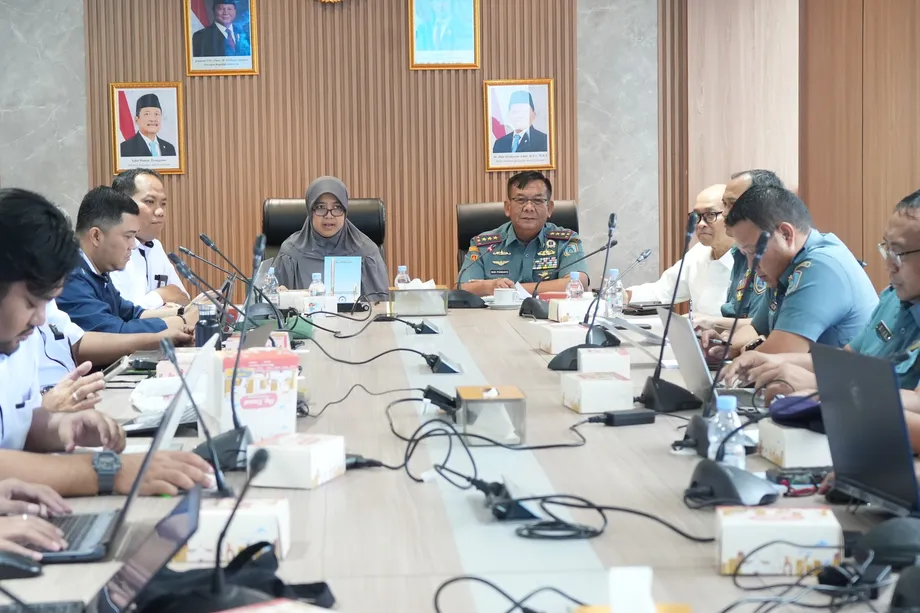
More than 60,000 joint personnel were deployed for ground firefighting, particularly in Central Kalimantan and South Sumatra. Around 50 aircraft were involved in water bombing and cloud seeding operations. Japan provided firefighting assistance, while water shortages hampered work on the ground.
The Forestry Ministry said dense haze hindered aerial operations near Tanjung Puting, although ground operations continued. A briefing to President Prabowo on October 12 described active firefighting across 639 hectares in six provinces. That figure concerns areas under active operations at that point; estimates of land burned during the season are much larger.
Government data recorded more than 202,000 hectares burned from January through July. For the period through August, the environmental organisation Auriga estimated more than 637,000 hectares damaged, while the satellite monitoring project Nusantara Atlas estimated nearly 896,000 hectares burned. The two August estimates differ by roughly 259,000 hectares.
A coalition of civil society groups in West Kalimantan sued the administration over alleged negligence in preventing and handling the fires. The Palace denied the accusation. The dispute comes as local volunteers seek greater assistance and conservation teams continue moving animals out of danger.
Rain forecasts and the next steps for wildlife
Indonesia's weather agency expected seasonal rain, which usually begins in October, to be delayed until November. It forecast that El Niño's effects would continue through the first quarter of 2027, while the approaching rainy season would help reduce the fires' impact.
Rehabilitation teams must keep treating animals while assessing both their health and the condition of potential release sites. Novita needs to recover her ability to climb. Mama Penja, Penja and Kumbang need forest conditions that allow a safe return. Continued monitoring is also needed for animals still occupying small patches of surviving habitat.
The Forestry Ministry urged residents to contact trained officers rather than attempt captures themselves. People finding wildlife in danger should give a clear location, describe the animal's condition and document it only when safe.
The ministry listed wildlife rescue numbers for Kalimantan:
- West Kalimantan conservation agency: 0811-577-6767.
- Central Kalimantan conservation agency: 0811-5218-500.
- East Kalimantan conservation agency: 0821-1333-8181.
Residents' reports helped bring rescuers to Mama Penja and Kumbang. Sustained rain, effective firefighting and surviving forest will determine when animals receiving treatment can move beyond rehabilitation centres and return to the wild.
Key Points
- West Kalimantan rescuers reported evacuating 51 orangutans since August 6.
- The Forestry Ministry recorded 96 Bornean orangutans receiving several forms of assistance by October 8.
- Rescued animals include Mama Penja, her infant Penja, Kumbang and Novita; Sampurna died hours after rescue.
- Respiratory illness cases in seven Indonesian provinces reached 283,270 by October 13, about two and a half times the September 9 total.
- Haze affected about 2,400 flights and disrupted daily life across several Southeast Asian countries.
- Damaged habitat and continuing fires are delaying wildlife releases, while seasonal rain was forecast to arrive in November.