Nearly 10,000 departures in one hour test the new crossing
Hong Kong's rebuilt Huanggang Port recorded 9,728 departures between 1pm and 2pm on October 18, 2026, as its first Sunday of operation collided with the Chung Yeung Festival holiday. The Security Bureau put the longest wait at 75 minutes, while a traveller who arrived with a child at about 11am said he was still waiting at a staffed departure counter nearly two hours later.
Contents
- Nearly 10,000 departures in one hour test the new crossing
- How the opening week reached its first holiday peak
- Where passengers lost time on Sunday
- What the five minute clearance system actually does
- Why age and registration mattered for families
- What officials promised, and what legislators want changed
- Transport links brought benefits and new pinch points
- How the new checks use personal information
- A capacity increase with an uneven first weekend
- Key Points
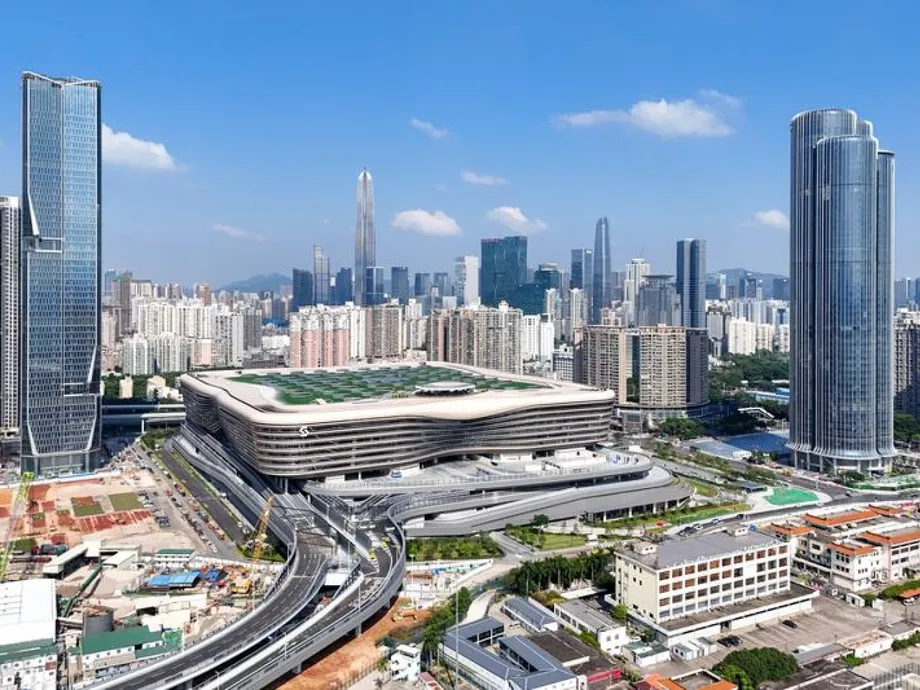
The congestion came six days after the crossing opened with a system designed to cut immigration clearance from around 30 minutes to approximately five. Crowds backed up beyond the departure hall into the public transport level, where police controlled access to escalators. Travellers described unclear queue entrances, difficulty finding the end of lines and families having to change queues after discovering they could not use automated gates.
Immigration Department figures showed more than 30,000 departures between 10am and 2pm. The Security Bureau said the busiest hour's traffic was 899 percent above the corresponding period at the former Huanggang and Lok Ma Chau crossing, equivalent to almost ten times the previous volume.
The Chung Yeung Festival, also called Chongyang, is an occasion when families visit ancestral graves and pay their respects. The holiday brought both those journeys and leisure trips north into Shenzhen. Huanggang's experience showed how a faster identity check can still leave passengers facing a lengthy journey when queues build at transport connections, escalators and manual counters.
How the opening week reached its first holiday peak
The new crossing began immigration services at 6:30am on October 12. About 5,100 travellers and 953 vehicles passed through in its first two hours. Passenger inspection services at the Lok Ma Chau road crossing then ceased, while the separate Lok Ma Chau Spur Line rail crossing remained open.
The government's October 10 opening notice had warned that nearby traffic could be busy and urged passengers to allow time to adjust. It set out joint command arrangements, extra transport preparations and crowd management deployments.
- October 12: Huanggang opened at 6:30am, replacing passenger clearance at the Lok Ma Chau road crossing.
- October 17: The first day of the three day holiday brought more than 130,000 passenger crossings at Huanggang.
- October 18: Departures increased sharply after 11am, reaching 9,728 between 1pm and 2pm.
Saturday's traffic included about 55,000 arrivals and 74,000 departures, with Hong Kong residents accounting for approximately 61,000 departures. Across Hong Kong's land, sea and air control points, the Immigration Department recorded 1.353 million arrivals and departures that day.
Huanggang therefore handled roughly one in ten of Hong Kong's recorded passenger movements on Saturday. Its roughly 74,000 departures were still below the more than 170,000 at Lo Wu and more than 130,000 at Lok Ma Chau Spur Line. The new facility was absorbing substantial demand while other major crossings also remained busy.
Where passengers lost time on Sunday
The Security Bureau's online status display showed a yellow busy warning on Sunday, with average departure waits of 30 to 45 minutes. Some travellers faced longer delays at manual counters. In the opposite direction, passenger numbers were lighter and immigration clearance generally took less than five minutes.
A timed journey at about 1pm took 50 minutes from leaving a bus on the Hong Kong side to completing clearance into Shenzhen. About 30 minutes went on reaching the departure hall on level five from the transport interchange on level two, a route that had taken around two minutes during smooth conditions on opening day.
Another roughly 15 minutes was spent waiting at the automated channels. Some passengers had difficulty with facial recognition because they had not removed their hats. Others struggled with the screen asking them to authorise the use of personal data.
Travellers at manual counters complained that entrances were narrow and queue endings hard to identify. Some said they joined several apparent queue endings before being redirected. Arguments over places in line brought police intervention.
A woman surnamed Ng said her journey from home through immigration took two and a half hours, compared with about an hour when she used Liantang. That comparison included her travel to the crossing as well as the border queue. For families with children or older relatives, changing lines and moving between floors added to the strain.
What the five minute clearance system actually does
The Security Bureau's joint clearance guide describes 134 automated collaborative inspection channels, 68 traditional manual counters and 26 clearance kiosks for private cars and coaches. Hong Kong and mainland immigration facilities sit beside each other along the boundary inside the building.
Passengers queue once to complete the two jurisdictions' immigration procedures. Automated channels have three gates: the first identifies the passenger using an eligible document or facial scan; the second carries out checks for departure, including facial and fingerprint verification; the third completes entry checks for the destination.
Manual counters also bring the two sides together, but passengers still present their documents separately to the departure and arrival authorities. The change removes the need to join two separate immigration queues.
Chief Secretary Eric Chan said at the opening that automated channel processing took approximately 20 seconds. The bureau's broader estimate is around five minutes for clearance, compared with around 30 minutes under the previous arrangement. A passenger's journey also includes getting from the bus stop to the hall, waiting for a channel and reaching onward transport.
Sunday's 50 minute timed journey illustrates the difference: about half an hour passed before the passenger even reached the departure hall. Opening more counters addresses the immigration queue, while access routes and crowd management determine how quickly people reach it.
Why age and registration mattered for families
The automated system has two different age thresholds. Eligible travellers aged seven or above may use document reading clearance. Facial scan entry without presenting a document at the first gate is available to eligible travellers aged 14 or above. Both methods still require passengers to carry valid travel documents accepted by each side.
Eligibility also depends on the documents held and the required registration. For many Hong Kong residents, this includes holding an identity card and a Mainland Travel Permit, commonly called a Home Return Permit, and being registered for mainland automated clearance. An existing QR code for Hong Kong's contactless e-Channel was among the features travellers said they could not use directly in the new collaborative channels.
A seven year old boy surnamed Leung encountered that gap on Saturday. Travelling with his parents and two younger sisters, he had to switch to a manual counter because his fingerprints had not been registered. His family completed the process quickly that day, but similar changes of queue became more difficult amid Sunday's crowds.
Children under seven must use manual clearance. Roundtable legislator Chong Ho-fung said some parents were unaware of that restriction, while other passengers reached the gates without the required biometric registration. When one family member could not proceed, the family often moved together to a staffed queue.
The Immigration Department had encouraged eligible Hong Kong residents to enrol in advance through the HK e-Channel app. The bureau also lists enrolment through eligible channels on departure from Hong Kong, self service kiosks and enrolment offices. Sunday exposed the practical cost of having passengers learn those steps at the gate.
What officials promised, and what legislators want changed
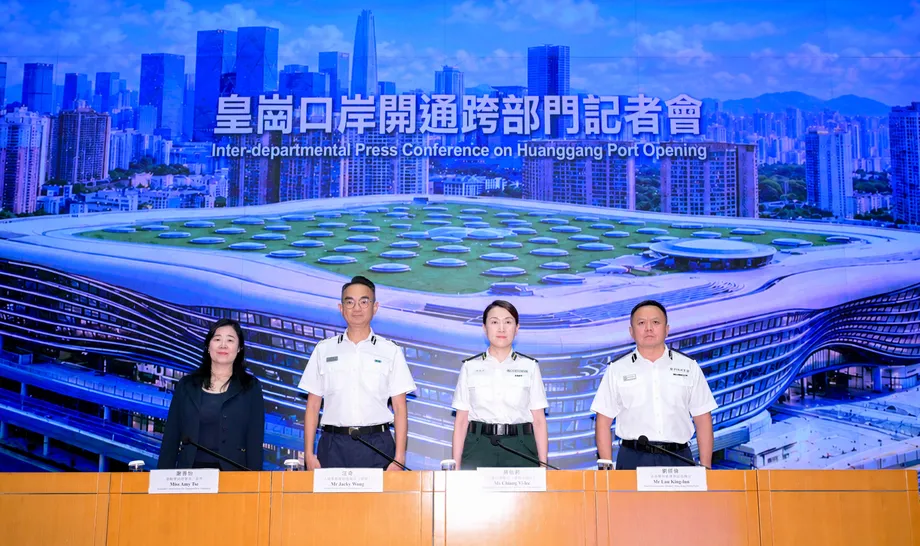
Secretary for Security Chris Tang said authorities had reserved sufficient staff for the opening week and holiday and had conducted passenger flow stress tests. He said all counters would open when waiting reached 15 minutes, with the aim of bringing the wait back towards five minutes.
Travellers nevertheless described some manual channels as closed while crowds built up. The government's longest recorded wait of 75 minutes and the family's account of nearly two hours put pressure on that response plan.
Chong said the government had used 20,000 civil servants in a large exercise, but argued that a test without young children and older people missed problems that would arise with a more varied holiday crowd. He called for clearer announcements and more staff to help passengers before they reached the gates.
Roundtable convenor Michael Tien proposed dividing a group of 30 manual channels by document type. His suggestion would allocate about five to passengers using foreign or Hong Kong SAR passports, and about 25 specifically to Hong Kong SAR passport holders. He said differences in mainland processing times were slowing families sharing queues with foreign passport holders.
Tien said the government had agreed to study the proposal. No implementation date was given. His plan concerns the allocation of 30 manual channels, while the Security Bureau lists 68 traditional manual counters across the facility.
Transport links brought benefits and new pinch points
Huanggang operates around the clock, and some passengers welcomed being able to reach it directly by bus. Saturday traveller Cheung said avoiding a transfer from bus to train saved time and more than HK$20 per journey in travel costs.
Another traveller, a woman surnamed Chan travelling north with friends, described a straightforward trip from Yuen Long Plaza:
"We came from Yuen Long Plaza. The journey took 20 to 25 minutes. It's very convenient," she said.
Chan also described the crossing as smooth and not too crowded on Saturday. Other passengers arriving from Kwai Fong reported a bus journey of around 40 minutes and immigration clearance taking only a few minutes. Customs and Excise Commissioner Chan Tsz-tat inspected operations that morning, and ambassadors were stationed to assist travellers.
The Transport Department had coordinated five franchised bus routes and three green minibus routes for the opening. Citybus B13 began its first opening day journey at 4:45am; the other initial departures ranged from 5:30am to 6am. Five short distance coach routes serving Mong Kok, Yau Tsim, Kwun Tong, Wan Chai and Tsuen Wan also switched to the new port.
Passengers' complaints extended beyond immigration. They cited long escalator journeys, shops and restaurants that had yet to open, fewer nearby parking spaces, limited arrangements for ride hailing pickups and shuttle fares that had not fallen.
Congestion continued at Shenzhen Metro's Huanggang Checkpoint station on Sunday. Weak mobile connectivity left some passengers unable to load their fare QR codes. They went outside to reconnect, then repeated security screening, while some codes expired before their holders reached the ticket gates.
How the new checks use personal information
The collaborative system collects travel document details, facial features and fingerprints. These biometric details are measurements used to help verify identity. Under the Security Bureau's published arrangements, the departure authority collects the information and, with the passenger's consent, transmits it to the arrival authority for entry checks.
Each immigration authority compares the collected information with its own database. The bureau says the two sides do not exchange databases or inspection results. It also says independent consultants assessed privacy risks and that departments conduct independent technology security assessments and audits under Hong Kong's Personal Data (Privacy) Ordinance.
Tang had said in July 2025 that Hong Kong residents' data would not be sent to mainland authorities. The current bureau guide describes the consent based transmission of collected passenger information to the arrival authority. Its stated safeguards focus on separate databases and separate inspection results.
Drivers face a related process through vehicle lanes with three gates. An integrated device collects temperature, document information, facial features and fingerprints for checks involving immigration, customs and health authorities. General passengers in private cars and coaches leave the vehicle for passenger clearance, carrying their belongings with them.
A capacity increase with an uneven first weekend
Tang estimated that 10,000 to 20,000 travellers had shifted to Huanggang since its opening, while traffic at nearby Lo Wu and Lok Ma Chau had fallen by 3 to 7 percent. He said there were no immediate plans to close other checkpoints and described the new port as an addition to Hong Kong's crossing capacity.
Eric Chan said the joint clearance system could gradually extend to other boundary control points if the Huanggang rollout went well. Its first holiday weekend produced both quick crossings and prolonged queues, with the sharpest problems concentrated in Sunday's northbound rush.
The operational priorities are concrete: direct families to the right queue before they reach a gate, help eligible passengers complete registration, make queue endings visible and coordinate the flow from buses through immigration to onward transport. The experience of Saturday's satisfied passengers and Sunday's delayed families shows how much the result depends on demand, direction of travel and readiness to use the new checks.
Key Points
- Huanggang opened on October 12, 2026, and handled more than 130,000 passenger crossings on October 17.
- Departures reached 9,728 between 1pm and 2pm on October 18, almost ten times the previous crossing's corresponding volume.
- The Security Bureau recorded a maximum wait of 75 minutes; a traveller with a child described waiting nearly two hours.
- Automated document reading clearance starts at age seven for eligible travellers, while facial scan entry starts at 14.
- Valid travel documents remain compulsory, including when using facial scan clearance.
- Officials promised to open all counters when waits reached 15 minutes. Legislators called for clearer guidance and changes to manual queues.
- The separate Lok Ma Chau Spur Line rail crossing remains open.