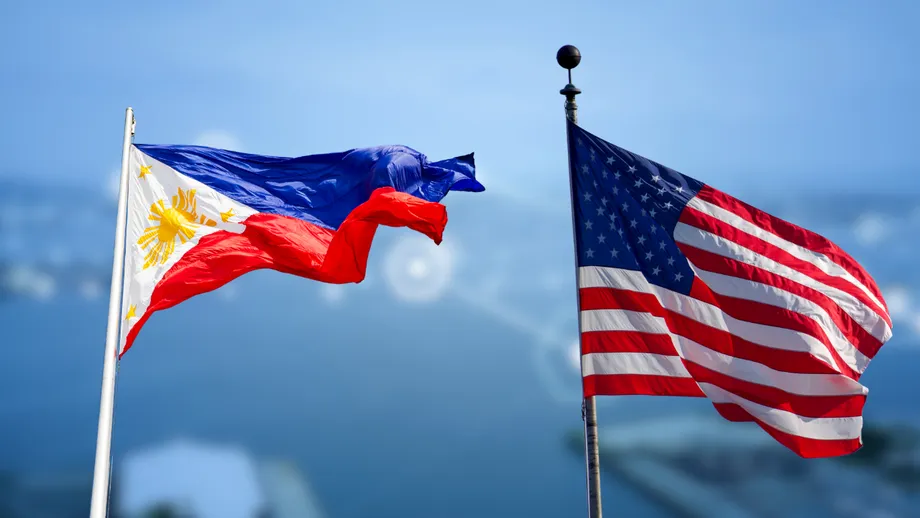
Oil reserves and a 2032 nuclear goal shape energy talks
The Philippines and the United States are exploring cooperation on an emergency oil stockpile targeted for completion by 2028 and preparations to introduce nuclear power by 2032, bringing immediate fuel security and future electricity supply into the same discussion.
Contents
- Oil reserves and a 2032 nuclear goal shape energy talks
- What an emergency oil reserve would do
- Why imported fuel remains part of the agenda
- The agreement behind nuclear cooperation
- What the Meralco reactor study will examine
- Training operators, teachers and lawmakers
- The nuclear timetable and its disputed milestone
- Domestic hydrogen and geothermal opportunities
- What families need beyond new power plants
- Key Points
Philippine Energy Secretary Sharon Garin met US Energy Secretary Chris Wright in Washington, D.C., on October 15, 2026. Their agenda covered liquefied natural gas (LNG), coal, geothermal energy, nuclear power, strategic petroleum reserves and naturally occurring hydrogen, according to the Philippine Department of Energy (DOE).
The talks, described in a DOE media release dated October 18, connect several projects already taking shape: an American study of small modular reactors for Meralco, training for future nuclear workers, and hydrogen exploration contracts covering more than 4,100 square kilometers in the Philippines.
Garin, who leads the Philippine energy department, described the purpose of the partnership in practical terms:
Our priority is to ensure a secure, reliable, and affordable energy supply for Filipino families and businesses.
Philippine Ambassador to the United States Jose Manuel Romualdez joined Garin, along with National Power Corp. president and chief executive Jericho Jonas Nograles, DOE Nuclear Energy Secretariat representative Patrick Aquino and Philippine Embassy Minister-Counselor Hans Siriban.
For households and businesses, the agenda addresses two different problems: keeping fuel available during an international disruption and building enough dependable electricity generation for future demand. Oil storage addresses the first problem. Nuclear preparation, domestic resource exploration and investment in other energy sources address the second.
What an emergency oil reserve would do
The United States is exploring possible involvement in developing the Philippine strategic petroleum reserve. Garin and Wright discussed how Manila could draw on American experience in emergency oil stockpiling and preparation for interruptions to international supplies.
A strategic petroleum reserve is oil kept for emergencies. For a country that imports more oil than it exports, stored supplies can provide a buffer when deliveries are interrupted. The Philippine stockpile is targeted for completion by 2028.
The DOE is also proposing that foreign countries be allowed to establish storage facilities in the Philippines as part of an effort to position the country as a potential Asian oil storage hub. A national emergency reserve would serve Philippine supply preparedness, while facilities holding oil for other countries would have a broader regional storage role.
The October announcement did not specify a final US financial commitment, the capacity or location of the Philippine reserve, or the terms for releasing its oil during an emergency. Those decisions will determine how much protection the stockpile can provide and how it will operate.
Why imported fuel remains part of the agenda
The Philippines enters these discussions with substantial exposure to imported energy. A CSIS energy security analysis, published on October 21, 2024, said net imports supplied more than half of the country's energy needs.
The analysis, written by Harrison Prétat, Yasir Atalan, Gregory B. Poling and Benjamin Jensen, also recorded coal's share of Philippine electricity generation at 60 percent in 2022, compared with 34 percent in 2010. That is an increase of 26 percentage points over 12 years.
Those figures help explain why the Washington agenda includes LNG and coal alongside nuclear power and domestic resources. Existing power plants and rising electricity demand create fuel needs that must be met while other projects are being prepared.
LNG is natural gas cooled into liquid form so it can be transported by ship. It gives countries access to gas from overseas suppliers, while retaining exposure to international prices and shipping conditions.
The CSIS analysis drew partly on an April 2024 exercise involving US and Philippine participants. Teams considered imported oil and gas necessary for meeting demand during a transition toward other sources. Their discussions also gave high priority to electricity networks, storage and renewable energy, showing that securing fuel is only one part of keeping the lights on.
The agreement behind nuclear cooperation
Philippine and American nuclear cooperation rests on the Agreement for Cooperation Concerning Peaceful Uses of Nuclear Energy, commonly called the 123 Agreement. Signed in 2023, it entered into force on July 2, 2024.
The agreement provides a framework for civilian nuclear cooperation. The current work includes regulation, commercial partnerships and workforce preparation, with US agencies working alongside Philippine counterparts.
The US Embassy's civilian nuclear cooperation fact sheet describes initiatives announced on February 16, 2026. It identifies the US departments of State, Energy and Commerce, the Nuclear Regulatory Commission and the US Trade and Development Agency (USTDA) as participants.
The embassy places those initiatives within the Philippine goal of integrating nuclear power into its energy mix by 2032. It also states an American commercial objective: exporting US nuclear technologies and developing lasting partnerships with allied countries.
For Manila, the practical work involves preparing institutions as well as choosing equipment. A nuclear program needs people who can assess designs, oversee safety, operate facilities and respond to emergencies. Several of the announced projects focus directly on those responsibilities.
What the Meralco reactor study will examine
USTDA will fund a $2.7 million feasibility study to help Meralco assess small modular reactors designed in the United States, according to the embassy fact sheet. The study will evaluate technologies, identify viable sites and develop an initial implementation roadmap.
Small modular reactors, or SMRs, are nuclear reactors designed with smaller generating units than conventional large nuclear plants. Their modular approach allows some components to be manufactured before assembly at a project site. They still require regulatory approval, suitable locations, trained workers and financing.
The study therefore covers choices that come before construction: which designs could suit Philippine needs, where they could be located and what steps a project would require. The October talks also addressed a USTDA supported mission connecting Philippine officials and industry representatives with American nuclear suppliers and specialists.
The embassy says that mission will bring 10 to 15 Philippine government and private sector participants to the United States to visit reactors, supply chains and training facilities. Financing, regulation and workforce development are among the subjects Philippine participants are expected to discuss with American counterparts.
Training operators, teachers and lawmakers
The US State Department's Foundational Infrastructure for Responsible Use of Small Modular Reactor Technology program, known as FIRST, is supporting technical and institutional preparation for Philippine nuclear development.
One planned project is a reactor control room simulator at a technical institution in the Luzon Economic Corridor. Based on an advanced American SMR design, it is intended to let future operators and technicians practice plant operations, safety procedures and emergency scenarios.
A simulator allows trainees to rehearse decisions in a realistic control room environment before working at an operating plant. That makes training a concrete part of the cooperation agenda rather than an activity left until a reactor is ready.
A separate workforce development fund, led by Fulbright Philippines, will bring American nuclear experts to the country to develop vocational and higher education curricula. Its supporters include AboitizPower, EōS Organization, the Technical Education and Skills Development Authority (TESDA), and the US Department of State.
FIRST funding will also support curriculum partnerships linking Philippine universities with Texas A&M University and King's College London. Philippine senators and members of the House of Representatives are expected to visit the United States in 2026 to study nuclear technology, policy, regulation and institutions.
The nuclear timetable and its disputed milestone
The Philippine nuclear goal begins with 1,200 megawatts (MW) by 2032 and rises to 4,800 MW by 2050. A megawatt measures generating capacity, meaning the rate at which a plant can produce electricity.
The CSIS description of the Philippine Energy Plan 2023–2050 places an intermediate target of 2,400 MW in 2035; descriptions accompanying the October talks also give 2045 for that milestone. Both schedules put the starting goal at 1,200 MW in 2032 and the final goal at 4,800 MW in 2050.
The final target is four times the initial capacity. The embassy's February announcement also identifies 2032 as the intended year for nuclear power to enter the Philippine energy mix.
The main milestones span agreements, project preparation and planned operations:
- 2023: The Philippines and United States signed the civilian nuclear cooperation agreement.
- July 2, 2024: The 123 Agreement entered into force.
- February 16, 2026: The United States announced reactor study, training and education initiatives.
- October 15, 2026: Garin and Wright discussed expanded energy cooperation in Washington.
- 2028: Target completion of the Philippine oil stockpile.
- 2032: Target entry of nuclear power, beginning with 1,200 MW.
- 2050: Nuclear capacity goal of 4,800 MW.
Domestic hydrogen and geothermal opportunities
Garin and Wright also examined energy resources found within the Philippines, particularly geothermal energy and natural hydrogen. Developing domestic resources could give the country more alternatives to imported fuel.
Koloma, a company based in the United States, holds three Philippine natural hydrogen exploration contracts covering more than 4,100 square kilometers in Central Luzon and western Zambales. It was the first company awarded exploration service contracts for natural hydrogen in the country.
Natural hydrogen occurs underground, unlike hydrogen manufactured through an industrial process. Koloma's work is at the exploration stage, where the task is to assess the resource and its development potential. The October discussions considered how that activity could contribute to the future Philippine energy mix.
Geothermal generation uses heat from beneath the earth's surface to produce electricity. The Philippines already produces geothermal power, making it an established domestic resource within an agenda that also includes newer possibilities such as natural hydrogen.
The 2024 CSIS exercise identified limits to geothermal expansion because usable resources depend on suitable locations. The October talks nevertheless included geothermal cooperation, keeping both existing domestic industries and emerging resources within the partnership.
What families need beyond new power plants
Philippine electricity users need power to reach them reliably, whatever its source. The CSIS analysis identified transmission, storage and connections between islands as major weaknesses in the energy system. It also described electricity prices as among the highest in Southeast Asia.
Transmission carries electricity over long distances from power plants, while distribution delivers it through local networks to consumers. A larger supply of electricity must be matched by networks capable of carrying it to homes and businesses.
The analysis incorporated a March 2024 survey of 1,765 Filipinos conducted with WR Numero Research. Respondents favored transmission and grid development as leading areas for American energy investment. More than 40 percent supported oil and gas exploration, while fewer than 25 percent expressed support for nuclear power.
Those findings place public confidence alongside engineering and finance in the nuclear preparation agenda. Training operators, developing regulatory expertise and preparing lawmakers all address the institutions needed to manage a technology that drew limited support in that survey.
The Philippine Energy Plan also aims for renewables to provide more than half of the energy mix by 2050, according to the CSIS analysis. The broader task is to connect new generation, domestic resource development and fuel preparedness with a stronger electricity network. For consumers, the desired result is straightforward: fewer disruptions and power they can afford.
Key Points
- Garin and Wright met in Washington on October 15, 2026, to discuss oil reserves, nuclear power, LNG, coal and domestic resources.
- The Philippine emergency oil stockpile is targeted for completion by 2028, with possible US involvement under discussion.
- The US Embassy lists a $2.7 million Meralco study covering American SMR designs, potential sites and an implementation roadmap.
- Nuclear cooperation includes operator simulation, university partnerships, vocational education and visits for officials.
- The Philippines aims to introduce 1,200 MW of nuclear capacity by 2032 and reach 4,800 MW by 2050.
- Koloma holds three natural hydrogen exploration contracts covering more than 4,100 square kilometers.
- Grid investment and reliable delivery remain central to turning additional energy supplies into dependable household electricity.