Nearly P40 billion in paper losses puts SSS investment decisions under scrutiny
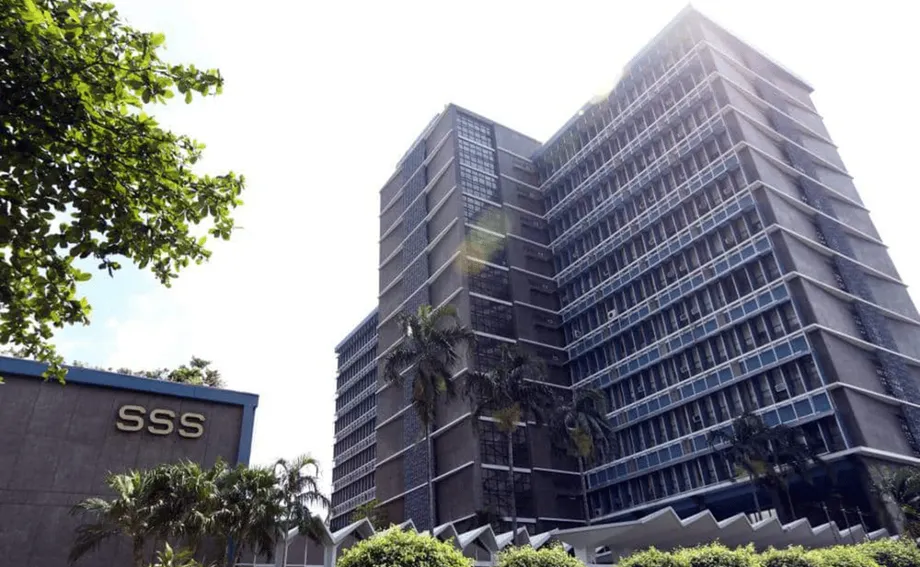
The Philippine Social Security System (SSS) held shares worth P81.473 billion at the end of 2025 that had cost P121.467 billion to acquire, leaving P39.994 billion in unrealized losses. Three unnamed companies, in telecommunications, food and beverages, and banking, accounted for about two thirds of that decline.
Contents
- Nearly P40 billion in paper losses puts SSS investment decisions under scrutiny
- What the loss figures actually measure
- Three holdings account for most of the damage
- Auditors point to problems within the companies
- Dividends and trading gains did not close the gap
- SSS defends its strategy as a response to market conditions
- The gap between written safeguards and investment action
- Exposure ceilings address a different kind of risk
- How the losses and controls developed
- The Essentials
The accumulated losses rose from P11.604 billion in 2021, an increase of approximately 245% over four years. The Commission on Audit (COA) questioned why the pension fund continued holding several investments through repeated price declines without effective thresholds for reviewing positions and taking corrective action.
Yet the SSS 2025 Annual Report says the institution already implements Stop Loss and Yellow Flag Monitoring Guidelines under Resolution No. 317-s.2022. Those guidelines require selling a stock at a loss once it breaches the acceptable loss limit. The central issue is therefore how the stated safeguards were applied to the holdings under scrutiny.
The report also contains an unmodified audit opinion, dated May 26, 2026, signed by COA Supervising Auditor Abegail V. Padilla. That opinion says the financial statements fairly present the fund's financial position, performance and cash flows under Philippine Financial Reporting Standards. It does not settle whether individual investment decisions were sound or risk controls worked effectively.
For members, the distinction matters: these are reductions in the market value of investments still held, not evidence that P39.994 billion was paid out or disappeared in cash. They nevertheless represent a substantial decline in assets intended to support the pension fund.
What the loss figures actually measure
The P39.994 billion loss is the difference between the acquisition cost and the market value of the affected shares at December 31, 2025. Their value was 32.93% below cost, meaning roughly one third of the amount originally invested in those holdings was no longer reflected in their market valuation.
An unrealized loss, often called a paper loss, arises when an investment's current value falls below its purchase cost but the investment has not been sold. Prices can recover, although recovery is not guaranteed. Selling below cost generally turns the loss on that holding into a realized loss.
The increase since 2021 was P28.390 billion. At P39.994 billion, the accumulated loss was about 3.45 times the earlier P11.604 billion figure. Those comparisons describe the deterioration in the affected investments, not the return on all SSS assets.
The figures do not establish a loss of the same percentage across the entire Investment Reserve Fund (IRF). They also do not, by themselves, establish an immediate inability to pay benefits. Assessing either would require the size and performance of the wider fund, its cash flows and its benefit obligations.
Three holdings account for most of the damage
The largest reported loss was P17.615 billion in an investment identified by auditors as Telecommunications Company B. That alone represented about 44% of the P39.994 billion total. SSS held 11.055 million shares in the company, worth P13.929 billion at the end of 2025.
The telco's share price fell from P1,812 in 2021 to P1,260 in 2025, a decline of about 30.5%. That price comparison uses 2021 as its starting point. It is not the same calculation as the accumulated loss measured against the fund's acquisition cost.
The food and beverage holding had P5.068 billion in unrealized losses and a remaining market value of P2.836 billion. The bank holding had P3.735 billion in losses against a remaining value of P1.807 billion. In both cases, the reported loss exceeded the value of the shares still held.
The combined loss for these three investments is reported as P26.417 billion, or about 66% of the total. The separately stated figures add to P26.418 billion, P1 million more than the combined figure. That small difference may reflect rounding, but no reconciliation is given.
Auditors point to problems within the companies
COA challenged the idea that the declines could be explained mainly by a weak stock market. For Telecommunications Company B, auditors cited a capital expenditure overrun and a governance issue affecting earnings guidance. Capital expenditure refers to spending on major assets, such as networks and equipment; an overrun means that spending exceeded the expected budget.
For the food and beverage investment, auditors cited shrinking profit margins and higher input costs. For the bank, they identified sluggish loan growth and pressure on interest margins, the spread between what a bank earns from lending and what it pays for funding.
Other reported losses included P1.935 billion in an energy company facing heavy debt and volatile margins, P1.876 billion in a holding company affected by weaker property demand, and P1.179 billion in a gaming and leisure company with volatile earnings.
COA's assessment distinguished temporary price movements from deterioration in a company's business:
"The decline in market value may reflect underlying business conditions and performance trends, rather than short-term price volatility," the auditors said.
The distinction is central to the dispute. Waiting through a market decline may be consistent with a patient investment strategy. Continuing to hold a company whose earning prospects have weakened requires a separate judgment about whether the original reasons for buying it still apply. The companies were not named beyond their sectors and the telco's audit label, so their identities should not be inferred.
Dividends and trading gains did not close the gap
COA found that dividends and trading gains totaled P30.132 billion from 2018 to 2025. Compared with the accumulated P39.994 billion in paper losses, that left a P9.862 billion shortfall.
The comparison adds income and gains to the picture rather than treating share prices as the only measure of investment performance. Dividends are payments companies make to shareholders, while trading gains arise from profitable sales. Both can offset some of the financial effect of falling prices.
However, the P9.862 billion difference should not be presented as a complete measure of SSS investment performance. It compares the reported dividends and trading gains over an eight year period with an accumulated valuation loss at a particular date. It does not provide a full return calculation for every asset held by the fund.
SSS also said other investments producing favorable returns substantially offset the effect of underperforming stocks. No quantified reconciliation of that broader claim accompanies the figures discussed here. The evidence establishes that the cited dividends and trading gains did not fully match the accumulated losses, while leaving the performance of the wider investment portfolio as a separate question.
SSS defends its strategy as a response to market conditions
SSS management attributed the losses to market conditions, including the lingering effects of the COVID-19 pandemic, inflation, monetary tightening, geopolitical tensions and foreign capital outflows. It argued that the portfolio's performance broadly tracked the Philippine Stock Exchange Index.
Management described the valuation change as an accounting adjustment rather than proof of improper investment decisions:
a non-cash, market-driven accounting adjustment reflecting temporary price fluctuations, not mismanagement or policy deviation.
Higher interest rates can put pressure on shares by increasing borrowing costs and making interest bearing investments more attractive. Foreign investors withdrawing money can also weigh on local share prices. These mechanisms help explain management's argument, but they do not establish that each holding's decline was temporary.
SSS said its investment decisions consider company fundamentals, valuations, liquidity and recovery prospects, rather than requiring an automatic sale whenever prices fall. It also acknowledged that some investments might no longer deliver the returns originally expected and could require reduced exposure or divestment.
The competing positions therefore concern how to distinguish a recoverable price decline from lasting weakness. SSS stresses professional judgment and patient investing. COA stresses measurable triggers that require that judgment to be revisited before losses continue accumulating.
The gap between written safeguards and investment action
The annual report describes two stages of loss monitoring. A stock enters yellow flag status when it meets specified conditions indicating a loss that is still within an acceptable level. Fund managers and stock traders must then monitor it closely. Once a stock breaches the acceptable loss limit, the stated guidelines call for selling it at a loss to minimize further losses.
COA, however, found that positions in several companies remained largely unchanged despite years of declining prices. Auditors also cited an investment optimization framework adopted in 2022 to guide buying, holding, selling and rebalancing decisions.
COA explained that its concern went beyond the presence of paper losses:
"The issue is not merely the existence of unrealized losses, but the failure to act on available governance tools and risk management frameworks designed to mitigate such losses," COA said.
The report's description of existing guidelines and the audit criticism should be read together. Written controls can exist while auditors still find their thresholds insufficiently measurable, enforceable or effective in practice. The precise numerical loss limits, which holdings breached them, any exceptions granted and the decisions taken at each review are not specified here.
COA recommended enforceable loss limits, measurable review triggers and clear procedures for reducing exposure, rebalancing or divesting when warranted. SSS agreed to strengthen its risk management framework while maintaining that its decisions were guided by professional judgment and the fund's sustainability.
Exposure ceilings address a different kind of risk
The annual report also sets out investment exposure ceilings under Section 26 of the Social Security Law. These seek to prevent excessive concentration in a corporate group or individual company. The ceilings are measured against the IRF forecast, rather than simply against the affected stock holdings.
- Conglomerate or corporate group: 10% of the IRF forecast.
- Individual corporation: 5% of the IRF forecast.
- An individual corporation's debt: 4% of the IRF forecast.
- An individual corporation's equity: 4% of the IRF forecast.
The stated forecast calculation uses the previous year's fund figure plus 90% of the current year's target net revenue. SSS also applies limits based on a company's value and credit score. For corporate debt, the value measure is three times unimpaired capital. For equity, it is 10% of the market value of the company's issued and outstanding shares.
The debt risk measure is Merton Distance-to-Default, which estimates how far a company is from financial default using its asset value and debt. The equity measure is the Altman Z-Score, which uses financial ratios to assess financial distress risk.
These controls address different problems from loss limits. An exposure ceiling restricts how much the fund can invest in one issuer or group; it does not guarantee that the investment will retain its value. Nothing in the reported loss figures alone demonstrates that SSS exceeded the Section 26 ceilings.
How the losses and controls developed
The reported deterioration spans several leadership periods. The losses accumulated during the tenures of SSS presidents Aurora Ignacio, Michael Regino, Rolando Macasaet and Robert Joseph de Claro. De Claro assumed office in December 2024 after serving on the Social Security Commission's risk management and investment committee.
The main dates establish when the losses were measured and when the safeguards were introduced:
- 2018 to 2025: Reported dividends and trading gains totaled P30.132 billion.
- 2021: Accumulated unrealized losses stood at P11.604 billion.
- 2022: SSS adopted an investment optimization framework; its annual report also identifies Resolution No. 317-s.2022 as the basis for its loss monitoring guidelines.
- December 2024: De Claro became SSS president.
- December 31, 2025: The affected shares were valued at P81.473 billion, against P121.467 billion in acquisition cost.
- May 26, 2026: Padilla signed COA's unmodified opinion on the financial statements.
The sequence shows that the controls existed during part of the period in which losses grew. It does not assign particular purchases, decisions to retain shares or amounts of loss to individual presidents.
No deadline for implementing the audit recommendations, scheduled hearing or date for an investment disposal is identified. The unresolved issues are practical ones: what thresholds will apply, who must authorize action, how exceptions will be documented and when persistently weak holdings will be reduced. Those details would show whether the promised stronger controls change investment decisions.
The Essentials
- SSS recorded P39.994 billion in unrealized stock losses at the end of 2025, up approximately 245% from 2021.
- The affected shares cost P121.467 billion and had a market value of P81.473 billion, a decline of 32.93% against acquisition cost.
- Three unnamed telecommunications, food and beverage, and bank holdings accounted for about two thirds of the losses.
- Reported dividends and trading gains of P30.132 billion from 2018 to 2025 fell P9.862 billion short of the accumulated paper losses.
- SSS attributed the declines largely to market conditions; COA also identified company problems and questioned the application of investment controls.
- The annual report describes existing loss monitoring guidelines, while auditors called for enforceable limits and measurable review triggers.
- COA's unmodified financial statement opinion does not resolve the separate concerns about investment management.
- No implementation deadline or scheduled disposal of the affected investments has been identified.