A record crowd and a final night hitting duel
South Korea's Korea Baseball Organization finished its 2026 regular season on October 12 with 12,770,551 spectators across 720 games, while Lotte Giants hitter Victor Reyes delivered four hits in the finale to set a season record of 211. Attendance rose by 458,032 from the previous record of 12,312,519 in 2025, an increase of about 3.7%.
Contents
- A record crowd and a final night hitting duel
- How attendance reached new heights
- Eight clubs pass one million at home
- Online clips connect with stadium visits
- Weekday crowds, television and rule changes
- Reyes wins a race that lasted until the finale
- Power records built across decades
- Kang and Ryu reach career firsts
- Relief pitching and speed add more milestones
- An opening streak and the postseason transition
- At a Glance
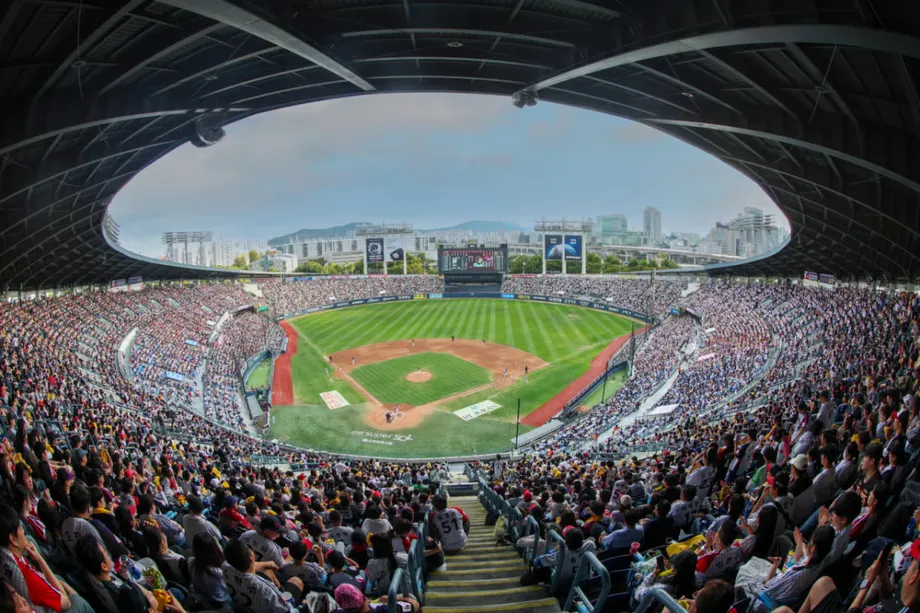
The final three games all sold out. Jamsil Baseball Stadium in Seoul drew 23,750 for Doosan against Lotte, Daegu Samsung Lions Park drew 24,000 for Samsung against KT, and Gwangju-Kia Champions Field drew 20,500 for KIA against LG. Together, those crowds added 68,250 spectators and brought the season's sellout count to 345, beating the previous record of 331.
Average attendance reached a record 17,737, compared with 17,101 a year earlier. Almost half the schedule sold out: 345 of 720 games equals 47.9%. The reported seat occupancy rate was 85.4%, showing that strong demand extended beyond the games that reached capacity.
The league also achieved a broader distribution of large crowds. Eight of its 10 clubs, rather than every team, exceeded one million spectators at home for the first time. Seven clubs established their own attendance records.
On the field, the season combined a close race between Reyes and KT's Choi Won-jun with career milestones for Kang Min-ho, Ryu Hyun-jin, Choi Hyung-woo and several other veterans. Those achievements measured different kinds of success: production within one season, sustained performance across many seasons and the durability needed to accumulate career records.
How attendance reached new heights
The crowd record developed throughout the season rather than depending on a late surge. After opening on March 28, the KBO passed one million spectators on April 10, its 14th day, with 55 games completed. That was five games faster than the 60 needed in 2025.
First half attendance reached 7,633,775 across 424 games. Every subsequent threshold in increments of one million was also reached in fewer games than ever before. The league passed 10 million in 565 games on August 26, compared with 587 games the previous year.
- March 28: The regular season opened.
- April 10: Attendance exceeded one million after 55 games.
- August 26: Attendance passed 10 million after 565 games.
- September 12: Attendance passed 11 million after 626 games.
- October 1: Attendance exceeded 12 million after 684 games.
- October 5: Attendance reached 12,362,000 after 699 games, surpassing the 2025 season record.
- October 12: The final three games lifted attendance to 12,770,551.
The October 5 figures were an interim snapshot, not a competing season total. At that point, average attendance was 17,685, seat occupancy was 85.2% and 330 games had sold out. All three measures increased before the schedule ended.
Eight clubs pass one million at home
LG, Hanwha, SSG, Samsung, KT, Lotte, KIA and Doosan each exceeded one million home spectators. That represents 80% of the league's clubs and distinguishes the season from a record driven by only a few large stadiums.
Samsung led the league, although reports differ on its exact total. Most season summaries give 1,717,050, against its previous record of 1,640,174. Another account gives 1,710,750, a difference of 6,300. Both figures put Samsung above 1.7 million and identify it as the attendance leader.
Using the more widely reported total of 1,717,050, Samsung increased its home attendance by 76,876, or about 4.7%. Doosan reached 1,507,522, exceeding 1.5 million for the first time and establishing a franchise record.
Other reported club records included LG at 1,622,238, KIA at 1,299,388 and KT at 1,022,972. Kiwoom, with 935,849, and NC, with 902,905, also set franchise records despite remaining below one million. Their results show why the number of clubs setting records differs from the number crossing the million mark.
Doosan's milestone also came at a moment of transition. Jamsil Baseball Stadium was reported to be scheduled for demolition after the season. Its final regular season home game ended with a full crowd watching Reyes complete his record chase.
Online clips connect with stadium visits
A KBO survey pointed to edited game footage as one route through which fans became interested in attending. Since its 2024 broadcast rights agreement, the league has allowed fans to use game scenes in online video content.
Among survey respondents, 87.0% said they had watched repurposed game footage. Highlight compilations were the most common category at 50.8%, followed by humorous or entertaining clips at 34.2% and videos made by fans at 32.3%. Respondents could select more than one category.
Among respondents who watched such footage before beginning regular stadium visits, 67.2% said it influenced their decision to attend. The figure was 72.3% among people in their 20s and 69.1% among women. These are reported perceptions, not proof that clips caused a specific number of ticket purchases. The survey descriptions do not give a sample size or enough methodological detail to assess how closely respondents represented the entire audience.
The league's own channels grew too. By September, its YouTube account had about 500,000 subscribers, up 21.6% from a year earlier, while Instagram had about 740,000 followers, up 23.2%. People aged 18 to 34 represented 71.4% of its Instagram following. The KBO also increased production of short videos to about 2.5 times the previous year's level and used artificial intelligence to distribute game highlights quickly.
Weekday crowds, television and rule changes
Attendance growth extended into ordinary evenings. Through October 1, games played Tuesday through Thursday, excluding public holidays, averaged 15,953 spectators. That was 662 more than the previous year's 15,291, an increase of 4.3%. Thursday recorded the largest rise at 7.3%, followed by Tuesday at 3.5% and Wednesday at 2.5%.
Television figures moved in the same direction. Through September 27, the combined average rating was 1.22%, compared with 1.15% in 2025. Average combined viewers per game rose from 272,957 to 283,408, an increase of 10,451, or about 3.83%. Those television figures cover a period ending before the regular season finale.
The KBO also connected interest in domestic baseball with South Korea's World Baseball Classic quarterfinal appearance in March, its first in 17 years, and a fifth consecutive Asian Games baseball gold in September. Videos about those national teams received higher average views than the league channel's usual content.
Rule changes received favorable survey responses. Some 76.7% said changes including the automated ball and strike system, pitch clock and reviews of checked swings had a positive effect on their interest in watching. The automated system determines balls and strikes using tracking technology; the pitch clock limits time between pitches. The survey measures audience opinion, not an independently established effect on attendance or game length.
Commercial partnerships extended baseball branding into everyday products, including food, fragrances, home goods and footwear. Collaborations involved CJ OnStyle, Pepero, Paldo Bibim Men, Crocs, Starbucks and Casetify. No revenue figures or separate attendance effects were given, so their contribution cannot be quantified alongside the crowd totals.
Reyes wins a race that lasted until the finale
Reyes and Choi Won-jun both reached 200 hits on October 6, making 2026 the first KBO season with two players at that level. Choi finished with 208, while Reyes reached 211, nine above his own previous record of 202 from 2024.
Reports describe Choi's October 7 breakthrough differently. One records him passing the old mark with his 203rd hit; another gives his total that day as 204. Both accounts place him ahead of the previous record before Reyes reclaimed the lead. The detailed chronology has Reyes matching 204 on October 9 and reaching 205 on October 10.
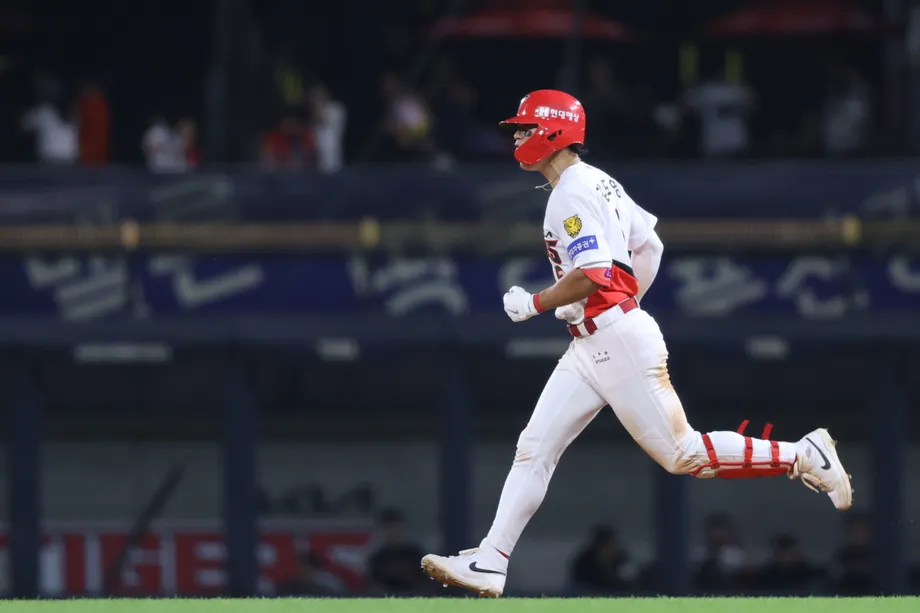
On the final night, Choi collected three hits in six at bats against Samsung in Daegu. Reyes had four in five against Doosan in Seoul, including a solo home run. His final hit came in the eighth inning, after which he left for a pinch runner to an ovation from both teams' supporters.
Lotte won 7-4 and finished seventh. Reyes ended the season with a .363 batting average, 18 home runs, 109 runs batted in and a .937 OPS. OPS adds on base percentage and slugging percentage, combining a hitter's ability to reach base with his power production.
Reyes, Lotte's Venezuelan switch hitter, acknowledged his rival after the race ended.
To be honest, I wasn't really paying attention to it. Now that it's over, I want to tell Choi Won-jun that I appreciate his hard work.
He led the league in hits in each of his first three KBO seasons: 202 in 2024, 187 in 2025 and 211 in 2026. He became the first foreign hitter to win that title in three consecutive seasons and the first KBO player with two seasons of at least 200 hits.
Reyes said his priority was appearing in every game. He played all 144 games in each of those three seasons.
My personal goal was to play all 144 games for three years. I kept that promise. I'm also happy to finish the season healthy.
Power records built across decades
Samsung's Choi Hyung-woo became the first KBO player to reach 4,500 career total bases on May 10 against NC in Changwon. On May 31 against Doosan in Daegu, he became the first to reach 1,000 career extra base hits.
Those are distinct statistics. Total bases count one for a single, two for a double, three for a triple and four for a home run. Extra base hits count doubles, triples and home runs as individual hits. Choi's first 1,000 comprised 553 doubles, 20 triples and 427 home runs.
One English account labels the milestones as 4,500 hits and 1,000 total bases. That conflicts with the Korean descriptions and other season summaries, which identify them as total bases and extra base hits. The breakdown of doubles, triples and home runs also supports the latter reading.
Choi hit 18 home runs in 2026, extending his run of seasons with at least 10 to 19. SSG's Choi Jeong continued an even longer streak, reaching his 10th homer on May 12 against KT to make it 21 consecutive seasons in double figures, beginning in 2006.
Choi Jeong then hit his 20th on July 16 against KIA, becoming the first player with 11 consecutive seasons of at least 20 home runs. That streak began in 2016, when he recorded his first 40 homer season.
Kang and Ryu reach career firsts
Kang Min-ho started at catcher for Samsung against Doosan in Daegu on April 1 and became the first KBO player to reach 2,500 career appearances. The milestone concerns total games played, rather than 2,500 games specifically spent catching. He is the only catcher among the top 10 players in career appearances.
Kang had already taken the career appearances lead on March 28, 2024, when he played his 2,238th game against LG at Jamsil. His latest milestone extended that record by another 262 appearances.
Hanwha's Ryu Hyun-jin reached 1,500 KBO strikeouts against SSG on April 7 at age 39 years and 13 days. He was the seventh pitcher to reach the mark, the oldest to do so and the fastest by games played.
Ryu needed 246 games, compared with Sun Dong-yeol's previous record of 301, a difference of 55. His age exceeded the previous oldest mark held by Song Jin-woo, who reached the threshold at 36 years, five months and 26 days.
On May 24 against Doosan in Daejeon, Ryu earned his 200th combined win in South Korea and the United States. The total comprised 122 KBO wins and 78 Major League Baseball wins. It is a combined career milestone, not 200 wins within either league alone.
Relief pitching and speed add more milestones
KIA closer Jeong Hae-young reached 150 career saves against SSG on May 24 at age 24 years, nine months and one day. He was the 12th KBO pitcher to reach that total and the youngest, beating Oh Seung-hwan's previous age record by more than two years.
LG's Kim Jin-seong recorded his 178th career hold against Kiwoom on August 11, passing Ahn Ji-man's 177. A hold generally credits a relief pitcher who preserves a lead in a qualifying situation without finishing the game. Kim also became the eighth pitcher with at least 10 holds in five consecutive seasons.
KT's Woo Kyu-min made his 900th pitching appearance on September 3 against Hanwha. He finished with 908, passing Ryu Taek-hyun's 901 for second place among pitchers, behind Jeong Woo-ram's 1,005.
LG's Park Hae-min reached 20 stolen bases on June 13 against Lotte, becoming the first player with 13 consecutive seasons at that level. On October 6, he became the fourth player to reach 500 career steals, joining Jeon Jun-ho, Lee Jong-beom and Lee Dae-hyung.
An opening streak and the postseason transition
SSG's Park Seong-han began the season with hits in 22 consecutive games, breaking Kim Yong-hee's record of 18 from the league's inaugural season in 1982. This was specifically a streak from Opening Day, not the record for a hitting streak starting at any point in a season.
Reports differ on its endpoint. The detailed Korean chronology places Park's 19th consecutive game with a hit on April 21 and the 22nd on April 24 against KT. Another English account assigns the 22nd to April 21. Park finished with a .330 average, 175 hits, 71 runs batted in and 96 runs scored.
KT's Kim Hyun-soo also set a longevity record, reaching 100 hits on July 18 for his 17th consecutive KBO season at that level. That sequence excludes his 2016 and 2017 seasons abroad, so it does not mean 17 uninterrupted calendar years.
The postseason was scheduled to begin Wednesday, October 14. KT, Samsung, KIA, LG and Doosan were reported as the qualifiers, with KT advancing directly to the Korean Series. The regular season records were settled, while the championship remained undecided.
At a Glance
- The KBO drew a record 12,770,551 spectators, up 458,032 from 2025.
- Average attendance reached 17,737, with 345 sellouts across 720 games.
- Eight of 10 clubs exceeded one million home spectators, and seven set franchise attendance records.
- Victor Reyes finished with a record 211 hits; Choi Won-jun had 208.
- Choi Hyung-woo reached 4,500 total bases and 1,000 extra base hits.
- Kang Min-ho reached 2,500 career appearances, while Ryu Hyun-jin reached 1,500 KBO strikeouts and 200 combined KBO and MLB wins.
- The postseason was scheduled to start October 14.