Residential Customers Set for P0.1733 per kWh Refund
The Energy Regulatory Commission (ERC) has ordered Manila Electric Company (Meralco) to return about P2.64 billion to customers over approximately six months, with residential consumers entitled to a refund of P0.1733 per kilowatt hour (kWh). The directive comes as households face higher October electricity bills and a separate increase in Meralco's distribution charge is expected in November.
Contents
- Residential Customers Set for P0.1733 per kWh Refund
- How the ERC Calculated the Excess Collections
- Why Repayment Was Cut to Six Months
- What Each Customer Class Will Receive
- November Is the Target, but Receipt of the Order Matters
- The Refund and Distribution Increase Are Separate Decisions
- October Bills Have Already Increased
- Consumers Seek the Calculations Behind the Reset
- Other Price Pressures Could Limit the Relief
- Key Points
The refund was approved on October 9 under ERC Case No. 2026-129 RC. It covers the reconciliation of distribution charges collected from January through June 2026, when Meralco's actual average collections exceeded the rate approved by the regulator.
Across all customer classes, the refund averages P0.1020 per kWh. That figure is different from the residential rate, an important distinction for households estimating their credit. A residential customer using 200 kWh would receive about P34.66 for a billing period at the announced P0.1733 rate.
The ERC shortened Meralco's proposed repayment period from 12 months to six months. However, the authorization is provisional: the amount remains subject to verification during the commission's final review, with hearings scheduled for October 16 to 23.
How the ERC Calculated the Excess Collections
The decision stems from a process called a true-up, which checks whether the revenue a utility actually collected matches what it was authorized to collect. In this case, the ERC examined distribution revenue and electricity sales for the first six months of 2026, the final portion of the expired period covered by its confirmation process.
The calculation uses the Actual Weighted Average Tariff (AWAT). Rather than treating every customer's tariff as identical, this measure reflects actual revenue across electricity sales. Meralco calculated an AWAT of P1.5537 per kWh for January through June, compared with the approved distribution rate of P1.3522 per kWh.
The difference is P0.2015 per kWh, about 14.9 percent above the approved rate. The ERC put the resulting excess collections at approximately P5.36 billion. After accounting for earlier refund and true-up decisions, it reduced the net amount to be returned to P2.64 billion.
That leaves a P2.72 billion difference between the initial excess and the net refund. The ERC attributed the adjustment to previous decisions, but a detailed breakdown of those offsets was not disclosed in the announcements described. The P5.36 billion and P2.64 billion figures therefore represent different stages of the calculation, rather than competing estimates of the same refund.
Why Repayment Was Cut to Six Months
Meralco proposed returning the money at an average rate of P0.0487 per kWh over 12 months. The ERC instead approved an average P0.1020 per kWh credit over approximately six months, more than doubling the proposed credit rate while halving the repayment period.
ERC Chairperson and Chief Executive Officer Francis Saturnino Juan said the shorter schedule was intended to get the money back to consumers sooner. He described the reconciliation process as a protection against collections exceeding the utility's authorized entitlement.
The true-up is a safeguard that makes sure what consumers pay always reflects what is fair. When Meralco collects more than it is entitled to, the ERC will make sure it is returned, and that it is returned quickly. By shortening the refund period to six months, we are giving consumers faster relief at a time when electricity prices remain elevated.
The change affects how quickly customers receive relief, not just the total amount being returned. Its effect on each bill will depend on the customer's classification and electricity consumption. The commission will require monthly reports from Meralco until the full amount has been refunded.
What Each Customer Class Will Receive
The refund is not a uniform P0.1020 credit for every account. The announced schedule assigns different rates to residential users, commercial and industrial categories, streetlights, and generators using Meralco's distribution network.
- Residential customers: P0.1733 per kWh.
- Flat streetlights: P0.1764 per kWh.
- General Service B: P0.1147 per kWh.
- GHMSCI: P0.0706 per kWh.
- General Power: P0.0514 per kWh.
- Generator Wheeling: P0.0128 per kWh.
General Service B and General Power include commercial and industrial accounts with demand of at least 5 kilowatts. Generator wheeling customers are power generators connected to the grid through Meralco's distribution system. Streetlight refunds will be credited to the account holder's bill.
For residential customers, the announced rate would produce a P17.33 credit at 100 kWh, P34.66 at 200 kWh, and P51.99 at 300 kWh. These are illustrations based on consumption multiplied by P0.1733, not guarantees of an identical credit each month.
The refund will appear as a separate bill entry labeled "AWAT (Refund)/Collect." Keeping it separate allows customers to distinguish the repayment of previous collections from charges for electricity used during the current billing period.
November Is the Target, but Receipt of the Order Matters
Approval of the refund and the start of bill credits are separate steps. Meralco Senior Vice President and Head of Regulatory Management Jose Ronald Valles said the formal order had not yet been released when the company was asked about the decision. He said the refund would help reduce customer rates, as earlier AWAT refunds had done.
Juan said the commission expected to issue the formal order within October and sought implementation in November, alongside the separate distribution rate reset. The stated trigger is the next billing cycle after Meralco receives the order, rather than a fixed date applicable to every account.
The sequence of announced decisions and pending steps is:
- January to June 2026: The collection period examined for the refund.
- October 9: The ERC approved provisional authority under Case No. 2026-129 RC.
- October 13: Meralco announced its October residential electricity rate increase.
- October 16 to 23: Hearings were scheduled for the final evaluation of the refund application.
- Within October: The ERC expected to release the formal refund and rate reset orders.
- November: Officials and Meralco identified this as the intended billing period for implementation, subject to receipt of the orders.
The timing statements describe an intended schedule, not confirmation that credits have already appeared on bills. The final refund amount could also change following the ERC's review and verification.
The Refund and Distribution Increase Are Separate Decisions
The refund addresses previous collections. The rate reset establishes the revenue Meralco may recover through distribution charges during a new regulatory period covering July 2026 to June 2030. Combining the two on a bill does not make them the same regulatory action.
The ERC approved an average distribution rate of P1.48 per kWh, compared with the existing rounded rate of P1.35 and Meralco's requested P2.34. The approved increase is P0.13 per kWh, about 9.6 percent above P1.35. It is also P0.86 below the company's application.
The commission allowed a revenue requirement of about P342 billion, P190 billion less than Meralco's P532 billion request. That is approximately 35.7 percent below the amount sought. The reset is the first since 2011, following roughly 15 years without a new reset.
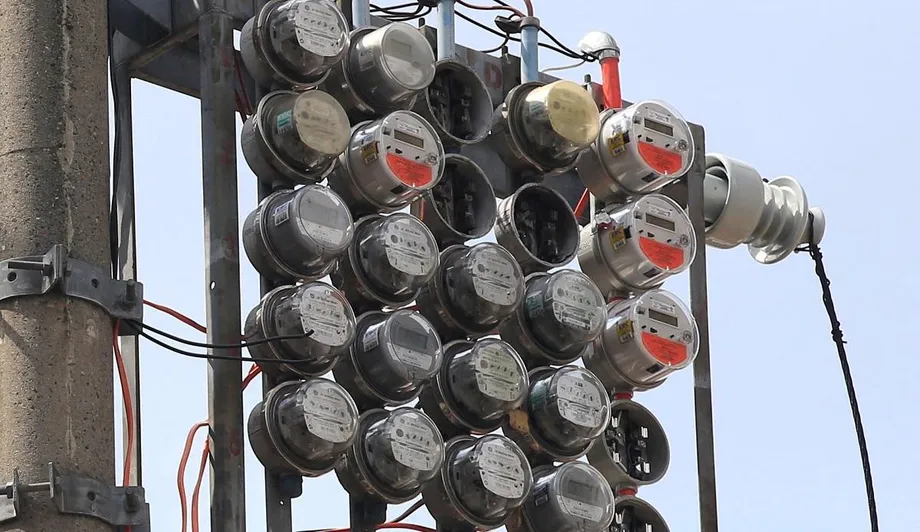
Distribution charges pay for the utility's network and operations, including poles, wires and substations, and allow a regulated return. Generation and transmission charges are separate components passed through to customers. An increase in the distribution rate therefore does not describe the change in the entire electricity bill.
Juan said the ERC wanted to align the refund and reset so there would be almost no movement in current rates. Meralco spokesperson Joe Zaldarriaga likewise said the two adjustments could produce a slight net reduction. The precise residential distribution increase, however, had not yet been determined in the company's public explanation.
October Bills Have Already Increased
Meralco's October residential electricity rate rose by P0.3191 per kWh to P15.0615, from P14.7424 in September. For a household using 200 kWh, the increase is P63.82, or about P64, bringing the bill calculated at that rate to approximately P3,012.
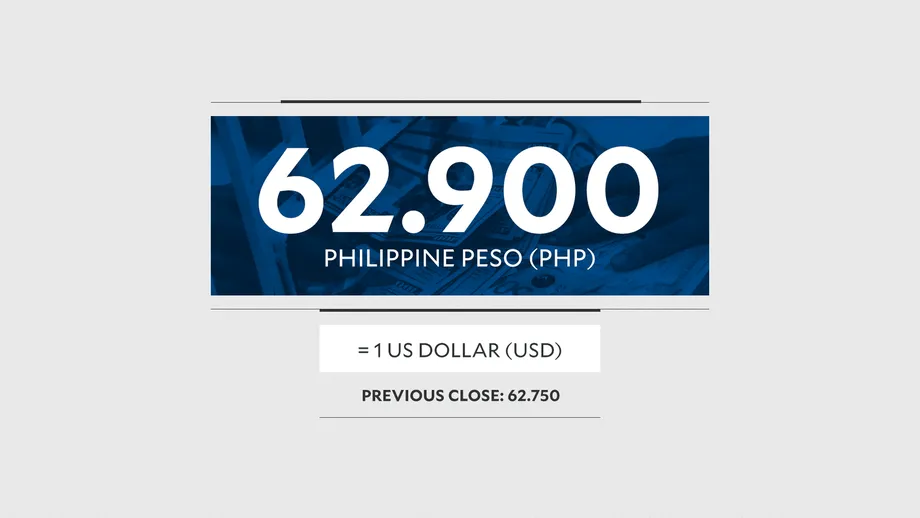
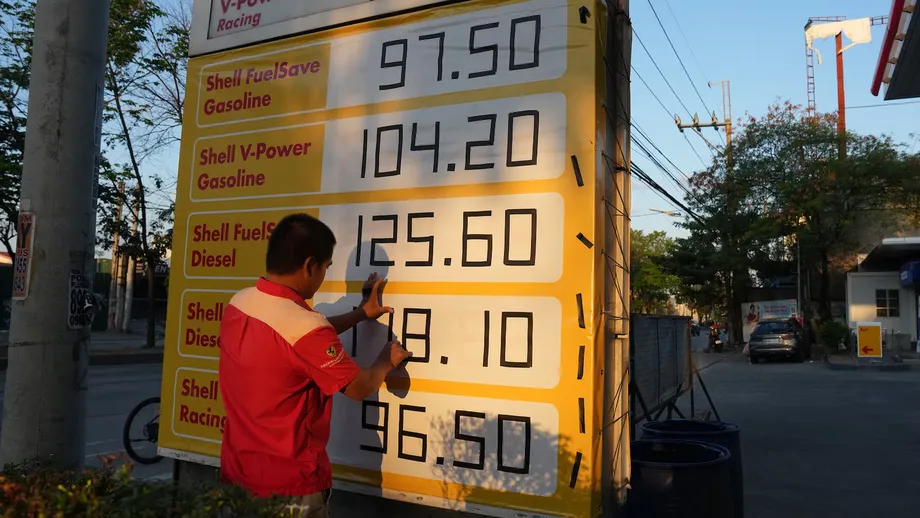
Generation charges rose by P0.4973 per kWh, more than the total bill increase. Meralco attributed that rise to elevated fuel prices, a weaker peso and tighter supply. Electricity purchased from First Gas and Prime CoreGen became more expensive as the plants used liquefied natural gas, with prices affected by the Middle East conflict.
Purchases from the Wholesale Electricity Spot Market also became more expensive amid tighter supply in Luzon. Cheaper power from other contracted suppliers, lower transmission charges and reduced taxes partly offset those increases. Removing the 12 percent value added tax on allowable system loss charges also limited the total rise.
The October rate did not yet include the newly approved distribution increase. At 200 kWh, the prospective P34.66 residential refund is smaller than October's P63.82 increase. That comparison shows the scale of the relief, but it is not a November bill forecast: generation, transmission and other components can change again.
Meralco is also continuing two earlier residential refunds totaling P1.0139 per kWh. Adding the new P0.1733 credit produces P1.1872 per kWh in combined refund rates while all three apply. Their actual effect depends on the implementation schedule and the continuation of the earlier credits.
Consumers Seek the Calculations Behind the Reset
The National Association of Electricity Consumers for Reforms (Nasecore), an intervenor in the rate proceedings, has asked for greater transparency over the ERC's Trending Method, the final regulatory asset base valuation, and the computations supporting approved revenue and asset limits.
The regulatory asset base is the value of assets recognized for setting the utility's regulated return. Its valuation matters because it helps determine how much customers pay through distribution charges. Nasecore said charges should be based on verified assets, prudent spending and reasonable capital returns under the Electric Power Industry Reform Act.
The group cited an October 2019 Supreme Court ruling that voided the replacement cost method for valuing Meralco's regulatory asset base. It said the ruling required fair asset valuation and excluded expenses unrelated to distribution. Nasecore requested the complete decision, supporting schedules, computations and findings so parties could assess compliance and exercise their procedural rights.
A separate uncertainty concerns investments intended to reduce system losses, electricity that is lost during delivery or not properly accounted for. Meralco Head of Utility Economics Larry Fernandez said the company included proposals to reduce these losses in its application, but could not yet identify which projects regulators approved, reduced or rejected. Specific reduction targets and implementation dates were consequently not disclosed.
Other Price Pressures Could Limit the Relief
The six month refund provides a defined credit, but it does not fix the other components of electricity prices. October's increase illustrates that distinction: higher generation costs lifted the total residential rate even as other charges fell.
Energy Secretary Sharon Garin warned of possible electricity price increases and outages as a forecast strong El Niño threatens to strain supply and increase consumption. The Philippine Atmospheric, Geophysical and Astronomical Services Administration expected El Niño to peak toward the end of 2026 and continue into early 2027.
El Niño is the abnormal warming of surface waters in the tropical Pacific, associated with shifts in rainfall and temperature. Garin's warning concerned possible pressure on the electricity system, not a confirmed outage schedule or a quantified future tariff increase. She said the energy department would coordinate with the ERC to guard against abuse by producers and distributors.
For customers, the immediate issues are whether the formal orders arrive in time for November billing, what residential distribution rate is applied, and whether the final refund review changes the approved amount. Monthly implementation reports will track the return of the P2.64 billion, while the complete rate reset decision will be needed to explain the approved spending and asset calculations.
Key Points
- The ERC approved a provisional P2.64 billion Meralco refund over approximately six months.
- Residential customers are entitled to P0.1733 per kWh, equivalent to P34.66 at 200 kWh.
- The refund follows a review of distribution collections from January through June 2026.
- November implementation is intended, with billing dependent on Meralco receiving the formal order.
- The separate rate reset raises the average distribution charge from P1.35 to P1.48 per kWh.
- October's total residential electricity rate rose to P15.0615 per kWh, before the new distribution increase.
- The refund remains subject to final verification, with hearings scheduled for October 16 to 23.
- Consumer representatives are seeking the full calculations behind the approved rate reset.