Five warehouses inspected, 15 samples collected
Thai authorities have impounded materials found in five warehouses in Nikhom Phattana district, Rayong province, after an inspection uncovered electronic circuit boards mixed with scrap and machinery that officials said appeared to constitute a factory operation. No factory operating licence was presented during the visit.
Contents
- Five warehouses inspected, 15 samples collected
- Residents raised concerns before the inspection
- What the inspection found
- Machinery puts factory licensing under scrutiny
- Laboratory testing will assess the waste and water
- Container labels may identify the cargo chain
- Import concerns and an unresolved chronology
- Key Points
The inspection took place at 09:30 on October 12, 2026, at premises associated with Rayong Industrial Company in Moo 1, Nikhom Phattana subdistrict. Officials entered warehouses 7, 8, 10, 12 and 14, out of 15 at the site. The Rayong Provincial Industry Office impounded the items found in all five inspected buildings.
Two discoveries are central to the investigation: labels in warehouse 8 identifying imported container numbers and cargo weights, and waste and wastewater collected for laboratory analysis at warehouse 14. Investigators plan to trace the owners of the goods, the transport companies involved and the origins of the containers.
The findings followed complaints about frequent container deliveries and dust spreading during unloading at a warehouse in the same locality. Residents wanted authorities to identify the importer and establish how the cargo had passed through inspection channels. The official inspection established the presence of mixed waste and processing equipment, but did not settle whether the imports were unlawful or whether pollution had reached nearby homes.
Residents raised concerns before the inspection
On October 10, residents near a warehouse in Moo 1, close to Pinthong Industrial Estate 6, reported trucks arriving almost daily. They said five containers had entered the premises that day and described workers using a modified forklift scoop to transfer waste from containers into the building.
Dust was reported to spread during unloading, and workers were described as handling the material without face masks. Residents feared that inhaling the dust could harm their health. Those concerns explain the demand for an inspection, but they are not laboratory findings about the dust's contents or evidence of a diagnosed illness.
Residents described the warehouse as backed by Chinese investment. That description does not establish the ownership of the imported goods or responsibility for any offence. The complaint reports and the subsequent inspection concern the same locality, but the inspection details do not explicitly identify the complained about building by its warehouse number.
The residents asked the Rayong governor, the Nikhom Phattana district chief, provincial industry officials and customs offices at Laem Chabang and Map Ta Phut to investigate. Their requests focused on both local handling conditions and the route by which the material entered Thailand.
What the inspection found
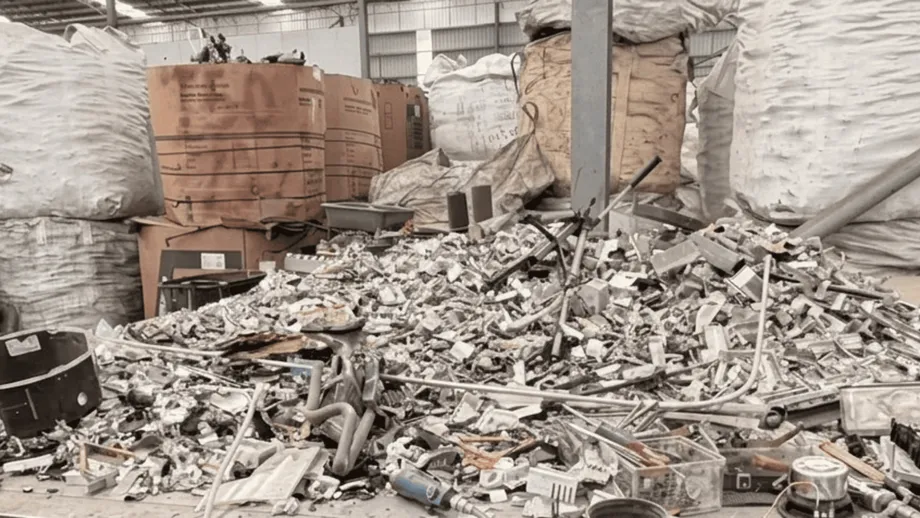
The inspection team found electric wire, plastic, aluminium scrap, iron scrap, paper scrap and wood scrap. Electronic circuit boards were mixed with these materials, rather than described as a separate consignment stored apart from other waste.
Officials also identified equipment for sorting material by size, shredding or crushing it, and separating copper using water. The original description additionally referred to a vibration separator. Taken together, the findings indicate that the premises contained equipment capable of processing material, rather than serving only as storage space.
Authorities have not published a total weight for the impounded waste. Although cargo weights appeared on labels in warehouse 8, the numerical values were not disclosed. The description of large quantities therefore cannot be converted into a verified tonnage or a count of imported shipments.
The five buildings inspected represent one third of the site's 15 warehouses. That comparison defines the inspection's reported scope, not the distribution of waste across the property. No findings were given for the other 10 buildings, and no reason was stated for why officials entered only five.
Machinery puts factory licensing under scrutiny
Officials said the installed machinery and apparent processing activity appeared to fall within factory operations governed by Thai factory law. During the inspection, those responsible at the premises could not present a factory operating licence known as Ror Ngor 4, written in Thai as รง.4.
That distinction matters. The reported finding is that a licence was not produced when requested. It is not a published final ruling on the legal status of every warehouse or an announcement that a court has convicted an operator.
The licence issue is also separate from the origin of the cargo. Investigators must establish whether the activity required authorisation and whether the relevant operator held it. Tracing imported containers addresses another question: who brought the material into Thailand and under what conditions.
The Rayong Provincial Industry Office's decision to impound the items gives the licensing inquiry a concrete enforcement step. No specific charges, penalties, prosecution dates or court hearings were announced in the inspection details.
Laboratory testing will assess the waste and water
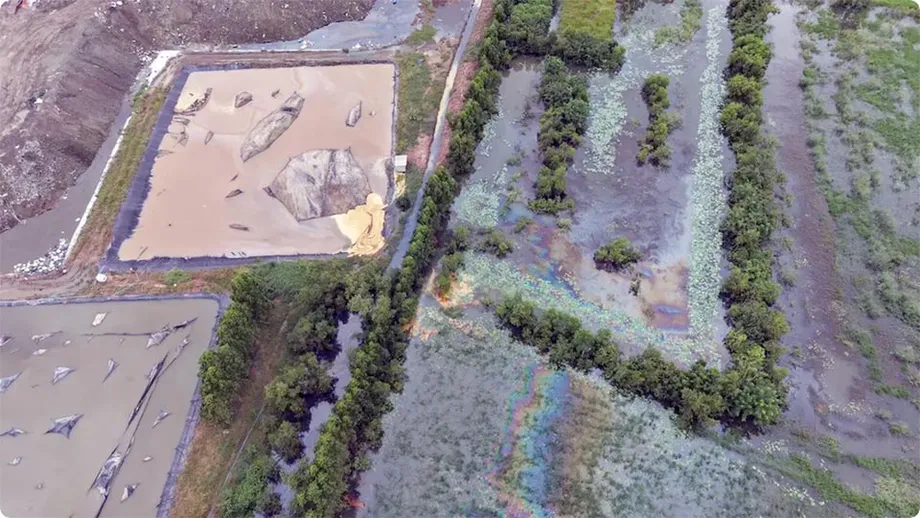
The Pollution Control Department and the provincial industry office collected 14 waste samples from warehouse 14. They also took one wastewater sample from a pond in front of that building, making 15 samples in total.
The sampling locations are important limits on what can be concluded. All 14 waste samples were reported as coming from warehouse 14, rather than being distributed across the five inspected buildings. The single water sample concerns the pond outside that warehouse, not a survey of surrounding waterways.
No laboratory results, pollutant concentrations or comparison with regulatory limits have been released in the inspection accounts. The testing therefore cannot yet support a claim that the pond contained hazardous concentrations of a particular substance or that contaminated water had left the premises.
The reported dust concerns and the official sampling also address different evidence. Waste and pond water analysis may establish properties of the material being handled, but the announced collection does not include an air or dust sample. Authorities have not announced a date for the laboratory results.
Container labels may identify the cargo chain
Surin Worakitthamrong, director general of the Pollution Control Department, said labels attached to waste piles in warehouse 8 listed numbers for containers imported from abroad and the weights of their cargo. Officials regard those identifiers as leads for tracing the material's origin.
Container numbers can help investigators connect physical cargo with transport and shipment records. A label alone, however, does not establish who legally owned the waste, whether its contents matched declarations, or whether the import complied with applicable rules.
The original description also referred to documents identifying countries of origin. The more detailed inspection accounts specify container numbers and weights but do not name any country. No importer, transport company or overseas exporter has been publicly identified in the findings described.
Surin said the department would coordinate with relevant agencies to gather information about the cargo owners, transport companies and container origins. That investigation could distinguish the roles of the warehouse operator, goods owner and carrier, rather than assuming they are the same entity.
Import concerns and an unresolved chronology
Residents asked officials to check compliance with the Basel Convention, the international agreement governing movements of hazardous waste and certain other waste across borders. Whether a particular shipment falls within those controls depends on its classification and the circumstances of its movement.
The complaint accounts cite June 7, 2023, as a Thai implementation date and describe a 30 day rule for returning illegally imported waste. Those legal details were not confirmed in the inspection findings or supported by an official legal document here. They should not be treated as an established deadline for returning the Rayong cargo. Authorities have not announced a finding that these shipments breached the convention.
The sequence of the inspection and ministerial instruction also needs clarification. Reports describe Natural Resources and Environment Minister Suchart Chomklin directing the department to inspect the premises on October 13, while Surin dates the inspection to October 12. The reports do not explain that difference.
- October 10, 2026: Residents reported frequent truck deliveries, five containers arriving that day and dust during unloading.
- October 12, 2026, at 09:30: The joint team inspected warehouses 7, 8, 10, 12 and 14.
- October 13, 2026: Inspection findings were reported, alongside accounts of Suchart's instruction to investigate.
The team included the department's Rayong pollution control centre and inspection division, provincial industry and environmental offices, the Damrongtham complaints centre and local agencies. The department said further coordination would focus on establishing the facts and preventing environmental and public health risks from improper storage or handling.
Key Points
- Items in five of the site's 15 warehouses were impounded by the Rayong Provincial Industry Office.
- Electronic circuit boards were found mixed with wire, plastic, metal, paper and wood scrap.
- Processing machinery was present, but no factory operating licence was produced during the inspection.
- Officials collected 14 waste samples and one wastewater sample at warehouse 14; results have not been announced.
- Labels in warehouse 8 provide leads for tracing imported containers, cargo owners and transport companies.
- No total waste tonnage, confirmed import violation, prosecution date or deadline for releasing test results was announced.