
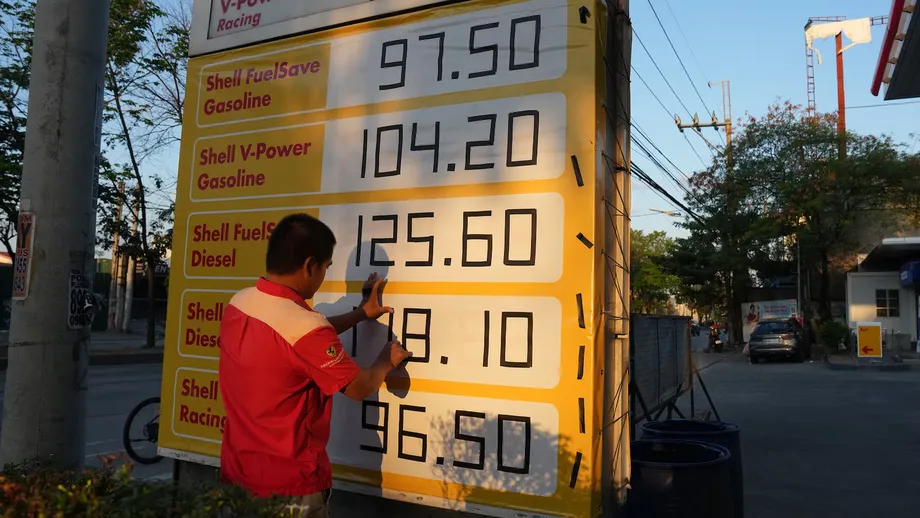
A year of emergency powers, with 45 days of fuel in stock
The Philippines has declared a national energy emergency lasting one year as the war involving the United States, Israel and Iran disrupts fuel shipments through the Strait of Hormuz. President Ferdinand Marcos Jr. is seeking an additional one million barrels of oil, while energy officials are considering greater coal generation from as early as April 1 to contain electricity costs.
Contents
- A year of emergency powers, with 45 days of fuel in stock
- What the declaration authorizes
- New oil purchases depend on suppliers and sanctions
- Relief for commuters, workers and food producers
- Coal becomes the immediate electricity fallback
- Higher prices drive protests and business concern
- Why the Hormuz disruption hits Asia hardest
- Regional conservation and the dates to watch
- Regional reserves are a separate, longer term effort
- What to Know
The Presidential Communications Office announced the declaration on March 24, 2026. Its energy emergency announcement sets out powers to procure fuel, make larger advance payments when necessary, enforce conservation measures and act against hoarding and profiteering. It also directs assistance for commuters, transport workers, farmers, fishing communities and Filipinos affected by the conflict overseas.
Authorities estimate existing fuel stocks can cover about 45 days at normal consumption. That is a buffer, not a guaranteed date when supplies will run out: deliveries, consumption and conservation can change how long inventories last. The proposed million barrels would add to that buffer, but no confirmed delivery schedule or supplier has been announced.
Marcos, speaking in a televised address about efforts to secure supplies, promised continuing deliveries rather than a single purchase:
"We will have a flow of oil. Not just one delivery, not two deliveries, but a flow of oil-related products," he said.
The immediate challenge is therefore twofold: obtain enough fuel to keep transport and essential services operating, and prevent rising energy costs from consuming household incomes and disrupting businesses. The emergency framework addresses both, although several measures still require decisions on funding, implementation or international approval.
What the declaration authorizes
The legal basis is Section 25 of Republic Act No. 7638, the Department of Energy Act of 1992. According to the presidential announcement, that provision allows the president, following a determination and recommendation by the energy secretary, to declare a critically low energy supply or an imminent danger of one and authorize allocation and conservation measures.
The declaration does not say the country has already exhausted its fuel. It responds to the risk that disrupted international supplies and rising prices could undermine energy availability, essential services and economic activity.
The order adopts the Unified Package for Livelihoods, Industry, Food, and Transport, known as UPLIFT. Marcos chairs its coordinating committee, which includes the executive secretary and ministers responsible for energy, transport, social welfare, agriculture, finance, economic planning and the budget.
The Department of Energy, Philippine National Oil Company and PNOC Exploration Corporation may purchase fuel and petroleum products. When the energy secretary certifies that it is necessary, they may make advance payments exceeding 15% of a contract's value. This gives public buyers greater flexibility in securing supplies during a market disruption, although it does not establish that a particular contract has been signed.
The declaration remains in force for one year from issuance unless Marcos extends or lifts it. The order specifies that it takes effect upon publication in the Official Gazette or a newspaper of general circulation. Its measures against profiteering and supply manipulation should not be confused with an already implemented blanket cap on fuel prices.
New oil purchases depend on suppliers and sanctions
Marcos has said the government will procure one million barrels to supplement current stocks. Philippine Ambassador to the United States Jose Manuel Romualdez has also said Manila is seeking exemptions from Washington that would permit purchases from countries subject to American sanctions.
Potential suppliers discussed in reporting include Iran and Venezuela, while Russia has also been identified as an alternative. These are possibilities, not confirmed supply agreements. Asked whether Washington had responded to the waiver request, Romualdez described the matter as a "work in progress".
The United States has separately eased sanctions on Russian oil during the crisis. That step does not establish that every purchase Manila might pursue is authorized. Securing fuel requires a permitted seller, payment arrangements and a viable delivery route, as well as a purchase agreement.
Reports put Philippine dependence on oil from the Gulf at 98%. The presidential announcement does not give that percentage, but it confirms the underlying vulnerability: the Philippines is a net importer of petroleum products and relies heavily on external fuel supplies.
Relief for commuters, workers and food producers
The emergency response extends beyond oil procurement. The transport department is directed to provide fuel subsidies and commuter fare assistance, expand the Libreng Sakay free ride program, and extend operating hours on the Light Rail Transit and Metro Rail Transit systems.
It must also review whether tolls, aviation charges, landing fees and similar assessments can be temporarily reduced, suspended or deferred. These are measures for consideration, not evidence that every charge has already been waived.
The government has begun providing 5,000 pesos, about $83, to motorcycle taxi drivers and other public transport workers. Free bus rides have also been offered to students and workers in selected cities. Other conservation measures include reduced ferry services and a four day working week for civil servants.
The Department of Social Welfare and Development is instructed to accelerate assistance to people in crisis and provide livelihood support for affected workers and vulnerable groups. Agriculture officials must protect supplies of food and agricultural inputs while releasing assistance for farmers and fishing communities. Trade officials are tasked with monitoring excessive price increases in basic necessities and supporting smaller businesses.
These provisions recognize that a fuel shock reaches beyond the filling station. Transport expenses affect the movement of food and other goods, while higher operating costs can reduce the earnings of drivers and producers even before shortages occur.
Coal becomes the immediate electricity fallback
Energy Secretary Sharon Garin has said the Philippines will temporarily rely more heavily on coal as the cost of liquefied natural gas rises. LNG is natural gas cooled into liquid form for transport by ship. Disruption to those shipments can raise the cost of operating gas power plants.
Coal already supplies about 60% of Philippine electricity generation. Officials were considering increased output from coal plants as early as April 1, while seeking to maximize domestic coal use and keeping additional imports from Indonesia available.
Garin, explaining the intended effect on electricity bills, said:
"If we are successful in implementing this, at least we can decrease the electricity rate hikes because of the conflict in the Middle East," she said.
That is a conditional aim to limit increases, not a promise that bills will fall. Garin said Indonesia had imposed no restriction on Philippine coal imports, while also indicating that extra purchases might not be necessary.
The country's gas supply presents a separate constraint. The Malampaya field supplies about 40% of power to Luzon, the main island, and was expected to run dry within a few years. Marcos announced a nearby gas discovery in January, raising hopes of extending production. No confirmed timetable shows that the discovery can meet the immediate emergency.
Higher prices drive protests and business concern
Petrol and diesel prices were reported to have risen to more than twice their February levels after the war began on February 28. For transport workers, higher fuel bills can sharply reduce take home earnings unless fares or assistance compensate for the increase.
Transport coalition Piston planned a two day strike for Thursday and Friday following the declaration. Its demands include removing fuel taxes, lowering oil prices, introducing state controls, increasing fares and raising wages. These demands go beyond the subsidies and procurement powers announced by the government.
Labour coalition Kilusang Mayo Uno criticized the declaration as evidence that the administration had failed to address the crisis earlier. It also warned that provisions concerning disruption of economic activity could restrict strikes. That is the coalition's interpretation, not an established finding that the order bans industrial action.
Businessman Manuel V. Pangilinan, who chairs major utilities companies, supported the emergency powers. He said rising energy costs were beginning to affect business operations and argued that the government "should have every option" available to manage the crisis.
The dispute concerns both the speed of relief and the reach of executive authority. Workers are seeking immediate changes to taxes, prices and incomes, while the government is building a framework to secure supplies and coordinate assistance.
Why the Hormuz disruption hits Asia hardest
The Strait of Hormuz is the shipping passage connecting the Persian Gulf with the open ocean. Before the disruption, it carried about 20 million barrels of oil a day, roughly one fifth of global supply. Its closure or effective blockage has put Asian importers under particular pressure.
The International Energy Agency estimates that roughly 80% of the oil normally passing through the strait is destined for Asian markets. A separate estimate puts Asia's share at nearly 90% when oil and gas are counted together. Those figures describe different fuel categories and should not be treated as interchangeable.
US Energy Information Administration figures for the first quarter of 2025 show daily flows through Hormuz of about 5.4 million barrels to China, just over two million to India, 1.7 million to South Korea and 1.6 million to Japan. Other Asian countries received about two million barrels daily, compared with about 400,000 barrels for the United States.
China's stated volume alone was about 13.5 times the US figure. The comparison explains the uneven exposure to disrupted deliveries, although global pricing means American consumers also face higher costs. Being a net exporter of petroleum does not insulate a country from international price movements.
IEA members plan to release 400 million barrels from strategic reserves, the largest such release in the group's history. Measured against the usual Hormuz flow of 20 million barrels a day, that equals about 20 days of traffic. It is a scale comparison, not a forecast of how long the release will cover shortages: timing, fuel types and destinations matter.
Regional conservation and the dates to watch
Other Asian governments are responding with conservation or reserve releases. South Korea launched a nationwide campaign urging shorter showers and bicycle use for short journeys. Thailand and Vietnam also asked residents to reduce energy consumption, while Japan said it would begin releasing reserves equivalent to a 30 day supply.
IEA Executive Director Fatih Birol warned at an event in Canberra that the crisis had surpassed the combined effect of the energy shocks of the 1970s. He described the threat to the global economy:
major, major threat," Birol said, adding that no country would be "immune to the effects of this crisis if it continues to go in this direction.
The Philippine response has unfolded across several dates, with procurement and electricity decisions still pending:
- February 28, 2026: The war began, followed by steep fuel price increases.
- March 20: The government put remaining fuel supplies at about 45 days of consumption.
- March 24: The presidential office announced the national energy emergency and UPLIFT framework; officials again cited about 45 days of supply.
- March 25: Marcos outlined the planned million barrel purchase, while the request for US sanctions exemptions remained unresolved.
- April 1: Officials identified this as the earliest possible start for greater coal generation.
The repeated 45 day estimate should not be read as a fixed countdown from either March 20 or March 24. Updated arrivals and consumption can change inventory coverage. The government has not announced a confirmed arrival date for the additional oil.
Regional reserves are a separate, longer term effort
Regional reporting dated October 1 describes ASEAN energy discussions in Manila, including coordinated petroleum responses and possible shared stockpiles. Those October developments should not be treated as events from the March declaration week; the year of the October account is not specified.
The regional exposure is substantial. ASEAN imports more than half of its refinery crude from the Middle East. An ASEAN Centre for Energy policy paper estimates that a severe disruption could put oil volumes equivalent to nearly 28% of the bloc's final oil consumption at risk.
Garin has discussed regional stockpiling arrangements and the possibility of the Philippines hosting future storage projects. Insufficient storage and inventories complicate implementation of the ASEAN Framework Agreement on Petroleum Security. October reporting also describes Chinese refiners suspending oil product exports for that month, a separate pressure on regional supply.
Christopher Len, a senior fellow at the ISEAS-Yusof Ishak Institute, distinguished emergency reserves from a broader strategy during a regional webinar:
"This is more about preparing for the next crisis. A reserve is a buffer. It is not a strategy," he said.
The IEA projects that Southeast Asia's energy import bill could rise from more than $80 billion in 2024 to about $245 billion by 2035 without structural change. Proposed ASEAN Power Grid connections would require about $27 billion by 2040. Such projects may reduce future exposure, but they are not substitutes for fuel deliveries needed during the present emergency.
What to Know
- The Philippines announced a national energy emergency on March 24, 2026, lasting one year unless extended or lifted.
- Authorities estimate about 45 days of fuel coverage and plan to purchase an additional one million barrels.
- The order authorizes direct fuel purchases, conservation measures and action against hoarding and profiteering.
- Transport subsidies, free rides, longer rail operating hours and assistance for vulnerable groups form part of the response.
- Greater coal generation could begin as early as April 1, but officials have not guaranteed lower electricity bills.
- US sanctions exemptions and delivery arrangements for alternative oil supplies remain unresolved.
- The government is also preparing assistance and possible evacuations for Filipinos in the Middle East, where about 2.4 million live and work.