October bills rise before a separate rate reset
Meralco customers face an October 2026 electricity rate of P15.0615 per kilowatt-hour, up P0.3191 from September, as more expensive liquefied natural gas, a weaker peso and higher spot market charges push up the cost of generating electricity. For a household using 200 kWh, the adjustment adds approximately P64 to the monthly bill.
Contents
- October bills rise before a separate rate reset
- What households will pay
- LNG and the peso drive generation costs
- Spot prices rose despite higher average supply
- Transmission and tax reductions soften the increase
- What the ERC approved for Meralco's network
- How the P2.64 billion refund works
- Network investment plans remain partly unresolved
- El Niño adds pressure as November billing approaches
- Key Points
The increase announced on October 13 does not include either the newly approved change in Meralco's distribution rate or a P2.64 billion customer refund ordered by the Energy Regulatory Commission (ERC). Company officials expect those separate adjustments to enter November billing, although Meralco had not yet received the decisions and could not confirm the precise effect on residential customers.
The distinction matters: October's increase largely reflects what Meralco pays electricity suppliers, while the pending distribution adjustment concerns the company's own network operations. The refund returns excess distribution collections from an earlier period. They affect different parts of the bill and should not be treated as a single increase.
Meralco serves more than 8.3 million customers across Metro Manila, Bulacan, Cavite and Rizal, along with parts of Laguna, Batangas, Pampanga and Quezon. Its October announcement comes as energy officials warn that El Niño could increase electricity demand and strain supply toward the end of 2026 and into early 2027.
What households will pay
The change from P14.7424 per kWh in September to P15.0615 in October amounts to an increase of about 2.16%. Applying the published rate to 200 kWh gives an indicative October bill of P3,012.30, compared with P2,948.48 at September's rate. The difference is P63.82, which explains the widely cited P64 estimate.
Estimated increases at other consumption levels are:
- 200 kWh: approximately P64.
- 300 kWh: approximately P96.
- 400 kWh: approximately P128.
- 500 kWh: approximately P160.
These estimates assume that electricity use stays unchanged. A household that consumes more power in October would see the cost of those additional units on top of the rate adjustment.
Reports differ slightly on the example for 200 kWh. One gives an increase of about P62, while the other accounts give P64. Multiplying the stated P0.3191 adjustment by 200 produces P63.82, supporting the P64 estimate. The published September and October rates themselves are consistent across the accounts.
LNG and the peso drive generation costs
The generation charge, which pays for electricity purchased from power producers, increased by P0.4973 per kWh. That was larger than the final P0.3191 increase in the household rate because reductions in other bill components absorbed part of the rise.
Charges from First Gas and Prime CoreGen climbed P3.2206 per kWh as their plants used liquefied natural gas (LNG) for September supply. LNG is natural gas cooled into liquid form for transport before being converted back into gas for use, including electricity generation.
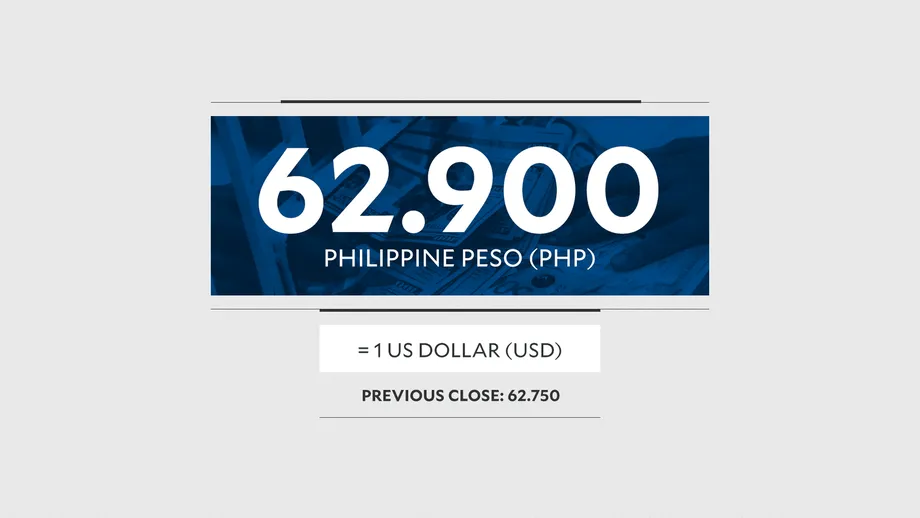
Meralco attributed the higher fuel cost to LNG prices that remained elevated amid the conflict in the Middle East. The peso's depreciation against the US dollar added another cost pressure: approximately 89% of First Gas and Prime CoreGen costs were denominated in dollars. A weaker peso means more Philippine currency is needed to meet the same dollar obligation.
Other contracted power became cheaper. Charges under power supply agreements fell P0.7567 per kWh, with South Premier Power Corp. benefiting from lower fuel costs after using natural gas from Malampaya. Domestic gas use helped temper the effect of peso depreciation.
The P3.2206 increase for First Gas and Prime CoreGen is a change in charges from that supplier category, not an extra P3.2206 applied to every unit on a household bill. Meralco's generation charge combines electricity purchases from different sources, with their respective shares determining the final effect.
Spot prices rose despite higher average supply
Meralco's charges for electricity purchased through the Wholesale Electricity Spot Market (WESM) increased P3.5167 per kWh. The company attributed the change to tighter supply conditions in Luzon, with one account also identifying billing adjustments. Meralco said spot purchases represented only a small portion of its supply.
The Independent Electricity Market Operator of the Philippines (IEMOP) reported a September average WESM price of P7.43 per kWh, up 3.1% from P7.21 in August. Average supply increased 2.4% to 20,209 megawatts, while average demand rose 1.8% to 14,188 MW.
Those monthly averages do not mean electricity was equally available in every region or trading interval. The market figures show higher average supply nationally, while Meralco's explanation identifies tighter conditions in Luzon affecting its purchases. They describe different measures rather than establishing that every part of the grid experienced the same shortage.
Regional prices also moved differently:
- Luzon: P5.18 per kWh, up 5.7%.
- Visayas: P12.42 per kWh, up 5.2%.
- Mindanao: P12.61 per kWh, down 1.4%.
Visayas and Mindanao prices were both more than twice Luzon's September average, even though Mindanao recorded a decline. These market averages are separate from Meralco's P3.5167 change in spot purchase charges, which reflects its own billing calculation rather than the nationwide change alone.
Transmission and tax reductions soften the increase
Charges associated with the National Grid Corporation of the Philippines fell P0.1384 per kWh. A detailed breakdown puts the reduction in ancillary service charges at P0.1321 and the reduction in transmission rates at P0.0063. Together, those figures equal P0.1384.
Ancillary services provide backup capacity and other support needed to keep the grid stable. Their lower cost helped offset the higher generation charge. The universal charge for missionary electrification, a bill component supporting electricity service in areas outside the main interconnected grids, moved in the opposite direction, rising P0.0634 per kWh.
The tax reductions are reported differently. One account gives a net reduction of 3.398 centavos per kWh in taxes and other charges, another gives P0.0398, and another gives P0.1436. These are different figures, and the accounts do not establish a common calculation that reconciles them.
They do identify reasons for tax relief: a higher share of indigenous natural gas, which is exempt from value-added tax, and removal of the 12% VAT on allowable system loss charges. System loss refers to electricity lost between delivery into the distribution network and consumption recorded at customer meters, including technical losses and losses from other causes.
IEMOP also described a separate change following the ERC's suspension of the reserve market. Its vice president for trading operations, Isidro Cacho Jr., said spot reserve scheduling, dispatch and pricing would stop, while reserves covered by ancillary services procurement agreements would remain operational. He identified October 14 as the intended start of implementation. That prospective change should not be confused with the transmission reduction already included in October's rate.
What the ERC approved for Meralco's network
The ERC approved Meralco's regulatory rate reset under Case No. 2026-016 RC for the period from July 2026 to June 2030. The previous reset was in 2011. The review determines the revenue Meralco may collect for distributing electricity through its poles, wires and substations, rather than the price of electricity bought from generators.
The approved revenue requirement is approximately P342 billion over four years, compared with Meralco's P532 billion request. The P190 billion reduction is about 36% of the amount sought. The approved average distribution rate is P1.48 per kWh, against Meralco's requested P2.34 and the existing average of approximately P1.35.
The difference between P1.35 and P1.48 is P0.13 per kWh, or about 9.6%. That is an average distribution rate comparison, not a confirmed residential bill increase. Meralco had yet to determine the exact residential effect.
The ERC said the review followed hearings held from March to May 2026 under the Rationalized Rules for Setting Distribution Wheeling Rates issued in November 2025. Francis Saturnino Juan, the ERC chairman and chief executive, explained why the commission reduced the requested revenue:
We trimmed capital projects that were not yet justified, disallowed excessive operating costs and bad debt provisions, removed contingencies and duplicated assets from the asset base, and used a lower return on capital than what Meralco proposed. Every peso allowed has to be prudent, efficient, and necessary, because consumers pay for it.
There is a timing distinction still to resolve. The account detailing the ERC announcement identifies P1.48 as the approved average rate for 2027, while Meralco officials expect the distribution adjustment to begin in November 2026. Without the decisions in hand, the company could not fully explain how the approved schedule would translate into customer bills.
How the P2.64 billion refund works
The ERC ordered Meralco to return P2.64 billion over six months after recalculating its distribution collections for January through June 2026. The approved final distribution rate for that period was P1.3522 per kWh, compared with an actual weighted average tariff of P1.5537 collected from customers.
The difference is P0.2015 per kWh for the period reviewed. That historical difference is not the same as the refund rate applied to future consumption. The ERC set an average refund of P0.1020 per kWh across customers and a residential refund of P0.1733 per kWh.
For a household using 200 kWh, the residential refund rate would provide approximately P34.66 in credit for a month in which it applies. The refund is expected to continue for six months or until the full amount is returned. One account rounds the total to P2.6 billion; the more precise figure repeated elsewhere is P2.64 billion.
Meralco had proposed an average refund of P0.0487 per kWh over 12 months. The ERC shortened the period to provide faster repayment. Juan explained the commission's decision:
When Meralco collects more than it is entitled to, the ERC will make sure it is returned, and that it is returned quickly. By shortening the refund period to six months, we are giving consumers faster relief at a time when electricity prices remain elevated,
Meralco is also continuing two earlier residential refunds totaling P1.0139 per kWh. Those existing credits are separate from the newly approved P0.1733 refund.
Company spokesperson Joe Zaldarriaga said the new refund and distribution adjustment could produce a slight net reduction. The ERC similarly projected almost no movement from implementing them together. Neither statement guarantees a lower total electricity bill, because generation, transmission and other charges can still change each month.
Network investment plans remain partly unresolved
Meralco senior vice president and head of Regulatory Management Jose Ronald Valles said the approved distribution adjustment would support investments to modernize the network and improve service delivery. The ERC identified new substations and lines, modernized metering and measures to reduce system loss among the intended results of the approved spending.
Specific project decisions were still unclear at the October briefing. Larry Fernandez, Meralco's head of utility economics, said proposals to reduce system losses had been included in the application, but the company could not yet identify which projects regulators approved, reduced or rejected. It also did not provide specific loss reduction targets or completion dates.
Meralco had not decided whether to seek reconsideration of the rate ruling. That decision would follow its review of the actual order, especially given the gap between its requested P2.34 average distribution rate and the approved P1.48.
The remaining uncertainty concerns both the tariff schedule and the investments behind it. The approved revenue total establishes a spending framework, but it does not by itself identify the timing or scope of every network project customers can expect.
El Niño adds pressure as November billing approaches
Energy Secretary Sharon Garin warned that the approaching El Niño could contribute to higher electricity rates and outages by straining the balance between demand and supply. The Philippine Atmospheric, Geophysical and Astronomical Services Administration expected the event to peak toward the end of 2026 and persist into early 2027.
Meralco said it had contracted sufficient supply for its more than 8.3 million customers and was carrying out maintenance of its facilities. That addresses supply preparedness, but it is not a promise that fuel costs or monthly rates will stay unchanged.
The main dates separate the completed regulatory steps from the changes still expected:
- November 2025: the ERC issued revised distribution rate rules.
- March to May 2026: hearings took place on Meralco's rate reset.
- July 2026 to June 2030: the period covered by the approved regulatory reset.
- October 13, 2026: Meralco announced the October increase to P15.0615 per kWh.
- October 14, 2026: IEMOP identified the intended start of reserve market suspension implementation.
- November 2026 billing: Meralco expects the new distribution adjustment and refund to begin, subject to receipt and review of the ERC decisions.
- Late 2026 into early 2027: the period when PAGASA expected El Niño to peak and persist.
The next billing cycle will therefore depend on more than the new distribution rate. The residential tariff details, refund implementation and fresh generation costs will determine whether customers receive the small net reduction described by officials or face another increase.
Key Points
- Meralco's October rate rises P0.3191 to P15.0615 per kWh, adding about P64 for a household using 200 kWh.
- Higher LNG costs, peso depreciation and spot purchase charges drive the increase.
- The ERC approved approximately P342 billion in distribution revenue for July 2026 to June 2030, below Meralco's P532 billion request.
- The approved P1.48 average distribution rate is separate from October's generation driven increase.
- A new P2.64 billion refund provides residential credits of P0.1733 per kWh over six months.
- Meralco expects the distribution adjustment and refund in November, but the exact residential effect and tariff schedule still need confirmation.
- El Niño could add demand and supply pressure through late 2026 and early 2027.