An 8% commission can still leave a much larger gap
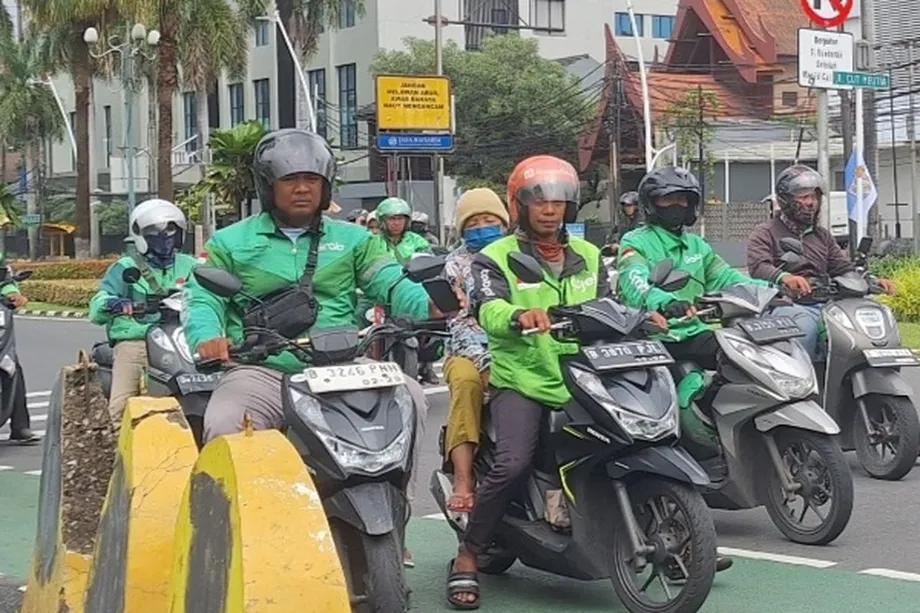
A passenger pays Rp19,500, but the driver receives Rp12,880. That transaction, cited by Indonesian Transport Workers Union (SPAI) chair Lily Pujiati, captures the dispute surrounding Indonesia's Presidential Regulation No. 27 of 2026: an 8% platform commission does not necessarily mean drivers keep 92% of the amount customers pay.
Contents
- An 8% commission can still leave a much larger gap
- What the cap covers, and when it began
- Drivers dispute the full cost of each transaction
- Lower commissions do not guarantee higher daily earnings
- Passengers face a separate pricing question
- Platforms agree on compliance but differ on business costs
- Partnership status remains contested
- Protection extends beyond the commission ceiling
- Safety proposals and delivery rules need further detail
- The Bottom Line
In SPAI's example, Rp4,500 in application fees and Rp1,000 in trip insurance were deducted first. An 8% commission was then applied to the remaining Rp14,000, taking another Rp1,120. The total difference between the passenger's payment and the driver's receipt was Rp6,620, or about 33.9% of the passenger fare. The arithmetic supports the union's description of a deduction approaching 34%, although the transaction has not been independently verified.
The government announced the regulation's issuance on October 8, 2026. By October 13, drivers were still questioning additional charges, insurance deductions and the distance covered by minimum fares. Their complaints concern both the size of deductions and the amount of work required to earn a given fare.
The Transportation Ministry's official announcement says the regulation provides legal certainty for drivers, platforms and customers, alongside transparent pricing, social protection and complaint procedures. It also says the 8% platform fee ceiling had already taken effect through a ministerial decree on July 1.
The central issue is therefore more specific than whether platforms display an 8% commission. Drivers want to know which charges fall within that ceiling, which sit outside it, and what amount the percentage is calculated against.
What the cap covers, and when it began
The presidential regulation covers passenger transport, goods delivery and food delivery. That broad coverage does not mean the same commission arrangements are already operating across every service.
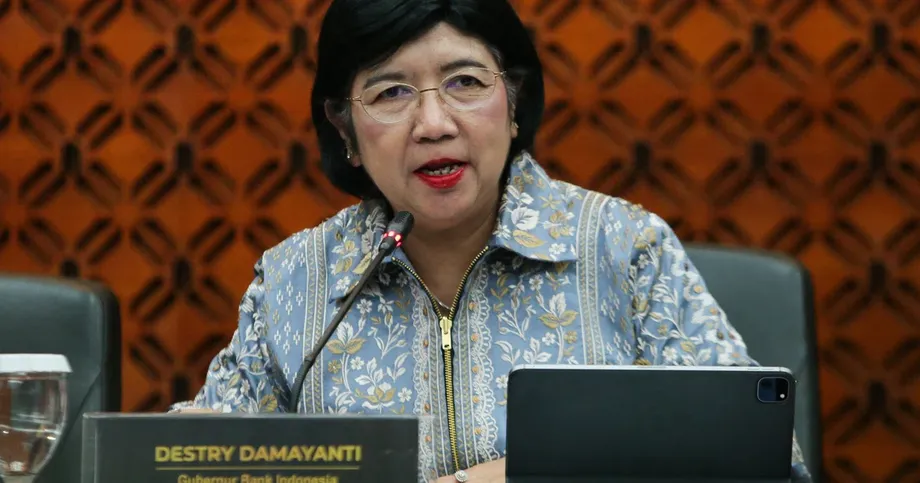
Transport Minister Dudy Purwagandhi said the current 8% ceiling applies to motorcycle passenger services, not cars. Extending similar rules to cars would require coordination with regional governments. Goods and food delivery arrangements fall under the Ministry of Communication and Digital Affairs, known as Komdigi, which is preparing implementing rules.
Reports differ on the legal sequence. One describes the July 1 start as taking effect under the presidential regulation itself. The Transportation Ministry instead identifies a ministerial decree effective July 1, followed by the adoption of the same ceiling in Presidential Regulation No. 27 of 2026. That distinction helps explain why companies say the commission change preceded the October announcement.
The main developments span several months:
- May 1, 2026: President Prabowo Subianto announced the commission ceiling at a May Day event at Jakarta's National Monument Square.
- July 1, 2026: The Transportation Ministry says its ministerial decree establishing the 8% ceiling took effect.
- October 8, 2026: The government announced issuance of the presidential regulation covering the digital transport ecosystem.
- October 10, 2026: The Indonesian Consumers Foundation (YLKI) issued warnings about extra charges, affordability and service standards.
- October 12, 2026: Deputy Communication and Digital Affairs Minister Nezar Patria said delivery rules would be issued before December 31.
At the May Day announcement, Prabowo framed the ceiling as protection for people whose work carries daily safety risks:
Ride-hailing drivers work hard and risk their safety every day. It is unfair if deductions reach 20%. Even 10% is too high -- I want it below that.
Drivers dispute the full cost of each transaction
Online Drivers Association (ADO) chair Taha Syafaril welcomed the regulation but said application usage charges applied to individual transactions could leave total deductions above 8%. He requested transparency over fares, platform deductions and algorithms, and said tariff rules lacked sanctions for violations. That is his assessment, rather than an established finding about every enforcement provision.
Other drivers described smaller but still unexplained differences. Abede Waki, 30, cited a three kilometre trip priced at Rp12,000 that left the driver around Rp10,200 to Rp10,300. If the passenger price were the calculation base and an 8% commission were the only deduction, the driver would receive Rp11,040.
His reported payment is therefore Rp740 to Rp840 below that simple calculation. The full gap from the passenger price is approximately 14.2% to 15%. Without an itemized receipt or an explanation of the calculation base, those figures cannot establish whether the platform breached the ceiling or applied separately classified charges.
Abede also said his earlier earnings were around Rp10,400 to Rp10,500 per trip, compared with about Rp10,200 now. Ahmad, 45, described a different change: fares he cited fell from around Rp15,000 to Rp13,000, leaving him feeling little improvement after the new deduction.
Ahmad said a previous Rp20,000 charge after more than 10 trips had been discontinued. Abede described an earlier Rp20,000 charge after more than 20 trips. Those accounts differ on the threshold and should not be treated as descriptions of one universal scheme.
Together, these examples show why comparing commission percentages alone is insufficient. The fare, the commission base, additional charges and any daily deductions all affect the amount a driver receives.
Lower commissions do not guarantee higher daily earnings
Driver accounts published on October 12 show contrasting results. Agus said he earned about Rp2,000 per kilometre and had not automatically gained from a lower commission. His concern was that earnings still depended on journey distance and the number of orders available amid competition between applications.
Arya reported a benefit. He said his deduction had fallen from more than 20% to 8%, increasing the share he retained, and that daily earnings could reach Rp200,000. At the same time, he said his passenger count had dropped from more than 15 a day to around five or six.
Using 15 trips as a conservative comparison, five or six represents a decline of roughly 60% to 67%. Because Arya described his earlier count as more than 15, the actual reduction could be larger. His figures are a personal account, not a measure of demand across the industry.
These experiences are not necessarily contradictory. A driver can keep more from each transaction while receiving fewer orders. Another can face a lower fare or longer journey that offsets the commission saving. The complaints about minimum fares covering greater distances fit the same concern, although no precise distance thresholds were given.
Arya wanted earnings sufficient for motorcycle servicing and oil changes. Those expenses matter when assessing welfare: the amount credited to an account is not the same as money left after fuel, maintenance and other operating costs.
Passengers face a separate pricing question
The 8% ceiling does not automatically make passenger fares cheaper or more expensive. The Transportation Ministry retains authority over passenger transport tariffs, while platform promotions and the structure of other charges also affect what customers pay.
Agus said fares that previously cost around Rp5,000 to Rp6,000 could now reach Rp7,000 to Rp8,000 as passenger promotions became less common. Ahmad, by contrast, described a fare falling from Rp15,000 to Rp13,000. The accounts indicate different experiences, not a consistent national price trend.
YLKI executive secretary Rio Priambodo warned on October 10 that consumers should not bear the costs of platform business adjustments through additional charges, higher fares or poorer service. Explaining the foundation's position, he said:
Every change in fares or cost components must be transparent, have a clear basis, and not harm consumers.
YLKI asked for meaningful consumer representation when implementing tariff rules are drafted, along with effective oversight and consistent enforcement. It also urged platforms not to reduce investment in safety, comfort, complaint services or user protection in response to the ceiling.
Driver and consumer concerns converge on one practical requirement: a clear breakdown of each transaction. Customers need to understand what they are paying for, while drivers need to understand what is withheld and why. That information would also help regulators distinguish lawful charges from attempts to evade the ceiling.
Platforms agree on compliance but differ on business costs
GoTo chief executive Hans Patuwo said GoRide had implemented an 8% commission for motorcycle passenger services since July 1. Grab Indonesia chief executive Neneng Goenadi gave the same start date for GrabBike. Both said goods and food delivery arrangements would follow the relevant ministries' implementing rules.
Gojek also pointed to its Program Apresiasi Mitra, which rewards drivers using performance, consistency and length of partnership as criteria. That program is separate from the question of how the commission ceiling is calculated.
inDrive Indonesia country manager Rio Aristo said the company would review and adjust its systems and operations to implement government policy. His response expressed a commitment to compliance but did not provide the same dated implementation claim as GoRide and GrabBike.
Maxim Indonesia development director Dirhamsyah argued that an 8% commission was low for a sustainable business model, citing rising costs for technology, security, protection programs, user support and marketing. As of October 11, Maxim was awaiting detailed implementing rules.
Maxim also welcomed recognition of drivers as partners and as part of the micro, small and medium enterprise sector, known as UMKM. That position places it on the opposite side of a central legal dispute from organizations seeking employee protections for platform drivers.
Partnership status remains contested
In its response to the regulation, Jakarta Legal Aid Institute (LBH Jakarta) argues that fundamental protections should be established through legislation, rather than resting only on a presidential regulation.
The institute cites Articles 27(2) and 28D(2) of Indonesia's 1945 Constitution, concerning decent work and livelihoods, and fair compensation and treatment in employment. It seeks protection for organizing rights, social security, workplace safety, dispute resolution and freedom from unilateral account deactivation.
LBH Jakarta says the regulation's title dropped the word referring to workers and warns that partnership or UMKM labels could place drivers outside employment protections despite their economic dependence on platforms. It also criticizes a drafting process it describes as closed, with inadequate access to the text and little meaningful participation by affected workers.
SPAI chair Lily Pujiati similarly argues that platform work contains the elements of employment: work, remuneration and instructions. She points to platform control over assignments, payment through digital wallets and suspension or termination when drivers do not carry out orders.
Lily cites daily work of 12 to 18 hours and earnings of Rp75,000 to Rp100,000, before substantial operating expenses. Those claims describe the union's assessment and do not establish an average for all drivers.
Both SPAI and LBH Jakarta invoke an instrument they identify as ILO Convention No. 193 on platform work. The convention's identity, adoption and ratification status are not independently established here, so those references should be understood as their stated legal arguments. LBH Jakarta's statement also carries an October 8 date while referring to an October 9 press conference, leaving its publication sequence unclear.
Protection extends beyond the commission ceiling
The Transportation Ministry says platform partnership agreements must be clear, fair, transparent and understandable. They must cover rights and obligations, fees, incentives, social protection, transaction data access, automated algorithmic systems, and complaint resolution.
An algorithm is the software logic used to make automated decisions. For drivers, the right to explanations matters when such systems affect access to work. Abede said losing access to the Hemat budget fare feature could make orders difficult to obtain.
The ministry says drivers are entitled to personal data protection and social security covering, at minimum, health, workplace accidents and death, subject to applicable laws. The May Day announcement also described enrollment in BPJS Kesehatan, Indonesia's national health insurance system.
Platforms must provide accessible, responsive, transparent and documented complaint services, with a response within seven days of receipt. A response deadline is not necessarily a deadline for resolving the complaint.
Companies and drivers have up to six months from the provisions taking effect to adjust partnership agreements, cost and earnings information systems, receipts and service records. The ministry's announcement does not give a calendar date for the end of that transition. Nor does it explain who pays each social protection contribution or how insurance charges interact with the commission ceiling.
Safety proposals and delivery rules need further detail
On October 9, Dudy proposed using platform trip data to monitor motorcycle mileage and remind drivers about regular maintenance. He said drivers could be required to submit maintenance evidence and could lose access to orders until requirements were met.
Those remarks describe the intended safety approach, not a fully detailed operating system already demonstrated to be in force. Maintenance standards, verification procedures and safeguards around order restrictions still require clarity, particularly given driver complaints about deactivation and access to work.
Director General of Land Transportation Aan Suhanan said the ministry was preparing revisions to PM 12/2019 on motorcycle safety and KP 667/2022, read together with KP 1001/2022, on calculating motorcycle transport service charges. He targeted completion in December 2026.
Nezar Patria said on October 12 that Komdigi's goods and food delivery rules would be issued before December 31. They would provide a calculation formula rather than detailed minimum and maximum tariffs, accounting for variations in goods' type, weight and dimensions. He gave examples of parcels weighing one, two and three kilograms.
The stated timetable differs from the initial expectation that implementing rules would arrive before December. Subsequent official remarks place completion during December or by the end of that month.
Deputy House Speaker Sufmi Dasco Ahmad described coordination among the Transportation, UMKM and Communication and Digital Affairs ministries through a joint forum or task force. Deputy State Secretary Minister Bambang Eko Suhariyanto said the forum would be chaired by the UMKM minister. Reporting also identifies taxation among the regulation's subjects, but detailed obligations have not been specified.
The scale of the affected workforce is uncertain. A ministry estimate puts motorcycle platform drivers at about seven million in 2025, while another estimate describes more than four million drivers across motorcycles and cars. GoTo reported 3.7 million registered partners but about 800,000 active drivers. Those figures use different populations and cannot be combined into a reliable national total.
The Bottom Line
- The 8% ceiling currently applies to motorcycle passenger services, with cars and delivery arrangements requiring further rules.
- The Transportation Ministry dates the ceiling to a ministerial decree effective July 1, before the October 8 presidential regulation announcement.
- SPAI's transaction example shows a total gap of about 33.9%, although the charges and their legal treatment require verification.
- Drivers report mixed earnings results as fares, order volumes, promotions and other deductions change.
- Platforms must disclose costs, provide social protection and respond to complaints within seven days.
- Implementing rules are targeted for December 2026, with Komdigi specifying issuance before December 31.
- Worker status, enforcement, insurance funding and the calculation base remain central unresolved issues.