Record penalty targets control of onion imports
The Philippine Competition Commission has imposed a combined P1.76 billion fine on six businesses and their responsible officers after finding that they shared the market for imported onions. The respondents collectively controlled nearly 50% of approved import clearances for red and yellow onions in 2020 and 2021, using separate businesses to coordinate supplies that were distributed nationwide.
Contents
- Record penalty targets control of onion imports
- Which businesses and officers were held liable?
- How the import arrangement worked
- Cold storage connected imports to markets nationwide
- What the official complaint alleged
- From warehouse searches to the final penalty
- Why the fines reached P1.76 billion
- Payment, reconsideration and possible prosecution
- What the case means for food buyers
- Key Points
The penalty, announced on October 15, 2026, is the largest imposed by the commission to date. Its findings cover arrangements involving import permits, shipping, cold storage and wholesale distribution, placing several stages of the onion supply chain within the same coordinated operation.
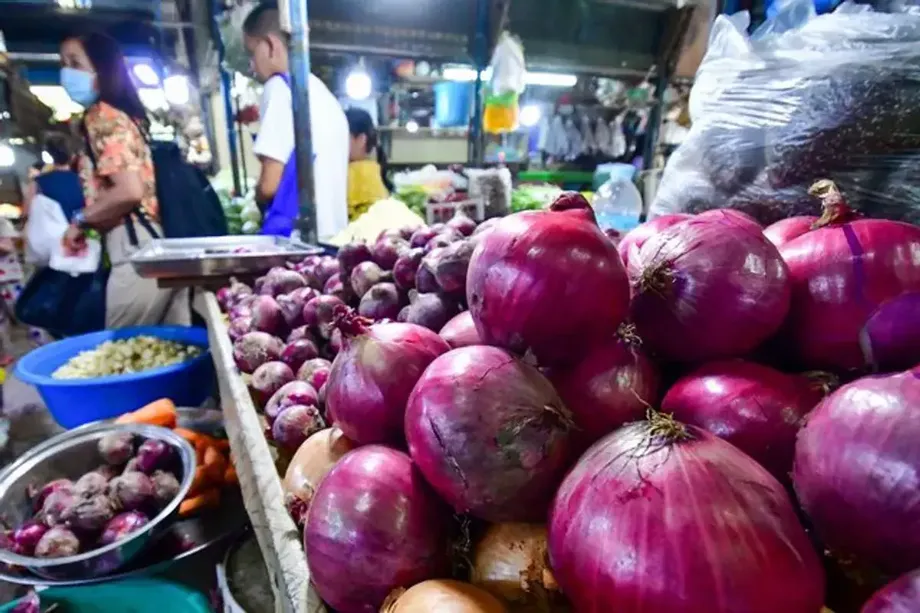
The investigation followed the sharp increase in onion prices in late 2022, when retail prices reached around P800 per kilogram, with some prices reported above that level. At the time, onions cost roughly three times as much as chicken and about 25% more than beef, adding to pressure on household food budgets and national inflation.
The commission ordered the respondents to permanently stop carrying out their agreement and pay their respective fines. It also said it would coordinate with the Department of Justice over possible criminal charges against those involved.
The case connects a daily shopping problem with a less visible part of the food trade: who obtains permission to import, whose name appears on shipments, and where vegetables are stored before reaching wholesalers. According to the commission, businesses that should have competed independently instead coordinated those decisions, reducing competition in an essential food market.
Which businesses and officers were held liable?
The six businesses fined were Golden Shine International Freight Forwarders Corp., Tian Long Corp., La Reina Fresh Vegetables & Young Indoor Plants, Inc., Yom Trading Corp., Vegefru Producing Store, and Rosal Fruit and Vegetable Trading.
Four officers were also held liable: Lilia Cruz, president of Golden Shine; Eric Pabilona, corporate executive officer of Golden Shine and corporate secretary of Tian Long; Renato Francisco Jr., chairman and president of La Reina and Yom Trading; and Letty Baculando, an incorporator of Golden Shine.
PCC Enforcement Office Director Christian Loren delos Reyes said the investigation began after the commission identified indications of overlapping officers and directors among a group of companies. Those connections became part of an investigation into how the businesses handled imports and distribution.
The commission dismissed charges against Philippine Vieva Group of Companies, Inc. and the Vegetable Importers, Exporters & Vendors Association of the Philippines because of insufficient evidence. Both had been named in the original complaint, alongside the businesses and individuals investigated.
How the import arrangement worked
Golden Shine, a freight forwarding company, systematically applied for sanitary and phytosanitary import clearances using the credentials of other respondent importers, according to the commission. It also designated those importers as consignees, monitored permit allocations and coordinated shipments. A consignee is the person or business named to receive imported goods.
The clearances, commonly called SPSICs, are issued by the Department of Agriculture's Bureau of Plant Industry. They form part of the controls intended to protect plant health when agricultural products enter the country. In this case, the allocation of those clearances also determined the volumes of onions that the businesses were allowed to import.
By accumulating approvals across separate businesses, the respondents collectively controlled nearly half of approved clearances for red and yellow onions in 2020 and 2021. The finding concerns access to import approvals, a key point in deciding how imported supplies enter the market.
Cold storage connected imports to markets nationwide
Imported shipments were routed to cold storage facilities managed by Tian Long. The facilities identified in the case were in Bulacan, Iloilo, Cebu, Cagayan de Oro and Davao City, giving the arrangement a presence across Luzon, the Visayas and Mindanao.
Cold storage keeps onions usable between arrival and sale. Control over that stage connects the import business to wholesale distribution, because stored produce can later be released to buyers supplying markets and shops.
The commission found that the arrangement extended across importation, storage and wholesale sales. Its geographic reach therefore went beyond the locations of the warehouses: onions moving through those facilities were distributed nationwide.
The earlier complaint also alleged exchanges of sensitive business information, including prices, suppliers, customers, volumes, shipping, distribution and storage. When competing traders share such details as part of a coordinated agreement, they can replace independent business decisions with joint control over supply.
What the official complaint alleged
The PCC Enforcement Office filed its Statement of Objections on July 9, 2024. The commission's September 2024 statement identified alleged violations of Sections 14(b)(2) and 14(c) of Republic Act No. 10667, the Philippine Competition Act.
The complaint accused the traders of assigning import clearances among themselves, dividing permitted import volumes and exchanging sensitive commercial information to reduce competition. Market allocation means competitors agree on how to divide business instead of independently competing for customers or supplies.
The Enforcement Office alleged a conspiracy lasting from 2019 to 2023, involving onions imported from China, the Netherlands and India. The later findings about control of nearly half of approved clearances specifically concern 2020 and 2021, within that longer period alleged in the complaint.
The commission has two distinct roles in this process. Its Enforcement Office investigates and brings charges, while the commission hears the case and decides liability using its authority as a body that adjudicates competition disputes.
From warehouse searches to the final penalty
A September 2023 dawn raid gave investigators documents, business records and electronic data relating to trading activities. Searches included respondent offices at Golden Shine Corporate Center.
The PCC described the operation as its first dawn raid under the Rules on Administrative Search and Inspection issued by the Supreme Court in 2019. Those rules set out procedures for inspections used to investigate possible violations of competition law.
The main stages of the case span several years:
- 2019 to 2023: The period of the alleged conspiracy identified in the Enforcement Office complaint.
- 2020 and 2021: The years in which the respondents controlled nearly 50% of approved red and yellow onion import clearances, according to the commission.
- Late 2022: Retail onion prices surged to around P800 per kilogram and, in some instances, above that level.
- September 2023: Investigators conducted the dawn raid and collected documentary and electronic evidence.
- July 9, 2024: The Enforcement Office filed its Statement of Objections.
- October 15, 2026: The commission announced the P1.76 billion penalty.
The Department of Agriculture also blacklisted importers linked to the case in 2024. Those identified were La Reina, Vegefru Producing Store and Yom Trading.
Why the fines reached P1.76 billion
The commission said the importers' submitted audited financial statements were grossly understated. It therefore calculated the penalties using actual import clearance volumes and onion wholesale prices reported by the Philippine Statistics Authority, rather than relying on those financial statements.
PCC Executive Director Kenneth Tanate said the calculation used the volume of onions involved and the official wholesale price data. Combining quantities with wholesale prices gave the commission a basis for assessing the value of the business covered by the conduct.
The penalties were tripled because onions are classified as a prime commodity. The PCC's 2024 statement identified Section 41 of the Philippine Competition Act and Section 6.5 of its Rules of Procedure as the provisions allowing that increase.
The Enforcement Office initially sought P2.423 billion in fines in 2024, described in its official announcement as approximately P2.4 billion. The P1.76 billion ultimately imposed is P663 million below the initial amount sought, or about 27% lower. The recommendation was made at the charging stage; the imposed amount followed the commission's consideration of the case.
Tanate, the PCC's executive director, described the penalties as the maximum fines and explained the commission's purpose:
By imposing the maximum fines, the PCC underscores its commitment to holding cartels accountable across all sectors of the economy and protecting consumers from the harmful effects of anti-competitive conduct,
Payment, reconsideration and possible prosecution
The commission directed the respondents to pay within 15 days of receiving the decision. Friday, October 16, 2026, was identified as the deadline to pay or seek reconsideration, which is a request for the commission to review its decision.
The permanent cease and desist order requires the respondents to stop carrying out the market sharing agreement. That order addresses their conduct, while the financial penalties punish the violations found by the commission.
The PCC also said it would coordinate with the Department of Justice on possible criminal charges. The Justice Department's Office for Competition would assess whether grounds exist to file cases.
Individuals prosecuted for cartel conduct may face prison terms and additional fines under the Philippine Competition Act. No criminal filing date or prosecution decision was announced.
What the case means for food buyers
For households, the immediate issue behind the investigation was the extraordinary cost of an everyday cooking ingredient. At around P800 per kilogram in late 2022, onions became more expensive than meat by weight, forcing shoppers to reconsider quantities and spending.
The competition case addresses how imported supply was organised before onions reached those shoppers. Its central finding is that separate businesses coordinated permits, shipments and storage rather than making those decisions independently. The commission's remedy combines a permanent order to stop the agreement with a record financial penalty.
The PCC has set out the conduct it found unlawful and the businesses and officers it held responsible. The next procedural steps concern payment or reconsideration of the administrative decision, alongside the Justice Department's assessment of possible criminal action.
Key Points
- The PCC imposed a record P1.76 billion combined fine on six onion businesses and their responsible officers.
- The respondents controlled nearly 50% of approved red and yellow onion import clearances in 2020 and 2021.
- The arrangement covered imports, cold storage and wholesale distribution nationwide.
- The commission used import volumes and Philippine Statistics Authority wholesale prices to calculate fines, which were tripled because onions are a prime commodity.
- Charges against Philippine Vieva Group and the Vegetable Importers, Exporters & Vendors Association of the Philippines were dismissed for insufficient evidence.
- The respondents were ordered to permanently stop the agreement, while possible criminal prosecution remained subject to Justice Department assessment.