Reserve contracts could cut projected red alert weeks from 22 to four
The Visayas could face red alerts in at least 22 of the 52 weeks in 2027 without contracts securing 250 megawatts of power reserves, according to Department of Energy projections presented around the October 12, 2026 Cebu Energy Summit. With those contracts, the forecast falls to four weeks. That makes securing backup capacity an immediate priority while the region waits for permanent power plants expected from 2028 onward.
Contents
- Reserve contracts could cut projected red alert weeks from 22 to four
- What the alerts mean for consumers
- How the supply crisis developed
- Why spare power contracts are disputed
- Batteries and barges buy time
- Cebu needs imports, and stronger connections
- Demand growth and outages squeeze the system
- Permanent projects arrive from 2028
- Businesses face interruptions and rising costs
- Conservation is part of the immediate response
- Key Points
Energy Secretary Sharon Garin warned that shortages could continue through the end of 2028, even with nearly 300 megawatts of diesel power barges targeted for arrival in the first quarter of 2027. Batteries, restored generating units and electricity transfers from other islands could reduce the frequency and severity of alerts, but the DOE still expects periods of tight supply.
Cebu is under particular pressure. Garin said its electricity demand is growing by about 14 percent annually, compared with roughly 6 percent elsewhere in the country. At that pace, improvements in supply must serve both existing customers and rapidly expanding demand.
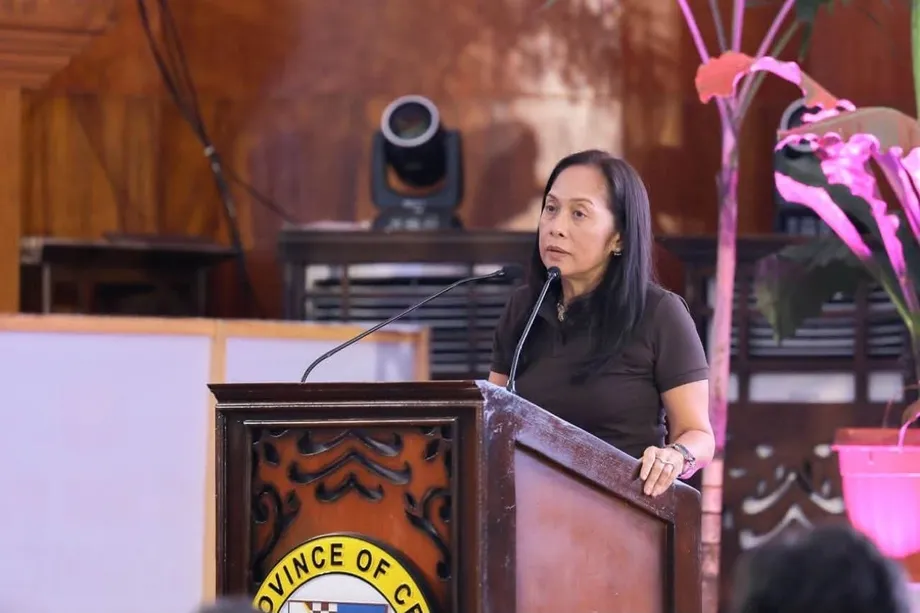
The summit brought together the provincial government, businesses, generators, utilities and regulators to form the Cebu Energy Alliance. Its immediate task is to coordinate relief measures while longer construction projects advance. Garin, the country's energy secretary, described the economic goal in direct terms:
We don't want Cebu's economy to slow down because of electricity challenges,
The government is trying to keep electricity available through Christmas and the following summer, when hotter weather and El Niño could increase demand while reducing some sources of supply. NGCP said additional electricity from Luzon and Mindanao could limit alerts through December if the supply arrives and generating units stay operational.
What the alerts mean for consumers
A yellow alert means the grid has too little spare capacity to meet its contingency requirement, the buffer needed if equipment suddenly fails. A red alert means available power is insufficient to cover consumer demand and the grid's regulating requirement, which helps keep electricity flowing steadily.
The Visayas recorded 44 red alerts and 115 yellow alerts in a later count cited during the dispute over reserve contracts. An alert signals a supply problem; whether consumers experience rotating interruptions depends on the electricity available and the measures operators can take at the time.
NGCP reported an operating reserve of about 270 megawatts in the Visayas at the summit. That cushion can shrink quickly when a large generating unit shuts down. Two Therma Visayas units that required restoration earlier in the year each have a capacity of 169 megawatts.
Neil Martin Modina, NGCP assistant vice president and head of Visayas System Operations, said restored units had helped prevent further rotational brownouts. His presentation placed the last such interruption on September 23. Continued dependence on functioning plants and imported electricity nevertheless leaves the grid exposed to another outage.
How the supply crisis developed
The DOE's June 17 release traced recurring alerts to simultaneous outages of major generating facilities beginning May 12. It expressed optimism that plant restoration and extra capacity would improve conditions within weeks.
The document identified two Therma Visayas units, totaling 338 megawatts, and the 150 megawatt Unit 3 of Panay Energy Development Corporation as being under restoration. It also recorded a fresh setback when KEPCO-SPC Power Corporation Unit 1 went offline on June 14.
The sequence shows how restoring one plant can improve supply while another failure creates fresh pressure:
- May 12, 2026: Recurring yellow and red alerts began amid simultaneous generating plant outages.
- May 22: The DOE directed NGCP to execute contracts for at least 250 megawatts of Visayas reserves.
- June 17: The DOE targeted KEPCO-SPC Unit 1 restoration for June 19 and PEDC Unit 3 restoration for July 3.
- September 15 and 28: Therma Visayas units returned to service, according to NGCP's summit presentation. KEPCO returned on September 29.
- October 5: The DOE criticized NGCP for failing to file the required reserve agreements.
- October 12: The Cebu Energy Alliance was formalized, and the ERC announced provisional authority for a Mactan battery procurement agreement.
- First quarter of 2027: The DOE targets delivery of nearly 300 megawatts of power barges.
DOE Undersecretary Mario Marasigan said in June that restoration was already reducing the duration of alerts and the size of supply deficits:
The restoration activities currently underway are already yielding positive results, including a reduction in the number of yellow alert hours and a decrease in the magnitude of supply deficits experienced in the grid,
Why spare power contracts are disputed
The DOE and NGCP disagree over responsibility for securing ancillary services. These are services that help balance electricity supply and demand, respond to equipment failures and maintain the stability of the transmission system. An ancillary services procurement agreement, or ASPA, contracts a qualified supplier to provide that support.
The DOE says timely agreements could have protected consumers from recent alerts. Its 2027 scenarios show red alerts occurring in roughly 42 percent of the year's weeks without the agreements, compared with about 8 percent with them. Those percentages come from the forecast of 22 weeks versus four out of 52.
Garin addressed the contracting delays in the DOE's October 5 statement:
The Visayas needed these reserves on the grid months ago. What was missing was timely execution. Delays in contracting left consumers with less protection when generating units unexpectedly went offline,
NGCP attributes the alerts to simultaneous generation outages and says ancillary services provide balancing and contingency support, while sufficient generating capacity is also necessary to meet demand. The operator denies intentionally delaying agreements and says suppliers must be operational and pass connection, commissioning and technical testing requirements.
The Energy Regulatory Commission granted provisional authority for NGCP to procure battery services in Mactan, Cebu, from East Asia Utilities Corp., an Aboitiz Power subsidiary. Announced on October 12, the approval allowed procurement to proceed while NGCP completed its full review of the battery unit.
Batteries and barges buy time
The DOE is pursuing about 250 megawatts of battery energy storage across Cebu, Bohol, Leyte and Iloilo. The Visayas currently has 134 megawatts of dependable battery capacity, according to figures discussed alongside the government's reserve plans.
Batteries store electricity when it is available and release it when demand rises or another source becomes unavailable. They can save daytime solar output for later use. Their megawatt rating describes how much power they can deliver at a moment; the duration of support also depends on how much energy they hold.
The June DOE release outlined a smaller package of approximately 260 megawatts of additional capacity support: around 170 megawatts of batteries across Cebu, Negros and Panay, a 20 megawatt modular diesel set and a possible power barge transfer from Metro Manila to Panay. The October plan set a broader battery target and proposed nearly 300 megawatts of barges across the Visayas.
The diesel barges are intended to support the grid for three to five years. Their arrival depends on transport, refurbishment, contracts, permits and environmental clearances. The first quarter of 2027 is the delivery target, with a final deployment date still dependent on those requirements.
Garin said the barges could contain shortages during El Niño and summer, although some red alerts would still occur. She also pressed NGCP to speed up battery deployment:
We need the batteries now. People cannot wait,
Cebu needs imports, and stronger connections
NGCP's summit figures put Cebu's generation capacity at about 863 megawatts against demand of 1,229 megawatts, leaving a gap of 366 megawatts, or almost 30 percent of demand. The same figures were also described as regional totals in coverage of the summit, while Modina's presentation identified them as Cebu's.
Cebu received 445 megawatts from Mindanao on the day before the summit, according to NGCP. Electricity sharing helps cover local shortfalls, but power must travel through transmission connections that have their own limits.
The Luzon to Leyte link was cited at 440 megawatts and the Leyte to Cebu connection at 250 megawatts. A proposed additional 440 megawatts on the Luzon to Leyte route had yet to materialize. Garin urged NGCP to assess and accelerate transmission improvements so electricity generated elsewhere can reach consumers who need it.
NGCP also said the system must retain contingency support to withstand the loss of a transmission line. This requirement limits how much of a connection's capacity operators can use at any one time.
For 2027, NGCP projected a need for 1,282 megawatts of additional capacity without sharing arrangements, falling to at least 634 megawatts with sharing. The figures make transmission and cooperation between islands central parts of the response, alongside new plants within the Visayas.
Demand growth and outages squeeze the system
Visayas peak demand rose from 2,201 megawatts in 2020 to 2,691 megawatts in 2025, according to DOE data. That is an increase of 490 megawatts, or about 22 percent in five years. Peak demand is the highest electricity requirement recorded during a period, when the grid faces its greatest load.
DOE data as of April 30 placed dependable Visayas capacity at 3,449 megawatts, including 1,233 megawatts from coal plants. Coal therefore accounted for about 36 percent of the total. Dependable capacity describes expected usable output, while the power available on a particular day changes with outages, maintenance and operating conditions.
NGCP said Visayas demand grew by 106 percent between 2009 and 2026, while generation supply increased by about 130 percent. It also reported that plant limitations, maintenance and forced outages removed 22.44 percent of available generation capacity during normal operations.
Garin warned that the expected severe El Niño could reduce hydroelectric generation by 40 percent and solar generation by 20 percent. The DOE presented these as weather risk estimates. Hotter conditions can also push households and businesses to use more cooling, increasing pressure when supply is already tight.
Permanent projects arrive from 2028
The DOE plans to auction 500 megawatts of gas generation for Cebu and another 500 megawatts for Panay, with initial delivery expected between 2028 and 2030. Gas plants can adjust output to help meet demand when renewable production changes.
A planned 150 megawatt Therma Visayas coal expansion in Toledo City is targeted for 2028, followed by another 107 megawatt facility in 2029. The DOE said the Therma Visayas expansion falls under an exception to the moratorium on new coal projects.
The project road map also included 220 megawatts of gas capacity in Cebu, 220 megawatts of gas capacity in Panay and a 135 megawatt baseload project in Panay by the end of 2028. Baseload refers to generation intended to supply a steady portion of electricity needs. Those project figures were presented alongside the broader plans to auction 500 megawatts of gas capacity for each island.
Developers project around 470 megawatts of additional renewable capacity in the Visayas by 2028, including projects in Cebu and Bohol. Storage and other generation will be needed to cover periods when renewable output is low.
The DOE's Visayas Master Plan treats major island clusters as connected subgrids. Each would meet much of its own demand and exchange surplus electricity with neighboring islands. Cebu's longer term energy security target under the plan is 2031, leaving temporary measures essential through the intervening years.
Businesses face interruptions and rising costs
Cebu businesses say unreliable electricity disrupts production schedules, customer service and investment decisions. Manufacturing, construction, tourism, hospitality and information technology companies face expenses for generator fuel, backup systems, equipment repairs and protection against sudden interruptions.
Companies providing information technology and business process outsourcing services are especially concerned because many serve international clients around the clock. Small businesses have fewer resources to buy generators, uninterruptible power supplies or solar installations. Governor Pamela Baricuatro said daily brownouts cost small businesses income and disrupt families.
The Cebu Chamber of Commerce and Industry called for timely outage and restoration advisories, stronger generation and transmission infrastructure, and greater accountability. Businesses said their own backup investments cannot take the place of reliable grid electricity.
Garin also raised concerns about reserve market prices, citing increases from around P10 to P20 and, in some cases, P30. She referred the matter to the ERC and the Philippine Competition Commission, and proposed consideration of suspending the reserve market. A decision on suspension had not been announced.
Distribution utilities were urged to review their exposure to the Wholesale Electricity Spot Market, where electricity bought to fill gaps in contracted supply can become expensive during shortages. The DOE also called for better meters and lines, and reductions in electricity losses from technical inefficiencies and theft.
Conservation is part of the immediate response
Garin urged households and businesses to reduce consumption by 10 to 20 percent to ease pressure on the grid. Her recommendations included switching off unused lights, unplugging equipment that consumes electricity on standby and setting air conditioners at around 24 degrees Celsius.
The secretary said using a setting of 24 degrees rather than 18 degrees could save about 15 percent on electricity bills. She also encouraged rooftop solar where feasible, while businesses committed to efficiency measures and maintaining backup systems.
The Cebu Energy Alliance, formalized through a commitment signing led by Baricuatro, brings local governments, businesses, generators, utilities and regulators into a shared coordination effort. Its work will run alongside reserve contracting, plant restoration, transmission upgrades and preparations for the proposed barges.
The next milestones are additional supply sought through December, barge delivery targeted for the first quarter of 2027 and permanent generating projects expected from 2028. Until then, the DOE's forecasts place reliable reserves, functioning plants and lower demand at the center of efforts to keep electricity available.
Key Points
- The DOE forecasts red alerts in at least 22 weeks of 2027 without reserve agreements, compared with four weeks if the agreements are secured.
- Nearly 300 megawatts of diesel power barges are targeted for the first quarter of 2027, subject to approvals and deployment requirements.
- The DOE is pursuing about 250 megawatts of battery storage across Cebu, Bohol, Leyte and Iloilo.
- Cebu's cited local generation gap is 366 megawatts, making electricity imports and transmission improvements essential.
- Major new plants are expected from 2028, while Cebu's longer term energy security target is 2031.
- Businesses want reliable supply and timely outage information; consumers are being urged to reduce electricity use by 10 to 20 percent.