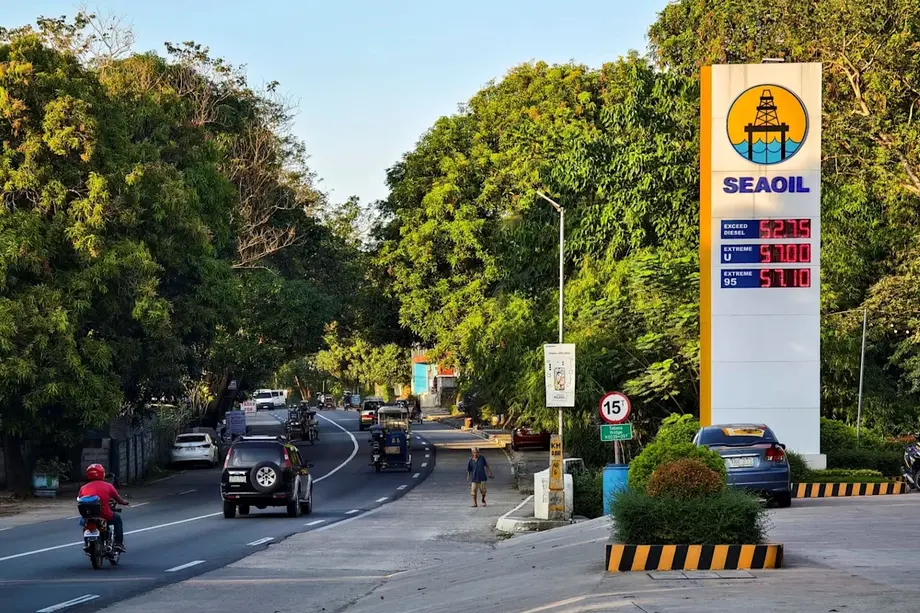
Fuel shock pushes buyers toward electric cars
Electric vehicles and hybrids are approaching a quarter of Philippine passenger car sales as a 68.3% jump in petrol prices pushes motorists to reconsider the cost of driving. Registrations of electric vehicles, including hybrids, exceeded 67,000 in January through August 2026, an increase of about 130% from the same period in 2025, according to Patrick T. Aquino, director of the Department of Energy's Energy Utilization Management Bureau.
Contents
- Fuel shock pushes buyers toward electric cars
- What the growth figures actually measure
- Buyers are joining waiting lists
- BYD deliveries show the scale of the shift
- Lower running costs meet purchase barriers
- Charging expansion faces delays
- Three deadlines shape government policy
- Motorcycles reveal a different market
- Cheaper imports put local makers under pressure
- At a Glance
The petrol increase followed the US and Israeli strikes on Iran in late February. GlobalPetrolPrices data cited in reporting placed the Philippine increase as the fourth steepest worldwide. Another account describes local gasoline prices as having more than doubled since March. Those figures use different starting points and are not directly comparable, but both indicate a sharp increase in motorists' expenses.
The pressure is particularly acute in a country that imports nearly all its fuel, has limited public transportation and does not provide fuel subsidies. For people who depend on a vehicle for work or family travel, cutting fuel consumption has become an immediate financial concern.
Carla Buencamino, head of mobility infrastructure at ACMobility, said the company's internal calculations put electric vehicles and hybrids at nearly a quarter of car sales in 2026, compared with 12% in 2025 and 4% in 2024. ACMobility operates the country's largest EV charging network.
That puts the estimated share close to twice its 2025 level and roughly six times its 2024 level. It measures the changing mix of cars being sold, however, not the share of all vehicles already on Philippine roads.
What the growth figures actually measure
The acceleration is visible in several datasets, although their totals should not be treated as interchangeable. Department of Energy figures cited in reporting put EV sales at about 14,000 in the first quarter of 2026, compared with 32,000 throughout 2025. Industry figures show first quarter sales rising 36% from a year earlier.
The first quarter total alone was about 44% of the previous year's full sales total. That comparison shows the strength of the opening months, but it does not establish what sales will reach across the whole of 2026.
A separate registration series records 60,906 EV registrations in 2025, up from 24,286 in 2024, an increase of about 151%. Those registration figures differ from the reported sales totals. The reports do not establish that both series cover the same vehicle categories or counting methods, so they cannot be combined into a single continuous measure.
The distinction between electric cars and hybrids also matters. A battery electric vehicle runs on electricity stored in its battery. A hybrid combines an engine with an electric motor and still uses fuel; some hybrids can also be charged from an external power supply. Aquino's figure of more than 67,000 registrations explicitly includes hybrids, so it does not mean that all those vehicles have stopped using petrol.
The main milestones show how quickly the market has moved:
- 2024: EV registrations reached 24,286, while ACMobility estimated the electric and hybrid share of car sales at 4%.
- 2025: Registrations reached 60,906, and the estimated sales share rose to 12%.
- First quarter of 2026: About 14,000 EVs were sold, with industry figures showing growth of 36% from a year earlier.
- January through August 2026: Registrations including hybrids exceeded 67,000, up about 130%.
Buyers are joining waiting lists
The rise in demand has created a supply problem for dealerships. Aquino, whose position as Director IV is confirmed in the Department of Energy's Energy Utilization Management Bureau directory, described buyers committing money before vehicles were available.
"Demand was through the roof. So you had to place an order, make a deposit and wait for your units to arrive," he said.
Mike Lim, founder and CEO of EV Supreme, said sales at his Metro Manila dealership increased eightfold after the oil crisis began. That is evidence of a sharp change at one business, rather than a national growth rate.
Willy Tee Ten, president of the Electric Vehicle Association of the Philippines, said the sudden increase had left brands struggling to match supply with orders.
"Most of the brands have a waitlist now, because nobody anticipated (demand) to be (so high)," he said.
Dealers have been seeking additional allocations from overseas manufacturers, including through attendance at the Beijing International Auto Show. Their immediate challenge is to turn customer interest and deposits into delivered vehicles. Waiting lists demonstrate demand, but they also mean that some motorists seeking relief from fuel bills cannot switch immediately.
BYD deliveries show the scale of the shift
BYD delivered 28,399 vehicles in the Philippines during January through August 2026, up 99% from the same period in 2025, according to Bob Palanca, managing director of BYD Cars Philippines.
Palanca said the company had already moved beyond its previous annual total and expected sales momentum to continue. His statement is a company forecast, not a confirmed result for the remaining months.
"We've already surpassed our entire 2025 sales total, four months ahead of target. We fully expect this momentum to carry through the rest of 2026 and well into 2027," he said.
The arrival of brands including BYD, Chery and MG has helped narrow the purchase price gap between electric and conventional vehicles, according to BMI Research. That changes the calculation for buyers: lower running expenses become more attractive when the initial price difference is smaller.
BYD's delivery figure should not be divided by the national registration total to calculate a precise market share. Deliveries and registrations are different measures, and the reported figures do not establish identical coverage. Together, they nevertheless show that the shift is reaching substantial volumes rather than remaining limited to small numbers of early buyers.
Lower running costs meet purchase barriers
For Manila resident Rommel Aceron, who drives between cities for work, errands and family travel, switching to an electric vehicle has reduced his monthly spending on energy for transport. He said his previous gasoline bill was about 8,000 pesos a month.
"Instead of me spending 8,000 pesos (US$130) per month for gasoline, now I'm just spending a few hundred pesos," Aceron said.
Aceron also said that after a full day of driving on a single charge, his vehicle still had 40% to 50% of its battery remaining. His experience illustrates why frequent drivers may find an EV attractive when petrol becomes expensive.
It is not a guaranteed saving for every buyer. The account does not specify his vehicle model, distance driven, electricity tariff or charging arrangements. Those details would be needed to calculate a comparable cost per kilometre or the time required for fuel savings to offset a higher purchase price.
High initial prices remain a barrier despite the narrowing gap with conventional cars. Specialised car loans are among the incentives intended to encourage adoption, but financing does not remove the purchase cost. Buyers still have to weigh repayments against running expenses and the practicality of charging where they live or work.
Charging expansion faces delays
The charging network is a major constraint on further growth. About 900 charging stations are operational, while the government roadmap envisages more than 7,000 nationwide by 2028.
On those approximate figures, the existing network is less than 13% of the planned total. Reaching the target would require adding more than 6,100 stations and expanding the network to nearly eight times its present size. The reports do not specify whether every station count represents the same number of individual charging points, so the totals are best read as a broad measure of expansion.
Aquino said private businesses are interested in building charging infrastructure, but regulatory and accreditation requirements can delay projects by at least six months before construction begins. That creates a timing problem: vehicle demand can rise quickly after a fuel price shock, while charging capacity takes longer to approve and install.
Charging speed matters alongside the number of locations. Reports describe many existing facilities as relying on slower charging technology. A station that is suitable for a vehicle parked for several hours may be less useful to a driver who needs to resume paid work quickly.
Glenford Philip Artuz, a transport network vehicle service operator, described the practical difference between refuelling and recharging.
"It's different when you use gasoline or crude than when you use electricity. Because when you have low battery, you need to recharge and that (takes) time," he said.
For commercial drivers, time spent charging can mean time without fare income. The charging programme therefore has to address availability, location and speed, rather than treating the station count alone as a measure of readiness.
Three deadlines shape government policy
The Department of Energy's bureau has a formal role in planning the transition. Its Electric Vehicle Industry Management Division formulates and updates the Comprehensive Roadmap for the Electric Vehicle Industry, known as CREVI, and provides technical support to local government units and other stakeholders.
Three dates define the reported policy agenda, with different goals attached to each:
- 2028: More than 7,000 charging stations are planned. The current exemption from import duties on EVs is also scheduled to expire.
- 2030: Officials want EVs to account for 50% of the taxi fleet and 50% of cars used by government officials, according to Aquino.
- 2040: The government aims for 50% EV adoption on the country's roads.
The energy ministry is seeking to extend the import duty exemption beyond 2028. That remains a proposal, rather than a confirmed extension. Keeping the exemption could help restrain purchase prices, but the reports give no decision date or final terms.
The targets also describe different parts of the market. The 2030 goals concern taxis and government cars, while the 2040 goal is broader. Neither should be confused with the current estimate that electric vehicles and hybrids account for nearly a quarter of passenger car sales. A rising share of new purchases does not immediately produce the same share across the existing vehicle fleet.
Motorcycles reveal a different market
The shift is slower among electric motorcycles, according to Aquino. Conventional motorcycles and jeepneys remain widely used, helping sustain demand for petroleum fuels even as electric and hybrid car purchases grow.
That limits what the passenger car figures say about national fuel consumption. The Philippines has about 14.8 million registered vehicles, and the reported EV registration totals remain small beside that scale. Annual registrations also cannot be treated as a count of every EV currently in use.
Aquino said less expensive electric motorcycles could make the technology accessible to more buyers. He pointed to VinFast models priced below 100,000 Philippine pesos as a more viable option for consumers who regard electric motorcycles as costly.
CREVI anticipates that electrified motorcycles, tricycles and hybrids will drive much of the country's adoption in the near term. Edmund Araga, president of the Asian Federation of Electric Vehicle Associations, also sees strong potential for smaller electric vehicles in short distance travel and the final part of a journey.
These vehicles address a different need from passenger cars. Their purchase prices and suitability for everyday local trips may determine whether electrification reaches people who cannot afford a car. Slower motorcycle growth therefore matters to both the breadth of adoption and the prospect of reducing fuel use.
Cheaper imports put local makers under pressure
The same imported vehicles that make electric transport more affordable can create difficulties for Philippine manufacturers. Araga said domestic producers of electric motorcycles and tricycles face competition from cheaper Chinese imports, alongside insufficient capital, limited financing and weak distribution networks.
A policy disagreement concerns the 60 billion peso Electric Vehicle Incentive Strategy. Tee Ten has questioned the exclusion of electric vehicles with two or three wheels from the programme, which aims to attract vehicle manufacturers to the Philippines.
Board of Investments head Ceferino Rodolfo defended the focus on vehicles with four wheels, saying the country already has a manufacturing base for electric motorcycles and tricycles. Araga's position is that those existing producers still need support to expand and compete.
The disagreement exposes a practical tension between lowering prices for buyers and building domestic production. Continuing import incentives may support affordability, while local manufacturers argue that access to capital and stronger distribution are necessary for them to participate in the growing market.
Progress against adoption targets is also uneven. Vehicles with four wheels had reached 54.6% of their short term adoption target in the reported assessment. That figure measures progress toward a specific target, not their share of all vehicles on the road.
The next tests are concrete: whether dealers can secure enough supply, whether charging projects move through approvals, whether the import exemption is extended and whether smaller electric vehicles become affordable to more riders. No final decision date for the duty extension or firm timetable for clearing dealership waiting lists has been reported.
At a Glance
- Petrol prices rose 68.3% following the late February strikes on Iran, according to cited price data.
- EV registrations including hybrids exceeded 67,000 in January through August 2026, up about 130% from a year earlier.
- ACMobility estimates electric vehicles and hybrids are nearing a quarter of car sales, compared with 12% in 2025 and 4% in 2024.
- BYD delivered 28,399 vehicles in the first eight months of 2026, an increase of 99%.
- About 900 charging stations are operational, against a plan for more than 7,000 by 2028.
- Officials seek 50% EV adoption in taxi and government car fleets by 2030, with a broader road adoption goal for 2040.
- An extension of the import duty exemption beyond 2028 is being sought but has not been confirmed.
- Electric motorcycle growth is slower, while local manufacturers face pressure from cheaper imports.