Advance funding puts a customer behind the expansion
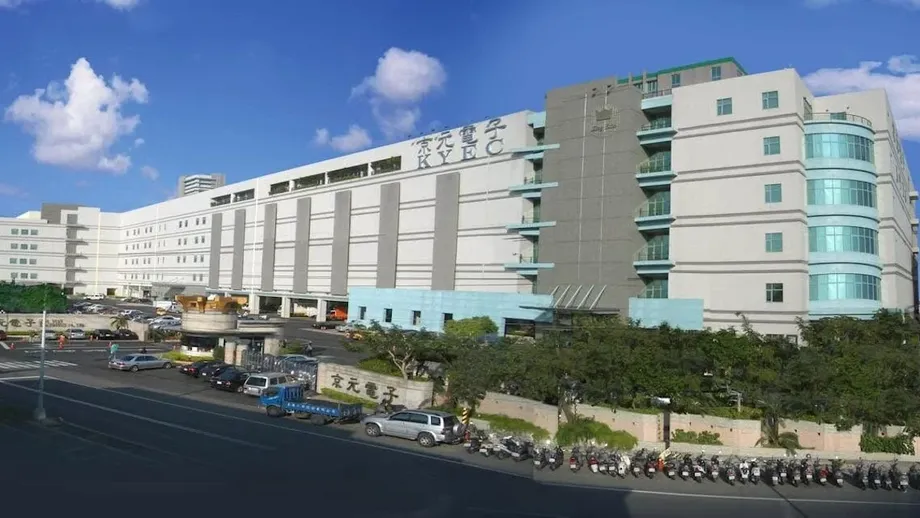
Nvidia has agreed to pay Taiwan semiconductor testing company King Yuan Electronics (KYEC) in advance for reserved US testing capacity, giving commercial support to an investment plan capped at $1.4 billion. KYEC announced the agreement on October 13, 2026, and simultaneously cancelled a separate $300 million guarantee previously approved for its American subsidiary.
Contents
- Advance funding puts a customer behind the expansion
- How the prepayment agreement works
- Why the $300 million guarantee was cancelled
- From July approval to an October local review
- Fort Worth documents identify a candidate property
- The first chips may still be packaged in Taiwan
- Rubin adds pressure through longer testing
- Record spending meets a longer construction cycle
- Other suppliers show two different kinds of expansion
- What still determines the project's return
- Key Points
The agreement involves NVIDIA International, Inc., KYEC and its wholly owned US subsidiary, AeternZ Semiconductor Testing Corporation. Nvidia will provide advance payments, while KYEC and AeternZ establish American testing capacity and reserve capacity for Nvidia. Future testing service charges will gradually offset the advance until it has been fully used.
The amount Nvidia will pay has not been disclosed. The $1.4 billion figure is KYEC's investment ceiling, not the value of Nvidia's prepayment. A separate $1.3 billion estimate appearing in a Fort Worth tax abatement application describes proposed project spending, rather than money already invested.
Those distinctions matter because the agreement strengthens the project's customer backing without revealing how much of the construction and equipment bill Nvidia will cover. The proposed plant still faces decisions about its location, property arrangements, equipment installation and eventual workload. Initial operations are planned at a small scale from 2028.
How the prepayment agreement works
The arrangement brings customer money into the project before testing services begin. Instead of paying only as chips pass through an operating facility, Nvidia commits funds ahead of time to secure future capacity. KYEC then applies subsequent service charges against that advance.
KYEC says the combination of advance payments and capacity reservations improves visibility into future orders. It has also said that a US plant without protection from long term orders would carry greater operating risk. For Nvidia, the agreement reserves access to a production step that chips must complete before shipment.
This is not a disclosed equity investment, and the published description does not say Nvidia will own part of the facility. Nor does it establish that Nvidia will finance the entire project. The agreement runs from signing until the advance has been fully offset, but no fixed end date or detailed service schedule has been disclosed.
Why the $300 million guarantee was cancelled
On September 17, KYEC's board approved a guarantee of up to $300 million for AeternZ. The subsidiary had been preparing a capacity construction and reservation contract with a customer, which required the parent company to act as a joint guarantor.
On October 13, KYEC said changes to the contract structure meant that the parent guarantee was no longer necessary. It cancelled the authorization on the same day it announced the Nvidia prepayment agreement.
The cancelled guarantee and the new advance payment serve different purposes. A guarantee would have committed KYEC to support specified subsidiary obligations. A prepayment supplies customer funds that are later offset against services. The $300 million guarantee therefore cannot be treated as the amount Nvidia has agreed to advance.
KYEC has not published the complete contractual changes. It is consequently not possible to establish how the revised agreement allocates every construction, performance or repayment obligation between the companies.
From July approval to an October local review
The customer agreement follows several months of planning. KYEC's board approved the American investment on July 10 and authorized chairman Hsieh Chi-chun to handle the establishment of the US business and facility within the $1.4 billion ceiling. Funding was expected to come from the company's own cash or borrowing, with spending tied to construction progress and capital needs.
The decision followed roughly six months of discussions about customers' demand for American manufacturing. Before this expansion, KYEC's US presence consisted of a sales office rather than a testing plant.
- July 10, 2026: KYEC approved a US facility investment capped at $1.4 billion.
- September 17: The board authorized a guarantee of up to $300 million for AeternZ's proposed capacity agreement.
- October 13: KYEC announced Nvidia's prepayment agreement and cancelled the guarantee.
- October 27: Fort Worth's city council was scheduled to consider a reinvestment zone and an AeternZ tax abatement agreement.
- 2028: The US facility is provisionally expected to begin operating at a small scale.
Fort Worth documents identify a candidate property
Texas had been described as the leading location, with a final site decision expected within one to two months of the October announcement. Details attributed to Fort Worth municipal documents make that prospect more concrete: AeternZ's proposal identifies a 27 acre candidate property near West Everman Parkway in the southern part of the city.
The listed landowner is Everman Fort Worth Building 2 & 3 SPE LLC. The tax abatement application sets out $1 billion in estimated real property improvements and $300 million in additional business personal property, for a combined $1.3 billion.
That estimate is $100 million below the board's $1.4 billion ceiling, or about 7.1% less. The figures do not necessarily conflict. One is an estimate submitted for a local tax application; the other is the maximum investment authorized by KYEC's board. Neither establishes the project's final cost.
The council was scheduled to consider creating Tax Abatement Reinvestment Zone No. 122 and then review AeternZ's tax abatement agreement on October 27. Entry into that process does not establish that KYEC has finalized the site, acquired the property or received the requested tax relief. The terms of its eventual land or building rights also remain unconfirmed.
The first chips may still be packaged in Taiwan
The initial production route could span both Taiwan and the United States. Chips would undergo TSMC's CoWoS advanced packaging in Taiwan before being shipped to KYEC's American facility for final testing.
CoWoS stands for chip on wafer on substrate. It is a packaging method used to connect computing chips and memory within a closely integrated assembly. Testing then checks whether the completed product performs as required. Packaging and testing are separate stages, even when companies plan them as parts of a single manufacturing chain.
An earlier description of the US expansion outlined a possible Arizona chain in which TSMC makes wafers, Amkor packages the chips and KYEC tests them. The Fort Worth proposal and the initial Taiwan packaging route describe a different geographic arrangement. They should not be read as confirmation of one settled production route.
KYEC's American testing operation could therefore begin before all preceding manufacturing stages are available domestically. Its workload would depend on customer allocation decisions and the pace at which American fabrication and packaging capacity develops.
Rubin adds pressure through longer testing
KYEC's reported order demand covers Nvidia's Blackwell and Rubin chips, as well as application specific integrated circuits (ASICs) and central processing units (CPUs). Its existing capacity is reported to be fully occupied. Other customers named in accounts of the expansion include Broadcom, Marvell, Intel, Google and Amazon.
As AI chips become more complex and consume more power, testing requires stronger cooling, stable operating conditions and suitable equipment. A finished chip still has to demonstrate that it meets shipment requirements after fabrication and packaging.
Reported analyst estimates put Rubin's testing time at more than 50% above Blackwell's. This is an estimate, not a disclosed Nvidia specification or a published KYEC measurement. It nevertheless illustrates why the need for testing capacity can grow faster than chip shipment numbers alone suggest: each unit may occupy equipment for longer.
KYEC's capabilities include wafer probing, finished product testing, burn in testing and system level testing. Burn in testing runs chips under elevated temperature or heavy load to identify products likely to fail. Its internally developed burn in equipment, liquid cooling technology and experience managing volume production have been identified as strengths in handling advanced AI chips.
Nvidia has not publicly explained the specific technical reasons for selecting KYEC for this agreement. Those capabilities help explain the demands of the work, but they do not establish Nvidia's own selection criteria.
Record spending meets a longer construction cycle
KYEC raised its planned 2026 capital expenditure from NT$39.372 billion to a record NT$50 billion to address demand for AI graphics processors and ASIC testing. The increase is NT$10.628 billion, or approximately 27%.
The US investment ceiling is approximately NT$45 billion. The annual capital expenditure plan and the American project ceiling should not simply be added together as a single year's spending commitment. The US project is intended to receive funding gradually, according to construction progress and financing needs.
KYEC president Chang Kao-hsun has described a sharp change in expansion pressure. A factory once provided enough capacity for two or three years of demand, whereas current demand could require two or three factories in a single year. He has also said construction periods have stretched from less than 12 months to at least 24 months.
Accounts differ on the property strategy. One describes purchasing an existing factory or building and installing equipment to shorten the schedule. Another records Chang saying that building or leasing was still under consideration. The final approach has not been publicly settled. Even with an existing structure, equipment installation and validation would remain necessary before commercial testing.
Other suppliers show two different kinds of expansion
Nvidia's use of advance funding to reserve semiconductor capacity has a precedent. In July 2026, it entered a reported $1.5 billion agreement covering multiple years with Amkor for advanced packaging and testing technology, with prepayments supporting capacity expansion.
The Amkor agreement's stated value cannot be directly compared with KYEC's $1.4 billion ceiling. The first is a collaboration value; the second is a facility investment limit. KYEC's undisclosed advance prevents a comparison of how much customer funding the two arrangements provide.
Fort Worth is also attracting Taiwanese electronics manufacturers whose operations sit at different points in the AI production chain. Wistron's D1 AI factory opened on July 21, with chairman Simon Lin and Nvidia chief executive Jensen Huang attending. The facility cost nearly $700 million, covers about 324,000 square feet and has begun volume production of GB300 Grace Blackwell Ultra computing boards. It also plans to manufacture products associated with Vera Rubin.
Foxlink opened a Fort Worth location in AllianceTexas on July 14. Its approximately 147,800 square foot building is intended for circuit board assembly and electronics manufacturing, including final assembly, testing and packaging. The development was estimated to create about 900 jobs once fully operational.
The three projects are at different stages. Wistron has started GB300 board production, Foxlink has begun developing its manufacturing location, and KYEC is pursuing a candidate site and local tax review. Their presence in the same city does not establish supply contracts among them.
What still determines the project's return
KYEC says the Nvidia agreement should support future financial and business development and strengthen their long term cooperation. The practical benefit is a clearer customer commitment before a large overseas investment, rather than a disclosed guarantee of profit.
Several figures needed to assess the investment remain unavailable: the prepayment amount, the quantity of capacity reserved for Nvidia, service prices, the final equipment mix and the pace of production growth. The allocation of Nvidia orders will be central to how much revenue the facility can generate.
The October 27 council review is the next specified local decision. After that, progress will depend on securing property arrangements, preparing the facility, installing and validating equipment, and matching capacity to customer demand. The 2028 starting point remains an initial plan for limited operations, not a commitment to full production.
The agreement addresses part of KYEC's concern about building without sufficient customer backing. It does not remove exposure to construction costs, delays or low utilization. The project's commercial success will depend on converting the reserved capacity into a sustained flow of testing work.
Key Points
- Nvidia will make undisclosed advance payments for reserved US testing capacity provided by KYEC and AeternZ.
- KYEC's US investment is capped at $1.4 billion, separate from the prepayment amount.
- A $300 million parent guarantee was cancelled after the contract structure changed.
- A Fort Worth tax application identifies a 27 acre candidate property and $1.3 billion in estimated investment.
- The city council review was scheduled for October 27, 2026; final site and tax decisions were not confirmed.
- Initial operations are planned from 2028, potentially testing chips packaged in Taiwan.
- KYEC raised planned 2026 capital expenditure by approximately 27% to NT$50 billion.
- Reserved capacity, final project costs and Nvidia's future testing volumes remain undisclosed.