Second company targeted after June 2025 sanctions
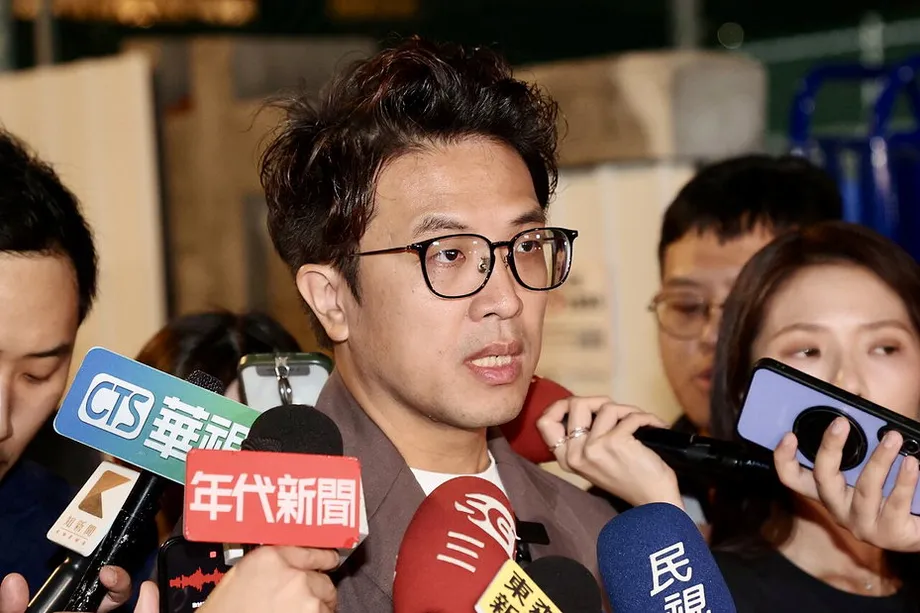
China's Taiwan Affairs Office announced sanctions against VWAY on October 14, 2026, accusing Shen Tu-cheng, the father of Democratic Progressive Party Taipei mayoral candidate Shen Pao-yang, of using the company to continue trading with Chinese businesses after another company he headed was sanctioned in June 2025.
Contents
- Second company targeted after June 2025 sanctions
- What Beijing says VWAY did
- The trade figures and what they show
- An older company, not necessarily a new entity
- The coffee cup shipment allegation
- Shen disputes the accusations and their timing
- Election criticism and a broader warning
- How the dispute developed
- Key Points
The measure prohibits VWAY from conducting any transactions or cooperation with mainland Chinese organizations, companies or individuals. Spokesperson Chen Binhua announced the decision at a regular press conference, making VWAY the second company associated with Shen's father to face such restrictions.
The allegations include a reported US$689,800 in VWAY trade with China between June 2025 and March 2026, compared with US$599,800 between January 2022 and May 2025. Those figures describe the value of transactions, not profits, and have not been independently established here.
Shen rejected the accusations as recycled smears and said his family's business operates in Ecuador, not China. In a response published late on October 13, before the new sanctions announcement, he also questioned how information about his family was obtained and why it was being released during the election campaign.
The dispute turns on more than where the family sells goods. Beijing alleges that VWAY continued sourcing products from Chinese suppliers despite restrictions on Zhaoyi Limited, the previously sanctioned company. Shen's statement about Ecuador does not, by itself, resolve that allegation. Equally, the reported trade figures do not establish that Shen personally participated in the business or that the transactions amounted to sanctions evasion.
What Beijing says VWAY did
Chen said the Taiwan Affairs Office had sanctioned Zhaoyi in June 2025, when Shen Tu-cheng was its responsible executive. He alleged that Shen subsequently used VWAY to maintain trade and business cooperation with mainland companies and obtain economic benefits.
Chen Binhua, spokesperson for the State Council Taiwan Affairs Office, explained the political basis for the new measure:
The mainland will not allow enterprises associated with diehard 'Taiwan independence' separatists to seek profits on the mainland.
The description of Shen as a separatist is Beijing's designation, not an independently established finding about the disputed transactions. Chen also accused the candidate of opposing China and obstructing exchanges while working with relatives to earn money from mainland businesses.
The announced prohibition extends beyond purchases or sales to cooperation with organizations and individuals. However, the announcement did not specify a monetary penalty, identify particular Chinese counterparties, or explain how existing contracts and goods already in transit would be treated. No separate customs action against VWAY was detailed.
The trade figures and what they show
The detailed allegations put VWAY's dealings with China at 38 transactions worth US$599,800 from January 2022 through May 2025. They then list 39 transactions worth US$689,800 from June 2025 through March 2026, after the sanctions against Zhaoyi.
If accurate, the later period involved US$90,000 more trade, an increase of about 15%, despite covering a much shorter span. The number of transactions rose by just one. Together, the two periods account for 77 transactions worth US$1,289,600.
Several reports describe the later period as just over six months. The stated dates, June 2025 through March 2026, instead cover ten calendar months when counted inclusively. The earlier comparison covers 41 calendar months. That distinction matters when assessing claims about the speed of the increase.
The figures support an allegation of greater trading activity after Zhaoyi was sanctioned, but they do not by themselves prove why that increase occurred. They also cannot be treated as earnings: the purchase value of goods does not reveal resale revenue, shipping costs, operating expenses or profit.
Reports allege that VWAY previously bought textiles, including fabric and carpets, and later took on insulated cups, automotive parts and other merchandise formerly handled by Zhaoyi. The described business involved buying products in China and reselling them in Ecuador and elsewhere. That would allow a company to serve an Ecuadorian market while maintaining commercial relationships with Chinese suppliers.
An older company, not necessarily a new entity
Although VWAY has been described as a new vehicle for the family's trade, reported registration information places its establishment in the British Virgin Islands on May 4, 2005. On that account, the allegation concerns a change in the use of an existing company, rather than the creation of a company after the 2025 sanctions.
The same reporting identifies Zhaoyi as a Taiwanese company established on February 26, 1991. It alleges that both businesses had Shen Tu-cheng as their responsible executive, shared an office address in Guayaquil, Ecuador, and used the same company email address.
Those alleged connections are relevant to Beijing's claim that VWAY continued Zhaoyi's business. Shared management and contact details, however, do not alone establish that a particular shipment violated a restriction. That requires evidence about the parties to the transaction, its timing and the rules applicable to it.
One report also identifies Sicuens International Co., Ltd. as the English name under which Zhaoyi was registered with Chinese customs. It says that registration was revoked in July 2025. This was a separate step from the Taiwan Affairs Office's June announcement, affecting the company's registration for customs dealings.
The coffee cup shipment allegation
The most specific claim concerns a coffee cup contract allegedly signed on April 21, 2025, between Zhaoyi and a company in Hefei. The goods were reportedly scheduled for customs declaration and shipment on June 19, after the alleged June 5 sanctions date.
According to the allegation, employees used VWAY's name to declare the goods, allowing them to pass customs checks and be loaded for shipment. The account says a second bill of lading then restored Zhaoyi's name, while payment to the Chinese supplier came from VWAY's account.
A bill of lading is a shipping document that records cargo and the parties involved in its transport. A change in the named party can matter when authorities are checking whether a restricted company is participating in a shipment.
This account provides a proposed mechanism for evasion, rather than relying solely on rising trade totals. It remains an allegation. The contract, customs declaration, payment record and shipping documents would be needed to establish the transaction and assess the claimed purpose of changing company names.
When asked at the press conference about evidence and possible gaps in enforcement, Chen said the measures were based on facts and law and that violations would be investigated when discovered. His reported answer did not set out the underlying shipment records or identify a specific legal provision governing the VWAY decision.
Shen disputes the accusations and their timing
Shen, the Taipei mayoral candidate and founder of Kuma Academy, said political figures should accept scrutiny but that discussion should rest on facts rather than unverified labels. His October 13 response focused on the origin, circulation and timing of the allegations.
He questioned why people were so interested in his family's business and daily movements, and said responding to accusations could give them further publicity. He also referred to an earlier surveillance case, saying prosecutors' findings showed that he and his family had been monitored around the clock in 2024 and that the commissioning party came from Hong Kong.
That account of the investigation is Shen's statement. It does not establish that the latest business allegations came from the same surveillance operation. It does explain why his response addressed information gathering as well as the commercial claims.
Chen rejected Shen's position and called on him to prove his innocence and give Taiwan's public a responsible explanation. The competing statements leave unresolved both the evidence for sanctions evasion and the extent, if any, of the candidate's involvement in his father's business.
Shen's late October 13 remarks preceded the October 14 sanction. No separate response from VWAY or Zhaoyi, or a fresh statement from Shen specifically addressing the new prohibition, was reported.
Election criticism and a broader warning
Kuomintang legislator Lai Shibao accused Shen of applying a double standard to exchanges across the Taiwan Strait. Lai said there was nothing wrong with ordinary business involving Chinese currency, but argued that Shen should apologize for criticizing such exchanges while allegedly permitting his father's business to benefit from them.
That is a political accusation, distinct from Beijing's claim of sanctions evasion. It depends on assertions about Shen's knowledge and conduct that are not established by transaction totals alone.
The October 14 press conference also addressed entertainer and writer Tsai Kang-yong, known as Kevin Tsai, who attended the inauguration of Shen's campaign headquarters on October 4. Several mainland companies subsequently announced an end to cooperation with Tsai and removed related content.
Chen Binhua, speaking for the Taiwan Affairs Office, warned against combining access to the Chinese market with support for people Beijing designates as separatists:
No individual or force can seek to benefit from the mainland's development while at the same time colluding with 'Taiwan independence' separatist forces.
Chen did not announce a specific government sanction against Tsai. The companies' decisions and the official warning should therefore be distinguished from the express transaction ban imposed on VWAY.
Chen also confirmed that a brother of United Microelectronics Corporation founder Robert Tsao had been refused entry to China. He attributed the refusal to restrictions on Tsao and his family following Beijing's designation of Tsao as a Taiwan independence hardliner. These cases show that the office's stated restrictions extend to relatives and associated businesses, while the actual measures differ between cases.
How the dispute developed
The sequence separates the earlier restrictions on Shen, the action against Zhaoyi, the alleged subsequent trade and the latest prohibition:
- October 2024: Beijing reportedly placed Shen on its list of Taiwan independence hardliners and announced entry and cooperation restrictions.
- April 21, 2025: The disputed coffee cup contract was allegedly signed in Zhaoyi's name.
- June 2025: The Taiwan Affairs Office sanctioned Zhaoyi. One detailed account gives June 5 as the date.
- July 2025: Chinese customs reportedly revoked the registration of Sicuens International Co., Ltd., identified in reporting as Zhaoyi's English name.
- June 2025 to March 2026: VWAY allegedly completed 39 transactions with China worth US$689,800.
- October 4, 2026: Tsai Kang-yong attended Shen's campaign headquarters inauguration.
- October 13, 2026: New business allegations appeared, and Shen responded late that night.
- October 14, 2026: Chen announced the prohibition on VWAY's transactions and cooperation with mainland parties.
The immediate development is a second company restriction, not a disclosed court judgment establishing the alleged evasion. No hearing, appeal deadline or date for releasing further evidence was announced. The central unresolved issues are the authenticity and meaning of the transaction records, whether the alleged company switch breached the earlier restrictions, and what role Shen himself played.
Key Points
- China announced sanctions against VWAY on October 14, 2026, prohibiting transactions and cooperation with mainland organizations, companies and individuals.
- Beijing alleges Shen Tu-cheng used VWAY to continue trading after Zhaoyi was sanctioned in June 2025.
- Reported trade figures total US$689,800 for June 2025 through March 2026. They represent transaction value, not profit.
- Shen Pao-yang rejects the accusations and questions their evidence, origin and election timing.
- A specific allegation involving coffee cups, customs declarations and shipping documents remains unverified here.
- No specific government sanction against Tsai Kang-yong or deadline for further proceedings was announced.