Six searches expose a military procurement dispute
Two senior executives of Taiwan's Jiin Ming Industry have been ordered detained for two months over allegations that the company and a subsidiary supplied military drones containing prohibited Chinese chips and lenses, then submitted false certificates of origin for acceptance by the armed forces.
Contents
- Six searches expose a military procurement dispute
- What investigators say was delivered
- How the searches led to detention
- Why the court rejected release
- Which laws prosecutors are examining
- VIPER's public claims face a separate test
- The chairman takes over a mostly industrial business
- Revenue growth sits alongside continuing losses
- Taiwan's sourcing push reaches the component level
- Key Points
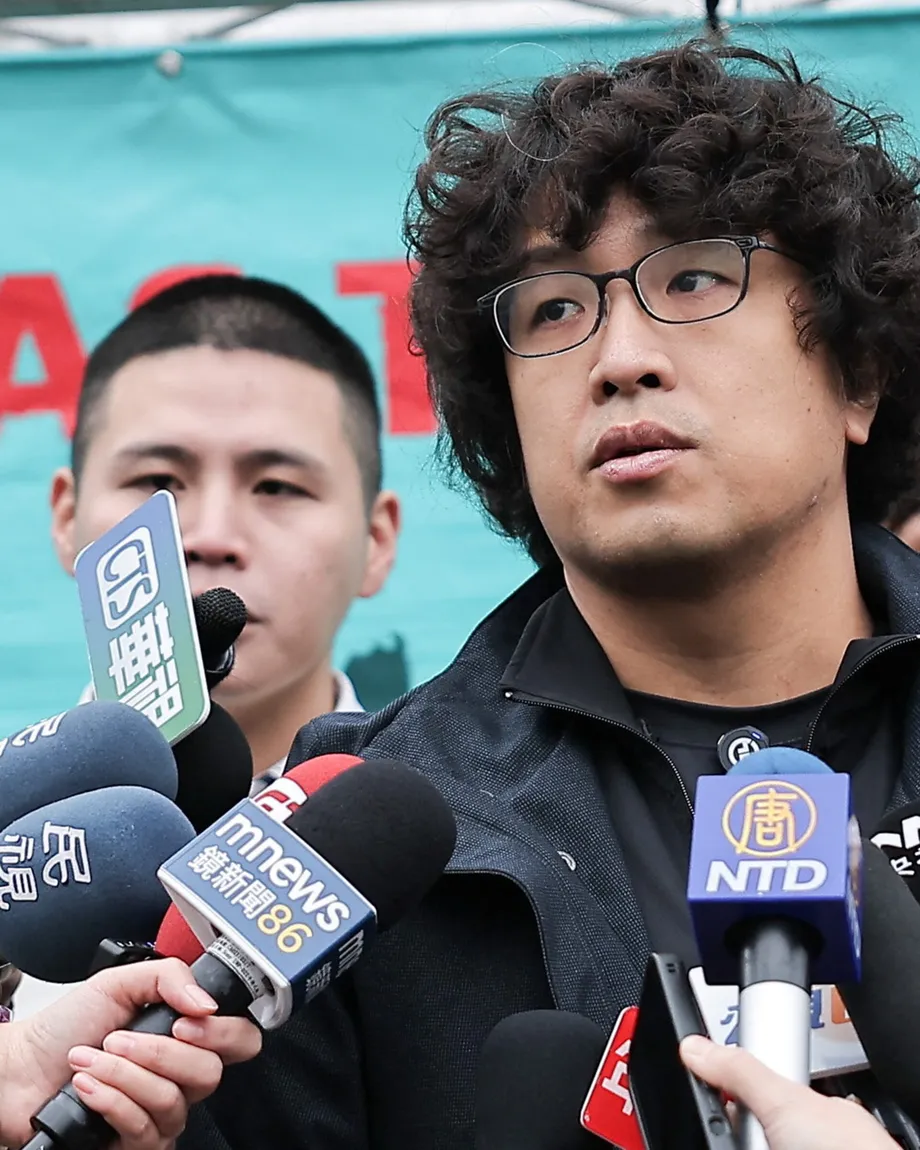
The Taoyuan District Court ordered vice chairman and general manager Jian Haoting and business director Chen Yangcheng detained from October 9, 2026, with visits and correspondence prohibited. Prosecutors described the investigation publicly on October 12, following searches at six locations and questioning that continued overnight.
The allegations put the company's procurement practices at odds with its public promotion of drones built without components from the People's Republic of China. However, investigators have not publicly identified the drone models involved, so the case cannot yet be tied to the company's advertised VIPER aircraft.
The Taoyuan District Prosecutors Office suspects violations of the National Security Act, use of false business documents and aggravated fraud involving three or more people. The detention decisions concern serious suspicion and risks to the investigation. They are not criminal convictions.
Jiin Ming, an electronics and precision metal manufacturer listed under stock code 3230, says operations remain normal. Chairman Tsai Hsiangfeng has temporarily taken over the general manager's duties. The company says defense drone orders represented about 1.1% of total revenue through September, a small commercial share even though the allegations concern sensitive military procurement.
What investigators say was delivered
Prosecutors say Jiin Ming and its subsidiary accepted multiple drone procurement contracts from Taiwan's armed forces. The suspected breach concerns chips and camera lenses made in China that the contracts prohibited, allegedly installed in drones presented for military acceptance.
The subsidiary has been identified in reporting as Yingsheng International. Searches covered the parent company, the subsidiary, suppliers and residences of people connected to the investigation. Jiin Ming's headquarters are in Luzhu District, Taoyuan.
The allegation has two connected parts: the origin of the physical components and the accuracy of the paperwork accompanying them. A certificate of origin identifies where a product or component comes from. Prosecutors suspect false certificates were used to obtain military acceptance despite the contractual restrictions.
No public account identifies the chip manufacturers, lens suppliers, contract values or number of affected aircraft. There is also no disclosed finding that the drones were hacked, transmitted information to China or failed during operations. The investigation concerns prohibited sourcing, alleged misrepresentation and delivery, rather than a demonstrated cyberattack.
How the searches led to detention
Chief Prosecutor Chang Chunhui assigned national security prosecutor Lin Yiwei to direct the investigation. On the morning of October 8, the Ministry of Justice Investigation Bureau's Hsinchu County station executed search warrants issued by the Taoyuan District Court.
The searches covered six locations. Investigators questioned seven company personnel, including the two executives, and one witness, and seized items to establish what had happened. Other defendants were allowed to leave after questioning.
The main sequence unfolded over five days:
- October 8: Investigators searched company premises, suppliers and residences. Jiin Ming disclosed that the Investigation Bureau had visited its offices.
- October 9, about 3 a.m.: Prosecutors arrested Jian and Chen after overnight questioning and sought detention with restrictions on contact.
- October 9: The court ordered both executives detained for two months from that date.
- October 12: Prosecutors publicly described the case, while Jiin Ming announced that its chairman would temporarily serve as general manager.
Each executive may appeal within 10 days of receiving the detention ruling. That period runs from receipt, rather than automatically from the date of the searches or the public announcement. No trial date or date for a further investigative announcement has been disclosed.
Why the court rejected release
The court gave separate reasons for detaining the two executives. For Jian, it described an upper level role in the alleged criminal structure and said parts of his account differed from witness testimony. It also noted that possible accomplices and other facts remained under investigation.
According to descriptions of the ruling, Jian initially denied wrongdoing but acknowledged the conduct set out in the detention application during court questioning. That reported acknowledgment is relevant to the court's assessment, but it does not replace a final judicial determination of the allegations.
The court found a risk of collusion with accomplices or witnesses. It also considered the company's number of military transactions and sales volumes as grounds for concern that similar conduct could recur, although those figures have not been made public.
Chen denied the alleged conduct. The court nevertheless found serious suspicion based on the evidence in the case file. It said parts of his statements changed between police and prosecutorial questioning and differed from witness accounts, supporting concerns about collusion and destruction of evidence.
For Jian, the court expressly considered alternatives including bail, release into another person's supervision and restrictions on leaving Taiwan by air or sea. It found those measures insufficient to prevent interference with witnesses or accomplices. Both executives were ordered held with visits and correspondence prohibited while investigators continue their work.
Which laws prosecutors are examining
The suspected national security offenses concern knowingly delivering products originating in mainland China for military procurement. Reports describing the investigation identify Article 11, paragraph 1, and Article 12, paragraph 1, of Taiwan's National Security Act.
Prosecutors also cited Articles 215 and 216 of the Criminal Code in connection with allegedly false business records and their use. Here, the certificates of origin matter because they were allegedly submitted as part of the armed forces' acceptance process, not merely retained as internal company paperwork.
The suspected aggravated fraud offense is listed under Article 339-4, paragraph 1, subparagraph 2, concerning fraud committed by three or more people. Only two executives have been publicly identified as detained. The suspected offense does not establish the guilt or identity of anyone else, and investigators say possible accomplices remain to be examined.
The case therefore extends beyond a dispute about whether goods met a contract specification. Prosecutors are examining whether the deliveries involved knowing violations of military sourcing restrictions, false documentation and fraud. Those allegations still require proof through the criminal process.
VIPER's public claims face a separate test
On its website, Jiin Ming presents VIPER as a drone built through cooperation across Taiwan's supply chain and intended for defense and strategic operations. Its VIPER product statement says the aircraft uses no Chinese components or technologies and complies fully with the U.S. National Defense Authorization Act, known as the NDAA.
The company describes the intended sourcing standard in explicit terms:
eliminating reliance on Chinese components and technologies to ensure maximum security and reliability.
That is a company assurance, not an independently established finding about the aircraft examined in this investigation. The statement also describes military production standards, scalable manufacturing and cooperation covering design, manufacturing and testing.
The NDAA is U.S. defense legislation that includes procurement restrictions affecting certain Chinese drone equipment. Jiin Ming's compliance claim is distinct from whether particular deliveries satisfied Taiwan's contracts and laws. One claim does not resolve the other.
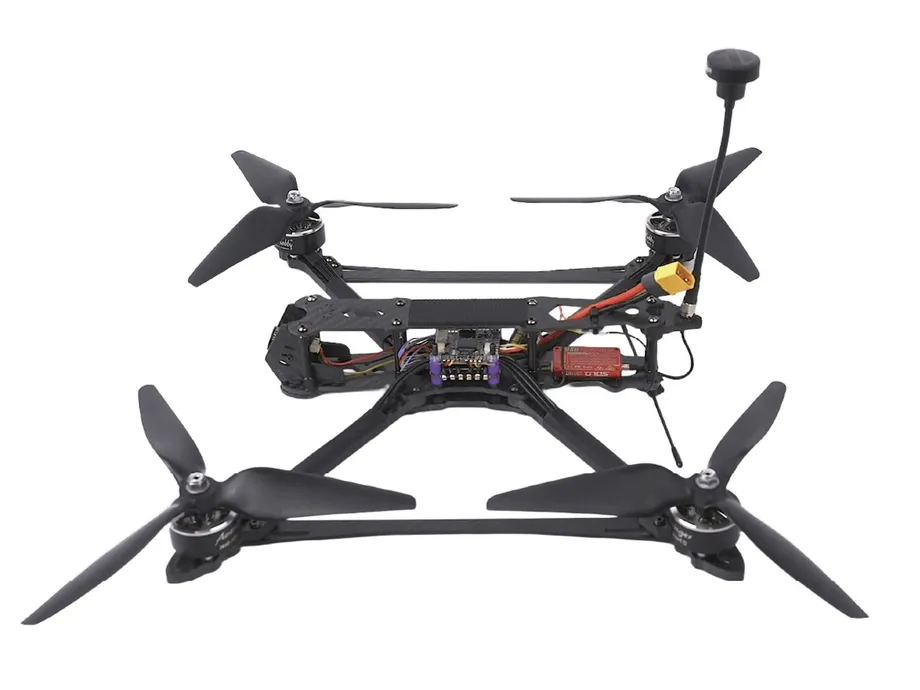
Jiin Ming has displayed a small VIPER quadrotor military drone and a prototype of a light fixed wing aircraft powered by a jet engine, both promoted as made in Taiwan. Investigators have not disclosed whether either is involved. The relevant contrast is between the company's public sourcing promises and the alleged practices in the procurement case, not a proven finding against every product it sells.
The chairman takes over a mostly industrial business
Jiin Ming said on October 12 that chairman Tsai Hsiangfeng had been released after prosecutorial questioning without having to post bail. His release does not itself determine the merits of the wider investigation.
The company says it activated an operational contingency mechanism, with Tsai temporarily serving as general manager and working with its professional management team to continue existing business. It has pledged to cooperate with investigators while declining to discuss case details because the investigation is confidential.
Its disclosed revenue mix helps distinguish its defense ambitions from its present business:
- Metal stamping and molds accounted for about 85.8% of total revenue through September.
- The drone business accounted for about 3.3%.
- Defense related drone orders accounted for about 1.1% of total revenue.
Using those approximate shares, defense drone orders represented about one third of drone revenue: 1.1% divided by 3.3%. The figures do not identify the value of the contracts under investigation, and they should not be treated as a measure of alleged losses.
Jiin Ming says export orders are unaffected and its existing domestic and overseas business and financial position have suffered no material impact at this stage. These are the company's assessments. The public disclosures do not establish what later procurement decisions, contract reviews or court proceedings might mean for the business.
Revenue growth sits alongside continuing losses
Founded in 1987, Jiin Ming began in metal manufacturing and has worked in consumer electronics, including as a qualified Apple supplier. Its expansion into military drones is part of a wider move beyond traditional electronics components, alongside activity in renewable energy and energy storage.
The company reported September consolidated revenue of NT$40.597 million, down 4.43% from August but up 19.82% from the same month a year earlier. Other accounts rounded that figure to NT$41 million, with changes of 4.4% and 19.8%. Those are rounded presentations of the same result, rather than conflicting revenue totals.
Its second quarter loss after tax was NT$49 million, compared with NT$38 million in the first quarter and NT$48 million in the corresponding quarter a year earlier. The loss widened by NT$11 million from the first quarter, about 29% using the reported figures. The second quarter loss per share was NT$0.58.
These results establish that Jiin Ming already faced financial pressure before the searches. They do not establish a connection between its losses and the suspected procurement offenses, nor do they independently verify its assessment that the investigation has caused no material business impact.
Taiwan's sourcing push reaches the component level
The investigation comes as Taiwan seeks to expand domestic drone production and reduce reliance on Chinese suppliers. Its drone development program was expanded in 2022 to include private companies as prime contractors, with research support from the Ministry of Economic Affairs and procurement support from the Ministry of National Defense.
The defense ministry has also launched a reported NT$7.1 billion mass production initiative for drones operating from land and warships. That wider program is separate from the undisclosed value of the Jiin Ming contracts being investigated.
Dennis Huang, Taiwan UAV's managing director for international strategy and operations, has described the supply disruption concern behind his company's sourcing decisions:
The Taiwanese government saw how crucial drones are for modern warfare and frets that a Chinese naval blockade could abruptly cut Taiwan from supply of parts and components for drones,
Huang said replacing Chinese engines with Australian alternatives would have cost 20 times as much, prompting Taiwan UAV to develop its own gasoline engines with partners and engineers from Taiwan's motor scooter industry. Its surveillance equipment includes a camera and stabilization assembly sourced from Latvia. These examples show that removing Chinese components can mean combining domestic development with imports from elsewhere, rather than manufacturing every part in Taiwan.
Avilon Intelligence, another Taiwanese manufacturer, says it develops its flight control and cloud systems internally and avoids sensitive Chinese components and software. Its drones serve civilian tasks such as forest monitoring and power tower inspection. Its chief executive, Ming Thanakorn, has described lower priced Chinese drones as continuing competition in the private market.
A separate controversy on August 16 concerned a possibly Chinese chip visible in a defense ministry drone prototype. The ministry said that aircraft was a proof of concept unrelated to the indigenous military drone program. That explanation and the prototype controversy are distinct from the Jiin Ming investigation; no connection between the two has been established.
The immediate unresolved issues are concrete: which aircraft and contracts were affected, how component origins were checked, who prepared the certificates and what investigators can prove about each person's knowledge. Neither the quantities involved nor any military decision to inspect, replace or suspend use of delivered aircraft has been publicly disclosed.
Key Points
- Jiin Ming executives Jian Haoting and Chen Yangcheng were ordered detained for two months from October 9, 2026, with visits and correspondence prohibited.
- Prosecutors suspect prohibited Chinese chips and lenses were installed in military drones and accompanied by false certificates of origin.
- Investigators searched six locations and questioned seven company personnel and one witness.
- The suspected offenses involve national security law, false business documents and aggravated fraud. No conviction has been announced.
- Chairman Tsai Hsiangfeng is temporarily serving as general manager. Jiin Ming says operations remain normal and export orders are unaffected.
- Defense drone orders represented about 1.1% of company revenue through September, compared with 3.3% for all drone business.
- The affected models, contract values and number of aircraft have not been disclosed. Each detained executive may appeal within 10 days of receiving the ruling.