
January payments depend on two budget deadlines
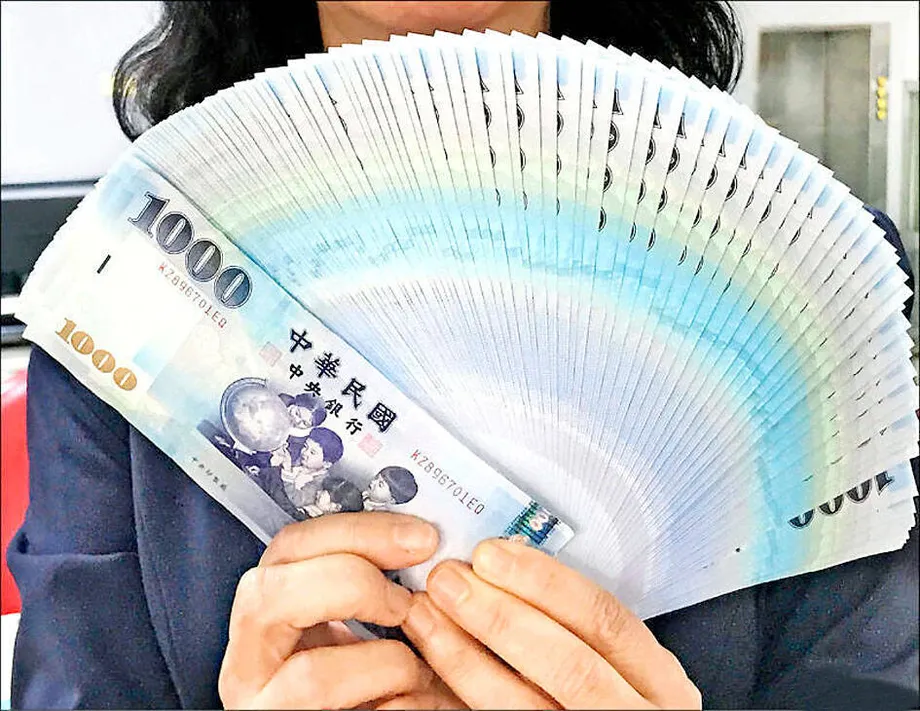
Taiwan could begin distributing NT$10,000 per eligible person on January 26, 2027, under a plan backed by NT$235.7 billion in the proposed central government budget. The first payments depend on the Legislative Yuan passing the budget by January 5 and President William Lai promulgating it by January 20.
Contents
- January payments depend on two budget deadlines
- How the AI gains would fund the payment
- The proposed timetable, from approval to collection
- Who would qualify for NT$10,000?
- Newborns would have a longer claim window
- Five channels, with a larger ATM network
- Why budget scrutiny could change the schedule
- The competing NT$20,000 proposal
- No new registration website has been announced
- Key Points
The Cabinet approved the distribution plan on October 8, 2026, aiming to start payments before Lunar New Year. Finance Ministry Deputy Minister Juan Ching-hwa cautioned that the schedule is an initial estimate, not a guaranteed payment date. If budget scrutiny takes longer, the collection timetable would move back.
The proposal combines five collection channels, broader ATM access and eligibility for several groups of foreign residents. It also includes qualifying babies born in Taiwan through December 31, 2027, with an extended claim deadline in January 2028.
The earliest payment date does not apply equally to every channel. Bank deposits and payments arranged through government rosters could begin on January 26, while ATM withdrawals would start on February 15 and collection at post office counters on February 22. People choosing cash collection would therefore wait longer than those included in the first deposit batch.
The distinction matters because the government is proposing a sequence of openings, rather than one day when everyone receives the money. Eligibility, registration and the final release of funds still depend on the budget completing the required legal process.
How the AI gains would fund the payment
The Executive Yuan submitted its proposed 2027 central government budget to the legislature at the end of August 2026. Revenue and expenditure are both budgeted at NT$3.9266 trillion, including NT$235.7 billion for the universal payment. The handout allocation represents about 6 percent of that expenditure total.
The Cabinet describes the initiative as a way to share economic gains and increased tax revenue associated with the artificial intelligence boom. Its presentation was titled Sharing AI dividends with all: NT$10,000 cash handout plan. Demand for semiconductors, information and communications products, high performance computing and cloud services underpins its explanation of the stronger revenue outlook.
On August 14, 2026, the Directorate General of Budget, Accounting and Statistics raised its forecast for that year's economic growth from 9.64 percent to 11.05 percent, an increase of 1.41 percentage points. The government subsequently raised projected revenue for the 2027 budget to NT$3.9266 trillion. Lai announced the proposed payment on August 17.
The administration says the payment would meet three conditions: no net increase in borrowing, no displacement of other policy spending, and compliance with legal and constitutional procedures. Executive Yuan spokesperson Lee Hui-chih identified social welfare, defense, health care and education among the priorities that should not lose funding to finance the distribution.
These are the government's stated budget commitments. They do not mean the money has already been authorized for release. The allocation remains part of a proposed annual budget that legislators must review.
The proposed timetable, from approval to collection
The finance ministry's detailed schedule puts preregistration on January 20 and registration for bank deposits on January 25. The first batch on January 26 would include preregistered deposits, direct deposits and distribution through government rosters.
A less specific account describes preregistration as opening in the middle of January after presidential promulgation. That differs from the January 20 date given in the detailed schedule. Neither version should be treated as a confirmed opening announcement while the budget remains pending.
- August 17, 2026: Lai announced the proposed NT$10,000 payment through the 2027 central government budget.
- End of August 2026: The Executive Yuan submitted the budget proposal to the Legislative Yuan.
- October 8, 2026: The Cabinet approved the distribution plan.
- January 5, 2027: Target deadline for the legislature to pass the budget at its third reading.
- January 20, 2027: Target deadline for presidential promulgation and proposed date for preregistration.
- January 25, 2027: Registration for bank deposits would open.
- January 26, 2027: The first deposits and roster payments could begin.
- February 15, 2027: ATM cash withdrawals would open.
- February 22, 2027: Collection at post office counters would begin.
- August 31, 2027: Proposed claim deadline for most recipients.
- January 31, 2028: Extended claim deadline for eligible newborns.
The sequence leaves less than a week between the proposed preregistration opening and the first payment batch. It also puts ATM collection 20 days after the first deposits, with post office counters opening another week later. Those intervals explain why the choice of channel affects when a recipient could obtain the money.
Who would qualify for NT$10,000?
The proposed eligibility rules generally follow the 2023 and 2025 cash distributions. They cover Taiwanese nationals with household registration, nationals without household registration who hold residence permits, and foreign nationals with permanent residence permits.
Household registration is Taiwan's official record of a citizen's registered household and related civil status. The plan distinguishes citizens entered in that system from Taiwanese nationals who do not have household registration but have permission to reside in Taiwan.
Spouses of Taiwanese nationals would also qualify if they hold residence permits. That category includes spouses from mainland China, Hong Kong, Macau and other countries. A foreign spouse's eligibility is therefore different from that of other foreign residents, for whom the plan specifies permanent residence.
The foreign resident provisions do not amount to eligibility for everyone holding any residence permit. An ordinary residence permit is sufficient for the specified spouse category, while permanent residence is the stated requirement for other foreign nationals.
Government personnel stationed overseas on official assignments would qualify, as would accompanying family members who hold Taiwanese nationality. The nationality condition for those family members is part of the proposed rules.
Final administrative instructions have not yet established the complete application process. Recipients should not assume that the timing of registration, identity checks or required documents will be identical to an earlier distribution simply because the eligibility categories are similar.
Newborns would have a longer claim window
The plan includes eligible babies born in Taiwan by December 31, 2027. Their extended deadline would be January 31, 2028, allowing claims for children born after the ordinary August 31 cutoff.
That extension prevents the general collection deadline from excluding babies born during the final four months of 2027. It also separates the deadline for submitting a claim from the birth date used to determine eligibility.
Reports differ in how they describe the extended window. Most describe January 31, 2028, as the deadline for eligible newborns generally, while one timetable specifically assigns it to babies born between August 1 and December 31, 2027. The broader eligibility description in that same account still includes babies born in Taiwan throughout 2027. Final instructions will need to clarify how the extension applies to earlier births.
There is also inconsistent shorthand for the ordinary collection period. One account describes roughly six months, while another describes more than seven months. Under the detailed schedule, January 26 to August 31 is just over seven months, although ATM and post office recipients would have shorter windows because those channels open later. The exact dates are more useful than the rounded duration.
Five channels, with a larger ATM network
The ministry plans to offer direct deposits, registered bank deposits, ATM withdrawals, post office collection and distribution through government rosters. Direct deposits would send money to existing payment accounts for designated groups without a separate registration step. Registered deposits would require eligible recipients to submit their details through the designated process.
Roster distribution would cover people held in correctional institutions and residents of selected remote communities. The remote areas identified in the plan include Shizi Township in Pingtung County, Wanrong Township in Hualien County and Jinfeng Township in Taitung County. Local police stations or substations would arrange roster distribution in those communities.
Shanghai Commercial and Savings Bank is expected to join the ATM withdrawal system, bringing participation to 17 financial institutions. The planned network includes eight state banks, CTBC Bank, Cathay United Bank, Taishin International Bank, Taipei Fubon Commercial Bank, E.Sun Commercial Bank, Bank SinoPac, Yuanta Commercial Bank and Chunghwa Post, alongside the new participant.
The ministry estimates ATM coverage would rise from 84.34 percent in the previous program to 86.18 percent, an increase of 1.84 percentage points. The planned expansion also reflects additional machines associated with Taishin's merger with Shin Kong and SinoPac's merger with King's Town Bank.
The coverage figure describes the participating ATM network, not the percentage of eligible people who will receive the payment. Post office counters and roster distribution remain separate options for people who do not use a participating ATM or a registered bank deposit.
Why budget scrutiny could change the schedule
The January 5 passage target is already later than the ordinary statutory timetable. Under the Budget Act, the 2027 central government budget should complete its third reading by December 1, 2026. A third reading is the legislature's final passage stage, after which presidential promulgation is required.
The previous annual budget illustrates the risk of delay. The 2026 central government budget took 351 days from submission to its third reading on August 14, 2026. The cash payment is a new program, making authorization to spend its allocation a central issue rather than simply an administrative scheduling matter.
The finance ministry has applied to the Executive Yuan to use the second reserve fund for preparatory work and instructed state banks to get ready. Juan said a government task group had been established to plan systems and related operations. Such preparations could shorten the time needed after approval, but they do not themselves authorize the full distribution.
The Taiwan People's Party caucus disputes the suggestion that passage of the entire budget is the only route to payment before Lunar New Year. Its caucus secretary general argues that Article 54 of the Budget Act permits spending on a new program before full budget passage if the Legislative Yuan agrees.
That is a political argument about an alternative approval route, not an announcement that such permission has been granted. The government's published payment estimate remains tied to January 5 passage and January 20 promulgation. No replacement timetable has been established for a delayed budget or a separate legislative authorization.
The competing NT$20,000 proposal
Opposition calls for NT$20,000 payments involve more than doubling the amount each recipient would receive. The Kuomintang caucus is pursuing a special legislative route aimed at making a payment during 2026, rather than relying on the Cabinet's proposed 2027 annual budget allocation.
The caucus argues that 40 percent of what it estimates to be more than NT$1 trillion in excess tax revenue could support a special budget exceeding NT$400 billion. Juan gives a different costing: a NT$20,000 distribution would require more than NT$470 billion. Those are different estimates attached to competing proposals and should not be treated as an agreed funding requirement.
Juan says doubling the payment would require borrowing, displace existing programs and affect fiscal stability. He also raises a dispute over whether the legislature can increase the budget. The administration maintains that any larger payment must have an identified funding source and comply with constitutional limits.
A special bill proposed by legislator Lo Ming-tsai and 22 others, concerning public support payments in response to the Middle East conflict, passed its first reading on May 8, 2026, and was referred to the economics and finance committees. As of September 23, it had not completed committee scrutiny. A first reading and referral do not mean a payment has been approved.
By October 8, reports described Kuomintang efforts to move its NT$20,000 initiative directly to a second reading on October 16 and secure final passage before the November 28 election. Legislator Hsu Chiao-hsin said the caucus still needed to confirm its arrangements. Those dates were political targets, not completed legislative steps.
Local payments are separate again. Taitung County's Yanping Township plans NT$5,000 per person through its 2027 budget, with registration requirements and collection arrangements still awaiting announcement. Other township programs have their own amounts and deadlines. None should be confused with approval of the national NT$10,000 proposal.
No new registration website has been announced
As of the October 8 planning update, the government had not announced the registration website for the new distribution. Registration was not open. The previous program's website, 10000.gov.tw, was taken down when that project ended on May 22, 2026.
A familiar address or a message claiming registration has already started is therefore not proof of a valid application channel. The finance ministry warns people to watch for false messages and suspicious websites while the launch remains pending.
Messages requesting ATM PINs, online banking passwords or verification codes should not be treated as payment registration instructions. People encountering suspicious messages or websites can call Taiwan's 165 fraud prevention hotline for verification.
The next decisive developments are legislative action on the budget, presidential promulgation and the ministry's final operational announcement. That announcement will need to establish the official registration channel, confirm the opening dates and explain outstanding details such as newborn claims and registration requirements. Until then, January 26 is a conditional target.
Key Points
- The first NT$10,000 payments could begin on January 26, 2027, if the budget passes by January 5 and is promulgated by January 20.
- The proposed NT$235.7 billion allocation is about 6 percent of the NT$3.9266 trillion central government expenditure budget.
- Preregistration is planned for January 20, with registration for bank deposits opening January 25.
- ATM withdrawals would begin February 15 and post office counter collection February 22.
- Eligible groups include registered Taiwanese citizens, qualifying nationals without household registration, foreign permanent residents and qualifying spouses.
- The ordinary claim deadline would be August 31, 2027. Eligible newborns would have an extended deadline of January 31, 2028, subject to final instructions.
- The planned ATM network would include 17 institutions, with coverage rising from 84.34 percent to 86.18 percent.
- The NT$20,000 opposition initiative and local township payments are separate from the Cabinet's NT$10,000 plan.
- No registration website for the new program had been announced as of the October 8 update.