
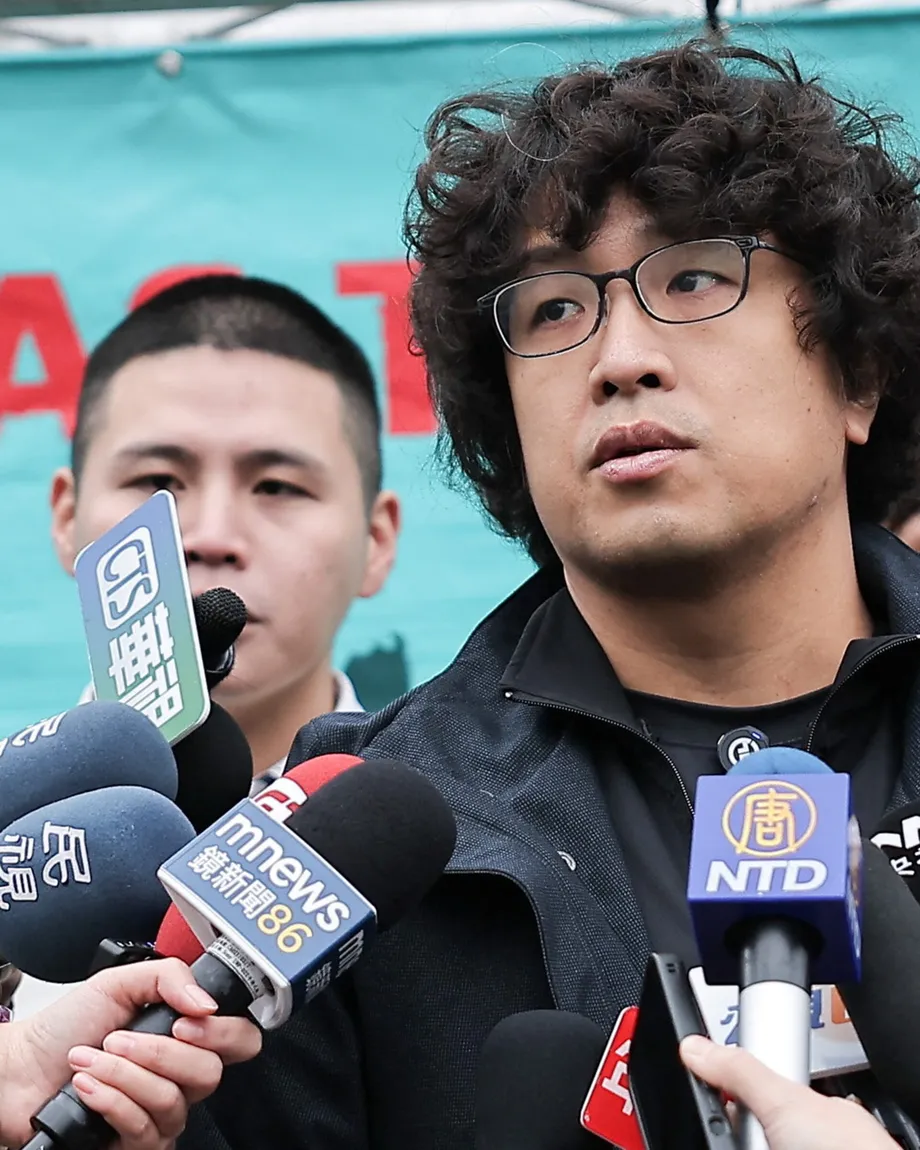
A large turnout brings both momentum and disruption
More than 2,000 vehicles reportedly followed Democratic Progressive Party Taipei mayoral candidate Puma Shen through Zhongshan and Datong districts on October 11, 2026, as his first Taipei Ocean Current campaign motorcade combined a large show of support with traffic complaints, a disputed campaign presence and five local policy proposals.
Contents
- A large turnout brings both momentum and disruption
- From the departure park to Baoan Temple
- What the turnout figures establish
- A traffic complaint draws a direct apology
- Support arrangements and reported safety problems
- An expelled councilor's convoy creates friction
- Five proposals target the two districts
- Aging homes and care closer to home
- Four debates proposed, arrangements still unsettled
- A symbolic return before the November vote
- Key Points
Shen's campaign aide Chou Hsuan relayed the vehicle figure shortly after 6 p.m., citing personnel handling traffic control. The candidate's official YouTube broadcast reportedly attracted more than 60,000 simultaneous viewers. At the destination, Dalongdong Baoan Temple, aerial footage showed crowds inside and around the temple, with attendance claimed to exceed 10,000.
Those figures describe different measures of participation, not a single verified total. Vehicles can carry more than one person, viewers need not be Taipei voters, and people watching online may also attend in person. The temple crowd estimate was not accompanied by a counting method.
The procession left at 5:30 p.m. and reached the temple at about 7 p.m., roughly half an hour behind schedule. During the journey, a student trying to reach Taipei Main Station complained of being trapped in traffic and fearing they would miss a 6:40 p.m. train to Hualien. Shen personally apologized on Threads and promised adjustments.
The evening also moved beyond campaign spectacle. Shen presented proposals on nighttime coordination, cultural routes, sports facilities, repairs to aging homes and care for older residents. Meanwhile, negotiations over televised debates with incumbent Kuomintang Mayor Chiang Wan-an were scheduled to continue on October 12, ahead of Taiwan's November 28 local elections.
From the departure park to Baoan Temple
Most accounts place the departure at the recreational sports park attached to the Dihua Sewage Treatment Plant, on Section 4 of Yanping North Road in Datong District. Supporters gathered before 5 p.m., with some arriving around 3 p.m. Crowds extended onto a nearby pedestrian bridge, while participants brought campaign ribbons, flags, gongs and drums.
Reports differ on the starting location. One identifies Chiang Wei-shui Memorial Park instead. The more detailed route descriptions name the sewage treatment plant's recreational park, but the discrepancy has not been resolved through a published official route record.
Shen rode at the front with legislator Wang Shih-chien, a deputy chair of his campaign headquarters. Taipei councilors Yen Juo-fang and Lin Liang-chun, along with council candidates Lai Chun-han and Lin Tzu-yang, also accompanied him.
The route included Changji Street, Chengde Road, Nanjing West Road, Liangzhou Street, Jinzhou Street, Jilin Road, Linsen North Road, Chongqing North Road and Jiuquan Street, ending near Baoan Temple on Hami Street. Supporters lined the roads, and some moved from sidewalks into the roadway to approach Shen.
The reported sequence shows how the afternoon gathering developed into an evening policy event:
- October 10: Shen and Chiang briefly discussed debates at Guangzhao Temple in Wanhua District.
- October 11, 5:30 p.m.: The first Ocean Current motorcade departed from Datong.
- About 6:30 p.m.: The originally scheduled arrival time at Baoan Temple.
- About 7 p.m.: Shen arrived, entered the temple to offer incense and moved toward the speaking venue about 20 minutes later.
- 8:30 p.m.: A later account places the presentation of his five district policy proposals at this time.
- October 12: Campaign representatives were scheduled to discuss televised debate arrangements.
- November 28: Taiwan's local elections were scheduled to take place.
What the turnout figures establish
The procession stretched for hundreds of meters. Accounts describe a wait of about 15 minutes between the front and rear passing a fixed point, while another says the entire convoy took about 15 minutes to clear the departure area. Neither observation gives an exact distance, because the vehicles repeatedly slowed.
The description of the 2,000 vehicles also varies. Chou's account referred to motorcycles and slow vehicles, while other reports described motorcycles alone or following vehicles more broadly. Cars, scooters and bicycles were all described as participating. The most cautious reading is that the campaign relayed a traffic control count exceeding 2,000, without a published breakdown.
The online response was substantial as well. Shen's late night Threads post received more than 30,000 likes in under half an hour, while a separate participant's video drew more than 10,000 likes. These are distinct measures of attention and should not be added to the crowd or livestream figures.
A resident surnamed Chen said they had voted for Chiang four years earlier but now intended to support Shen. That account illustrates one person's change of preference, not evidence of a wider shift among Taipei voters. The motorcade demonstrated enthusiasm among participants; it did not measure citywide voting intentions.
A traffic complaint draws a direct apology
The clearest account of disruption came from a student heading to Taipei Main Station to return to Hualien for study. In a Threads post, the student complained that neither of two traffic lanes was usable and said that, by 5:33 p.m., they had already spent 10 minutes at the same intersection.
The student feared missing a 6:40 p.m. train despite leaving an hour early for a journey that would normally take about 30 minutes without congestion. A separate description says the student was traveling by bus when it encountered the campaign traffic.
Shen, the DPP mayoral candidate, replied directly to the complaint. His apology, translated from Chinese, said:
I am very sorry for the inconvenience caused. I will ask the team to make adjustments and improvements.
The student later said they had arrived safely and thanked people for their concern. Supporters also apologized, and some offered to help cover the cost of changing the train ticket. The update established that the traveler reached their destination, but did not quantify how much time the motorcade added to the journey.
Shen's response acknowledged the disruption without announcing a specific remedy. No revised traffic plan, lane access arrangement or schedule for future motorcades was reported. That leaves a practical issue for the campaign: how to preserve participation while keeping streets usable for people who are not attending.
Support arrangements and reported safety problems
Before the event, Shen circulated instructions describing five support points along the route, where participants could collect flags and ribbons. The temple venue was not to distribute those items. Supplies, a medical station and medical volunteers were also planned, with reminders to drink water and seek assistance if unwell.
Entry to the speaking venue was scheduled to open at 5:30 p.m., with the queue beginning on Hami Street and admission through a single entrance opposite Baoan Temple. People holding reserved LINE places were directed to a separate designated check in location.
Despite those arrangements, reports described possible safety violations during the procession. Some participants were said to have ridden without properly wearing helmets, and firecrackers were set off as the convoy passed. Other accounts described supporters stepping into the road and the lead vehicle slowing to interact with crowds.
No injuries, enforcement findings or penalties were specified. The reported incidents should therefore be distinguished from confirmed legal violations. They nevertheless identify concrete matters for organizers to address alongside congestion: separation of pedestrians and vehicles, helmet use and control of firecrackers near a moving procession.
An expelled councilor's convoy creates friction
A separate controversy involved Taipei Councilor Chen Yi-chun. Reports said her team joined the rear of the procession with campaign flags, some bearing wording suggesting Shen's support, despite a request from his team to remove campaign vests.
Chen had reportedly been suspended by the DPP's disciplinary body following a first instance judgment sentencing her to seven years and 10 months in prison in a case involving assistant expense claims and bribery allegations. She was later expelled after pursuing reelection in violation of party rules.
The judgment's status matters: a first instance sentence should not be presented as a final judgment. No appeal outcome or later court decision was identified, and no court document was cited in the accounts of the motorcade dispute.
The DPP's Taipei branch had also reportedly sent a formal notice demanding removal of campaign displays containing the party emblem and images of Chen alongside Shen. Chen said supporters had put up the displays themselves. Some Shen supporters objected to her convoy joining the event, but no resolution during the procession was reported.
Participation in the motorcade does not, by itself, establish an endorsement. The reported request from Shen's team to remove campaign clothing points to a disagreement over how Chen's presence was presented to voters.
Five proposals target the two districts
At Baoan Temple, Shen linked his five proposals to the needs of Zhongshan and Datong residents. He said the districts together had 330,000 people, with 25 percent aged 65 or older. Applied to that total, the share represents approximately 82,500 older residents, although the population figures were presented by the candidate rather than linked to a published dataset.
Shen also said 35 percent of Datong's homes were more than 50 years old and women made up 54 percent of Zhongshan's population. Residents' concerns, he said, included insufficient rubbish bins, rats, secondhand smoke, declining commercial areas, public safety and aging buildings.
The first proposal would introduce a nighttime mayor or coordinator, create a discussion mechanism between commercial areas and neighborhoods, and conduct safety audits. The concept is a dedicated role for coordinating nighttime activity and its effects on nearby residents. Shen did not specify the position's powers, budget or appointment process.
The second would connect cultural destinations through walking routes and green transport. Shen named Chifeng Street, Dadaocheng, Yansan Night Market, Dalongdong, the Taipei Expo Park and Meiji Bridge. He argued that these places should operate as a connected network rather than isolated attractions, while pointing to rising rents and the departure of shops around Chifeng Street.
The third proposal was a Yuanshan sports center with space for basketball, football, badminton, volleyball, swimming, fitness, adapted sports and emerging activities. Shen contrasted unused Expo Park land with crowded facilities, but did not provide a construction budget, timetable or detailed site plan.
Aging homes and care closer to home
The fourth proposal would make Datong a demonstration area for a mobile service team helping residents repair older homes. Shen described a single contact point, proactive home visits and additional city funding, bringing central and local resources together instead of leaving residents to navigate separate programs.
Examples included partial exterior wall repairs, signs and water and electrical pipes. The focus was extending the usable life and improving the safety of existing homes, rather than waiting solely for larger redevelopment projects. Eligibility, subsidy levels and a rollout schedule were not specified.
The fifth proposal would strengthen community care locations, medical services delivered at home and a design center focused on making spaces easier for people with dementia to use. Shen framed these measures as ways to help older residents remain in familiar neighborhoods with practical support.
Together, the housing and care plans respond to the age profile Shen described. Their delivery would depend on details not yet announced, including staffing, coordination with existing services and how residents would qualify for assistance. The evening established the campaign's priorities, not a funded implementation program.
Four debates proposed, arrangements still unsettled
Before departing, Shen renewed his request for four televised debates. He argued that a single event could force candidates to cover seven or eight subjects too briefly, while separate debates could concentrate on one or two issues at a time and include questioning between the candidates.
He named transport and relocation of Songshan Airport as possible themes. The airport issue was an example of a debate topic, not an agreed debate agenda or a detailed relocation plan presented at this event.
Chiang said both campaigns had agreed in principle to TVBS organizing a debate or debates and had signed consent forms. He urged Shen's representatives to attend the October 12 coordination meeting and argued that actually holding debates mattered more than using their number as a campaign talking point.
The two candidates also gave different explanations of their brief exchange the previous evening. Shen said he had indicated four debates while Chiang held up one finger. Chiang's camp said the gesture referred to Monday's coordination meeting, rather than agreement on one debate. Shen confirmed his staff would attend.
The number of debates, their dates, subjects and questioning format had not been settled. Separately, when asked about former legislative speaker Yu Shyi-kun's comments that prompted discussion of Chiang's family background, Shen said the opponent's family was outside the scope of debate and that the campaign should focus on policies.
A symbolic return before the November vote
Baoan Temple carried personal campaign significance for Shen: he said it was the first stop where he announced his candidacy. In his late night Threads post, he described becoming emotional after seeing a placard calling for unity in Taipei, then laughing at supporters' chants. He also joked that attendance had exceeded two people after previously worrying nobody would come.
A participant who had moved north from Kaohsiung shared video of roadside supporters waving flags, cheering and jumping as the convoy passed. Online comments compared the atmosphere with the 2004 Hand in Hand rally and campaign scenes from Chen Shui-bian's era. Those comparisons express supporters' memories and reactions, not a measured historical ranking of crowd sizes.
Taiwan's November 28 elections were scheduled to choose 11,051 local officials across nine categories of office, including mayors, county magistrates, councilors and village or ward chiefs. For the Taipei contest, Shen's first motorcade produced visible enthusiasm and a more detailed district platform, while also exposing traffic, safety and campaign identification problems requiring concrete responses.
Key Points
- Shen's October 11 motorcade crossed Zhongshan and Datong before ending at Dalongdong Baoan Temple.
- A campaign aide cited a traffic control count exceeding 2,000 following vehicles; the vehicle breakdown was not published.
- The official YouTube livestream reportedly exceeded 60,000 simultaneous viewers.
- Shen apologized to a student delayed while trying to catch a train to Hualien. The student later reported arriving safely.
- Five proposals covered nighttime coordination, cultural routes, a Yuanshan sports center, repairs to older homes and community care.
- Reports described safety concerns and a dispute over expelled councilor Chen Yi-chun's campaign presence.
- Debate coordination was scheduled for October 12, with the number and format still undecided.
- Taiwan's local elections were scheduled for November 28, 2026.