Debt Fundraising Sparks a Sharp Selloff
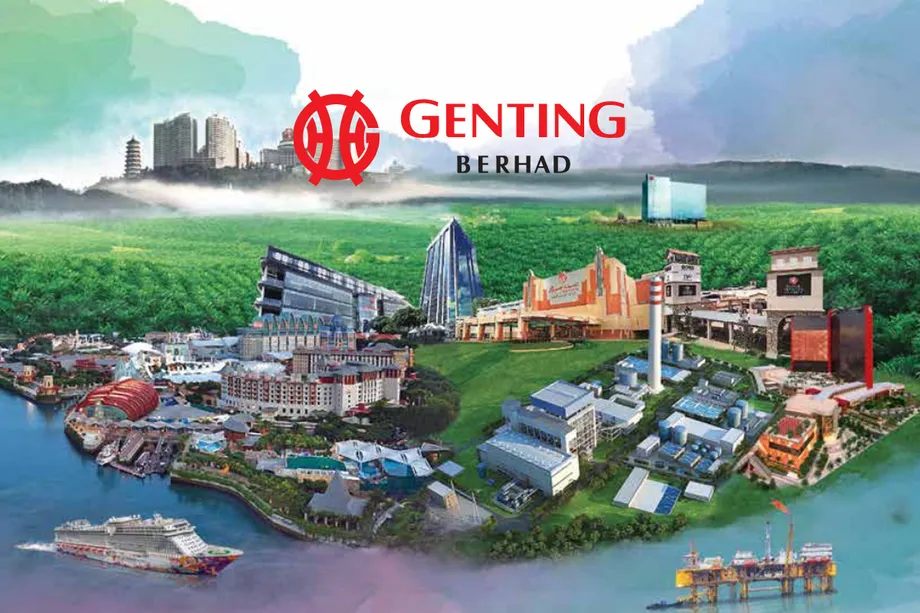
Genting Bhd shares plunged as much as 17.02% on Monday after the casino, leisure and hospitality group proposed a RM1.25 billion rights issue, with RM800 million earmarked to repay borrowings. The stock fell 32 sen to RM1.56, its lowest level since April 2007, as investors weighed the relief from lower debt against the prospect of diluted earnings and dividends per share.
Contents
- Debt Fundraising Sparks a Sharp Selloff
- Where the RM1.25 Billion Would Go
- How the Rights Issue Would Work
- Why Analysts Disagree on the Cost
- Borrowings Have Grown Faster Than the Proposed Repayment
- Profit Figures Require Careful Reading
- Major Shareholders Back Their Entitlements
- What Happens Before Completion
- Key Points
At 9.30am, Genting was trading at RM1.60, with nearly 16 million shares changing hands. More than RM1 billion was wiped from its market capitalisation in less than 30 minutes of morning trading. The fall triggered a suspension of intraday short selling in Genting shares for the rest of Monday, rather than a suspension of ordinary share trading.
The selling spread to subsidiary Genting Malaysia Bhd, whose shares dropped 12 sen, or 8%, to RM1.37. Genting's proposed cash call, described as its first rights issue, arrived after a steep decline in its share price and several credit rating downgrades that had raised concerns about the cost of financing its investment commitments.
The central tension is the size of the relief relative to the group's debt. Genting estimates that the repayment will save RM41.3 million in annual interest expenses. Yet the RM800 million repayment represents only about 1.8% of its RM45.25 billion in borrowings at the end of June 2026. The transaction would provide cash and strengthen equity, but would leave most of the borrowing burden in place.
Where the RM1.25 Billion Would Go
The proposed allocation divides the proceeds among debt repayment, working capital and the cost of carrying out the exercise. RM800 million, or 64% of the amount raised, would repay borrowings falling due within 12 months of completion. Another RM429.5 million would support working capital, while RM20.5 million would cover transaction expenses.
Those latter amounts represent approximately 34.4% and 1.6% of the proceeds respectively. An initial description put the balance after debt repayment toward working capital; the more detailed breakdown separates the exercise expenses from the money available for operations.
Genting calculated the expected RM41.3 million annual interest saving using its weighted average interest rate of 5.16% on short term borrowings as of June 30, 2026. Applying that rate to RM800 million produces approximately the stated saving. Interest rates across the group's borrowings ranged from 3.88% to 8.45% a year.
The saving is an annual estimate, not a guaranteed increase of the same amount in profit attributable to shareholders. Its eventual effect would depend on when debt is repaid and other factors, including taxes and changes elsewhere in the business. Working capital funding also serves a different purpose from debt repayment: it supplies cash for operating needs rather than directly reducing borrowings.
How the Rights Issue Would Work
Genting has proposed a renounceable rights issue, which gives existing shareholders an entitlement to buy new shares. Renounceable rights can generally be sold or transferred, allowing a shareholder who does not wish to subscribe to seek value from the entitlement instead. The detailed timetable and terms will determine how those choices operate.
The fundraising illustration uses a price of RM1.30 per new share. That is not the final subscription price. Genting intends to set the price at a discount of 25% to 30% to the theoretical ex rights price, calculated using the five day volume weighted average share price before the pricing date.
The theoretical ex rights price is an estimate of the share price after accounting for the new shares and the cash raised. It is not simply the market price before the announcement. Consequently, the planned discount should not be read as a promise that shareholders will buy at 25% to 30% below Friday's RM1.88 closing price.
At the illustrative RM1.30 price, raising RM1.25 billion would require approximately 961.5 million new shares. That calculation indicates the possible scale of the exercise, but it is not a confirmed issuance total or entitlement ratio. The final price and terms remain to be determined.
A shareholder who takes up a full proportional entitlement would generally preserve their percentage ownership, while committing additional money. Someone who does not subscribe would own a smaller percentage after new shares are issued. Selling the rights can provide compensation for their value, although the proceeds would depend on the market price of those rights.
Why Analysts Disagree on the Cost
Maybank Investment Bank downgraded Genting to sell, warning that the new shares could sharply dilute earnings and dividends per share. Its analysis pointed to limited interest savings and a reduction of about two percentage points in net gearing, a measure that compares debt after allowing for cash with equity.
The bank also warned that further fundraising, including private placements, could not be ruled out. A private placement involves issuing shares to selected investors and could create additional dilution. This was an analyst's assessment of a possible risk, not an announced Genting transaction.
CIMB Securities cautioned that selling pressure could continue. Its concern was that investors generally view rights issues negatively because they replace cheaper debt with more expensive equity. Equity does not carry contractual interest payments, but investors still expect a return for taking ownership risk.
Public Investment Bank reached a different assessment of the financing choice. It said the rights issue could be a cheaper way to raise capital and fund operating expenditure after credit downgrades increased Genting's borrowing costs. It nevertheless cut its target price by 35 sen to RM2.00, reflecting continued pressure on the stock.
The disagreement turns on the comparison being made. CIMB focused on the return shareholders expect from equity relative to debt. Public Investment Bank focused on the cost of securing fresh funds under Genting's current credit conditions. Both assessments can coexist: issuing shares can ease cash pressure while reducing the earnings claim attached to each existing share.
Borrowings Have Grown Faster Than the Proposed Repayment
Genting's borrowings stood at RM45.25 billion on June 30, 2026, comprising approximately RM9.68 billion in short term borrowings and RM35.58 billion in long term borrowings. Including lease liabilities, total debt reached RM47.55 billion, compared with RM40.50 billion a year earlier.
That is an increase of RM7.05 billion, or about 17.4%, in debt including leases. The proposed RM800 million repayment is equivalent to about 11.3% of that annual increase. It also amounts to approximately 8.3% of the reported short term borrowing balance, though the actual debt repaid will depend on maturities and the completion date.
The reported gearing ratio rose to 0.51 times from 0.43 times. The increase in borrowings was principally attributed to financing for Resorts World New York City's commercial casino licence and development expenditure. Public Investment Bank also pointed to substantial commitments involving Resorts World New York and Resorts World Sentosa.
Credit ratings add another constraint. In September, Fitch Ratings downgraded Genting to BBB-, its lowest investment grade rating, following earlier cuts by Moody's Ratings and S&P Global Ratings. A weaker rating can increase the interest lenders demand, making new borrowing or refinancing more expensive.
The rights issue would therefore address both debt maturities and operating cash needs. It would not, on the disclosed figures, remove the need to manage a much larger borrowing balance or the demands of ongoing developments.
Profit Figures Require Careful Reading
The cash call comes against a weaker earnings picture. Genting's reported net profit attributable to shareholders for the first half of 2026 was RM74 million, on revenue of RM14.41 billion. For the full year 2025, it recorded a net loss of RM11.6 million, compared with a net profit of RM883 million in 2024.
Annual revenue was almost unchanged, at RM27.71 billion in 2025 against RM27.72 billion in 2024. The contrast shows that broadly stable sales did not prevent a substantial deterioration in the final result. The figures do not establish how much of that deterioration arose from financing costs, operating performance or other charges.
Reports differ on the scale of the first half profit decline. One description gives a 70.2% fall, while another states a 174% decline to the same positive RM74 million figure. Those percentages cannot both describe a fall from a positive comparable profit to RM74 million on the same accounting basis. The reported profit amount is consistent, but the percentage change requires clarification.
For shareholders, the distinction between group earnings and earnings per share is also central. Issuing new shares increases the number among which attributable profit is divided. Interest savings may support earnings, but they must be weighed against that larger share count. Neither the proposed fundraising nor the savings estimate guarantees higher earnings per share.
Major Shareholders Back Their Entitlements
Kien Huat Realty Sdn Bhd, Kien Huat International Ltd and Datuk Indera Lim Keong Hui have undertaken to subscribe for their respective entitlements. Together, those commitments cover 45.1% of the proposed issue, equivalent to approximately RM563.8 million under the illustrative assumptions.
Kien Huat Realty, the private investment vehicle of Genting executive chairman Tan Sri Lim Kok Thay, owns 43.82% of Genting. Kien Huat International holds 1.25%, while Lim Keong Hui holds 0.03%. Their combined ownership corresponds to the portion covered by the subscription undertakings.
Genting intends the rights issue to be fully subscribed and plans underwriting for the remaining portion not covered by those undertakings. That portion represents approximately 54.9%, or RM686.2 million, of the proposed fundraising. Underwriting arrangements are expected to be in place before the issue price is fixed.
The commitments provide support for completing the cash call, but do not settle whether its terms will appeal to other shareholders. The exercise remains subject to regulatory and shareholder approvals, including an extraordinary general meeting. AmInvestment Bank Bhd is the principal adviser.
What Happens Before Completion
Genting expects to complete the exercise in the first quarter of 2027. No exact date for the shareholder meeting, final pricing or subscription deadline has been specified. The main milestones disclosed so far are:
- June 30, 2026: Borrowings stood at RM45.25 billion, while debt including leases reached RM47.55 billion.
- September: Fitch downgraded Genting to BBB-, following earlier rating cuts by Moody's and S&P.
- Friday, October 9: The fundraising proposal was disclosed. Genting shares closed at RM1.88, valuing the group at approximately RM7.29 billion.
- Monday after the announcement: Shares fell as low as RM1.56, and intraday short selling was suspended for the rest of the day.
- First quarter of 2027: Expected completion, subject to approvals and final transaction arrangements.
Before Monday's fall, Genting shares had already declined 36.9% for the year. The proposed RM1.25 billion cash call amounts to approximately 17.1% of Friday's RM7.29 billion market capitalisation, illustrating why the financing decision drew such a strong market response.
The analyst consensus remains mixed. Genting has four buy ratings, seven hold ratings and one sell rating, with an average target price of RM2.38 over 12 months across 12 analysts. Those targets are forecasts, not assurances of recovery. Maybank also flagged the possibility of lower dividends as Genting rebuilds its cash balance, though no dividend reduction was announced in the proposal.
Key Points
- Genting shares fell as much as 17.02% to RM1.56 after the proposed RM1.25 billion rights issue.
- RM800 million would repay debt, RM429.5 million would fund working capital and RM20.5 million would cover expenses.
- The estimated annual interest saving is RM41.3 million, against borrowings of RM45.25 billion at June 30, 2026.
- The illustrative subscription price is RM1.30. Final pricing and the entitlement ratio remain unsettled.
- Major shareholders have committed to 45.1% of the issue, with underwriting planned for the remainder.
- Analysts differ on the financing benefits, while warning about dilution and possible dividend pressure.
- Completion is expected in the first quarter of 2027, subject to regulatory and shareholder approvals.