A major terminal changes operator, not owner
DP World signed a 15-year agreement on 8 October 2026 to operate and modernise Bangladesh's New Mooring Container Terminal, an existing public facility with five jetties and 14 of Chittagong Port's 18 quayside gantry cranes. The deal promises about Tk600 crore in advance fees and more than Tk1,000 crore in investment during the first decade. It also faces worker opposition and unresolved questions about how the port authority's revenue will be calculated.
Contents
- A major terminal changes operator, not owner
- What Bangladesh retains under the concession
- The payment package needs careful separation
- Why the revenue percentage matters
- The volume guarantee is below recent throughput
- Faster cranes are only one part of the target
- Customs and inland transport can still delay cargo
- Businesses welcome speed, but question prices
- Worker assurances have not ended opposition
- How the agreement reached signing
- What would demonstrate a better return
- The Essentials
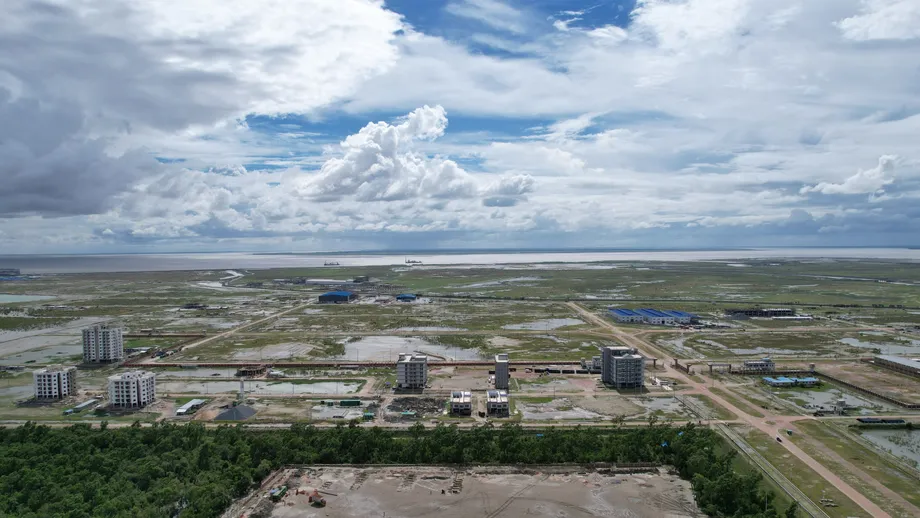
The concession covers the New Mooring Container Terminal (NCT) and its Overflow Container Yard. DP World's official concession announcement confirms that ownership remains with the Chittagong Port Authority (CPA), while the Dubai based company takes responsibility for operation and maintenance under a public and private partnership framework.
CPA Chairman Rear Admiral S. M. Moniruzzaman and DP World Executive Chairman Essa Kazim signed the agreement at Invest Bangladesh's premises in Agargaon, Dhaka. Shipping Minister Shaikh Rabiul Alam, Invest Bangladesh Chairman Ashik Chowdhury, DP World Group Chief Executive Officer Yuvraj Narayan and regional Chief Executive Officer Rizwan Soomar attended.
The distinction between ownership and operation is central to the dispute. The government says it is buying better terminal services without transferring sovereign authority. Opponents question the financial return, transparency and necessity of handing an already productive public asset to a foreign operator. The full agreement has not been published, leaving several assurances impossible for the public to check against the complete contractual wording.
What Bangladesh retains under the concession
NCT began operating in 2007 after construction costing approximately Tk2,000 crore. It is widely described as handling around 44% of Chattogram Port's container traffic. Until the transition, it has been operated by Chittagong Dry Dock Ltd, a company controlled by the Bangladesh Navy. That company took over on 7 July 2025, after Saif Powertec's contract expired the previous day.
Under the new arrangement, CPA retains the terminal, land and core infrastructure, along with regulatory oversight. Customs, Immigration, the Navy, Coast Guard and other security functions remain with the relevant Bangladeshi agencies. DP World's authority concerns terminal operation and maintenance, not ownership of the port or control of those state functions.
The initial term can be extended by another 15 years only through mutual agreement and subject to specified conditions. Renewal is not automatic. If agreement cannot be reached, CPA can withdraw from extension negotiations.
Commerce Minister Khandaker Abdul Muktadir defended the arrangement in Sylhet on 9 October, rejecting claims that it amounted to selling the country. He said Bangladesh could renew the agreement or let it end when the fixed term expires. Invest Bangladesh also says the investment requires no borrowing by Bangladesh. That addresses financing concerns, but does not by itself establish whether the concession provides the best financial return.
The payment package needs careful separation
DP World is expected to pay CPA approximately Tk600 crore in advance. A quarter is payable upon signing and the remaining three quarters before operations begin. On that figure, the instalments would be about Tk150 crore and Tk450 crore. These are contractual payment amounts, not confirmation that either instalment has already been received.
The operator has also committed to investing more than Tk1,000 crore during the first 10 years. The broader package is described as approximately $150 million in investment and other commitments, including about $90 million for equipment, technology and upgrades.
Descriptions of the package differ. Some accounts present $150 million as an investment commitment during the concession, while others say it includes a $50 million payment to the port authority. The latter presentation separates an advance payment from spending on physical improvements. Without a published investment schedule and accounting breakdown, the figures should not be added together as if they were independent commitments.
CPA is also due a fixed annual fee of about Tk10 crore. The government says DP World will bear operating, investment and maintenance risks, including equipment repair costs. Reported clauses cover minimum service standards, environmental and social obligations, repairs, asset ownership, currency exchange risks and CPA intervention rights. The detailed allocation of those risks remains undisclosed.
Why the revenue percentage matters
Shipping Minister Rabiul Alam has said CPA will receive 67% of revenue generated for each TEU handled. A TEU is a unit equal to one standard container measuring 20 feet in length; a container measuring 40 feet generally counts as two TEUs.
However, accounts of Invest Bangladesh's explanation describe a range of 40% to 67%, depending on average terminal revenue per TEU, rather than a single fixed rate. The thresholds determining which percentage applies have not been disclosed. Nor is there a public explanation of every covered revenue stream or permitted deduction.
At the minister's estimated revenue of $140 to $150 per TEU, a 67% share would give CPA $93.80 to $100.50 per TEU. Separate CPA figures for December 2025 put NCT's gross revenue at $161.82 per TEU and net revenue after costs at $104.10. Applying 67% to that gross figure produces $108.42.
That calculation is useful, but it is not proof that CPA's net earnings would increase. A share of gross revenue under a new contract cannot be compared directly with historical net earnings without accounting for which costs move to DP World, which remain with CPA and which revenue categories enter the formula.
CPA reportedly earned Tk6,629 crore in FY2025-26 while handling 3.52 million TEUs. Applying the commonly cited 44% NCT traffic share gives an estimated Tk2,917 crore. This is an allocation based on a port average, not a reported terminal revenue figure, and cannot establish how much CPA would gain or lose under the concession.
The volume guarantee is below recent throughput
The agreement reportedly sets a minimum annual handling guarantee of 1.23 million TEUs. That floor can fall to 1 million TEUs once a new terminal becomes operational. The provision is intended to protect CPA's earnings, although the complete payment mechanism for a volume shortfall has not been published.
NCT's FY2025-26 throughput is generally reported as 1.385 million TEUs. Against that figure, the initial guarantee is 155,000 TEUs lower, or approximately 11.2% below the previous year's traffic. The possible 1 million TEU floor would be about 27.8% below that throughput. The guarantee therefore protects a minimum level rather than requiring growth beyond recent performance.
Reports differ on the baseline: another account puts the previous year's handling at 1.375 million TEUs, a difference of 10,000 TEUs. There is also a mismatch between the figures describing NCT's share. If NCT handled 1.385 million TEUs and the whole port handled 3.52 million in the same period and on the same basis, NCT's share would be approximately 39.3%, not 44%.
Different reporting periods or counting methods might explain the discrepancy, but no reconciliation has been published. A verified baseline matters because both the financial guarantees and future claims of productivity improvement depend on it.
Faster cranes are only one part of the target
DP World's official development plan includes civil works, equipment upgrades, digital systems, berth planning, yard management, equipment use, preventive maintenance, safety and sustainability. Expected changes include modern scanning, upgraded or replacement cranes, automated gates and less reliance on paper documents.
The government targets truck turnaround of about 90 minutes, better crane productivity from the second year of operations and no vessel waiting time at NCT. These are different measures. Truck turnaround concerns a vehicle's terminal visit; vessel waiting is time before berthing; vessel turnaround covers a broader stay. Container dwell time measures how long cargo remains at the facility.
Reports citing the World Bank and S&P Global Market Intelligence's 2025 Container Port Performance Index place Chattogram 364th among 400 ports. Other cited operating figures put average container dwell at 9.4 days and ship stay at 2.53 days. Those figures describe wider port performance and should not automatically be treated as NCT specific measurements.
Business accounts give different crane baselines. One compares 22 containers per hour at Chittagong with more than 35 across DP World's operations. Mohiuddin Chowdhury, a Bangladesh Garment Manufacturers and Exporters Association director and Clifton Group managing director, puts current NCT handling at 28 to 30 containers per hour and expects it to exceed 40.
Mohiuddin also says vessel turnaround has already fallen from five or six days to about two, with a possible further reduction to one day. Those differences underline the need to document starting conditions before handover. The government's reported penalty mechanism applies when contractual targets remain unmet for three consecutive months, but detailed thresholds and penalty amounts are not public.
Customs and inland transport can still delay cargo
A more efficient terminal cannot independently eliminate delays elsewhere in the cargo journey. The National Board of Revenue's 2022 Time Release Study is cited as finding that goods clearance at Chittagong Customs House took an average of 11 days and six hours. That is a historical customs measure, not the same indicator or period as the reported 9.4 day container dwell figure.
Ruhul Amin Shikder Biplob, secretary general of the Bangladesh Inland Container Depots Association, says 18 depots outside the port handle all export cargo and 64 categories of imports. He points to customs procedures and the practice of opening containers inside the port for delivery as local operating conditions that require attention alongside terminal equipment.
Former CPA member for administration and planning Md Jafar Alam says about 70% of containers are bound for Dhaka, while inland corridors and railway capacity are constrained. He also notes that containers receive four days of free storage. These factors can influence cargo removal even when unloading becomes faster.
Invest Bangladesh estimates annual economic losses from port inefficiency at around Tk3,000 crore. Another account gives approximately Tk10 crore daily, equivalent to Tk3,650 crore over 365 days, so the estimates are not identical. The agency also cites World Bank research suggesting that reducing dwell time by one day could raise exports by up to 7.4%. That is a cited estimate, not a guaranteed result from this concession.
Businesses welcome speed, but question prices
Business leaders broadly support better service, while differing on whether the agreement will reduce total costs. Dhaka Chamber President Taskin Ahmed expects international operating standards, automation, worker training and lower demurrage, the charges associated with delays beyond agreed time allowances.
Bangladesh Knitwear Manufacturers and Exporters Association President Mohammad Hatem welcomes the agreement and urges opponents to bring substantiated concerns to the government. BGMEA Senior Vice President Inamul Haq Khan makes support conditional on operations reaching international standards. Former Chittagong Chamber director Mahfuzul Haque Shah believes DP World's presence could reassure foreign investors.
Their support comes with a pricing qualification. Bangladesh Chamber of Industries President Anwar-ul Alam Chowdhury Parvez questions how business costs will fall if port charges rise by 41%. That increase is raised in his criticism, but the public concession details do not establish which charges it covers or whether it results from this agreement.
Chittagong Chamber President Mohammad Amirul Haque likewise supports improved efficiency while warning against higher business costs. He also says business representatives were not informed of the contract terms and calls for consultation on major agreements. Faster handling can reduce delay costs, but the benefit to importers and exporters depends on service prices as well as speed.
Worker assurances have not ended opposition
The government says existing workers will retain their jobs, wages and benefits, with opportunities for training and career development. Commerce Minister Muktadir goes further, saying improved efficiency should increase their pay and benefits. DP World's official announcement promises workforce and skills development, though it does not publish detailed employment protections.
Labour groups continue to demand cancellation. Humayun Kabir of the Port Protection Movement Council argues that local workers could be trained to run the terminal and raises concerns about commissions paid abroad. Opponents also question why an established, profitable facility requires a foreign operator rather than further investment under domestic management.
The dispute follows earlier strikes and demonstrations, including a reported nine day port shutdown led by the Jatiyatabadi Sramik Dal and other organisations. On 10 October, the alliance against imperialism and war held a rally outside Ashwini Kumar Hall in Barishal, chaired by local Communist Party President Mizanur Rahman Selim.
Organisers alleged that police attacked an 8 October protest outside Invest Bangladesh in Dhaka, injuring about 30 people. They named Socialist Party leader Bazlur Rashid Firoz, Communist Party President Sajjad Zahir Chandan and physician and Socialist Party leader Manisha Chakraborty among those injured. These are the organisers' allegations; the accounts do not establish a police response or investigation finding.
At a separate 10 October meeting chaired by labour leader Tapan Dutta, the Port Protection Committee called for a mass hunger strike on 12 October outside the port's One Stop Service building. Its demands include publication of the full terms and an independent financial and technical assessment. The committee says it is not opposed to technology or foreign investment, but wants revenue, worker rights and security protected.
How the agreement reached signing
The appointment developed across several administrations. Its framework includes the PPP Act 2015, a government to government policy adopted in 2017 and amendments to the law in 2019. DP World's official announcement says the partnership builds on a 2019 memorandum between the Dubai government and Bangladesh's PPP Authority.
The principal reported milestones are:
- 23 March 2023: Approval in principle for an international private operator.
- 20 October 2025: Approval of the transaction structure.
- 8 and 25 January 2026: Tender issued and bids submitted, respectively.
- 8 February 2026: The interim government reportedly suspended the initiative amid opposition.
- 4 June 2026: The new government directed CPA to continue discussions with DP World.
- 6 August 2026: Negotiations concluded.
- 16 September and 1 October 2026: CPA Board and Cabinet Committee approvals.
- 8 October 2026: The concession was signed in Dhaka.
Reports also differ in describing the transition ahead. Shipping Minister Rabiul Alam says DP World will start work within six months and reach full operations within two years. Another account expects it to assume terminal responsibility within six months after administrative procedures. Those descriptions may refer to different stages, rather than a single operational launch.
Counting from signing gives approximate milestones of April 2027 and October 2028. No exact handover date or detailed transition schedule has been publicly established.
What would demonstrate a better return
CPA will retain monitoring and audit rights, with weekly and monthly reports covering containers, vessels and revenue. CCTV surveillance will remain. The government says commercially sensitive clauses will stay confidential because disclosure could weaken future bargaining, while principal public interest terms have been released.
Ahamedul Karim Chowdhury, a former head of Kamalapur Inland Container Depot and Pangaon Inland Container Terminal, argues for a documented baseline and a public quarterly dashboard covering throughput, turnaround, dwell time, equipment availability, safety and investment. These are recommendations, not confirmed disclosure obligations.
Such reporting would help distinguish genuine operating gains from changes in trade volumes or new infrastructure. Investment delivery, worker retention, tariff changes and the condition of assets returned after 15 years are also necessary measures. Reported termination, compensation, dispute resolution and handover clauses exist, but their detailed remedies remain unknown.
Invest Bangladesh Chairman Ashik Chowdhury stated the intended service outcome in DP World's announcement:
We want faster operations, stronger connectivity and higher standards at one of our most important trade gateways.
DP World says its network includes more than 60 ports and terminals handling nearly 10% of global container traffic. Other accounts describe around 80 terminals in nearly 70 countries, or operations in more than 40 countries, without reconciling the definitions. Its experience is substantial, but comparisons are not forecasts: a cited $100 million Manila investment raised annual capacity from 1.45 million to nearly 2 million TEUs, approximately 38%.
The company also sees possible investment of up to $1 billion in Bay Terminal and related logistics projects, subject to government priorities. That is separate from the signed NCT commitment. Bangladesh's immediate test is whether this existing terminal becomes faster and more reliable while delivering verifiable public earnings and protecting workers.
The Essentials
- CPA and DP World signed a 15-year NCT concession on 8 October 2026; CPA retains ownership.
- The reported package includes approximately Tk600 crore in advance fees and more than Tk1,000 crore in investment during the first 10 years.
- Revenue accounts differ between a fixed 67% CPA share and a variable 40% to 67% range.
- The 1.23 million TEU annual guarantee is below reported FY2025-26 throughput of 1.385 million TEUs.
- Targets include faster truck handling, improved crane productivity and penalties for three consecutive months of missed contractual targets.
- Workers continue to oppose the deal; a mass hunger strike was announced for 12 October.
- The full agreement, precise revenue formula and exact handover date remain unpublished.