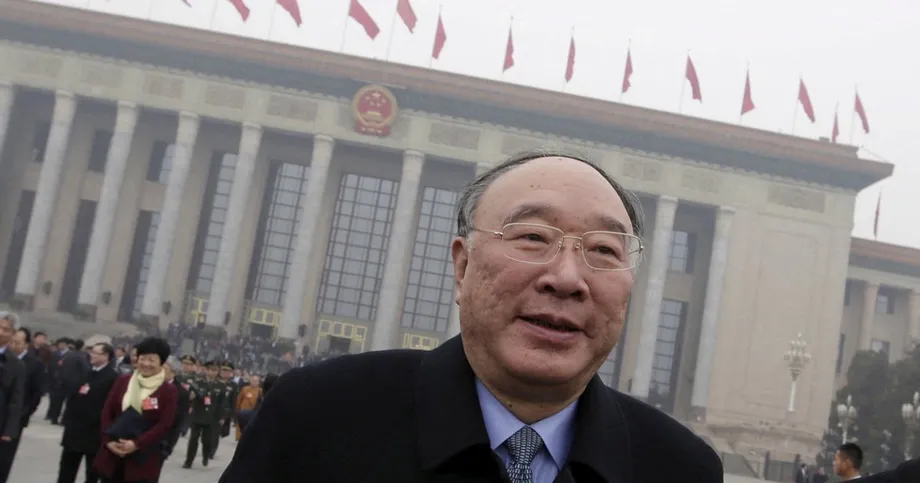
October 13 announcement puts a prominent economic adviser under scrutiny
Huang Qifan, the former Chongqing mayor who remained in office after the downfall of Communist Party chief Bo Xilai, is under investigation for suspected serious violations of Party discipline and the law, Chinese authorities announced on October 13. Huang, 74, stepped down as mayor in December 2016 but continued to appear publicly as an economic adviser and speaker.
Contents
- October 13 announcement puts a prominent economic adviser under scrutiny
- What the disciplinary announcement establishes
- From a Shanghai factory to Chongqing's mayoralty
- The Bo Xilai crisis that Huang survived
- A public economic role after leaving office
- The cancelled forum and conflicting organizer details
- A separate think tank case, with no confirmed connection
- The timeline and what happens next
- What to Know
The Central Commission for Discipline Inspection and the National Supervisory Commission are conducting the disciplinary review and supervisory investigation. Their announcement identifies Huang by his former positions as deputy secretary of the Communist Party's Chongqing Municipal Committee and mayor of the southwestern municipality. It does not specify the alleged misconduct, when it occurred or which positions it concerns.
The announcement followed reports that a forum scheduled for October 26 in Hangzhou, where Huang was to be the principal speaker, had been cancelled. The event had promoted him through academic and policy advisory titles rather than his former government office. No official explanation connecting the cancellation to the investigation has been disclosed.
The case brings renewed attention to a politician known for managing Chongqing's economy and surviving one of China's most consequential political scandals. His continued service after Bo's removal in 2012 distinguished his career from those of several other senior figures caught up in that episode.
For now, the confirmed development is an investigation, not a conviction. The authorities have disclosed no detailed allegations, court proceedings or timetable for a decision. Huang could not be reached for comment, and it was unclear whether he had been allowed to retain a lawyer.
What the disciplinary announcement establishes
The announcement uses the formula of suspected serious violations of discipline and law. This wording commonly appears in investigations involving alleged corruption, but it does not identify a particular offense. It should not be read as a finding that Huang accepted bribes, misused public funds or committed any other specific act.
The two bodies named in the announcement address related but distinct matters. Party discipline concerns the rules governing Communist Party members. Supervisory investigations concern suspected misconduct or violations of law involving public responsibilities. Naming both processes indicates the scope of the review, without establishing its eventual outcome.
Several basic facts remain undisclosed: whether the allegations relate to Huang's years in Shanghai, his Chongqing administration, his subsequent parliamentary service or his later advisory activities. The announcement also gives no information about the sums, transactions or other people that might be involved.
From a Shanghai factory to Chongqing's mayoralty
Huang was born in May 1952 in Zhuji, Zhejiang province. His working life began in 1968 at the Shanghai Coking Plant, where he started as a worker in a coke oven workshop and later became an engineer. In 1983, he moved into Shanghai's municipal administration and began working on economic affairs.
His Shanghai positions included deputy secretary general of the municipal Party committee and deputy secretary general of the municipal government. He also served as director of the Party committee's research office. His published biography lists a master's degree in business administration and a research qualification.
Huang moved to Chongqing in 2001 as a deputy mayor. In 2010, he became mayor and deputy secretary of the municipal Party committee, placing him at the center of the city's government during Bo Xilai's tenure as Party chief.
That progression helps explain his reputation as an economic technocrat, a public official associated with technical and policy expertise. His work covered industrial development, investment, banking, property and municipal finances. His departure from the mayoralty in December 2016 ended roughly six years in that office and about 15 years in Chongqing's administration.
The Bo Xilai crisis that Huang survived
The defining political disruption of Huang's mayoralty began in February 2012, when Wang Lijun, Chongqing's deputy mayor and recently displaced police chief, entered the United States consulate in Chengdu. Huang went to the consulate to persuade Wang to leave. The episode preceded investigations involving Wang, Bo and Bo's wife, Gu Kailai.
Gu was convicted in August 2012 of murdering British businessman Neil Heywood and received a death sentence suspended for two years. Wang was sentenced the following month to 15 years in prison for offenses including abuse of power and taking bribes. In September 2013, Bo received a life sentence for bribery, embezzlement and abuse of power.
Huang had been closely associated with Bo, overseeing economic work while Bo led the municipality's Party organization. Huang once described their relationship as being like "fish and water". After Bo's removal, however, Huang publicly supported the central leadership's decision and remained mayor.
Speaking in 2013 as Chongqing's mayor, Huang repudiated aspects of his former superior's record. He said Bo's legacy had been "banished" and described projects associated with him in these terms:
vanity projects
Huang said those projects had "tired the people and drained money" and would not be allowed to happen again. In his government work report that year, he also described efforts to remove the serious effects of the Bo and Wang cases while maintaining stability and economic development.
The present announcement does not say Huang's investigation is connected to that earlier scandal. His former association with Bo explains the attention surrounding the case, but it does not establish the subject of the current inquiry.
A public economic role after leaving office
Huang became a deputy chairperson of the Financial and Economic Affairs Committee of the 12th National People's Congress in 2017 and left that position in 2018. He subsequently continued in academic, advisory and policy discussion roles, speaking about finance, property, industrial policy and technology.
His later affiliations include academic adviser to the China Finance 40 Forum and executive vice chairman of the academic committee of the China Institute for Innovation and Development Strategy. Promotional information for the cancelled Hangzhou event also identified him as a distinguished professor at Fudan University and a vice chairman of the China Center for International Economic Exchanges.
Huang's public arguments included warnings against excessive property speculation and borrowing. He also advocated stronger legal enforcement and investor protection alongside the opening of capital markets, as well as more developed channels for equity financing. Equity financing means raising money by selling ownership shares rather than taking on debt.
Descriptions of Huang as having been retired for about 10 years refer broadly to the period since he left the mayoralty. They do not mean he had withdrawn from public activity: his parliamentary appointment followed his mayoral departure, and his speaking engagements continued afterward.
The cancelled forum and conflicting organizer details
The Hangzhou appearance was scheduled for October 26 at a hotel, with Huang invited as the main speaker. The forum's title concerned using new productive forces to support better business development in Hangzhou. Reports say the event was cancelled with a notice giving no specific reason.
Reports differ over the organizing bank. One identifies Bank of Hangzhou as the host. A more detailed account names the Hangzhou branch of Bank of Ningbo and gives the forum's full Chinese title. The discrepancy has not been resolved by a disclosed statement from the organizer.
The timing matters because news of the cancellation circulated before the authorities publicly announced Huang's investigation. It does not, by itself, establish why the forum was called off or when organizers learned of the inquiry. No replacement date or rescheduled appearance has been announced.
The event's promotional biography also shows how Huang was being presented to business audiences: as an academic and policy adviser with continuing authority on economic questions, rather than simply as a former mayor.
A separate think tank case, with no confirmed connection
Attention has also turned to the China Center for International Economic Exchanges because the Hangzhou forum identified Huang as one of its vice chairmen. Reports describe the center's chairman, Bi Jingquan, as having come under investigation in May of the preceding year and subsequently received a 14 year prison sentence. The reported offenses included accepting bribes during his leadership of the center.
The same account says the center's supervising institution changed in January from the National Development and Reform Commission to the Chinese Academy of Social Sciences, followed by an internal reorganization.
These developments concern an institution with which Huang was publicly associated, but the disciplinary announcement does not link his investigation to Bi's case. Institutional affiliation alone is not evidence of involvement in another person's offenses. There is no disclosed allegation that Huang participated in the transactions underlying that conviction.
The official description of Huang remains limited to his former Chongqing positions. Whether investigators are examining his later work at the center, or any other advisory organization, has not been stated.
The timeline and what happens next
Huang's career and the events surrounding the announcement span several decades. The principal dates distinguish his government service from the later public activities that continued after he left the mayoralty:
- May 1952: Huang is born in Zhuji, Zhejiang.
- 1968: He begins work at the Shanghai Coking Plant.
- 1983: He moves into Shanghai's municipal administration.
- 2001: He transfers to Chongqing as a deputy mayor.
- 2010: He becomes Chongqing mayor and deputy secretary of the municipal Party committee.
- February 2012: Wang Lijun enters the United States consulate in Chengdu; Huang goes there to persuade him to leave.
- September 2013: Bo Xilai is sentenced to life in prison. Huang remains mayor.
- December 2016: Huang leaves the mayoralty.
- 2017 to 2018: He serves as a deputy chairperson of the National People's Congress Financial and Economic Affairs Committee.
- October 13: Authorities announce Huang's disciplinary review and supervisory investigation.
- October 26: His scheduled Hangzhou forum appearance is cancelled.
No hearing date, charging decision or deadline for completing the investigation has been announced. The next substantive development would be an official account specifying the findings or the action taken against him. Until then, the case remains an inquiry with its alleged conduct undisclosed.
What to Know
- Former Chongqing mayor Huang Qifan, 74, is undergoing disciplinary review and supervisory investigation, authorities announced on October 13.
- The announcement alleges serious violations of Party discipline and law but identifies no specific offense.
- Huang remained mayor after Bo Xilai's 2012 removal and left the office in December 2016.
- A Hangzhou forum scheduled for October 26, where Huang was to speak, was cancelled without a detailed explanation.
- Reports disagree over which bank organized the forum.
- No official connection has been established between Huang's investigation and either Bo's scandal or the separate case involving Bi Jingquan.
- No court date or investigation timetable has been disclosed, and Huang's access to a lawyer was unclear.