New funding meets unresolved arms decisions
Taiwan approved a $24.8 billion arms procurement budget in May 2026, but its legislature had still not passed an annual defense budget by June 18. In Washington, Congress provided $1 billion for the Taiwan Security Cooperation Initiative and $300 million in military financing grants for fiscal year 2026, while a separate planned $14 billion arms sales package remained under review.
Contents
- New funding meets unresolved arms decisions
- Taiwan's budget dispute is about scope and oversight
- American aid and arms sales are different commitments
- A $14 billion package has competing official descriptions
- How the decisions unfolded
- Delivery delays complicate the deterrence timetable
- The 2027 milestone is not an invasion date
- Pressure below warfare shapes Taiwan's weapons choices
- Readiness depends on people and essential services
- The legal promise stops short of guaranteed intervention
- Key Points
Those decisions sit at the center of a difficult policy problem: how to strengthen Taiwan's defenses against China without setting off the conflict that the assistance is intended to prevent. The Congressional Research Service's Taiwan defense report, updated June 18, 2026, describes growing Chinese military pressure alongside disputes over Taiwan's spending, weapons choices and the extent of possible American intervention.
The stakes extend beyond an invasion. China's People's Liberation Army, or PLA, conducts frequent patrols, exercises, cyber operations and other activities intended to pressure Taiwan without open warfare. These operations impose costs on Taiwan's forces while testing the resilience of its infrastructure and society.
Taiwan is a democracy of 23.3 million people that formally calls itself the Republic of China. The People's Republic of China claims the island but has never controlled it. Beijing says it prefers peaceful unification while reserving the right to use force.
The latest CRS assessment does not present an attack as inevitable. It distinguishes military capability from political intent and describes several possible campaigns, from missile strikes and blockades to an amphibious invasion. That distinction matters when interpreting both China's military preparations and the timetable for delivering American weapons.
Taiwan's budget dispute is about scope and oversight
Taiwan's defense budget increased by around 7.5% between 2024 and 2025. President Lai Ching-te has said he intends to raise defense spending to around 3.3% of gross domestic product in 2026. An earlier reported plan put that year's spending at approximately $31 billion, but a spending intention is different from an enacted annual budget.
The legislature's May decision approved $24.8 billion over eight years for arms purchases from the United States. That amount was 38% below the executive's proposal, which also included domestic weapons development and procurement. Based on the rounded figures, the approved budget represents 62% of a proposal worth approximately $40 billion, leaving a difference of roughly $15.2 billion.
Both leading political parties have expressed support for greater defense investment. Their dispute concerns what should be funded through the special budget and what should go through the annual budget. Opposition lawmakers argued that domestic development and procurement should receive the greater scrutiny attached to annual appropriations.
Reports describe opposition proposals to place the difference in the annual defense budget. CRS establishes that lawmakers wanted domestic spending handled through that process, but it does not establish that the full difference had been restored. As of June 18, the annual budget remained unpassed. Taiwan's rules automatically default funding to the previous year's budget when a new annual budget is not approved.
American aid and arms sales are different commitments
The U.S. funding figures describe several distinct channels, not a single pool of weapons already delivered. Foreign Military Sales, or FMS, generally involve Taiwan buying American equipment through the U.S. government. Foreign Military Financing, or FMF, provides grants or loans that can help pay for those purchases. Presidential Drawdown Authority permits transfers directly from existing U.S. defense stocks.
The National Defense Authorization Act for Fiscal Year 2026, Public Law 119-60, authorized $1 billion for the Taiwan Security Cooperation Initiative. The Consolidated Appropriations Act, 2026, Public Law 119-75, then appropriated that money and provided another $300 million in FMF grants for Taiwan. Authorization establishes permission for a program; appropriation supplies funding.
The distinction also applies to earlier legislation. CRS's Taiwan congressional defense report, updated May 10, 2024, explains that the Taiwan Enhanced Resilience Act authorized up to $2 billion annually in FMF grants and up to $2 billion annually in direct loans and loan guarantees through fiscal year 2027. Those ceilings did not mean Congress supplied the full amounts each year.
The 2024 appropriations law made at least $300 million in FMF available for Taiwan. A separate emergency law provided $2 billion in FMF for the broader Indo-Pacific region, of which Taiwan could be a recipient, rather than assigning the entire sum to Taiwan. It also supplied $1.9 billion to replace U.S. stocks transferred through drawdown authority and reimburse associated services, including certain assistance to countries supporting Taiwan at Washington's request.
By June 2026, the executive branch had announced three drawdown packages for Taiwan totaling $1.5 billion. That total describes announced assistance, not a verified inventory of equipment received and ready for use.
A $14 billion package has competing official descriptions
The State Department has notified Congress of more than $39 billion in potential FMS to Taiwan since 2015. Eight notifications on December 17, 2025, totaled $11.1 billion, the largest such group for Taiwan to date. Notification is a stage in the sales process, not confirmation that equipment has arrived.
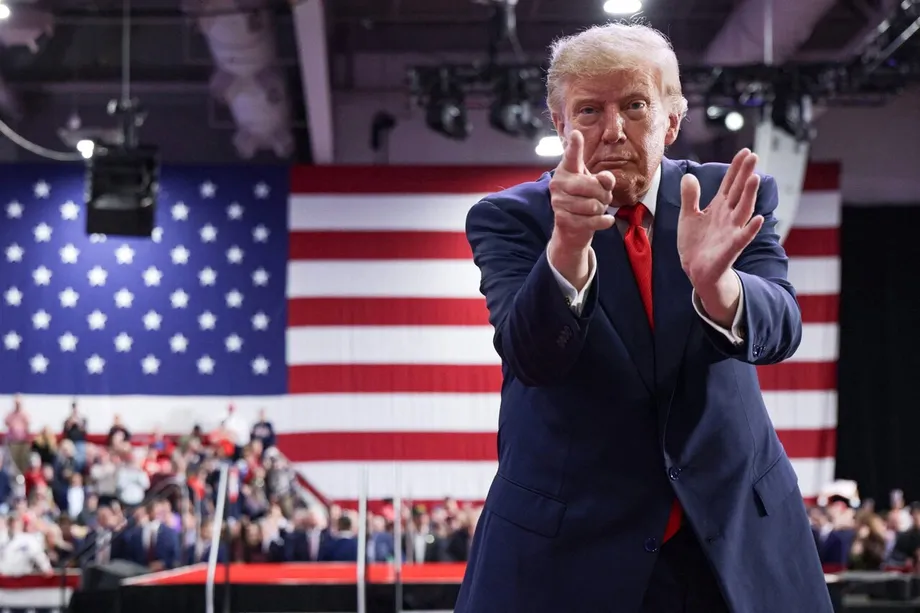
A further planned $14 billion package became a focus ahead of President Donald Trump's May 14 and 15, 2026, summit with Chinese leader Xi Jinping in Beijing. Eight U.S. senators urged Trump to formally notify the sales, saying Congress had already given preliminary approval.
Trump said during and immediately after the summit that he had discussed the potential sales with Xi and was holding them in abeyance. Describing the role of the sales in negotiations, the president said:
a very good negotiating chip for us, frankly.
Other administration officials subsequently gave different descriptions. Acting Secretary of the Navy Hung Cao told Senate appropriators on May 21 that the United States was pausing FMS to Taiwan to preserve munitions needed for Operation Epic Fury. Secretary of State Marco Rubio told Senate appropriators on June 3 that the potential sales were not paused but were under review.
These statements leave uncertainty about the package's status and the reasons governing its timing. The June 18 CRS update gives no final decision or date for formal notification.
How the decisions unfolded
The sequence shows that legislative support, sales notifications and executive decisions have moved on separate tracks. Taiwan's budget approval did not automatically settle Washington's decision on the next package.
- Late 2022: The Taiwan Enhanced Resilience Act opened new military financing and drawdown channels for Taiwan.
- July 2023: The Biden administration notified Congress of an intended $345 million drawdown transfer.
- 2024: Taiwan extended compulsory military service for males from four months to one year, while U.S. legislation funded additional assistance channels.
- December 17, 2025: The State Department issued eight Taiwan arms sales notifications totaling $11.1 billion.
- May 2026: Taiwan's legislature approved the $24.8 billion special procurement budget.
- May 14 and 15, 2026: Trump and Xi discussed potential Taiwan arms sales during their Beijing summit.
- May 21 and June 3, 2026: Cao and Rubio offered different descriptions of whether sales were paused or under review.
- June 18, 2026: CRS reported that Taiwan's annual defense budget remained unpassed.
The next steps are therefore separate: resolving Taiwan's annual allocations, deciding the planned U.S. sales package and converting announced support into equipment and trained units. No deadlines for those decisions are specified in the June 18 report.
Delivery delays complicate the deterrence timetable
Taiwan reportedly awaited more than $20 billion in U.S. weapons deliveries as of August 2024. That is a historical backlog estimate, not a measurement of the backlog in June 2026. Reported average intervals between purchase and delivery ranged from two to five years.
The 2024 account listed 66 newer F-16 fighters expected by 2026, alongside more than 140 F-16s already operated by Taiwan. It also described outstanding purchases of more than 100 Abrams tanks, 11 HIMARS rocket systems, 100 Harpoon missile systems, 250 Stinger missile systems, several hundred Javelin missiles and four Reaper drones. Those figures should not be treated as a current delivery inventory.
The earlier CRS report identifies delays and other obstacles in the FMS process as congressional concerns. It also explains that Russia's war in Ukraine demonstrated how quickly conflict can consume American supplied equipment. Cao's May 2026 testimony adds a separate, current concern about competing U.S. munitions needs.
The practical test is therefore more demanding than the dollar value of an announcement. Taiwan needs equipment delivered, personnel trained and systems supported. Drawdown authority offers access to existing stocks, but announced transfers alone do not establish readiness.
The 2027 milestone is not an invasion date
The PLA has spent decades developing capabilities for military operations against Taiwan. CRS says some observers assess that it is already, or soon will be, capable of campaigns including missile strikes, seizures of smaller islands, blockades and an invasion of Taiwan's main island. These operations involve different levels of risk and preparation.
An amphibious invasion would be the riskiest campaign. Chinese forces would have to cross the Strait, establish a beachhead and move through mountainous terrain and densely populated areas before they could control the island. The Strait is approximately 70 nautical miles wide at its narrowest point, and seasonal weather adds difficulty.
William Burns, then director of the Central Intelligence Agency, explained the distinction between readiness and a decision to attack in 2023:
to be ready by 2027 to conduct a successful invasion. Now that does not mean that he's decided to conduct an invasion in 2027 or any other year. But it's a reminder of the seriousness of his focus and his ambition.
CRS says observers debate whether the PLA will meet that capability goal and whether Xi would choose such a risky operation. Earlier reporting also described U.S. defense assessments that China could not yet successfully conduct an amphibious assault against U.S. intervention. That assessment addresses a more demanding scenario than an operation against Taiwan alone, and should not be read as a blanket finding about every possible Chinese campaign.
Pressure below warfare shapes Taiwan's weapons choices
China's gray zone activities are coercive actions conducted below the threshold of open combat. CRS lists large exercises, almost daily patrols, flights by uncrewed combat aircraft around Taiwan, cyber operations, increased law enforcement activity near islands administered by Taiwan, disinformation and political interference.
The May 2024 CRS report recorded nearly 1,500 PLA aircraft sorties across the Strait's informal median line since May 2022. Such crossings had previously been rare. It explained that increasingly routine operations near Taiwan could make it harder to distinguish ordinary pressure from preparations for an attack, while consuming maintenance resources and giving Chinese forces training and intelligence opportunities.
After then House Speaker Nancy Pelosi visited Taiwan in 2022, the PLA increased operations near the island. The June 2026 report says the resulting pattern has not retreated. It documents Chinese escalation following some American support and senior engagements, without proving that such support necessarily causes war.
This pressure helps explain Taiwan's weapons debate. Successive U.S. administrations have favored an asymmetric strategy: using relatively small, inexpensive and dispersed weapons, such as missiles against ships and naval mines, to make an invasion difficult. Some members of Taiwan's defense establishment argue that fighter aircraft and large warships remain necessary to respond to coercion short of invasion. Uncertainty about whether and how long American forces would assist Taiwan informs both positions.
Readiness depends on people and essential services
Taiwan's spending growth predates the latest special budget. The May 2024 CRS report says defense spending rose from 2% of GDP in 2019 to 2.5% in 2023, an increase of 0.5 percentage points. The proposed 3.3% level for 2026 would be another 0.8 percentage points above the 2023 figure, if achieved. These GDP shares measure spending relative to the economy, not the same thing as annual budget growth.
Taiwan extended compulsory military service for males from four months to one year in 2024 and established a defense mobilization agency in 2022 to strengthen reserves and civil preparedness. Nevertheless, the June 2026 report identifies continuing recruitment, training and retention problems.
American cooperation includes military dialogues, planning and training in both Taiwan and the United States. The earlier CRS report describes F-16 pilot training at Luke Air Force Base in Arizona and reports training with several U.S. National Guards. Defense Department reporting listed 41 U.S. military personnel assigned for duty in Taiwan in December 2023, a dated figure rather than a current force count.
Energy, food, water and communications are another part of defense readiness. CRS identifies vulnerability to external disruption, including attacks affecting internet infrastructure and submarine cables. Weapons purchases do not by themselves address these weaknesses, particularly in a blockade that could interrupt supplies without an immediate landing.
The legal promise stops short of guaranteed intervention
The 1979 Taiwan Relations Act states that U.S. policy is to make defense articles and services available so Taiwan can maintain sufficient defensive capability. It also calls for the United States to maintain the capacity to resist force or coercion threatening the security or social and economic system of Taiwan's people. It does not require American forces to defend Taiwan.
That distinction underlies strategic ambiguity, the absence of a firm public commitment about U.S. intervention in a Chinese attack. Advocates of a formal commitment argue it would strengthen deterrence. Supporters of ambiguity argue it encourages restraint in Beijing and Taipei while giving Taiwan an incentive to invest in its own defense. The Reagan administration's Six Assurances also included no agreed date for ending American arms sales.
The consequences of a conflict would reach far beyond the Strait. A 2024 estimate put Taiwan's share of global semiconductor production above half, including about nine in ten of the most advanced chips. Reported estimates placed possible global economic damage from a blockade or war as high as $10 trillion. These are estimates, not forecasts of a certain outcome.
The extent of allied participation is also unsettled. A 2023 independent task force assessment identified Japan as the most essential and potentially willing ally in a Taiwan conflict, but that assessment is not a promise of intervention. The central uncertainty remains how budget approvals, weapons deliveries, military readiness and political decisions would combine in an actual crisis.
Key Points
- Taiwan approved $24.8 billion over eight years for U.S. arms purchases, 38% below the executive's proposal.
- Its annual defense budget for 2026 remained unpassed as of June 18, with funding defaulting to the previous year's budget.
- U.S. fiscal year 2026 appropriations provided $1 billion for the Taiwan Security Cooperation Initiative and $300 million in FMF grants.
- A planned $14 billion arms sales package had no final decision date in the latest CRS report.
- The 2027 PLA readiness goal concerns military capability, not a confirmed decision to invade.
- Chinese coercion, weapons delivery delays, personnel shortages and infrastructure vulnerability complicate Taiwan's defense preparations.
- The Taiwan Relations Act supports Taiwan's defense but does not require U.S. military intervention.